
Braids of light
This funding-free scientific milestone signals growing maturity in quantum photonic research, validating chip-scale approaches as viable for topological studies and potentially accelerating investment in hardware for quantum simulations.
Understand this faster with AI


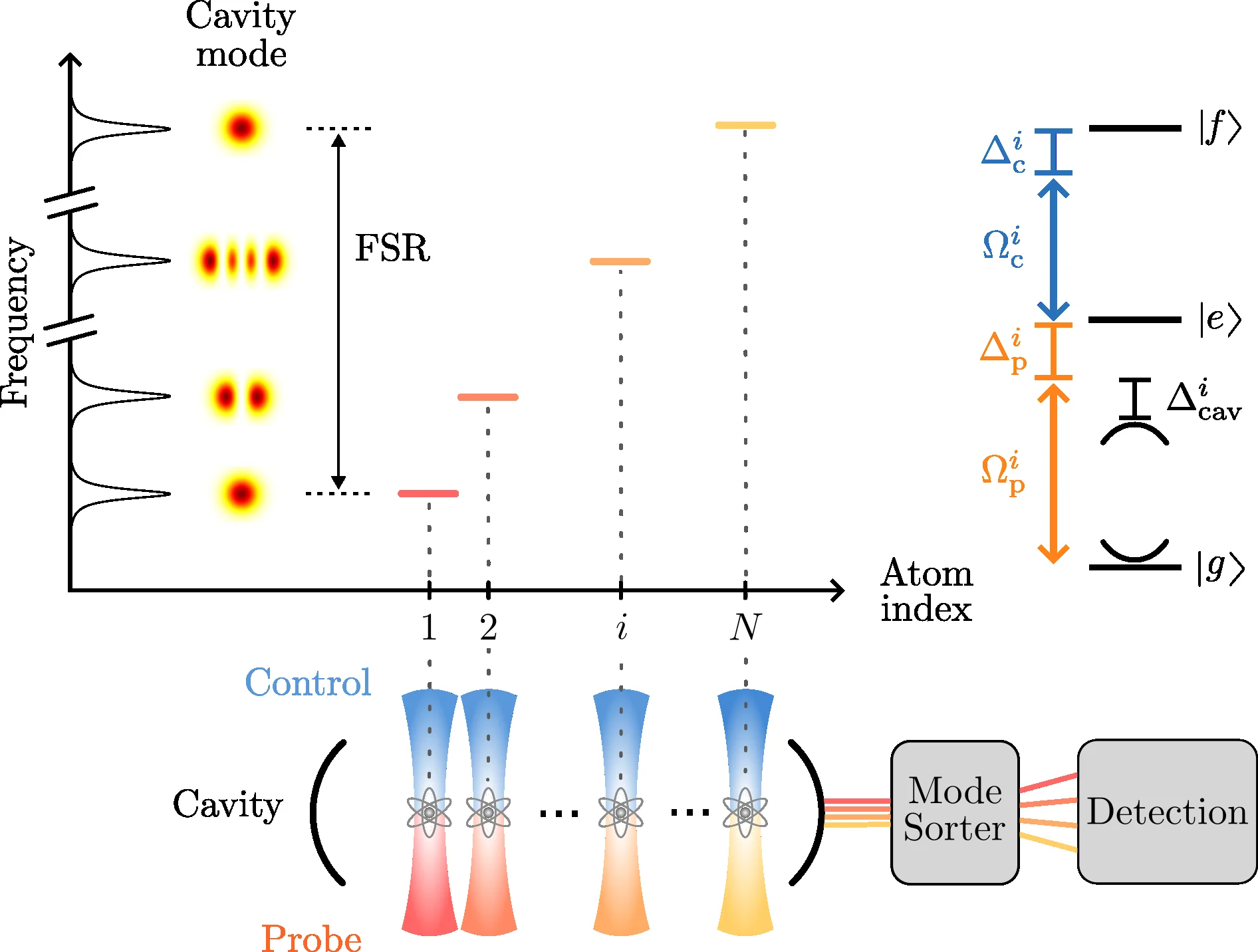
Non-Hermitian systems trace braid-like eigenvalue paths that are difficult to observe directly. Coupled chip-scale lasers now reveal braided spectra, enabling real-time visualization of non-Hermitian topology. This is a preview of subscription content, access via your institution Access options Access through your institution Access Nature and 54 other Nature Portfolio journals Get Nature+, our best-value online-access subscription $32.99 / 30 days cancel any time Learn more Subscribe to this journal Receive 12 print issues and online access $259.00 per year only $21.58 per issue Learn more Rent or buy this article Prices vary by article type from$1.95 to$39.95 Learn more Prices may be subject to local taxes which are calculated during checkout Fig. 1: Obtaining a knot from spectral measurements. Explore related subjects Discover the latest articles and news in related subjects. Diode lasers Topological matter Optical physics Photonic devices ReferencesAshida, Y., Gong, Z. & Ueda, M. Adv. Phys. 69, 249–435 (2020).Article ADS Google Scholar Bergholtz, E. J., Budich, J. C. & Kunst, F. K. Rev. Mod. Phys. 93, 015005 (2021).Article ADS Google Scholar Mao, W. et al. Nat. Phys. https://doi.org/10.1038/s41567-026-03288-2 (2026).Ding, K., Fang, C. & Ma, G. Nat. Rev. Phys. 4, 745–760 (2022).Article Google Scholar Miri, M.-A. & Alù, A. Science 363, eaar7709 (2019).Article Google Scholar Wang, K., Dutt, A., Wojcik, C. C. & Fan, S. Nature 598, 59–64 (2021).Article ADS Google Scholar Patil, Y. S. S. et al. Nature 607, 271–275 (2022).Article ADS Google Scholar Hodaei, H. et al. Nature 548, 187–191 (2017).Article ADS Google Scholar Bandres, M. A. et al. Science 359, eaar4005 (2018).Article Google Scholar Wang, K. et al. Phys. Rev. Lett. 136, 056602 (2026).Article ADS Google Scholar Download referencesAuthor informationAuthors and AffiliationsStockholm University, Stockholm, SwedenJ. Lukas K. König & Emil J. BergholtzAuthorsJ. Lukas K. KönigView author publicationsSearch author on:PubMed Google ScholarEmil J. BergholtzView author publicationsSearch author on:PubMed Google ScholarCorresponding authorCorrespondence to J. Lukas K. König.Ethics declarations Competing interests The authors declare no competing interests. Rights and permissionsReprints and permissionsAbout this articleCite this articleKönig, J.L.K., Bergholtz, E.J. Braids of light. Nat. Phys. (2026). https://doi.org/10.1038/s41567-026-03399-wDownload citationPublished: 07 August 2026Version of record: 07 August 2026DOI: https://doi.org/10.1038/s41567-026-03399-wShare this articleAnyone you share the following link with will be able to read this content:Get shareable linkSorry, a shareable link is not currently available for this article.Copy shareable link to clipboard Provided by the Springer Nature SharedIt content-sharing initiative Laser mode braiding on a chip Wenbo MaoBofeng ZhuLan Yang Nature Physics Article 12 May 2026
Source Information
Discussion
0 professional contributions
Sign in to join this professional discussion.
Be the first to add a constructive contribution.