Home/Quantum Technology/Quantum Software Development: Qiskit, Cirq & Quantum Programming

Quantum Software Development: Qiskit, Cirq & Quantum Programming

Quantum programming news: Qiskit, Cirq, quantum SDKs, compilers. Quantum software stack & hybrid quantum-classical development.

1,769 Articles
Updated Daily

Quantum software development bridges abstract quantum algorithms with physical hardware execution, requiring specialized programming frameworks, compilers, and hybrid classical-quantum orchestration.

Major programming frameworks include Qiskit (IBM) with 500,000+ users including substantial Indian participation; Cirq (Google); and PennyLane (Xanadu) for differentiable quantum programming.

India's Quantum Software Development Landscape

India's software development capabilities feature prominently in NQM plans. Tata Consultancy Services (TCS) partners with IBM to develop cloud-based interfaces and quantum algorithms. The DRDO-TIFR-TCS collaboration developed the cloud interface for India's 6-qubit superconducting quantum processor.

The NQM Thematic Hub at IISc Bengaluru develops quantum software including compilers, control electronics, and algorithm libraries. The Centre for Development of Advanced Computing (C-DAC) integrates quantum computing with India's high-performance computing infrastructure.

Educational institutions including IISc Bengaluru, IIT Delhi, and IIT Bombay offer quantum computing courses and certifications. The IISc Centre for Continuing Education provides a Certificate Programme in Quantum Computing and Artificial Intelligence with hands-on training in Qiskit and PennyLane.

Coprime Bivariate Bicycle Codes and Their Layouts on Cold Atomsquantum-computing

Coprime Bivariate Bicycle Codes and Their Layouts on Cold Atoms

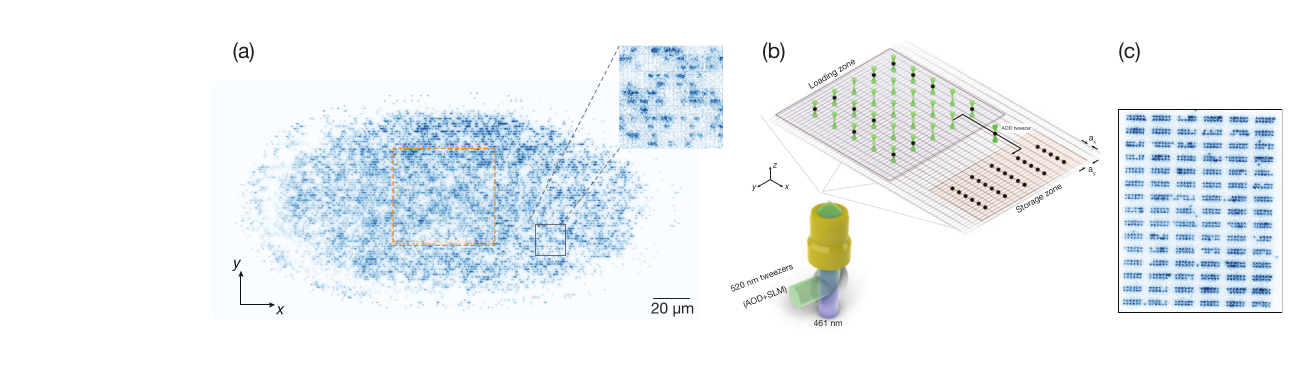
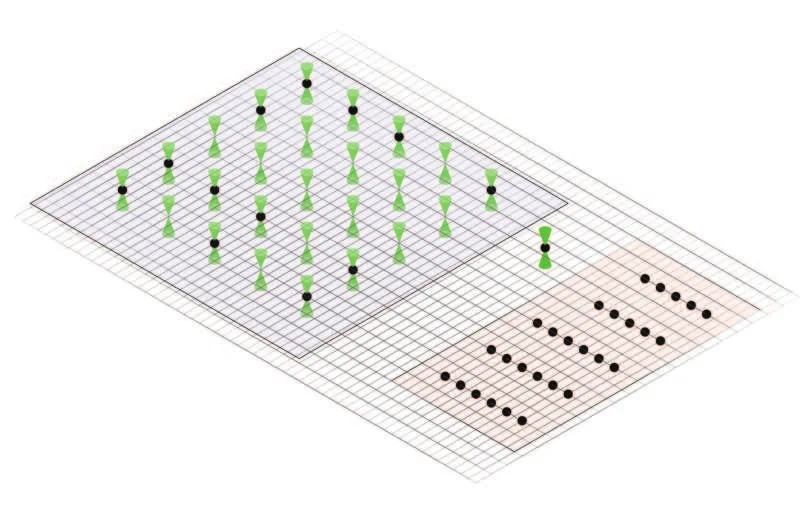
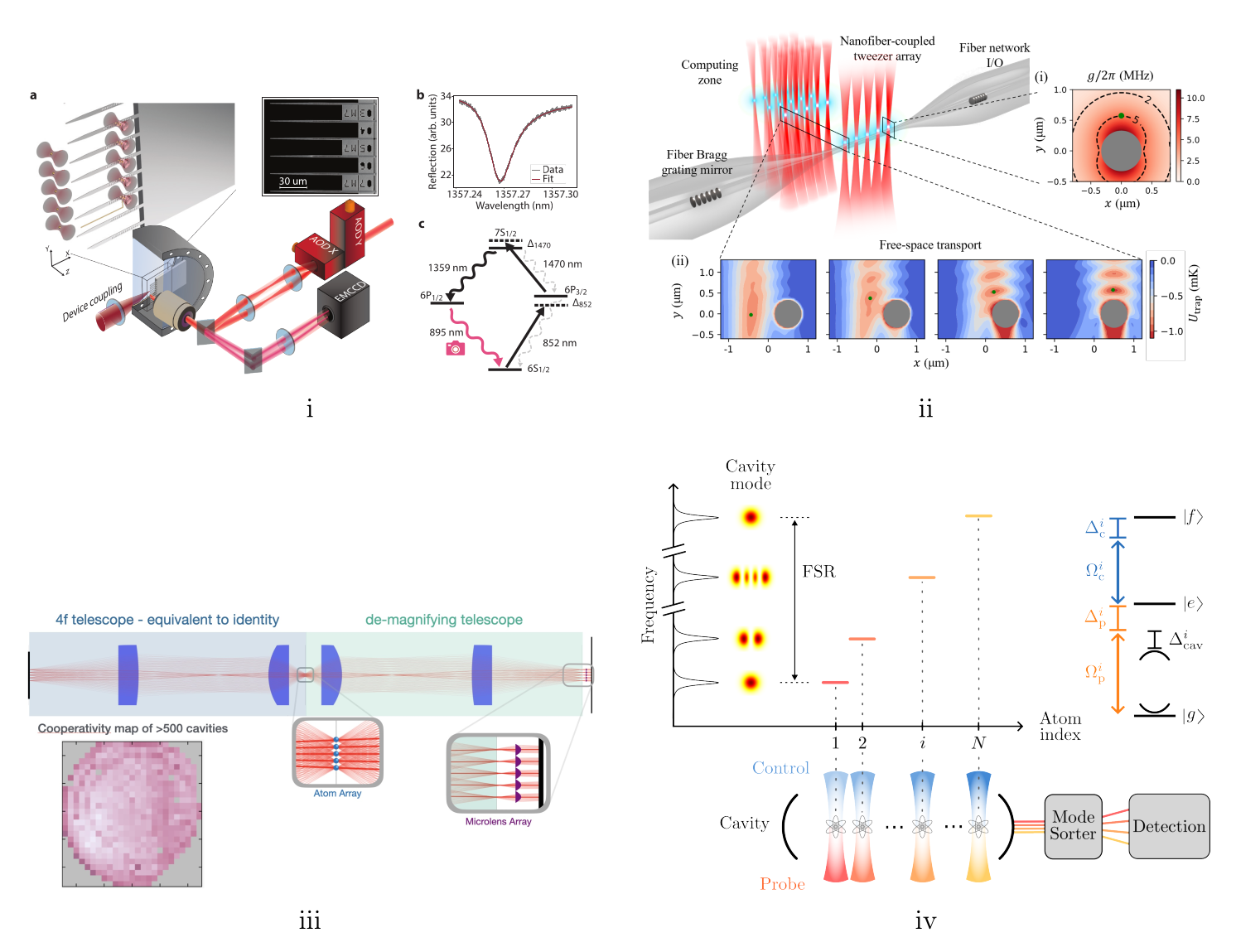
AbstractQuantum computing is deemed to require error correction at scale to mitigate physical noise by reducing it to lower noise levels while operating on encoded logical qubits. Popular quantum error correction schemes include CSS code, of which surface codes provide regular mappings onto 2D planes suitable for contemporary quantum devices together with known transversal logical gates. Recently, qLDPC codes have been proposed as a means to provide denser encoding with the class of bivariate bicycle (BB) codes promising feasible design for devices. This work contributes a novel subclass of BB codes suitable for quantum error correction. This subclass employs $coprimes$ and the product $xy$ of the two generating variables $x$ and $y$ to construct polynomials, rather than using $x$ and $y$ separately as in vanilla BB codes. In contrast to vanilla BB codes, where parameters remain unknown prior to code discovery, the rate of the proposed code can be determined beforehand by specifying a factor polynomial as an input to the numerical search algorithm. Using this coprime-BB construction, we found a number of surprisingly short to medium-length codes that were previously unknown. We also propose a layout on cold atom arrays tailored for coprime-BB codes. The proposed layout reduces both move time for short to medium-length codes and the number of moves of atoms to perform syndrome extractions. We consider an error model with global laser noise on cold atoms, and simulations show that our proposed layout achieves significant improvements over prior work across the simulated codes.► BibTeX data@article{Wang2026coprimebivariate, doi = {10.22331/q-2026-02-23-2009}, url = {https://doi.org/10.22331/q-2026-02-23-2009}, title = {Coprime {B}ivariate {B}icycle {C}odes and {T}heir {L}ayouts on {C}old {A}toms}, author = {Wang, Ming and Mueller, Frank}, journal = {{Quantum}}, issn = {2521-327X}, publisher = {{Verein zur F{\"{o}}rderung des Open Access Publizierens in den Quantenwisse

Quantum JournalLoading...0
TII Opens Cloud Access to Its Superconducting QPUsquantum-computing

TII Opens Cloud Access to Its Superconducting QPUs

Insider Brief Technology Innovation Institute (TII) has launched a cloud service providing partners with access to its in-house superconducting quantum processing units (QPUs). The QPUs, developed by TII’s Quantum Computing Hardware Lab, range from 5 to 25 qubits and include locally fabricated chips with coherence times up to ten times longer than the lab’s first-generation prototypes. The platform integrates TII’s open-source Qibo framework to enable cloud-based execution of quantum and hybrid quantum-classical workloads. PRESS RELEASE — The Technology Innovation Institute (TII), the applied research pillar of Abu Dhabi’s Advanced Technology Research Council (ATRC), today announced the launch of a cloud service providing access to Quantum Processing Units (QPUs) developed by TII’s Quantum Computing Hardware Lab. Initially available to TII partners, the service enables users to run quantum workloads directly on TII’s physical quantum hardware in the cloud.  Established four years ago, the Quantum Research Center’s Quantum Computing Hardware Lab has advanced from foundational capability-building to delivering cloud-accessible quantum systems based on superconducting devices. The lab currently operates multiple QPU systems ranging from 5 to 25 qubits, including in-house fabricated chips that demonstrate quantum coherence times up to ten times longer than TII’s first-generation prototypes. These advances reflect growing in-house expertise across quantum design, fabrication, and system-level integration.  The launch is the result of a coordinated effort between the Quantum Computing Hardware Lab and TII’s Quantum Middleware team, with Qibo serving as the software layer for job submission and execution workflows. Qibo is TII’s open-source quantum software framework that enables users to build quantum circuits and hybrid quantum-classical workflows, and to execute them seamlessly across simulators and QPU backends through a unified interface. The platform is ava

Quantum DailyLoading...0
Shortcuts to Adiabaticity via Adaptive Quantum Zeno Measurementsquantum-computing

Shortcuts to Adiabaticity via Adaptive Quantum Zeno Measurements

--> Quantum Physics arXiv:2602.17786 (quant-ph) [Submitted on 19 Feb 2026] Title:Shortcuts to Adiabaticity via Adaptive Quantum Zeno Measurements Authors:Adolfo del Campo View a PDF of the paper titled Shortcuts to Adiabaticity via Adaptive Quantum Zeno Measurements, by Adolfo del Campo View PDF HTML (experimental) Abstract:We consider the quantum Zeno dynamics arising from monitoring a time-dependent projector. Starting from a stroboscopic measurement protocol, it is shown that the effective Hamiltonian for Zeno dynamics involves a nonadiabatic geometric connection that takes the form of the Kato-Avron Hamiltonian for parallel transport, stirring the evolution within the time-dependent Zeno subspace. The latter reduces to counterdiabatic driving when projective measurements are performed in the instantaneous energy eigenbasis of the quantum system. The effective Zeno Hamiltonian can also be derived in the context of continuous quantum measurements of a time-dependent observable and the non-Hermitian evolution with a complex absorbing potential varying in time. Our results thus provide a unified framework for realizing shortcuts to adiabaticity via adaptive quantum Zeno measurements. Comments: Subjects: Quantum Physics (quant-ph); Other Condensed Matter (cond-mat.other); Atomic Physics (physics.atom-ph) Cite as: arXiv:2602.17786 [quant-ph]   (or arXiv:2602.17786v1 [quant-ph] for this version)   https://doi.org/10.48550/arXiv.2602.17786 Focus to learn more arXiv-issued DOI via DataCite (pending registration) Submission history From: Adolfo del Campo [view email] [v1] Thu, 19 Feb 2026 19:44:08 UTC (22 KB) Full-text links: Access Paper: View a PDF of the paper titled Shortcuts to Adiabaticity via Adaptive Quantum Zeno Measurements, by Adolfo del CampoView PDFHTML (experimental)TeX Source view license Current browse context: quant-ph < prev   |   next > new | recent | 2026-02 Change to browse by: cond-mat cond-mat.other physics physic

arXiv Quantum PhysicsLoading...0
Google Gave Amazing News to Nvidia and Broadcom Stock Investorsquantum-computing

Google Gave Amazing News to Nvidia and Broadcom Stock Investors

By Jose Najarro – Feb 21, 2026 at 8:15PM ESTNASDAQ: GOOGLAlphabetMarket Cap$3.8TToday's Changeangle-down(3.95%) $11.96Current Price$314.81Price as of February 20, 2026 at 3:58 PM ETAlphabet reported massive Capex growth driven by AI demand.In today's video, I discuss recent updates affecting Alphabet (GOOGL +3.95%) (GOOG +3.66%) and other AI stocks. To learn more, check out the short video, consider subscribing, and click the special offer link below. *Stock prices used were the after-market prices of Feb. 4, 2026. The video was published on Feb. 4, 2026. Read NextFeb 20, 2026 •By Eric TrieStock Market Today, Feb. 20: Alphabet Jumps as Gemini Rollout Bolsters $185B AI BuildoutFeb 20, 2026 •By Patrick SandersBetter Artificial Intelligence Stock: Alphabet vs. AmazonFeb 20, 2026 •By Anders BylundPrediction: 2 Stocks That Should Be Worth More Than Nvidia 10 Years From NowFeb 20, 2026 •By Sean WilliamsBillionaire Stanley Druckenmiller Dumped 4 of the Hottest AI Stocks and Nearly Quadrupled His Fund's Stake in Another Trillion-Dollar CompanyFeb 19, 2026 •By Johnny RiceHere's the Quantum Computing Stock Wall Street Loves the Most (Hint: It's Not IonQ or Rigetti)Feb 18, 2026 •By Daniel SparksAmazon vs. Alphabet: Which Is the Better AI Stock to Buy Now?About the AuthorJose Najarro enjoys investing in the tech market, more importantly, the semiconductor sector. Before partnering with the Fool, Jose worked as a Senior Electrical Engineer for General Dynamics, where he had first-hand experience seeing how emerging technology can change the world. Jose Najarro went to NJIT, receiving his Bachelor's and Master's degree in Electrical Engineering.TMFJoseNajarroX@_JoseNajarroStocks MentionedAlphabetNASDAQ: GOOGL$314.81 (+3.95%) $+11.96BroadcomNASDAQ: AVGO$332.44 (0.46%) $1.55NvidiaNASDAQ: NVDA$189.82 (+1.02%) $+1.92AlphabetNASDAQ: GOOG$314.67 (+3.66%) $+11.11*Average returns of all recommendations since inception. Cost basis and return based on previous market day close.

The Motley FoolLoading...0
New Quantum Algorithms Deliver Speed-Ups Without Sacrificing Predictabilityquantum-computing

New Quantum Algorithms Deliver Speed-Ups Without Sacrificing Predictability

Researchers have begun to systematically investigate pseudo-deterministic quantum algorithms, a novel class of quantum computation that consistently yields a canonical solution with high probability. Hugo Aaronson and Tom Gur from the University of Cambridge, working with Jiawei Li from UT Austin, present compelling evidence of their potential and limitations within the query complexity model. Their findings, detailed in a new paper, demonstrate significant complexity separations, including a problem where pseudo-deterministic quantum algorithms require substantially more queries than their classical randomised counterparts. This work is particularly significant as it establishes both the advantages, an exponential speed-up for certain problems, and the boundaries, a quintic advantage over deterministic algorithms, of this emerging computational paradigm, potentially reshaping our understanding of quantum algorithmic power. Problems currently intractable for even the most powerful computers could yield to a new class of quantum algorithms. These ‘pseudo-deterministic’ quantum methods find correct answers with high probability, offering speed-ups for specific calculations. Initial results demonstrate an exponential advantage over classical approaches for certain problems, such as Quantum-Locked Estimation. Meanwhile, remaining within a quintic limit for general computations. Scientists have begun a systematic investigation into pseudo-deterministic quantum algorithms, representing a unique intersection between the power of quantum mechanics and the reliability of deterministic computation. Recent work has focused on the query complexity model, revealing surprising separations in what these algorithms can achieve compared to classical counterparts. Understanding these differences has implications for the development of more dependable quantum technologies and a deeper understanding of the fundamental limits of computation. To establish clear boundaries between what qu

Quantum ZeitgeistLoading...0
Quantum Computers Tackle Complex Drone Delivery Schedulesquantum-computing

Quantum Computers Tackle Complex Drone Delivery Schedules

Scientists are increasingly exploring quantum computing to solve complex logistical challenges, and this research details a novel approach to the drone delivery packing problem. Sara Tarquini from Gran Sasso Science Institute, Matteo Vandelli and Francesco Ferrari from Quantum Computing Solutions, Leonardo S.p.A., alongside Daniele Dragoni working with colleagues at both Quantum Computing Solutions, Leonardo S.p.A. and the Hypercomputing Continuum Unit, Leonardo S.p.A., and Francesco Tudisco from Gran Sasso Science Institute and University of Edinburgh, present a hybrid quantum-classical framework utilising a neutral-atom quantum processing unit. They reformulate the delivery problem as a graph-partitioning task, leveraging the unique capabilities of neutral-atom quantum computers to encode constraints and efficiently explore potential solutions. This work is significant because it demonstrates the potential for quantum algorithms to optimise real-world delivery schedules, offering a pathway towards more efficient and scalable drone delivery networks, and showcases promising results from experiments conducted on up to 100 atoms on the Fresnel QPU. Solving complex delivery problems, such as optimising drone routes, could become far more efficient with this technology. This demonstration offers a practical application for emerging quantum processors, moving beyond theoretical possibilities. Researchers are applying the principles of quantum computing to a practical logistical challenge: optimising drone delivery routes. This work details a hybrid quantum-classical approach to the Drone Delivery Packing Problem, a complex task involving assigning deliveries to drones with limited battery life and time windows. By reformulating the problem as a graph partitioning exercise based on independent sets, the team successfully demonstrated a method for finding efficient delivery schedules. The core innovation lies in using a neutral-atom quantum processing unit (QPU) to genera

Quantum ZeitgeistLoading...0
Quandela Unveils MerLin, Reproducing 18 State-of-the-Art Photonic QML Modelsquantum-computing

Quandela Unveils MerLin, Reproducing 18 State-of-the-Art Photonic QML Models

Quandela Quantique Inc. has unveiled MerLin, a new open-source framework designed as a discovery engine for photonic and hybrid quantum machine learning. Available as of February 11, 2026, MerLin integrates optimized quantum simulation into standard machine learning workflows, enabling the training of quantum layers and systematic benchmarking. As an initial demonstration, the framework successfully reproduces eighteen state-of-the-art photonic and hybrid QML models, spanning diverse architectures like kernel methods and convolutional networks. By embedding photonic quantum models within established machine learning ecosystems, MerLin allows practitioners to leverage existing tooling for comparisons and hybrid workflows, “establishing a shared experimental baseline consistent with empirical benchmarking methodologies widely adopted in modern artificial intelligence.” This positions MerLin as a tool for linking algorithms, benchmarks, and future quantum hardware. Photonic Quantum Computing Advantages for Machine Learning Photonic quantum computing is proving particularly promising due to its scalability, robustness, compatibility with optical communication technologies, and energy efficiency. This convergence of quantum computing and machine learning is accelerating advances in both fields, with quantum machine learning (QML) offering the potential to extend the capabilities of classical algorithms. Unlike many approaches, photonic QML “exploits the bosonic nature of light and high-dimensional multi-mode interference to implement and train machine learning models directly on this unconventional photonic quantum computation model, enabling intrinsic parallelism and efficient exploration of large Hilbert spaces.” Realizing this potential necessitates software frameworks that bridge abstract QML models with execution on emerging quantum hardware. The need for such tools is highlighted by the current fragmented software landscape, where frameworks like Qiskit, Cirq, Puls

Quantum ZeitgeistLoading...0
Quantum Graphs Learn Data with Fewer Qubitsquantum-computing

Quantum Graphs Learn Data with Fewer Qubits

Graph neural networks offer a potent method for analysing graph-structured data, but implementing them on near-term quantum computers presents significant hurdles due to limitations in circuit depth and qubit resources. Armin Ahmadkhaniha and Jake Doliskani, both from the Department of Computing and Software at McMaster University, address this challenge with a novel fully quantum graph convolutional architecture tailored for the noisy intermediate-scale quantum (NISQ) era. Their research introduces an edge-local and qubit-efficient quantum message-passing mechanism, inspired by the Quantum Alternating Operator Ansatz (QAOA), that decomposes complex operations into simpler, hardware-native gate operations. This innovative design substantially reduces qubit requirements, from n to log(n) for a graph with n nodes, and allows implementation on existing quantum devices irrespective of graph size, representing a crucial step towards scalable quantum machine learning and unlocking the potential for unsupervised node representation learning on complex datasets. Complex networks underpin many real-world systems, from social connections to molecular structures. Future quantum computers promise to unlock insights from these networks far beyond the reach of today’s machines, and this advance delivers a quantum architecture that could make that potential a reality, even on the limited hardware available now. Scientists are increasingly turning to quantum computing to address challenges in machine learning, particularly when dealing with complex, graph-structured data. Graphs appear across numerous scientific fields, and extracting useful information from these structures is becoming ever more important. Traditional machine learning methods, such as graph neural networks, face computational limits as graphs grow larger and more complex. Researchers have now developed a fully quantum approach to graph convolutional neural networks, designed to operate within the constraints of to

Quantum ZeitgeistLoading...0
Neutrino Oscillation Experiments Hit Precision Limitsquantum-computing

Neutrino Oscillation Experiments Hit Precision Limits

Scientists are increasingly focused on refining measurements of neutrino oscillation parameters to rigorously test the Pontecorvo-Maki-Nakagawa-Sakata (PMNS) matrix. Claudia Frugiuele, Marco G. Genoni, Michela Ignoti, and Matteo G. A. Paris, all from INFN Sezione di Milano and Dipartimento di Fisica Aldo Pontremoli, Università degli Studi di Milano, present a study investigating the theoretical limits to precision in neutrino oscillation experiments using quantum estimation theory. Their research determines whether current flavour measurements represent the most effective method for extracting oscillation parameters, revealing that while optimal for certain parameters at the first oscillation maximum, significant improvements are possible for others. This work establishes a crucial benchmark for evaluating both fundamental and practical limitations in neutrino physics and offers a quantitative framework to guide the optimisation of future facilities like the planned ESS SB. Can we truly extract all possible information about neutrino behaviour from current experiments. New analysis reveals that existing methods are remarkably effective at measuring some neutrino properties, but fall short when probing others. Understanding these limits will guide the design of the next generation of neutrino detectors and maximise their potential. Scientists investigating neutrino oscillations are now capable of measurements precise enough to rigorously test the underlying physics of these elusive particles. Within the framework of quantum estimation theory, a recent analysis examines whether standard flavor measurements, the only type currently feasible with existing detectors, are the best possible way to determine the parameters governing neutrino behaviour. Calculations of the Quantum Fisher Information (QFI) and the classical Fisher Information (FI) were performed, considering muon and electron antineutrino beams propagating in a vacuum. These calculations assessed the potentia

Quantum ZeitgeistLoading...0
Scaleway & AQT Launch European Quantum Computing Partnership, February 2026quantum-computing

Scaleway & AQT Launch European Quantum Computing Partnership, February 2026

Alpine Quantum Technologies (AQT) and Scaleway announced today, February 20, 2026, a partnership to deliver European quantum computing through cloud access. AQT is integrating its trapped-ion quantum computer, IBEX Q1, directly into Scaleway’s cloud platform, creating a new sovereign quantum infrastructure designed to bolster digital resilience and technological independence. The collaboration will provide access to quantum processing units via Scaleway’s Quantum as a Service (QaaS) platform, available Tuesdays and Wednesdays from 10:00 to 17:00 CET. “Together with Scaleway, AQT offers our customers hands-on access to the best quantum computers in Europe,” said Felix Rohde, Director of Cloud Partnerships and Business Development at AQT. This move significantly expands Europe’s capacity for secure, independent quantum computing and opens new avenues for innovation in fields ranging from logistics to financial modeling. AQT IBEX Q1 Integrates with Scaleway’s European Quantum as a Service The arrival of the IBEX Q1 trapped-ion quantum computer within Scaleway’s cloud infrastructure marks a significant step toward a fully sovereign quantum ecosystem in Europe, offering unprecedented access to advanced quantum processing capabilities. Crucially, the IBEX Q1 can be accessed and programmed using familiar quantum software packages like Qiskit, Cirq, and Pennylane, lowering the barrier to entry for those eager to explore quantum computation. Availability is specifically scheduled for Tuesdays and Wednesdays between 10:00 and 17:00 CET, accommodating the working hours of European-based customers. This strategic timing reflects a commitment to practical usability and seamless integration into existing workflows. Valentin Macheret, Engineering Manager, Quantum Technologies at Scaleway, highlights the technical advantages of the collaboration, noting that AQT’s approach “offers remarkable fidelity and unique all-to-all connectivity, which are critical for running complex and dee

Quantum ZeitgeistLoading...0
IBM’s Duality Accelerator Drives Quantum Software Growth with SQK (2023) & QodeX Quantumquantum-computing

IBM’s Duality Accelerator Drives Quantum Software Growth with SQK (2023) & QodeX Quantum

IBM is fueling the next generation of quantum software companies with new investments in startups SQK and QodeX Quantum, announced today, February 20, 2026. Selected for phase two of the Alchemist Chicago accelerator’s inaugural cohort, these early-stage companies are pioneering quantum applications in healthcare and machine learning, representing a push toward “transformative solutions for industry.” Seattle-based SQK, founded in 2023, is developing hybrid quantum-classical algorithms for medical image reconstruction, while Chicago’s QodeX Quantum, established in 2025, aims to build a platform for quantum-native AI models. According to IBM, these investments are part of a broader strategy to “accelerate the growth of the software ecosystem” and unlock the potential of quantum computers, solidifying Illinois as a global hub for quantum innovation. SQK and QodeX Quantum: Pioneering Healthcare & AI Solutions “By addressing one of healthcare’s most pressing needs, improving accuracy and efficiency in imaging, SQK is positioned to make a meaningful impact,” IBM states. IBM intends to empower QodeX with access to its quantum technology and customer ecosystems, fostering sustainable growth. This support is part of IBM’s broader strategy to accelerate the quantum software ecosystem, including a two-phase program with the University of Chicago’s Polsky Center. “Building a robust quantum ecosystem…brings the promise of useful quantum computing closer to reality,” according to IBM, with Illinois becoming a central hub for this innovation. Alchemist Chicago Accelerator Drives Quantum Startup Growth Phase one of the program concentrated on customer discovery and proof-of-concept development, leveraging IBM’s mentorship and access to its quantum systems. Currently, the accelerator is in phase two, providing venture investment and business acceleration to selected startups, including SQK and QodeX Quantum, both participants in the inaugural cohort. Chicago’s QodeX Quantum, es

Quantum ZeitgeistLoading...0
Entanglement Boosts Machine Learning of Quantum Systemsquantum-computing

Entanglement Boosts Machine Learning of Quantum Systems

Researchers are increasingly focused on accurately approximating complex Hamiltonian dynamics with simplified, effective models, a crucial challenge at the intersection of Hamiltonian learning and simulation. Ayaka Usui, Guillermo Abad-López, and Hari krishnan SV, working with colleagues at the Universitat Autònoma de Barcelona and ICREA, demonstrate a novel approach to improve the performance of quantum generative adversarial networks (QGANs) in this area. Their work addresses the common issue of training plateaus and local minima that often limit QGAN scalability. By introducing an entanglement-assisted learning strategy, coupling a randomly initialized auxiliary qubit during training, the team significantly enhances learning performance, offering a promising pathway towards more efficient and robust Hamiltonian dynamics simulations. Complex molecular simulations, essential for materials science and drug design, could become dramatically faster with improved quantum algorithms. Entanglement-assisted learning offers a potential solution to longstanding challenges in quantum machine learning, stabilising the training process and bringing practical quantum simulation closer to reality. Scientists are increasingly focused on methods for approximating complex quantum systems with simpler, more manageable models, a pursuit at the intersection of quantum Hamiltonian learning and quantum simulation. Recent work demonstrates that quantum generative adversarial networks, or QGANs, can outperform traditional approaches to this approximation, such as the Trotter method. However, training these QGANs presents challenges, including optimisation difficulties and a tendency to get stuck in suboptimal solutions as the system grows in complexity. A new entanglement-assisted learning strategy offers a potential solution, coupling a randomly initialised auxiliary qubit to the learning process at an intermediate stage. This addition introduces a beneficial interaction between randomis

Quantum ZeitgeistLoading...0
Symmetries Greatly Simplify Quantum Algorithm Complexityquantum-computing

Symmetries Greatly Simplify Quantum Algorithm Complexity

Scientists are increasingly focused on optimising the Quantum Approximate Optimisation Algorithm (QAOA) to unlock its full potential for solving complex computational problems. Boris Tsvelikhovskiy from the University of California, Riverside, Bao Bach and Jose Falla from the University of Delaware, working with Ilya Safro and colleagues from both the University of Delaware’s Departments of Computer and Information Sciences and Physics and Astronomy, demonstrate how classical symmetries can be harnessed to significantly improve QAOA’s performance. Their research details the analysis of reduced instances of the MaxCut problem, revealing how fixing a single variable can dramatically alter the structure of the dynamical Lie algebra, sometimes collapsing its dimension from exponential to quadratic. This discovery not only provides theoretical insights into QAOA’s behaviour but also suggests a practical pathway towards designing more expressive and trainable quantum circuits, potentially overcoming limitations in current quantum hardware. Within a cryostat, cooled to near absolute zero, delicate quantum circuits are carefully prepared for computation. These complex systems promise to solve problems intractable for even the most powerful conventional computers. Understanding how to best use their potential requires a deeper look at the underlying symmetries governing their behaviour. Scientists have demonstrated a close tie between the structure of the dynamical Lie algebra (DLA) generated by Hamiltonians and both the expressivity and trainability of quantum approximate optimisation algorithms (QAOA). This work shows that classical symmetries can be systematically exploited as a design principle for QAOA. Focusing on the MaxCut problem with global bit-flip symmetry, researchers analysed reduced QAOA instances obtained by fixing a single variable and studied how this choice affects the associated DLAs. The structure of the DLAs can change dramatically depending on which va

Quantum ZeitgeistLoading...0
Qiskit-Braket provider v0.11: New Primitives and Flexible Circuit Compilationquantum-computing

Qiskit-Braket provider v0.11: New Primitives and Flexible Circuit Compilation

Qiskit-Braket provider v0.11: New Primitives and Flexible Circuit Compilation We recently released v0.11 of the Qiskit-Braket provider, which brings more Qiskit features to Amazon Braket users, improves access to Braket backends through Qiskit, and also enables compilation on the Braket SDK or with OpenQASM Programs. With v0.11, the Qiskit-Braket provider now: Supports flexible compilation features for Braket using common Qiskit transpile functionality through the to_braket function Contains new BraketEstimator and BraketSampler primitives, which mirror routines found in similar Qiskit primitives, and includes several features aimed at running with Amazon Braket program sets. Supports Qiskit 2.0, and is fully back compatible to v0.34.2. With the latest upgrades to the Qiskit-Braket provider, you can use a richer set of tools for executing quantum programs on Amazon Braket. Updated support for Qiskit 2.0 The Qiskit-Braket-provider now supports Qiskit 2.0, which introduced new functionality and deprecated several old classes, compared to Qiskit 1.x. Additionally, performance increases seen in the refactoring of Qiskit 2.0 can now be leveraged using the Qiskit-Braket provider. The Qiskit-Braket provider is also back compatible to v0.34.2. For a full list of 2.0 changes, see Qiskit’s release summary, as well as recent releases (0.7.0 and beyond) in the Qiskit-Braket provider. Unlocking compilation for Braket circuits The Qiskit-Braket provider can now be used to easily unlock compilation on Braket circuits. You can now compile or transpile to Braket Circuit objects through the to_braket function, which can then be directly submitted to Braket devices: from qiskit_braket_provider import to_braket from braket.circuits import Circuit from braket.aws import AwsDevice from braket.devices import Devices device = AwsDevice(Devices.IQM.Garnet) ghz_4 = Circuit().h(0).cnot(0,1).cnot(1,2).cnot(2,3) ghz_4_native = to_braket(ghz_4, braket_device = device) # result = device.run(ghz_4

Amazon BraketLoading...0
Dissipation as a Resource: Synchronization, Coherence Recovery, and Chaos Controlquantum-computing

Dissipation as a Resource: Synchronization, Coherence Recovery, and Chaos Control

--> Quantum Physics arXiv:2602.16817 (quant-ph) [Submitted on 18 Feb 2026] Title:Dissipation as a Resource: Synchronization, Coherence Recovery, and Chaos Control Authors:Debabrata Mondal, Lea F. Santos, S. Sinha View a PDF of the paper titled Dissipation as a Resource: Synchronization, Coherence Recovery, and Chaos Control, by Debabrata Mondal and 2 other authors View PDF HTML (experimental) Abstract:Dissipation is commonly regarded as an obstacle to quantum control, as it induces decoherence and irreversibility. Here we demonstrate that dissipation can instead be exploited as a resource to reshape the dynamics of interacting quantum systems. Using an experimentally realizable Bose-Josephson junction containing two bosonic species, we demonstrate that dissipation enables distinct dynamical behaviors: synchronized phase-locked oscillations, transient chaos with long-time coherence recovery, and steady-state chaos. The emergence of each behavior is determined by experimentally tunable parameters. At weak interactions, the two components synchronize despite dissipation, exhibiting long-lived coherent oscillations reminiscent of a boundary time crystal. Stronger interactions induce a dissipative phase transition into a self-trapped regime accompanied by chaotic dynamics. Remarkably, dissipation regulates the lifetime of chaos and enables the recovery of coherence at long times. By introducing a controlled tilt between the wells, transient chaos can be converted into persistent steady-state chaos. We further show that standard spectral diagnostics fail to distinguish between the two chaotic regimes, revealing that spectral statistics primarily reflect short-time instability. These results establish dissipation as a powerful tool for engineering dynamical phases, restoring quantum coherence, and controlling the duration of chaotic behavior and information scrambling. Subjects: Quantum Physics (quant-ph); Quantum Gases (cond-mat.quant-gas); Statistical Mechanics (cond-mat

arXiv Quantum PhysicsLoading...0
Weak-Value Amplification for Longitudinal Phase Measurements Approaching the Shot-Noise Limit Characterized by Allan Variancequantum-computing

Weak-Value Amplification for Longitudinal Phase Measurements Approaching the Shot-Noise Limit Characterized by Allan Variance

--> Quantum Physics arXiv:2602.17035 (quant-ph) [Submitted on 19 Feb 2026] Title:Weak-Value Amplification for Longitudinal Phase Measurements Approaching the Shot-Noise Limit Characterized by Allan Variance Authors:Jing-Hui Huang, Xiang-Yun Hu View a PDF of the paper titled Weak-Value Amplification for Longitudinal Phase Measurements Approaching the Shot-Noise Limit Characterized by Allan Variance, by Jing-Hui Huang and Xiang-Yun Hu View PDF HTML (experimental) Abstract:We report a quantitative evaluation of weak-value amplification (WVA) for longitudinal phase measurements using Allan variance analysis. Building on a recent double-slit interferometry experiment with real weak values [Phys. Rev. Lett. 134, 080802 (2025)], our Allan variance analysis demonstrates measurement of a few attosecond time delay approaching the shot noise limit at short averaging intervals of $T$ = $0.01-0.1$ s, representing two orders of magnitude variance reduction compared to the $T=300$ s operating point in prior implementations. We demonstrate that the Allan-variance noise floor scales with the inverse of the detected photon number $1/N_r$, confirming shot-noise-limited operation with WVA. Furthermore, this $1/N_r$ scaling experimentally validates that WVA can outperform conventional measurement under fixed detected photon number and detector saturation, in the presence of technical noise, as theoretically predicted [Phys. Rev. Lett. 118, 070802 (2017)]. Our results provide rigorous, quantitative evidence of the near-optimal noise performance achievable with WVA, establishing a new benchmark for precision optical metrology. This advancement is particularly relevant to applications such as gravitational-wave detection, where signals predominantly occupy the high-frequency regime ($>10$ Hz). Comments: Subjects: Quantum Physics (quant-ph) Cite as: arXiv:2602.17035 [quant-ph]   (or arXiv:2602.17035v1 [quant-ph] for this version)   https://doi.org/10.48550/arXiv.2602.17035 Focu

arXiv Quantum PhysicsLoading...0
Here's the Quantum Computing Stock Wall Street Loves the Most (Hint: It's Not IonQ or Rigetti)quantum-computing

Here's the Quantum Computing Stock Wall Street Loves the Most (Hint: It's Not IonQ or Rigetti)

By Johnny Rice – Feb 19, 2026 at 9:00PM ESTKey PointsMost institutional investment in quantum pure plays comes from passive index funds, not active conviction buying.IonQ, Rigetti, and D-Wave face survival risk if quantum timelines stretch longer than bulls expect.Alphabet offers quantum exposure backed by $73 billion in annual free cash flow and a dominant core business.We’re bullish on these 10 stocks ›NASDAQ: GOOGLAlphabetMarket Cap$3.7TToday's Changeangle-down(-0.16%) $0.48Current Price$302.85Price as of February 19, 2026 at 4:00 PM ETQuantum stocks soared in 2025, but the "smart money" isn't buying the hype.Quantum computing stocks had an incredible 2025. IonQ, Rigetti Computing, and D-Wave Quantum delivered the kind of returns that make investors who missed out feel queasy. But for all the hype, there's something quantum bulls don't love to admit: The "smart money" isn't convinced. Wall Street's exposure to the pure-play quantum computing stocks that dominate Reddit threads and YouTube thumbnails is limited. Most institutional buying in quantum pure plays isn't what it looks like Yes, institutional investment in the sector rose dramatically last year, but most of that capital flowed in from passive exchange-traded fund (ETF) and index fund managers, not active hedge funds. When you see that BlackRock "owns" 30 million shares of IonQ, it's easy to misunderstand this as implying BlackRock likes the stock. It doesn't. Instead, it reflects mechanical buying driven by IonQ's inclusion in an index like the Russell 2000. This passive buying is responsible for the vast majority of Wall Street activity in quantum pure plays, but even the active side of things is misleading. Most of these are hedge funds that trade on momentum, looking to take advantage of short-term trends. They're not buying with conviction and holding for the long term. It's easy to see why. Image source: Getty Images. The numbers don't lie Rigetti posted $1.95 million in revenue last quart

The Motley FoolLoading...0
Tower Semiconductor and Xanadu Industrialize Silicon Photonic Quantum Stackquantum-computing

Tower Semiconductor and Xanadu Industrialize Silicon Photonic Quantum Stack

Tower Semiconductor and Xanadu Industrialize Silicon Photonic Quantum Stack Tower Semiconductor and Xanadu have expanded their partnership to develop a manufacturable silicon photonics platform for fault-tolerant quantum computing. This collaboration utilizes Tower’s high-volume foundry infrastructure to industrialize Xanadu’s photonic circuit designs, transitioning hardware from prototype to demonstrator systems. The joint engineering effort focuses on a custom production flow for a specialized material stack designed to maintain optical performance and scalability as system complexity increases. Technical developments center on the optimization of ultra-low loss silicon nitride (SiN) waveguides and integrated photodiodes within standard product flows. These components are critical for measurement-based quantum computing (MBQC) architectures, which require the generation and entanglement of thousands of qubits on a single photonic chip. By validating these designs on an established 200mm manufacturing platform, the partnership aims to meet the precise tolerances and high-yield requirements of large-scale quantum information processing. This manufacturing-aligned approach leverages Tower Semiconductor’s PH18 silicon photonics platform to provide a foundation for commercial-scale hardware. The expansion secures a dedicated fabrication route for Xanadu’s custom material stack, ensuring compatibility with industrial semiconductor processes. This technical alignment is intended to facilitate the deployment of photonic quantum modules that integrate with existing telecommunications and data center infrastructure. For further technical specifications, consult the official documentation from Tower Semiconductor here, review Xanadu’s photonic hardware architecture here, explore the Tower SiPho technology platform here, or access research on PennyLane here. February 19, 2026 Mohamed Abdel-Kareem2026-02-19T16:48:10-08:00 Leave A Comment Cancel replyComment Type in the text di

Quantum Computing ReportLoading...0