Home/Quantum Technology/Quantum Optimization & Logistics: Supply Chain & Routing Applications

Quantum Optimization & Logistics: Supply Chain & Routing Applications

Quantum optimization news: logistics, supply chain quantum, routing optimization, QAOA. Combinatorial optimization & enterprise deployments.

2,128 Articles
Updated Daily

Optimization problems—finding the best solution among millions or billions of possibilities—represent the most immediate commercial application for quantum computing. Logistics, supply chain management, manufacturing, and transportation face combinatorial explosion where classical algorithms struggle.

Quantum approaches include quantum annealing solving optimization natively using quantum tunneling; QAOA (Quantum Approximate Optimization Algorithm) as a gate-based alternative; and quantum-inspired algorithms providing immediate business value on classical hardware.

India's Quantum Optimization Landscape

India's National Quantum Mission prioritizes optimization applications given the country's complex logistics challenges. The Indian Railways, the world's largest employer and passenger carrier, represents a prime use case for quantum scheduling optimization. The NQM Thematic Hub at IIT Bombay focuses on quantum algorithms for optimization problems.

Tata Consultancy Services (TCS) develops quantum optimization solutions for Indian enterprises including supply chain, logistics, and manufacturing applications. The Quantum Valley Tech Park in Andhra Pradesh, anchored by an IBM Quantum System Two with 156-qubit Heron processor, targets optimization applications among its use cases including supply chain resilience and energy optimization.

The NQM specifically targets quantum computing applications in optimization, with intermediate-scale quantum computers expected to demonstrate utility in logistics and scheduling problems within the mission timeline.
Shortcuts to Adiabaticity via Adaptive Quantum Zeno Measurementsquantum-computing

Shortcuts to Adiabaticity via Adaptive Quantum Zeno Measurements

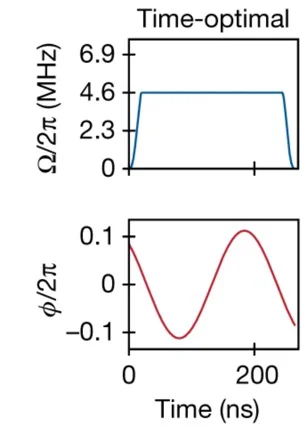
--> Quantum Physics arXiv:2602.17786 (quant-ph) [Submitted on 19 Feb 2026] Title:Shortcuts to Adiabaticity via Adaptive Quantum Zeno Measurements Authors:Adolfo del Campo View a PDF of the paper titled Shortcuts to Adiabaticity via Adaptive Quantum Zeno Measurements, by Adolfo del Campo View PDF HTML (experimental) Abstract:We consider the quantum Zeno dynamics arising from monitoring a time-dependent projector. Starting from a stroboscopic measurement protocol, it is shown that the effective Hamiltonian for Zeno dynamics involves a nonadiabatic geometric connection that takes the form of the Kato-Avron Hamiltonian for parallel transport, stirring the evolution within the time-dependent Zeno subspace. The latter reduces to counterdiabatic driving when projective measurements are performed in the instantaneous energy eigenbasis of the quantum system. The effective Zeno Hamiltonian can also be derived in the context of continuous quantum measurements of a time-dependent observable and the non-Hermitian evolution with a complex absorbing potential varying in time. Our results thus provide a unified framework for realizing shortcuts to adiabaticity via adaptive quantum Zeno measurements. Comments: Subjects: Quantum Physics (quant-ph); Other Condensed Matter (cond-mat.other); Atomic Physics (physics.atom-ph) Cite as: arXiv:2602.17786 [quant-ph]   (or arXiv:2602.17786v1 [quant-ph] for this version)   https://doi.org/10.48550/arXiv.2602.17786 Focus to learn more arXiv-issued DOI via DataCite (pending registration) Submission history From: Adolfo del Campo [view email] [v1] Thu, 19 Feb 2026 19:44:08 UTC (22 KB) Full-text links: Access Paper: View a PDF of the paper titled Shortcuts to Adiabaticity via Adaptive Quantum Zeno Measurements, by Adolfo del CampoView PDFHTML (experimental)TeX Source view license Current browse context: quant-ph < prev   |   next > new | recent | 2026-02 Change to browse by: cond-mat cond-mat.other physics physic

arXiv Quantum PhysicsLoading...0
Enhanced Maximum Independent Set Preparation with Rydberg Atoms Guided by the Spectral Gapquantum-computing

Enhanced Maximum Independent Set Preparation with Rydberg Atoms Guided by the Spectral Gap

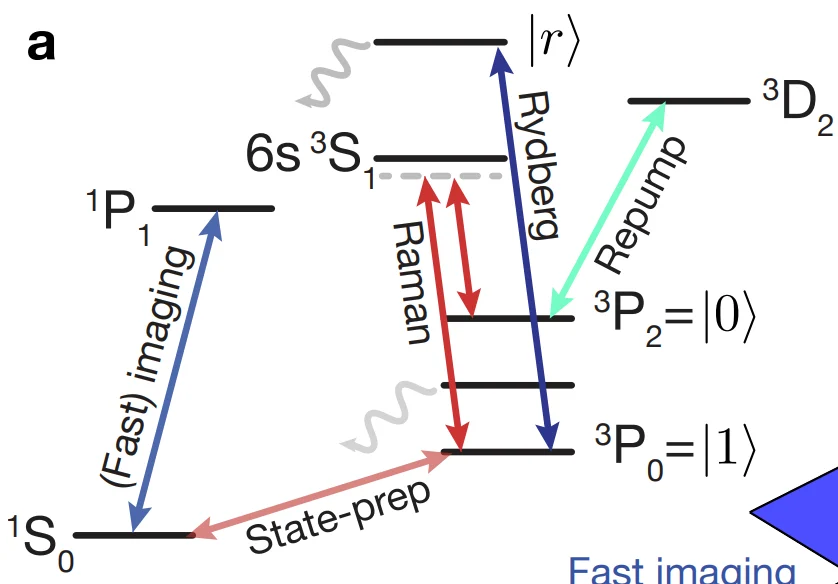
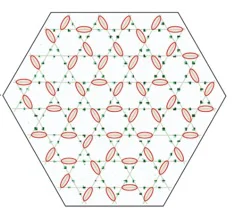
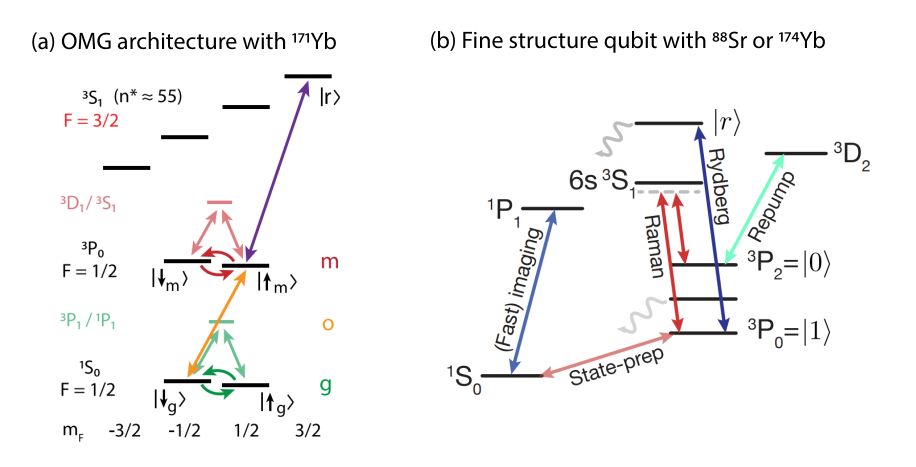
--> Quantum Physics arXiv:2602.17991 (quant-ph) [Submitted on 20 Feb 2026] Title:Enhanced Maximum Independent Set Preparation with Rydberg Atoms Guided by the Spectral Gap Authors:Seokho Jeong, Minhyuk Kim View a PDF of the paper titled Enhanced Maximum Independent Set Preparation with Rydberg Atoms Guided by the Spectral Gap, by Seokho Jeong and 1 other authors View PDF HTML (experimental) Abstract:Adiabatic quantum computation with Rydberg atoms provides a natural route for solving combinatorial optimization problems such as the maximum independent set (MIS). However, its performance is fundamentally limited by the reduction of the spectral gap with increasing system size and connectivity, which induces population leakage from the ground state during finite-time evolution. Here we introduce the Adjusted Detuning for Ground-Energy Leakage Blockade (ADGLB), a spectral-gap-guided schedule engineering method that modifies the laser detuning profile to suppress leakage without introducing additional Hamiltonian terms or iterative optimization loops. We experimentally benchmark ADGLB on a quasi-one-dimensional chain of $N=10$ atoms, and the MIS preparation probability increases substantially compared with the standard adiabatic schedule. Furthermore, we show that the schedule optimized for smaller instances can be directly applied to larger two-dimensional triangular lattices with $N=25$ and $N=37$. With a small heuristic offset, the method also remains effective for instances with higher hardness parameters. These findings demonstrate that spectral-gap-guided schedule engineering offers a scalable and hardware-efficient strategy for enhancing adiabatic quantum optimization on neutral-atom platforms. Subjects: Quantum Physics (quant-ph) Cite as: arXiv:2602.17991 [quant-ph]   (or arXiv:2602.17991v1 [quant-ph] for this version)   https://doi.org/10.48550/arXiv.2602.17991 Focus to learn more arXiv-issued DOI via DataCite (pending registration) Submission history

arXiv Quantum PhysicsLoading...0
Clarification of “academic relevance”quantum-computing

Clarification of “academic relevance”

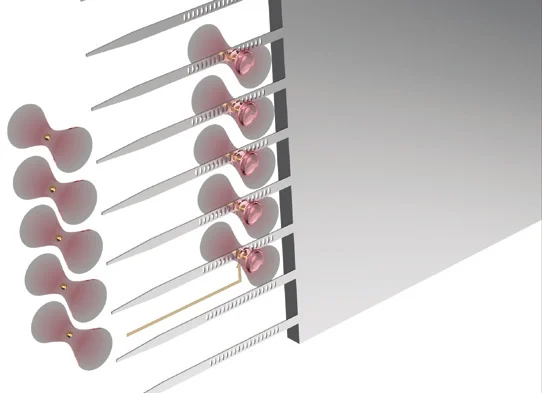
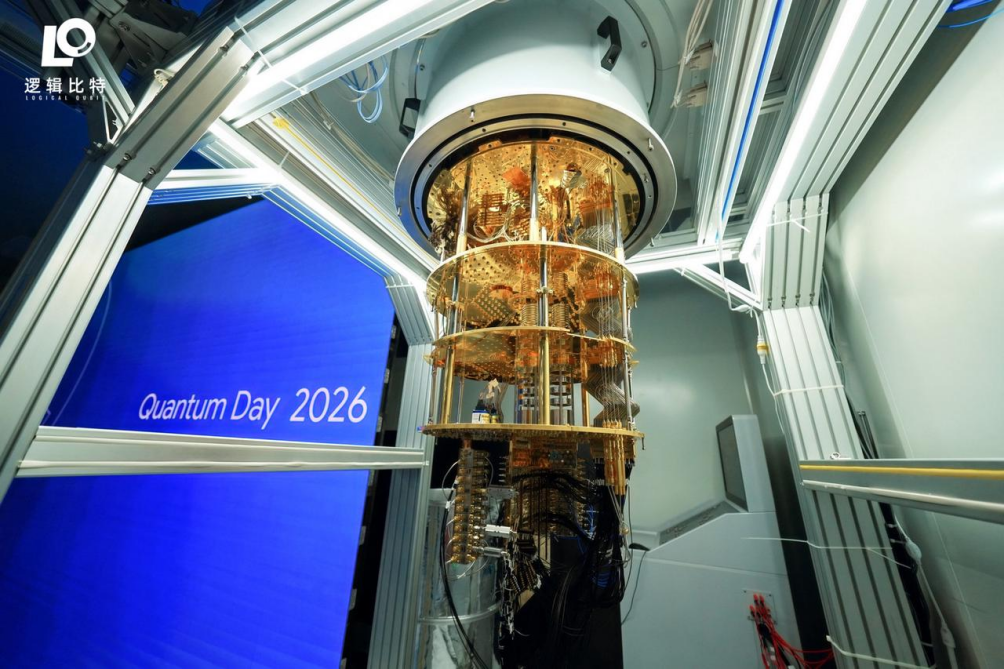
Hi community, I’m reaching out to better understand the removal of my recent post regarding the quantum computer hardware replica I designed and built for a local university. It was removed for "not being related to the academics of quantum computing," and I’m hoping for some clarity on that criteria. To provide context: this wasn’t a fan-art project. This was a commissioned educational tool built specifically for a university’s quantum computing department. The "cooling tower" (dilution refrigerator) architecture is fundamental to how superconducting qubits function; without that specific hardware environment, the "academics" of the math and logic don't translate to reality. My post aimed to show the hardware side of the field, specifically how universities are using physical models to teach students about: Cryogenic environments and the stages of cooling. Signal routing and the physical constraints of wiring a quantum processor. Scaling challenges in hardware design. If a project commissioned by a university for the express purpose of departmental education doesn’t qualify as "academic," could you please clarify what does? Is the sub restricted strictly to theoretical papers, or is there room for the physical engineering and pedagogical tools that make the science accessible? I’d love to find a way to share this that fits your guidelines, as the intersection of hardware engineering and education is a vital part of the field. submitted by /u/StarsapBill [link] [comments]

Reddit r/QuantumComputing (RSS)Loading...0
2 Quantum Computing Stocks That Could Make a Millionairequantum-computing

2 Quantum Computing Stocks That Could Make a Millionaire

Quantum computing is still a high-risk frontier, but for patient investors, these two tickers could be tomorrow's generational wealth creators.Quantum computing is still early, messy, and wildly speculative, which is exactly why the upside for patient, risk‑tolerant investors is so intriguing. If this technology can cross the chasm from lab curiosity to everyday infrastructure over the next 10–20 years, today's niche players could look like buying early cloud or GPU leaders before the world catches on.​ Here are two quantum names with very different approaches that could, in a bullish scenario, move the needle on lifetime wealth and eventually produce some millionaire investors. Image source: Getty Images. 1. IonQ IonQ (IONQ 4.52%) remains the poster child for pure‑play, gate‑based quantum hardware. This month, the company reiterated that its systems are already accessible via major public clouds and are being used by customers in pharmaceuticals, materials, finance, logistics, cybersecurity, and government work. What makes IonQ interesting from a millionaire‑maker perspective is the combination of three things: A credible technical roadmap (including industry‑leading error rates on key two‑qubit gates). Distribution through hyperscale clouds that can switch on demand when the economics make sense. Early‑stage real workloads and partnerships rather than purely academic demos. In other words, IonQ looks like a potential millionaire maker because it has a real technical edge, major cloud distribution, and early partnerships, proving it's moving beyond lab demos into real-world use. ExpandNYSE: IONQIonQToday's Change(-4.52%) $-1.51Current Price$31.92Key Data PointsMarket Cap$11BDay's Range$31.37 - $33.8852wk Range$17.88 - $84.64Volume679KAvg Vol20MGross Margin-747.41% 2. Rigetti Computing Where IonQ leans into trapped ions, Rigetti (RGTI 4.07%) is the scrappy superconducting challenger aiming to sell both cloud access and physical systems. In January, the company updat

The Motley FoolLoading...0
It is time for Europe to weaponise its chokepointsquantum-computing

It is time for Europe to weaponise its chokepoints

Opinion Global tradeIt is time for Europe to weaponise its chokepointsChina and others have long been adept at using supply chains to their advantage — the EU should do the sameMartin SandbuAdd to myFTGet instant alerts for this topicManage your delivery channels hereRemove from myFTEurope could strengthen its geopolitical leverage by fostering its leadership in cutting-edge semiconductor technologies, such as ASML’s ultraviolet lithography, on which other countries depend © ASMLIt is time for Europe to weaponise its chokepoints on x (opens in a new window)It is time for Europe to weaponise its chokepoints on facebook (opens in a new window)It is time for Europe to weaponise its chokepoints on linkedin (opens in a new window)It is time for Europe to weaponise its chokepoints on whatsapp (opens in a new window) Save It is time for Europe to weaponise its chokepoints on x (opens in a new window)It is time for Europe to weaponise its chokepoints on facebook (opens in a new window)It is time for Europe to weaponise its chokepoints on linkedin (opens in a new window)It is time for Europe to weaponise its chokepoints on whatsapp (opens in a new window) Save Martin SandbuPublishedFebruary 22 2026Jump to comments sectionPrint this pageUnlock the Editor’s Digest for freeRoula Khalaf, Editor of the FT, selects her favourite stories in this weekly newsletter.Europeans’ great geopolitical awakening has been to realise, first, that they depend on other powers in many near-existential ways, and second, that those powers are increasingly willing to use their strangleholds to bend Europe to their wills.This fear first fully emerged vis-à-vis China, with concerns over Huawei’s role in 5G networks a decade or so ago. Vulnerability to Vladimir Putin over energy flows was something countries near Russia warned against early on, but became commonly understood only after his open weaponisation of gas sales in 2022. Yet what has most shocked Europeans is how the US has joined those t

Financial TimesLoading...0
Google Gave Amazing News to Nvidia and Broadcom Stock Investorsquantum-computing

Google Gave Amazing News to Nvidia and Broadcom Stock Investors

By Jose Najarro – Feb 21, 2026 at 8:15PM ESTNASDAQ: GOOGLAlphabetMarket Cap$3.8TToday's Changeangle-down(3.95%) $11.96Current Price$314.81Price as of February 20, 2026 at 3:58 PM ETAlphabet reported massive Capex growth driven by AI demand.In today's video, I discuss recent updates affecting Alphabet (GOOGL +3.95%) (GOOG +3.66%) and other AI stocks. To learn more, check out the short video, consider subscribing, and click the special offer link below. *Stock prices used were the after-market prices of Feb. 4, 2026. The video was published on Feb. 4, 2026. Read NextFeb 20, 2026 •By Eric TrieStock Market Today, Feb. 20: Alphabet Jumps as Gemini Rollout Bolsters $185B AI BuildoutFeb 20, 2026 •By Patrick SandersBetter Artificial Intelligence Stock: Alphabet vs. AmazonFeb 20, 2026 •By Anders BylundPrediction: 2 Stocks That Should Be Worth More Than Nvidia 10 Years From NowFeb 20, 2026 •By Sean WilliamsBillionaire Stanley Druckenmiller Dumped 4 of the Hottest AI Stocks and Nearly Quadrupled His Fund's Stake in Another Trillion-Dollar CompanyFeb 19, 2026 •By Johnny RiceHere's the Quantum Computing Stock Wall Street Loves the Most (Hint: It's Not IonQ or Rigetti)Feb 18, 2026 •By Daniel SparksAmazon vs. Alphabet: Which Is the Better AI Stock to Buy Now?About the AuthorJose Najarro enjoys investing in the tech market, more importantly, the semiconductor sector. Before partnering with the Fool, Jose worked as a Senior Electrical Engineer for General Dynamics, where he had first-hand experience seeing how emerging technology can change the world. Jose Najarro went to NJIT, receiving his Bachelor's and Master's degree in Electrical Engineering.TMFJoseNajarroX@_JoseNajarroStocks MentionedAlphabetNASDAQ: GOOGL$314.81 (+3.95%) $+11.96BroadcomNASDAQ: AVGO$332.44 (0.46%) $1.55NvidiaNASDAQ: NVDA$189.82 (+1.02%) $+1.92AlphabetNASDAQ: GOOG$314.67 (+3.66%) $+11.11*Average returns of all recommendations since inception. Cost basis and return based on previous market day close.

The Motley FoolLoading...0
New Quantum Algorithms Deliver Speed-Ups Without Sacrificing Predictabilityquantum-computing

New Quantum Algorithms Deliver Speed-Ups Without Sacrificing Predictability

Researchers have begun to systematically investigate pseudo-deterministic quantum algorithms, a novel class of quantum computation that consistently yields a canonical solution with high probability. Hugo Aaronson and Tom Gur from the University of Cambridge, working with Jiawei Li from UT Austin, present compelling evidence of their potential and limitations within the query complexity model. Their findings, detailed in a new paper, demonstrate significant complexity separations, including a problem where pseudo-deterministic quantum algorithms require substantially more queries than their classical randomised counterparts. This work is particularly significant as it establishes both the advantages, an exponential speed-up for certain problems, and the boundaries, a quintic advantage over deterministic algorithms, of this emerging computational paradigm, potentially reshaping our understanding of quantum algorithmic power. Problems currently intractable for even the most powerful computers could yield to a new class of quantum algorithms. These ‘pseudo-deterministic’ quantum methods find correct answers with high probability, offering speed-ups for specific calculations. Initial results demonstrate an exponential advantage over classical approaches for certain problems, such as Quantum-Locked Estimation. Meanwhile, remaining within a quintic limit for general computations. Scientists have begun a systematic investigation into pseudo-deterministic quantum algorithms, representing a unique intersection between the power of quantum mechanics and the reliability of deterministic computation. Recent work has focused on the query complexity model, revealing surprising separations in what these algorithms can achieve compared to classical counterparts. Understanding these differences has implications for the development of more dependable quantum technologies and a deeper understanding of the fundamental limits of computation. To establish clear boundaries between what qu

Quantum ZeitgeistLoading...0
Quantum Computers Tackle Complex Drone Delivery Schedulesquantum-computing

Quantum Computers Tackle Complex Drone Delivery Schedules

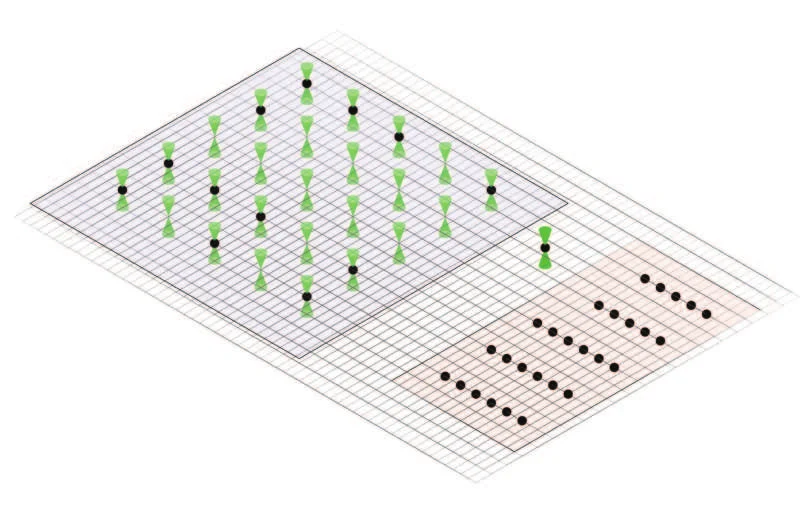
Scientists are increasingly exploring quantum computing to solve complex logistical challenges, and this research details a novel approach to the drone delivery packing problem. Sara Tarquini from Gran Sasso Science Institute, Matteo Vandelli and Francesco Ferrari from Quantum Computing Solutions, Leonardo S.p.A., alongside Daniele Dragoni working with colleagues at both Quantum Computing Solutions, Leonardo S.p.A. and the Hypercomputing Continuum Unit, Leonardo S.p.A., and Francesco Tudisco from Gran Sasso Science Institute and University of Edinburgh, present a hybrid quantum-classical framework utilising a neutral-atom quantum processing unit. They reformulate the delivery problem as a graph-partitioning task, leveraging the unique capabilities of neutral-atom quantum computers to encode constraints and efficiently explore potential solutions. This work is significant because it demonstrates the potential for quantum algorithms to optimise real-world delivery schedules, offering a pathway towards more efficient and scalable drone delivery networks, and showcases promising results from experiments conducted on up to 100 atoms on the Fresnel QPU. Solving complex delivery problems, such as optimising drone routes, could become far more efficient with this technology. This demonstration offers a practical application for emerging quantum processors, moving beyond theoretical possibilities. Researchers are applying the principles of quantum computing to a practical logistical challenge: optimising drone delivery routes. This work details a hybrid quantum-classical approach to the Drone Delivery Packing Problem, a complex task involving assigning deliveries to drones with limited battery life and time windows. By reformulating the problem as a graph partitioning exercise based on independent sets, the team successfully demonstrated a method for finding efficient delivery schedules. The core innovation lies in using a neutral-atom quantum processing unit (QPU) to genera

Quantum ZeitgeistLoading...0
Phoenix and Quantum Technology: Arizona’s Industrial Bet on the Quantum Economyquantum-computing

Phoenix and Quantum Technology: Arizona’s Industrial Bet on the Quantum Economy

Insider Brief Officials, investors, manufacturers and researchers met in Phoenix to assess how the region could build a manufacturing-centered quantum ecosystem, signaling a shift in focus from research breakthroughs to long-term system production. Discussions highlighted Arizona’s expanding semiconductor and advanced materials base — including epitaxial wafer manufacturing and photonic chip fabrication at ASU Research Park — as foundational infrastructure for future quantum hardware supply chains. Participants framed Phoenix as entering a preparatory phase similar to early aerospace and semiconductor hubs, positioning the region to support large-scale deployment and trusted manufacturing once quantum technologies mature. Image: Lawrence Semiconductor process engineer inspecting an isotopically enriched silicon-28 epitaxial wafer produced at the company’s Tempe, Arizona facility. The company’s capabilities support low-defect, spin-coherent materials platforms for silicon spin-qubit research and quantum device development. Over two days in Phoenix this week, local officials, manufacturers, researchers, international partners and representatives from the U.S. Air Force met across a series of roundtables and meetings to discuss what it would take to build a regional quantum ecosystem. The visit, led by Matt Cimaglia, founder and managing partner of Quantum Coast Capital, and senior advisor Dan Hart, included discussions at the Greater Phoenix Economic Council and concluded with remarks at the Phoenix Sister Cities annual Global Links Business Luncheon. The conversations frequently returned to a comparison that has begun surfacing in policy circles: the early space industry and the emerging quantum technology sector may follow similar geographic patterns. Matt Cimaglia, left, and Dan Hart, right, speak during the Phoenix Sister Cities Global Links Business Luncheon at Monroe Street Abbey on Feb. 19, 2026, in downtown Phoenix. The implication is less about where breakthr

Quantum DailyLoading...0
Faster Network Algorithms Boost Data Transfer Efficiencyquantum-computing

Faster Network Algorithms Boost Data Transfer Efficiency

Scientists investigate fundamental limits of communication in distributed computing networks, presenting new algorithms for leader election, broadcast, Minimum Spanning Tree construction, and Breadth-First Search. Fabien Dufoulon from the School of Computing and Communications at Lancaster University, Frédéric Magniez from Universit e Paris Cit e, CNRS, IRIF, and Gopal Pandurangan from the Department of Computer Science at the University of Houston, working in collaboration, demonstrate near-optimal message complexity for these crucial tasks within the quantum routing model. Their algorithms achieve complexities of for leader election, broadcast, and MST, and for BFS, where n represents the number of nodes and e the number of edges in the network. This research significantly advances the field by establishing tighter bounds than previous work and highlighting a quadratic advantage offered by routing over classical approaches, where a lower bound of typically applies to these problems even with randomised algorithms. The team’s innovative use of walks based on electric networks provides a novel framework for designing efficient distributed algorithms and establishes a powerful technique for proving lower bounds on message complexity. Scientists have devised new algorithms that dramatically reduce communication costs for complex network tasks. These advances achieve near-optimal efficiency for leader election, broadcast communication, and tree construction, requiring fewer messages than previously possible. These algorithms represent a departure from classical approaches, offering the potential for significant efficiency gains in scenarios where communication bandwidth is limited or energy consumption is a concern. The research focuses on optimising message complexity, a critical metric in distributed systems. By leveraging the principles of quantum mechanics, the team developed algorithms that outperform their classical counterparts, particularly for large networks.

Quantum ZeitgeistLoading...0
Batteries Defy Limits with Boosted Charging Powerquantum-computing

Batteries Defy Limits with Boosted Charging Power

Batteries, miniaturised devices capable of storing and releasing energy on demand, present a compelling avenue for technological advancement due to their potential for matching energy and time scales of existing technologies and the intriguing possibility of achieving super-extensive charging power. Anna Pavone, Federico Luigi Cavagnaro, and colleagues from the Universit`a degli studi di Genova and CNR-SPIN demonstrate that a cluster-Ising model, previously thought to preclude such enhanced scaling when charged via quench protocols, surprisingly exhibits super-extensive charging power across a broad range of system sizes, extending to up to a thousand spins under specific conditions. This research is significant as it reveals a remarkable anomalous scaling arising from super-extensive growth of stored energy, indicating the effect is finite-size dependent and robust even with thermal fluctuations, challenging established limitations in Wigner-Jordan integrable spin chains. One thousand spins, the scale at which this battery design demonstrably stores and releases energy, suggests a new path towards powerful, miniaturised energy storage. It offers a compelling alternative for future device development. Scientists are increasingly focused on quantum batteries, miniaturized devices designed to store and release energy utilising quantum mechanical principles. These batteries promise advantages over conventional energy storage due to their potential to match the energy and time scales of other quantum technologies, alongside the possibility of achieving super-extensive charging power. Recent work challenges the assumption that enhanced scaling is impossible within Wigner-Jordan integrable spin chains when charged using a quantum-quench protocol, demonstrating that an extended cluster-Ising model can exhibit super-extensive charging power across a range of system sizes, extending up to a thousand spins under appropriate conditions. This anomalous scaling stems from a corr

Quantum ZeitgeistLoading...0
Quantum Graphs Learn Data with Fewer Qubitsquantum-computing

Quantum Graphs Learn Data with Fewer Qubits

Graph neural networks offer a potent method for analysing graph-structured data, but implementing them on near-term quantum computers presents significant hurdles due to limitations in circuit depth and qubit resources. Armin Ahmadkhaniha and Jake Doliskani, both from the Department of Computing and Software at McMaster University, address this challenge with a novel fully quantum graph convolutional architecture tailored for the noisy intermediate-scale quantum (NISQ) era. Their research introduces an edge-local and qubit-efficient quantum message-passing mechanism, inspired by the Quantum Alternating Operator Ansatz (QAOA), that decomposes complex operations into simpler, hardware-native gate operations. This innovative design substantially reduces qubit requirements, from n to log(n) for a graph with n nodes, and allows implementation on existing quantum devices irrespective of graph size, representing a crucial step towards scalable quantum machine learning and unlocking the potential for unsupervised node representation learning on complex datasets. Complex networks underpin many real-world systems, from social connections to molecular structures. Future quantum computers promise to unlock insights from these networks far beyond the reach of today’s machines, and this advance delivers a quantum architecture that could make that potential a reality, even on the limited hardware available now. Scientists are increasingly turning to quantum computing to address challenges in machine learning, particularly when dealing with complex, graph-structured data. Graphs appear across numerous scientific fields, and extracting useful information from these structures is becoming ever more important. Traditional machine learning methods, such as graph neural networks, face computational limits as graphs grow larger and more complex. Researchers have now developed a fully quantum approach to graph convolutional neural networks, designed to operate within the constraints of to

Quantum ZeitgeistLoading...0
Neutrino Oscillation Experiments Hit Precision Limitsquantum-computing

Neutrino Oscillation Experiments Hit Precision Limits

Scientists are increasingly focused on refining measurements of neutrino oscillation parameters to rigorously test the Pontecorvo-Maki-Nakagawa-Sakata (PMNS) matrix. Claudia Frugiuele, Marco G. Genoni, Michela Ignoti, and Matteo G. A. Paris, all from INFN Sezione di Milano and Dipartimento di Fisica Aldo Pontremoli, Università degli Studi di Milano, present a study investigating the theoretical limits to precision in neutrino oscillation experiments using quantum estimation theory. Their research determines whether current flavour measurements represent the most effective method for extracting oscillation parameters, revealing that while optimal for certain parameters at the first oscillation maximum, significant improvements are possible for others. This work establishes a crucial benchmark for evaluating both fundamental and practical limitations in neutrino physics and offers a quantitative framework to guide the optimisation of future facilities like the planned ESS SB. Can we truly extract all possible information about neutrino behaviour from current experiments. New analysis reveals that existing methods are remarkably effective at measuring some neutrino properties, but fall short when probing others. Understanding these limits will guide the design of the next generation of neutrino detectors and maximise their potential. Scientists investigating neutrino oscillations are now capable of measurements precise enough to rigorously test the underlying physics of these elusive particles. Within the framework of quantum estimation theory, a recent analysis examines whether standard flavor measurements, the only type currently feasible with existing detectors, are the best possible way to determine the parameters governing neutrino behaviour. Calculations of the Quantum Fisher Information (QFI) and the classical Fisher Information (FI) were performed, considering muon and electron antineutrino beams propagating in a vacuum. These calculations assessed the potentia

Quantum ZeitgeistLoading...0
Scaleway & AQT Launch European Quantum Computing Partnership, February 2026quantum-computing

Scaleway & AQT Launch European Quantum Computing Partnership, February 2026

Alpine Quantum Technologies (AQT) and Scaleway announced today, February 20, 2026, a partnership to deliver European quantum computing through cloud access. AQT is integrating its trapped-ion quantum computer, IBEX Q1, directly into Scaleway’s cloud platform, creating a new sovereign quantum infrastructure designed to bolster digital resilience and technological independence. The collaboration will provide access to quantum processing units via Scaleway’s Quantum as a Service (QaaS) platform, available Tuesdays and Wednesdays from 10:00 to 17:00 CET. “Together with Scaleway, AQT offers our customers hands-on access to the best quantum computers in Europe,” said Felix Rohde, Director of Cloud Partnerships and Business Development at AQT. This move significantly expands Europe’s capacity for secure, independent quantum computing and opens new avenues for innovation in fields ranging from logistics to financial modeling. AQT IBEX Q1 Integrates with Scaleway’s European Quantum as a Service The arrival of the IBEX Q1 trapped-ion quantum computer within Scaleway’s cloud infrastructure marks a significant step toward a fully sovereign quantum ecosystem in Europe, offering unprecedented access to advanced quantum processing capabilities. Crucially, the IBEX Q1 can be accessed and programmed using familiar quantum software packages like Qiskit, Cirq, and Pennylane, lowering the barrier to entry for those eager to explore quantum computation. Availability is specifically scheduled for Tuesdays and Wednesdays between 10:00 and 17:00 CET, accommodating the working hours of European-based customers. This strategic timing reflects a commitment to practical usability and seamless integration into existing workflows. Valentin Macheret, Engineering Manager, Quantum Technologies at Scaleway, highlights the technical advantages of the collaboration, noting that AQT’s approach “offers remarkable fidelity and unique all-to-all connectivity, which are critical for running complex and dee

Quantum ZeitgeistLoading...0
Entanglement Boosts Machine Learning of Quantum Systemsquantum-computing

Entanglement Boosts Machine Learning of Quantum Systems

Researchers are increasingly focused on accurately approximating complex Hamiltonian dynamics with simplified, effective models, a crucial challenge at the intersection of Hamiltonian learning and simulation. Ayaka Usui, Guillermo Abad-López, and Hari krishnan SV, working with colleagues at the Universitat Autònoma de Barcelona and ICREA, demonstrate a novel approach to improve the performance of quantum generative adversarial networks (QGANs) in this area. Their work addresses the common issue of training plateaus and local minima that often limit QGAN scalability. By introducing an entanglement-assisted learning strategy, coupling a randomly initialized auxiliary qubit during training, the team significantly enhances learning performance, offering a promising pathway towards more efficient and robust Hamiltonian dynamics simulations. Complex molecular simulations, essential for materials science and drug design, could become dramatically faster with improved quantum algorithms. Entanglement-assisted learning offers a potential solution to longstanding challenges in quantum machine learning, stabilising the training process and bringing practical quantum simulation closer to reality. Scientists are increasingly focused on methods for approximating complex quantum systems with simpler, more manageable models, a pursuit at the intersection of quantum Hamiltonian learning and quantum simulation. Recent work demonstrates that quantum generative adversarial networks, or QGANs, can outperform traditional approaches to this approximation, such as the Trotter method. However, training these QGANs presents challenges, including optimisation difficulties and a tendency to get stuck in suboptimal solutions as the system grows in complexity. A new entanglement-assisted learning strategy offers a potential solution, coupling a randomly initialised auxiliary qubit to the learning process at an intermediate stage. This addition introduces a beneficial interaction between randomis

Quantum ZeitgeistLoading...0
Symmetries Greatly Simplify Quantum Algorithm Complexityquantum-computing

Symmetries Greatly Simplify Quantum Algorithm Complexity

Scientists are increasingly focused on optimising the Quantum Approximate Optimisation Algorithm (QAOA) to unlock its full potential for solving complex computational problems. Boris Tsvelikhovskiy from the University of California, Riverside, Bao Bach and Jose Falla from the University of Delaware, working with Ilya Safro and colleagues from both the University of Delaware’s Departments of Computer and Information Sciences and Physics and Astronomy, demonstrate how classical symmetries can be harnessed to significantly improve QAOA’s performance. Their research details the analysis of reduced instances of the MaxCut problem, revealing how fixing a single variable can dramatically alter the structure of the dynamical Lie algebra, sometimes collapsing its dimension from exponential to quadratic. This discovery not only provides theoretical insights into QAOA’s behaviour but also suggests a practical pathway towards designing more expressive and trainable quantum circuits, potentially overcoming limitations in current quantum hardware. Within a cryostat, cooled to near absolute zero, delicate quantum circuits are carefully prepared for computation. These complex systems promise to solve problems intractable for even the most powerful conventional computers. Understanding how to best use their potential requires a deeper look at the underlying symmetries governing their behaviour. Scientists have demonstrated a close tie between the structure of the dynamical Lie algebra (DLA) generated by Hamiltonians and both the expressivity and trainability of quantum approximate optimisation algorithms (QAOA). This work shows that classical symmetries can be systematically exploited as a design principle for QAOA. Focusing on the MaxCut problem with global bit-flip symmetry, researchers analysed reduced QAOA instances obtained by fixing a single variable and studied how this choice affects the associated DLAs. The structure of the DLAs can change dramatically depending on which va

Quantum ZeitgeistLoading...0
Finite-Temperature Dynamical Phase Diagram of the $2+1$D Quantum Ising Modelquantum-computing

Finite-Temperature Dynamical Phase Diagram of the $2+1$D Quantum Ising Model

--> Quantum Physics arXiv:2602.16772 (quant-ph) [Submitted on 18 Feb 2026] Title:Finite-Temperature Dynamical Phase Diagram of the $2+1$D Quantum Ising Model Authors:Lucas Katschke, Roland C. Farrell, Umberto Borla, Lode Pollet, Jad C. Halimeh View a PDF of the paper titled Finite-Temperature Dynamical Phase Diagram of the $2+1$D Quantum Ising Model, by Lucas Katschke and 4 other authors View PDF HTML (experimental) Abstract:Mapping finite-temperature dynamical phase diagrams of quantum many-body models is a necessary step towards establishing a framework of far-from-equilibrium quantum many-body universality. However, this is quite difficult due, in part, to the severe challenges in representing the volume-law entanglement that is generated under nonequilibrium dynamics at finite temperatures. Here, we address these challenges with an efficient equilibrium quantum Monte Carlo (QMC) framework for computing the finite-temperature dynamical phase diagram. Our method uses energy conservation and the self-thermalizing properties of ergodic quantum systems to determine observables at late times after a quantum quench. We use this technique to chart the dynamical phase diagram of the $2+1$D quantum Ising model generated by quenches of the transverse field in initial thermal states. Our approach allows us to track the evolution of dynamical phases as a function of both the initial temperature and transverse field. Surprisingly, we identify quenches in the ordered phase that cool the system as well as an interval of initial temperatures where it is possible to quench from the paramagnetic (PM) to ferromagnetic (FM) phases. Our method gives access to dynamical properties without explicitly simulating unitary time evolution, and is immediately applicable to other lattice geometries and interacting many-body systems. Finally, we propose a quantum simulation experiment on state-of-the-art digital quantum hardware to directly probe the predicted dynamical phases and their real-t

arXiv Quantum PhysicsLoading...0
Dissipation as a Resource: Synchronization, Coherence Recovery, and Chaos Controlquantum-computing

Dissipation as a Resource: Synchronization, Coherence Recovery, and Chaos Control

--> Quantum Physics arXiv:2602.16817 (quant-ph) [Submitted on 18 Feb 2026] Title:Dissipation as a Resource: Synchronization, Coherence Recovery, and Chaos Control Authors:Debabrata Mondal, Lea F. Santos, S. Sinha View a PDF of the paper titled Dissipation as a Resource: Synchronization, Coherence Recovery, and Chaos Control, by Debabrata Mondal and 2 other authors View PDF HTML (experimental) Abstract:Dissipation is commonly regarded as an obstacle to quantum control, as it induces decoherence and irreversibility. Here we demonstrate that dissipation can instead be exploited as a resource to reshape the dynamics of interacting quantum systems. Using an experimentally realizable Bose-Josephson junction containing two bosonic species, we demonstrate that dissipation enables distinct dynamical behaviors: synchronized phase-locked oscillations, transient chaos with long-time coherence recovery, and steady-state chaos. The emergence of each behavior is determined by experimentally tunable parameters. At weak interactions, the two components synchronize despite dissipation, exhibiting long-lived coherent oscillations reminiscent of a boundary time crystal. Stronger interactions induce a dissipative phase transition into a self-trapped regime accompanied by chaotic dynamics. Remarkably, dissipation regulates the lifetime of chaos and enables the recovery of coherence at long times. By introducing a controlled tilt between the wells, transient chaos can be converted into persistent steady-state chaos. We further show that standard spectral diagnostics fail to distinguish between the two chaotic regimes, revealing that spectral statistics primarily reflect short-time instability. These results establish dissipation as a powerful tool for engineering dynamical phases, restoring quantum coherence, and controlling the duration of chaotic behavior and information scrambling. Subjects: Quantum Physics (quant-ph); Quantum Gases (cond-mat.quant-gas); Statistical Mechanics (cond-mat

arXiv Quantum PhysicsLoading...0