Quantum Annealing: D-Wave Systems & Optimization Applications
Quantum annealing news: D-Wave Advantage systems, optimization problems, hybrid algorithms. QUBO formulations & commercial deployments.
Quantum annealing represents the earliest commercialized form of quantum computing, using quantum fluctuations to find optimal solutions to combinatorial optimization problems. D-Wave Systems has deployed systems with 5,000+ qubits (Advantage processor) accessed via cloud and installed at research institutions, government labs, and corporations.
Unlike gate-based quantum computers that execute algorithmic instructions, quantum annealers solve problems by mapping them onto an Ising model or quadratic unconstrained binary optimization (QUBO) formulation. The quantum processor evolves from a superposition of all possible states toward the ground state of the problem Hamiltonian.
India's Quantum Annealing Landscape
India's enterprise technology sector explores quantum annealing through cloud access to D-Wave systems. The National Quantum Mission focuses primarily on gate-based quantum computing hardware development rather than quantum annealing hardware, but optimization applications using quantum annealing fall under NQM's broader quantum computing applications scope. Tata Consultancy Services (TCS), Infosys, and other IT majors develop quantum optimization solutions for Indian enterprises using hybrid quantum-classical approaches.
Key Advantages
Key advantages include mature commercial technology with 10+ years of cloud availability, massive qubit counts (5,000+), specialization for optimization without requiring full error correction, and established application ecosystems. Limitations include narrow application scope (optimization only), no quantum error correction, and restricted connectivity requiring problem embedding overhead.
Recent Developments
Recent developments include D-Wave's Advantage2 prototype experimenting with higher connectivity (Zephyr topology) and error-reduction techniques.

quantum-computingEnhanced Maximum Independent Set Preparation with Rydberg Atoms Guided by the Spectral Gap
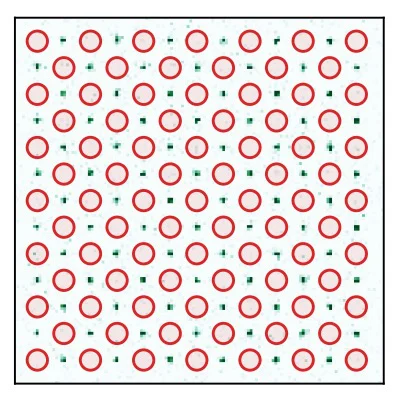
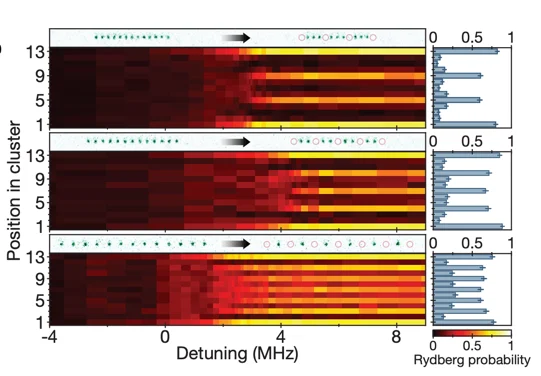
--> Quantum Physics arXiv:2602.17991 (quant-ph) [Submitted on 20 Feb 2026] Title:Enhanced Maximum Independent Set Preparation with Rydberg Atoms Guided by the Spectral Gap Authors:Seokho Jeong, Minhyuk Kim View a PDF of the paper titled Enhanced Maximum Independent Set Preparation with Rydberg Atoms Guided by the Spectral Gap, by Seokho Jeong and 1 other authors View PDF HTML (experimental) Abstract:Adiabatic quantum computation with Rydberg atoms provides a natural route for solving combinatorial optimization problems such as the maximum independent set (MIS). However, its performance is fundamentally limited by the reduction of the spectral gap with increasing system size and connectivity, which induces population leakage from the ground state during finite-time evolution. Here we introduce the Adjusted Detuning for Ground-Energy Leakage Blockade (ADGLB), a spectral-gap-guided schedule engineering method that modifies the laser detuning profile to suppress leakage without introducing additional Hamiltonian terms or iterative optimization loops. We experimentally benchmark ADGLB on a quasi-one-dimensional chain of $N=10$ atoms, and the MIS preparation probability increases substantially compared with the standard adiabatic schedule. Furthermore, we show that the schedule optimized for smaller instances can be directly applied to larger two-dimensional triangular lattices with $N=25$ and $N=37$. With a small heuristic offset, the method also remains effective for instances with higher hardness parameters. These findings demonstrate that spectral-gap-guided schedule engineering offers a scalable and hardware-efficient strategy for enhancing adiabatic quantum optimization on neutral-atom platforms. Subjects: Quantum Physics (quant-ph) Cite as: arXiv:2602.17991 [quant-ph] (or arXiv:2602.17991v1 [quant-ph] for this version) https://doi.org/10.48550/arXiv.2602.17991 Focus to learn more arXiv-issued DOI via DataCite (pending registration) Submission history
arXiv Quantum PhysicsLoading...0
quantum-computingIonQ vs. D-Wave: Which Quantum Stock Has the Clearer Path to Growth in 2026? - Nasdaq
IonQ vs. D-Wave: Which Quantum Stock Has the Clearer Path to Growth in 2026? Nasdaq
Google News – Quantum ComputingLoading...0
quantum-computingIonQ vs. D-Wave: Which Quantum Stock Has the Clearer Path to Growth in 2026? - The Motley Fool
IonQ vs. D-Wave: Which Quantum Stock Has the Clearer Path to Growth in 2026? The Motley Fool
Google News – Quantum ComputingLoading...0
quantum-computingBatteries Defy Limits with Boosted Charging Power
Batteries, miniaturised devices capable of storing and releasing energy on demand, present a compelling avenue for technological advancement due to their potential for matching energy and time scales of existing technologies and the intriguing possibility of achieving super-extensive charging power. Anna Pavone, Federico Luigi Cavagnaro, and colleagues from the Universit`a degli studi di Genova and CNR-SPIN demonstrate that a cluster-Ising model, previously thought to preclude such enhanced scaling when charged via quench protocols, surprisingly exhibits super-extensive charging power across a broad range of system sizes, extending to up to a thousand spins under specific conditions. This research is significant as it reveals a remarkable anomalous scaling arising from super-extensive growth of stored energy, indicating the effect is finite-size dependent and robust even with thermal fluctuations, challenging established limitations in Wigner-Jordan integrable spin chains. One thousand spins, the scale at which this battery design demonstrably stores and releases energy, suggests a new path towards powerful, miniaturised energy storage. It offers a compelling alternative for future device development. Scientists are increasingly focused on quantum batteries, miniaturized devices designed to store and release energy utilising quantum mechanical principles. These batteries promise advantages over conventional energy storage due to their potential to match the energy and time scales of other quantum technologies, alongside the possibility of achieving super-extensive charging power. Recent work challenges the assumption that enhanced scaling is impossible within Wigner-Jordan integrable spin chains when charged using a quantum-quench protocol, demonstrating that an extended cluster-Ising model can exhibit super-extensive charging power across a range of system sizes, extending up to a thousand spins under appropriate conditions. This anomalous scaling stems from a corr
Quantum ZeitgeistLoading...0
quantum-computingD-Wave Joins Southeastern Quantum Collaborative as Inaugural Member
Insider Brief D-Wave Quantum Inc. has joined the Southeastern Quantum Collaborative (SQC) as an inaugural member to support regional quantum technology advancement and workforce development. The SQC brings together academia, industry, and government — including The University of Alabama in Huntsville, Davidson Technologies, IBM, and Alabama A&M University — to accelerate quantum information science applications across the Southeastern U.S. With a D-Wave Advantage2 system hosted at Davidson’s Huntsville headquarters, the collaboration aims to support workforce training and defense-oriented quantum use cases in the region. PRESS RELEASE — D-Wave Quantum Inc. (NYSE: QBTS) (“D-Wave” or the “Company”), the only dual-platform quantum computing company, providing both annealing and gate-model systems, software and services, today joined the Southeastern Quantum Collaborative (SQC) as an inaugural member, along with The University of Alabama in Huntsville, Davidson Technologies, IBM and Alabama A&M University. The SQC will bring together academia, industry and government to accelerate the advancement and application of quantum information science and technology across the Southeast. In addition, it aims to develop the quantum-ready workforce needed to commercialize the technology. Given Davidson hosts a D-Wave Advantage2TM system at its headquarters in Huntsville, Alabama, D-Wave is well positioned to support the SQC’s quantum workforce development efforts. “Alabama has long been a leader in the development and use of advanced technologies, and D-Wave is excited to join the Southeastern Quantum Collaborative as an inaugural member to support the next wave of innovation coming from the region — quantum computing,” said Jack Sears, vice president of government business solutions at D-Wave. “Establishing a globally competitive, quantum-ready workforce across the Southeast — capable of operationalizing annealing and gat
Quantum DailyLoading...0
quantum-computingFinite-Temperature Dynamical Phase Diagram of the $2+1$D Quantum Ising Model
--> Quantum Physics arXiv:2602.16772 (quant-ph) [Submitted on 18 Feb 2026] Title:Finite-Temperature Dynamical Phase Diagram of the $2+1$D Quantum Ising Model Authors:Lucas Katschke, Roland C. Farrell, Umberto Borla, Lode Pollet, Jad C. Halimeh View a PDF of the paper titled Finite-Temperature Dynamical Phase Diagram of the $2+1$D Quantum Ising Model, by Lucas Katschke and 4 other authors View PDF HTML (experimental) Abstract:Mapping finite-temperature dynamical phase diagrams of quantum many-body models is a necessary step towards establishing a framework of far-from-equilibrium quantum many-body universality. However, this is quite difficult due, in part, to the severe challenges in representing the volume-law entanglement that is generated under nonequilibrium dynamics at finite temperatures. Here, we address these challenges with an efficient equilibrium quantum Monte Carlo (QMC) framework for computing the finite-temperature dynamical phase diagram. Our method uses energy conservation and the self-thermalizing properties of ergodic quantum systems to determine observables at late times after a quantum quench. We use this technique to chart the dynamical phase diagram of the $2+1$D quantum Ising model generated by quenches of the transverse field in initial thermal states. Our approach allows us to track the evolution of dynamical phases as a function of both the initial temperature and transverse field. Surprisingly, we identify quenches in the ordered phase that cool the system as well as an interval of initial temperatures where it is possible to quench from the paramagnetic (PM) to ferromagnetic (FM) phases. Our method gives access to dynamical properties without explicitly simulating unitary time evolution, and is immediately applicable to other lattice geometries and interacting many-body systems. Finally, we propose a quantum simulation experiment on state-of-the-art digital quantum hardware to directly probe the predicted dynamical phases and their real-t
arXiv Quantum PhysicsLoading...0
quantum-computingWhen Does Quantum Annealing Outperform Classical Methods? A Gradient Variance Framework
--> Quantum Physics arXiv:2602.16875 (quant-ph) [Submitted on 18 Feb 2026] Title:When Does Quantum Annealing Outperform Classical Methods? A Gradient Variance Framework Authors:Vishwajeet Ohal, Pierre Boulanger View a PDF of the paper titled When Does Quantum Annealing Outperform Classical Methods? A Gradient Variance Framework, by Vishwajeet Ohal and Pierre Boulanger View PDF HTML (experimental) Abstract:Based on our experimental findings, we propose the following decision framework for practitioners. Quantum annealing is recommended when the problem formulation QUBO exhibits a high gradient variance (greater than 0.3) and the energy landscape contains numerous thin barriers characterized by sharp peaks and narrow valleys. Additionally, quantum approaches are particularly suitable when classical methods are observed to get trapped in local minima, the problem size is manageable given hardware constraints (less than 5000 variables for pure quantum annealing), and the time overhead of approximately 10 seconds is acceptable for the application. In contrast, classical methods are recommended when the gradient variance is low (less than 0.2), indicating smooth landscapes where quantum tunneling provides little advantage. Classical approaches are also preferable when the problem size is small and classical solvers can provide nearly instantaneous results, when solution quality requirements are modest and local optima suffice, or when hardware access or cost is a limiting factor. For problems that exceed pure quantum capacity but possess a favorable landscape structure, hybrid approaches combining quantum and classical techniques are recommended. Such hybrid methods are particularly effective when decomposition quality can be verified and both solution quality and scalability are important considerations. Subjects: Quantum Physics (quant-ph) Cite as: arXiv:2602.16875 [quant-ph] (or arXiv:2602.16875v1 [quant-ph] for this version) https://doi.org/10.48550/arXi
arXiv Quantum PhysicsLoading...0
quantum-computingHere's the Quantum Computing Stock Wall Street Loves the Most (Hint: It's Not IonQ or Rigetti)
By Johnny Rice – Feb 19, 2026 at 9:00PM ESTKey PointsMost institutional investment in quantum pure plays comes from passive index funds, not active conviction buying.IonQ, Rigetti, and D-Wave face survival risk if quantum timelines stretch longer than bulls expect.Alphabet offers quantum exposure backed by $73 billion in annual free cash flow and a dominant core business.We’re bullish on these 10 stocks ›NASDAQ: GOOGLAlphabetMarket Cap$3.7TToday's Changeangle-down(-0.16%) $0.48Current Price$302.85Price as of February 19, 2026 at 4:00 PM ETQuantum stocks soared in 2025, but the "smart money" isn't buying the hype.Quantum computing stocks had an incredible 2025. IonQ, Rigetti Computing, and D-Wave Quantum delivered the kind of returns that make investors who missed out feel queasy. But for all the hype, there's something quantum bulls don't love to admit: The "smart money" isn't convinced. Wall Street's exposure to the pure-play quantum computing stocks that dominate Reddit threads and YouTube thumbnails is limited. Most institutional buying in quantum pure plays isn't what it looks like Yes, institutional investment in the sector rose dramatically last year, but most of that capital flowed in from passive exchange-traded fund (ETF) and index fund managers, not active hedge funds. When you see that BlackRock "owns" 30 million shares of IonQ, it's easy to misunderstand this as implying BlackRock likes the stock. It doesn't. Instead, it reflects mechanical buying driven by IonQ's inclusion in an index like the Russell 2000. This passive buying is responsible for the vast majority of Wall Street activity in quantum pure plays, but even the active side of things is misleading. Most of these are hedge funds that trade on momentum, looking to take advantage of short-term trends. They're not buying with conviction and holding for the long term. It's easy to see why. Image source: Getty Images. The numbers don't lie Rigetti posted $1.95 million in revenue last quart
The Motley FoolLoading...0
quantum-computingD-Wave Integrates into SQC to Drive Regional Quantum Hardware Deployment
D-Wave Integrates into SQC to Drive Regional Quantum Hardware Deployment D-Wave Quantum Inc. (NYSE: QBTS) has been named an inaugural member of the Southeastern Quantum Collaborative (SQC), joining a consortium that includes the University of Alabama in Huntsville (UAH), Davidson Technologies, IBM, and Alabama A&M University. The collaboration is structured to synchronize academic and industrial efforts in quantum information science (QIS) across the Southeastern United States, focusing on the development of field-ready quantum capabilities. Central to this integration is the D-Wave Advantage2™ annealing system, currently operational at Davidson Technologies’ Huntsville facility. This infrastructure provides the collaborative with the hardware necessary to develop and test quantum-powered applications for mission planning and large-scale operational optimization. By utilizing local hardware, the SQC aims to reduce the latency between theoretical research and the deployment of quantum solutions in defense, logistics, and energy sectors. The SQC serves as a framework for building a specialized workforce capable of managing both annealing and gate-model quantum technologies. This initiative leverages the region’s existing defense and manufacturing base to create an ecosystem for quantum innovation. The partnership’s objective is to establish the Southeast as a primary hub for operational quantum computing, supporting the technical requirements of both public and private sector stakeholders. For further technical details, view the official press release from D-Wave here or explore the Southeastern Quantum Collaborative’s research priorities at UAH here. February 19, 2026 Mohamed Abdel-Kareem2026-02-19T16:27:15-08:00 Leave A Comment Cancel replyComment Type in the text displayed above Δ This site uses Akismet to reduce spam. Learn how your comment data is processed.
Quantum Computing ReportLoading...0
quantum-computingTrybe Capital Loads Up D-Wave Quantum With 1.9 Million Shares Bought
D-Wave Quantum provides quantum computing systems and cloud-based solutions for enterprises tackling complex computational challenges.On February 17, 2026, Trybe Capital Management LP disclosed a new position in the quantum computing stock D-Wave Quantum (QBTS +1.63%).What happenedAccording to a Securities and Exchange Commission (SEC) filing dated February 17, 2026, Trybe Capital Management LP initiated a new position in D-Wave Quantum by purchasing 1,936,922 shares. The estimated value of this transaction, based on the quarter’s average pricing, is $50.65 million. The stake’s value at the end of the quarter was also $50.65 million, reflecting the new share purchase.What else to knowThis new position comprises 7.25% of Trybe Capital’s 13F reportable assets under management as of December 31, 2025.Top five holdings after the filing:NASDAQ: NVDA: $145.60 million (26.2% of AUM)NASDAQ: LRCX: $81.87 million (11.7% of AUM)NASDAQ: GOOGL: $78.07 million (11.2% of AUM)NYSE: TSM: $61.47 million (8.8% of AUM)NASDAQ: AMZN: $51.39 million (7.4% of AUM)As of February 13, 2026, D-Wave Quantum shares were priced at $19.67, up 202.6% over the past year, outperforming the S&P 500 by 190.82 percentage points.Company overviewMetricValuePrice (as of market close 2/13/26)$19.67Market Capitalization$6.89 billionRevenue (TTM)$24.14 millionNet Income (TTM)($398.81 million)Company snapshotOffers quantum computing systems (Advantage), cloud-based quantum access (Leap), open-source programming tools (Ocean), and professional onboarding services (Launch and D-Wave Launch).Offers quantum computing hardware, cloud-based quantum computing access, software solutions, and enterprise professional services.Serves enterprise clients in manufacturing, logistics, financial services, life sciences, and sectors seeking advanced computational solutions.D-Wave Quantum is a leading provider of quantum computing systems and cloud-based quantum solutions, with a focus on enterprise adoption across multiple
The Motley FoolLoading...0
quantum-computingD-Wave Joins Southeastern Quantum Collaborative as an Inaugural Member
PALO ALTO, Calif. – February 19, 2026 — D-Wave Quantum Inc. today joined the Southeastern Quantum Collaborative (SQC) as an inaugural member, along with The University of Alabama in Huntsville, Davidson Technologies, IBM and Alabama A&M University. The SQC will bring together academia, industry and government to accelerate the advancement and application of quantum information science and technology across the Southeast. In addition, it […] The post D-Wave Joins Southeastern Quantum Collaborative as an Inaugural Member appeared first on Inside HPC & AI News | High-Performance Computing & Artificial Intelligence.
InsideHPC QuantumLoading...0
quantum-computingQuantum ‘magic’ Linked to Critical Shifts in Systems
Scientists are increasingly recognising nonstabilizerness, a key resource for universal computation, as crucial to understanding complex quantum systems. Andrew Hallam, Ryan Smith, and Zlatko Papić, all from the School of Physics and Astronomy at the University of Leeds, have developed a novel spectral transfer-matrix framework to investigate this phenomenon within infinite matrix product states. Their work reveals universal subleading information within the spectrum of the stabilizer Rényi entropy, identifying a distinct SRE correlation length that diverges at continuous phase transitions and dictates the spatial response to local perturbations. By deriving exact SRE expressions for the cluster-Ising model and performing numerical analysis, the researchers demonstrate that nonstabilizerness provides a new and powerful means of detecting criticality and understanding the impact of local disturbances in quantum systems. Understanding the limits of computation demands fresh ways to characterise complex systems. New work offers a powerful technique for detecting critical points, moments of dramatic change, within these systems, revealing how a system’s inherent computational power relates to its response to even minor disturbances. Scientists have uncovered a new way to measure “magic”, a key resource for advanced quantum computation, within complex quantum systems. This work details how nonstabilizerness, the property enabling universal quantum gates beyond standard operations, behaves particularly close to critical points where materials undergo phase transitions. Specifically, they identified a unique SRE correlation length, differing from conventional measures, that expands dramatically at these critical transitions and dictates how the SRE responds to localised disturbances. Exact SRE calculations for a simplified “skeleton” of the cluster-Ising model, alongside numerical investigations, demonstrate that nonstabilizerness provides a novel perspective on the connec
Quantum ZeitgeistLoading...0
quantum-computingAI Discovers Phase Transitions with 0.01% Accuracy
Researchers are developing increasingly sophisticated methods to identify phase transitions, crucial phenomena governing material behaviour, and a new study led by Brandon Yee, Wilson Collins and Maximilian Rutkowski, all from the Physics Lab, Yee Collins Research Group, details a significant advance in this field. Their work extends the Prometheus framework, enabling unsupervised discovery of phase transitions not only in two-dimensional classical systems, but also in three dimensions and, crucially, into the realm of quantum mechanics. This collaborative effort demonstrates the ability to accurately pinpoint critical temperatures and extract exponents for the 3D Ising model, and to detect exotic criticality in disordered quantum systems, achieving up to 2% accuracy in critical point detection. By systematically validating their approach across diverse physical domains, the team establishes a robust and generalisable tool for exploring complex phase diagrams where analytical solutions remain elusive, opening new avenues for materials discovery and fundamental physics research. A powerful new technique for finding hidden changes in complex systems, from magnetism to quantum materials, has been developed by scientists. The method automatically identifies critical points, moments where a material’s behaviour fundamentally alters, without needing prior knowledge of the physics involved, offering a route to understanding previously inaccessible phenomena and accelerating materials discovery. Researchers have extended a machine learning framework, named Prometheus, to identify phase transitions not only in complex three-dimensional classical systems but also in quantum materials. This addresses a long-standing challenge in condensed matter physics: discovering and characterising transitions without relying on prior knowledge or analytical solutions. Previous approaches often required pre-labelled data or manual intervention, limiting their ability to uncover genuinely ne
Quantum ZeitgeistLoading...0
quantum-computingPalm Beach Economic Group Secures $1M Federal Grant for Quantum Workforce Efforts
Insider Brief The Business Development Board of Palm Beach County has received $1.031 million in federal funding secured by Lois Frankel to support workforce development and regional coordination in quantum technologies. Palm Beach State College was awarded more than $2 million in federal funding to establish a Quantum Innovation Center focused on education, research, and industry collaboration in quantum computing and AI. The funding builds on recent regional milestones, including D-Wave Quantum Inc.’s headquarters relocation to Boca Raton and Florida Atlantic University’s $20 million acquisition of a D-Wave quantum computer. PRESS RELEASE — The Business Development Board of Palm Beach County (BDB) has been awarded $1,031,000 in federal funding secured by U.S. Representative Lois Frankel – the largest federal grant in the organization’s history – to advance workforce development and regional coordination in quantum technologies as part of a broader effort to build a regional quantum ecosystem through programming initiatives. The funding was announced this morning at a press conference with Congresswoman Frankel, Business Development Board President and CEO Kelly Smallridge, Palm Beach State College President Ava Parker, and many public and private sector partners at Palm Beach State College’s Historic Building in West Palm Beach. The investment will further align business, education, and economic development strategies as Palm Beach County strengthens its position in advanced technology industries. Palm Beach State College also received more than $2 million in federal funding to support the creation of the Quantum Innovation Center, a transformative hub for education, research, and industry collaboration that will be located in the College’s Historic Building in downtown West Palm Beach. The new center will serve as a regional hub for research and workforce training in quantum computing, artificial intelligence, and related high-tech fields. Together, these investm
Quantum DailyLoading...0
quantum-computingD-Wave (NYSE: QBTS) Schedules Q4 & FY2025 Earnings Release
D-Wave Quantum Inc. (NYSE: QBTS) announced it will release its fourth quarter and full fiscal year 2025 financial results on February 26, 2026, before market open. The company, uniquely positioned as the only provider of both annealing and gate-model quantum computing systems, will detail its performance for the period ended December 31, 2025. A conference call at 8:00 a.m. (Eastern Time) featuring Chief Executive Officer Dr. Alan Baratz and Chief Financial Officer John Markovich will follow the release, discussing both financial results and the company’s future outlook. D-Wave, serving over 100 organizations across commercial, government, and research, continues to lead in delivering enterprise-grade quantum solutions, including its Leap™ quantum cloud service boasting 99.9% availability. D-Wave Announces February 26, 2026 Financial Results Release D-Wave Quantum Inc. The company, a pioneer in quantum computing, reports its financial year ended December 31, 2025, at this time, making it a key date for investors tracking the burgeoning quantum landscape. D-Wave distinguishes itself as the “only dual-platform quantum computing company,” offering both annealing and gate-model systems alongside associated software and services. The financial release will be accessible via the D-Wave Investor Relations website at https://ir.dwavesys.com/. A conference call is scheduled for 8:00 a.m. (Eastern Time) on February 26, 2026, to elaborate on the results and future outlook, with dial-in numbers 1-844-826-3035 (domestic) and 1-412-317-5195 (international) available, or a link for instant access. Chief Executive Officer Dr. Dual-Platform Quantum Computing Systems & Leap™ Cloud Service D-Wave Quantum Inc. distinguishes itself by offering a unique approach to quantum computing, providing both annealing and gate-model systems—a capability no other company currently matches. This dual-platform strategy allows users to explore different quantum paradigms, potentially optimizing so
Quantum ZeitgeistLoading...0
quantum-computingPalm Beach County Receives $1M Federal Funding to Expand Quantum Ecosystem
Palm Beach County Receives $1M Federal Funding to Expand Quantum Ecosystem The Business Development Board of Palm Beach County (BDB) has been awarded $1,031,000 in federal funding to facilitate regional coordination and workforce development in quantum technologies. Secured by U.S. Representative Lois Frankel, the investment is designed to align business, education, and economic development strategies to support a growing cluster of high-tech industries. Simultaneously, Palm Beach State College (PBSC) received more than $2 million in federal funding to support the creation of a Quantum Innovation Center in West Palm Beach, which will serve as a regional hub for research and specialized training in quantum computing and artificial intelligence. The Quantum Innovation Center at PBSC will be located in the college’s Historic Building and is intended to foster collaboration between researchers and private industry. This federal support follows a recent $4.95 million award from the Florida Job Growth Grant Fund, further expanding the infrastructure for high-tech workforce development in the region. These combined investments are part of a broader programming initiative to prepare students for technical careers while strengthening the local innovation economy through structured academic and regional partnerships. This funding coincides with several industry milestones in the region, including the relocation of D-Wave Quantum Inc.’s corporate headquarters to Boca Raton and Florida Atlantic University’s $20 million acquisition of a D-Wave quantum computer. The BDB is working with academic leaders and private sector partners, such as Quantum Coast Capital, to integrate these corporate and research assets into a cohesive technological corridor. These efforts are part of a long-term strategy to establish Palm Beach County as an emerging center for quantum and advanced technology development. For further details, view the official announcement from the Business Development Boar
Quantum Computing ReportLoading...0
quantum-computingAnnealing Techniques Offer Gains for Complex Airline Scheduling Problems
Scientists are increasingly focused on optimising complex logistical challenges, and airline fleet assignment represents a particularly demanding example of such a problem. Kuntal Adak, Sakshi Kaushik, and Rahul Rana, all from Tata Consultancy Services, present a comparative study of classical binary and integer programming models against quantum annealing techniques for solving this critical task. Their collaborative research rigorously assesses the performance of both approaches, revealing the potential benefits of quantum annealing for specific problem scales while acknowledging existing technological constraints. This work is significant because it contributes valuable insights into the viability of quantum computing for real-world airline operations, potentially leading to substantial improvements in efficiency and cost reduction within the aviation sector. The demand on each flight is considered while adhering to a set of operational constraints. This study explores two distinct mathematical formulations of the Flight Assignment Problem (FAP): a Binary Linear Programming (BLP) model and an Integer Linear Programming (ILP) model. These models are addressed using both SCIP (Solving Constraint Integer Programs) and Quantum Annealers to assess their efficacy in solving this complex problem. The integer model incorporates aircraft balance constraint to track the number of aircraft at a particular location at the end of the day to reuse them. Exponential search space growth and cost optimisation in fleet assignment modelling Initial results demonstrate a clear relationship between problem size and computational efficiency when applying quantum annealing and SCIP solvers to the fleet assignment problem. Specifically, the study establishes that the search space for multi-day fleet type assignment grows exponentially, represented as O ηM, where η signifies the number of fleet types and M denotes the total number of flights across all days. This formulation underscores
Quantum ZeitgeistLoading...0
quantum-computingQuantum Computing Stocks IonQ, Rigetti Computing, and D-Wave Quantum Have Issued a Can't-Miss $615 Million Warning to Wall Street - Nasdaq
Quantum Computing Stocks IonQ, Rigetti Computing, and D-Wave Quantum Have Issued a Can't-Miss $615 Million Warning to Wall Street Nasdaq
Google News – Quantum ComputingLoading...0Quantum Computing Stocks IonQ, Rigetti Computing, and D-Wave Quantum Have Issued a Can't-Miss $615 Million Warning to Wall Street - The Motley Fool
Quantum Computing Stocks IonQ, Rigetti Computing, and D-Wave Quantum Have Issued a Can't-Miss $615 Million Warning to Wall Street The Motley Fool
Google News – Quantum ComputingLoading...0
quantum-computingSpectral signatures of nonstabilizerness and criticality in infinite matrix product states
--> Quantum Physics arXiv:2602.15116 (quant-ph) [Submitted on 16 Feb 2026] Title:Spectral signatures of nonstabilizerness and criticality in infinite matrix product states Authors:Andrew Hallam, Ryan Smith, Zlatko Papić View a PDF of the paper titled Spectral signatures of nonstabilizerness and criticality in infinite matrix product states, by Andrew Hallam and 2 other authors View PDF Abstract:While nonstabilizerness (''magic'') is a key resource for universal quantum computation, its behavior in many-body quantum systems, especially near criticality, remains poorly understood. We develop a spectral transfer-matrix framework for the stabilizer Rényi entropy (SRE) in infinite matrix product states, showing that its spectrum contains universal subleading information. In particular, we identify an SRE correlation length -- distinct from the standard correlation length -- which diverges at continuous phase transitions and governs the spatial response of the SRE to local perturbations. We derive exact SRE expressions for the bond dimension $\chi=2$ MPS ''skeleton'' of the cluster-Ising model, and we numerically probe its universal scaling along the $\mathbb{Z}_2$ critical lines in the phase diagram. These results demonstrate that nonstabilizerness captures signatures of criticality and local perturbations, providing a new lens on the interplay between computational resources and emergent phenomena in quantum many-body systems. Comments: Subjects: Quantum Physics (quant-ph) Cite as: arXiv:2602.15116 [quant-ph] (or arXiv:2602.15116v1 [quant-ph] for this version) https://doi.org/10.48550/arXiv.2602.15116 Focus to learn more arXiv-issued DOI via DataCite Submission history From: Ryan Smith [view email] [v1] Mon, 16 Feb 2026 19:00:04 UTC (2,236 KB) Full-text links: Access Paper: View a PDF of the paper titled Spectral signatures of nonstabilizerness and criticality in infinite matrix product states, by Andrew Hallam and 2 other authorsView PDFTeX Source view li
arXiv Quantum PhysicsLoading...0