Quantum Machine Learning: QML Algorithms & Quantum AI Applications
Quantum machine learning news: QML algorithms, quantum AI, quantum neural networks. Hybrid quantum-classical ML & quantum advantage research.
Quantum machine learning (QML) explores intersections between quantum computing and artificial intelligence, investigating whether quantum algorithms can accelerate data analysis, pattern recognition, and model training beyond classical capabilities.
Theoretical foundations include quantum advantages for linear algebra subroutines central to machine learning—matrix inversion, principal component analysis, and vector inner products. The HHL algorithm promises exponential speedup for specific sparse, well-conditioned systems.
India's Quantum Machine Learning Landscape
India's National Quantum Mission supports quantum machine learning research through its Quantum Computing Thematic Hub at IISc Bengaluru. The Indian Institute of Science offers a Certificate Programme in Quantum Computing and Artificial Intelligence through its Centre for Continuing Education, providing comprehensive training in quantum AI applications with hands-on coding using Qiskit and PennyLane.
Tata Consultancy Services (TCS) develops quantum machine learning algorithms for enterprise applications. Infosys explores quantum AI through its Quantum Living Labs. IIT Delhi offers certification programs in quantum computing and machine learning in collaboration with industry partners.
The NQM targets developing quantum algorithms for optimization, simulation, and machine learning, with human resource development including training programs for quantum professionals.
Current NISQ-era QML relies on hybrid quantum-classical approaches including variational quantum algorithms, quantum neural networks, and quantum kernel methods. Challenges include "barren plateaus" in optimization landscapes limiting trainability, and limited qubit counts restricting model complexity.
quantum-computingAuto Quantum Machine Learning for Multisource Classification
--> Quantum Physics arXiv:2602.18642 (quant-ph) [Submitted on 20 Feb 2026] Title:Auto Quantum Machine Learning for Multisource Classification Authors:Tomasz Rybotycki, Sebastian Dziura, Piotr Gawron View a PDF of the paper titled Auto Quantum Machine Learning for Multisource Classification, by Tomasz Rybotycki and Sebastian Dziura and Piotr Gawron View PDF HTML (experimental) Abstract:With fault-tolerant quantum computing on the horizon, there is growing interest in applying quantum computational methods to data-intensive scientific fields like remote sensing. Quantum machine learning (QML) has already demonstrated potential for such demanding tasks. One area of particular focus is quantum data fusion -- a complex data analysis problem that has attracted significant recent attention. In this work, we introduce an automated QML (AQML) approach for addressing data fusion challenges. We evaluate how AQML-generated quantum circuits perform compared to classical multilayer perceptrons (MLPs) and manually designed QML models when processing multisource inputs. Furthermore, we apply our method to change detection using the multispectral ONERA dataset, achieving improved accuracy over previously reported QML-based change detection results. Comments: Subjects: Quantum Physics (quant-ph); Computer Vision and Pattern Recognition (cs.CV); Machine Learning (cs.LG) Cite as: arXiv:2602.18642 [quant-ph] (or arXiv:2602.18642v1 [quant-ph] for this version) https://doi.org/10.48550/arXiv.2602.18642 Focus to learn more arXiv-issued DOI via DataCite (pending registration) Submission history From: Tomasz Rybotycki [view email] [v1] Fri, 20 Feb 2026 22:31:02 UTC (1,407 KB) Full-text links: Access Paper: View a PDF of the paper titled Auto Quantum Machine Learning for Multisource Classification, by Tomasz Rybotycki and Sebastian Dziura and Piotr GawronView PDFHTML (experimental)TeX Source view license Current browse context: quant-ph < prev | next &
arXiv Quantum PhysicsLoading...0
quantum-computingIntegrable cascaded frequency conversion using the time rescaling shortcut to adiabaticity
--> Quantum Physics arXiv:2602.18930 (quant-ph) [Submitted on 21 Feb 2026] Title:Integrable cascaded frequency conversion using the time rescaling shortcut to adiabaticity Authors:J. L. Montenegro Ferreira View a PDF of the paper titled Integrable cascaded frequency conversion using the time rescaling shortcut to adiabaticity, by J. L. Montenegro Ferreira View PDF HTML (experimental) Abstract:In this letter we explore how full frequency conversion can be performed in shorter, integrable devices by using a STIRAP-like protocol modified by the time rescaling shortcut to adiabaticity. We show how the coupled equations for two simultaneous three-wave mixing processes can be written in terms of a STIRAP-like system, which creates robust conversion, albeit requiring long propagation distances inside a bulk crystal or waveguide. We then discuss how the time rescaling (TR) method can be modified to be applied in optical systems, then apply it in the conversion process to create a TR-STIRAP protocol, showing that full conversion is also obtained, but at a fraction of the propagation distance. We also show how the original shaping of the coupling coefficients required by the TR-STIRAP can be approximated by gaussian functions with high conversion fidelity, thus simplifying the experimental implementation. This protocol has the potential to be used in several areas, including the integration of photon sources and efficient detectors for quantum key distribution. Comments: Subjects: Quantum Physics (quant-ph); Optics (physics.optics) Cite as: arXiv:2602.18930 [quant-ph] (or arXiv:2602.18930v1 [quant-ph] for this version) https://doi.org/10.48550/arXiv.2602.18930 Focus to learn more arXiv-issued DOI via DataCite (pending registration) Submission history From: José Lukas Montenegro Ferreira [view email] [v1] Sat, 21 Feb 2026 18:44:08 UTC (2,519 KB) Full-text links: Access Paper: View a PDF of the paper titled Integrable cascaded frequency conversion using the time r
arXiv Quantum PhysicsLoading...0
quantum-computingAWS Quantum Technologies Blog: New QGCA Outperforms Simulated Annealing on Complex Optimization Problems
Amazon Quantum Solutions Lab researchers have announced a new algorithm, the quantum-guided cluster algorithm (QGCA), that outperforms simulated annealing on complex optimization problems. Published on February 12, 2026, by Peter Eder, Aron Kerschbaumer, and colleagues, QGCA utilizes precomputed correlations from quantum optimization algorithms to guide collective spin updates, accelerating the search for effective solutions. The team demonstrated this hybrid workflow on graph instances, showing that quantum-guided clusters explore the solution space more effectively than the classical heuristic, simulated annealing. “The idea is to use quantum information to identify and flip groups of spins (clusters) with a high chance of acceptance,” the researchers explain, highlighting a practical way to leverage quantum-derived structure for challenging optimization problems with constraints. Quantum-Guided Cluster Algorithms Enhance Optimization Performance Leveraging correlations gleaned from quantum computations enhances optimization performance, according to researchers at Amazon Quantum Solutions Lab. This isn’t about building a full-scale quantum computer to solve these problems directly, but rather about using quantum algorithms as a “guide” for classical approaches, specifically a refined cluster algorithm. Many real-world challenges, from logistical scheduling to financial portfolio selection, fall into the category of combinatorial optimization – problems easily defined but notoriously difficult for conventional computers to solve due to their complex landscapes of potential solutions. The team’s innovation, the quantum-guided cluster algorithm (QGCA), tackles the limitations of traditional methods like simulated annealing, which often get trapped in local optima. Simulated annealing functions by making small, incremental changes and accepting worse solutions to escape these traps, but struggles with “rugged” landscapes. Existing cluster algorithms attempt to addres
Quantum ZeitgeistLoading...0
quantum-computingCoprime Bivariate Bicycle Codes and Their Layouts on Cold Atoms
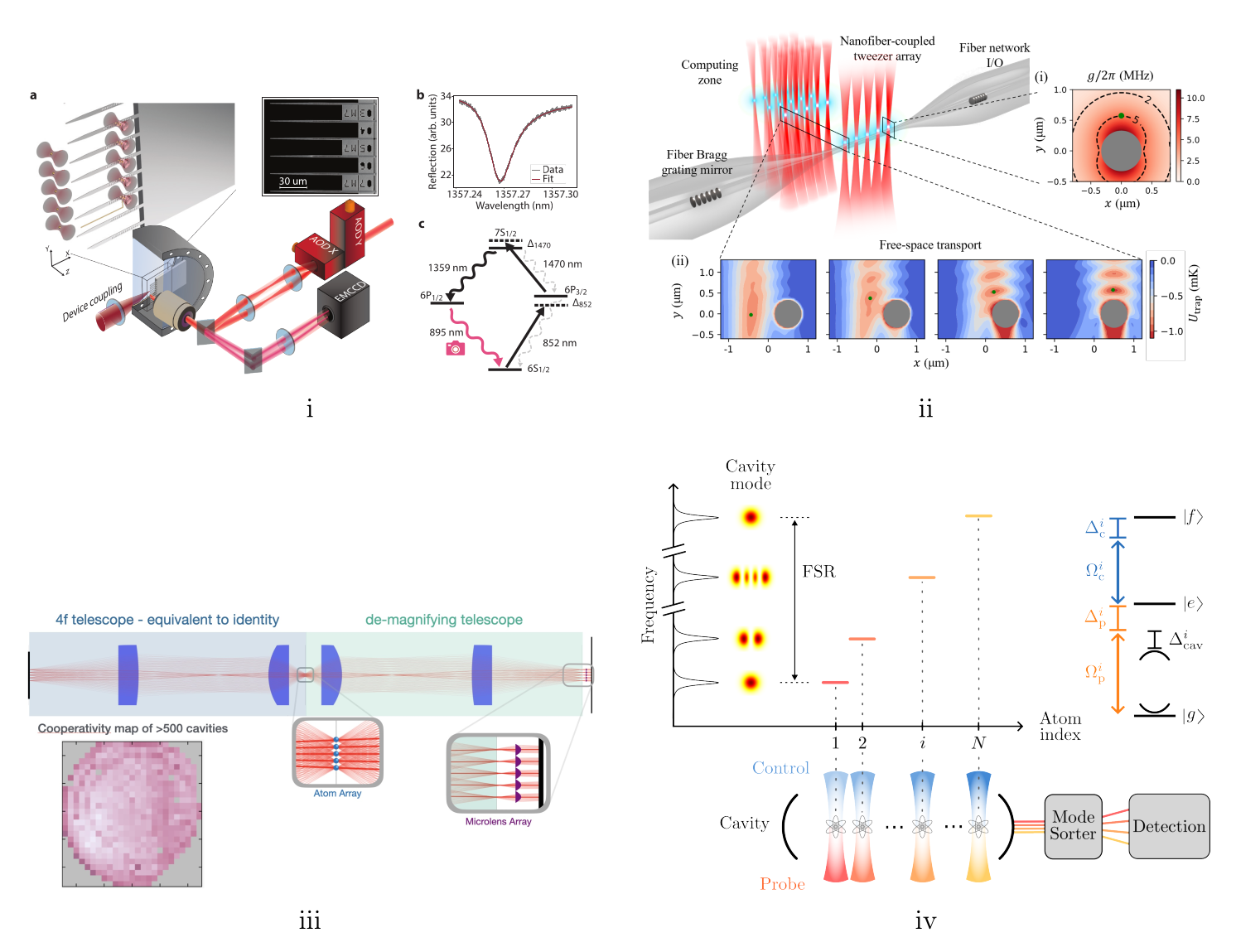
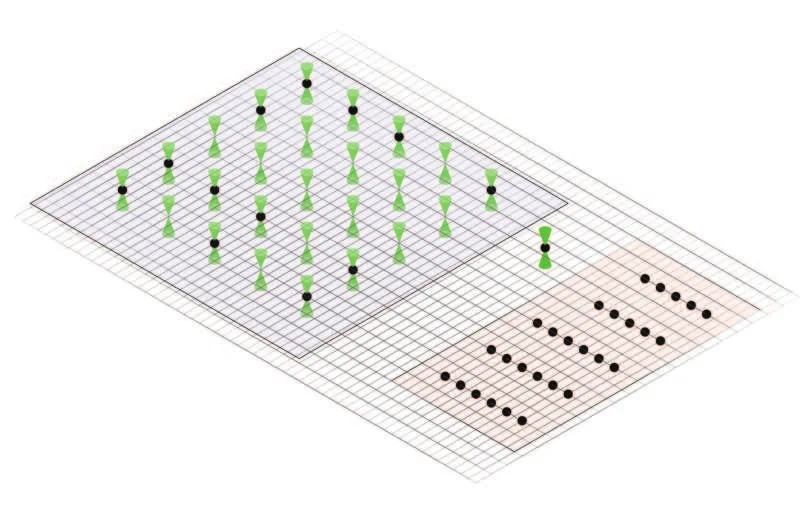
AbstractQuantum computing is deemed to require error correction at scale to mitigate physical noise by reducing it to lower noise levels while operating on encoded logical qubits. Popular quantum error correction schemes include CSS code, of which surface codes provide regular mappings onto 2D planes suitable for contemporary quantum devices together with known transversal logical gates. Recently, qLDPC codes have been proposed as a means to provide denser encoding with the class of bivariate bicycle (BB) codes promising feasible design for devices. This work contributes a novel subclass of BB codes suitable for quantum error correction. This subclass employs $coprimes$ and the product $xy$ of the two generating variables $x$ and $y$ to construct polynomials, rather than using $x$ and $y$ separately as in vanilla BB codes. In contrast to vanilla BB codes, where parameters remain unknown prior to code discovery, the rate of the proposed code can be determined beforehand by specifying a factor polynomial as an input to the numerical search algorithm. Using this coprime-BB construction, we found a number of surprisingly short to medium-length codes that were previously unknown. We also propose a layout on cold atom arrays tailored for coprime-BB codes. The proposed layout reduces both move time for short to medium-length codes and the number of moves of atoms to perform syndrome extractions. We consider an error model with global laser noise on cold atoms, and simulations show that our proposed layout achieves significant improvements over prior work across the simulated codes.► BibTeX data@article{Wang2026coprimebivariate, doi = {10.22331/q-2026-02-23-2009}, url = {https://doi.org/10.22331/q-2026-02-23-2009}, title = {Coprime {B}ivariate {B}icycle {C}odes and {T}heir {L}ayouts on {C}old {A}toms}, author = {Wang, Ming and Mueller, Frank}, journal = {{Quantum}}, issn = {2521-327X}, publisher = {{Verein zur F{\"{o}}rderung des Open Access Publizierens in den Quantenwisse
Quantum JournalLoading...0
quantum-computingQuantum algorithm beats classical tools on complement sampling tasks
Quantum computers—devices that process information using quantum mechanical effects—have long been expected to outperform classical systems on certain tasks. Over the past few decades, researchers have worked to rigorously demonstrate such advantages, ideally in ways that are provable, verifiable and experimentally realizable.
Phys.org Quantum SectionLoading...0
quantum-computingTII Opens Cloud Access to Its Superconducting QPUs
Insider Brief Technology Innovation Institute (TII) has launched a cloud service providing partners with access to its in-house superconducting quantum processing units (QPUs). The QPUs, developed by TII’s Quantum Computing Hardware Lab, range from 5 to 25 qubits and include locally fabricated chips with coherence times up to ten times longer than the lab’s first-generation prototypes. The platform integrates TII’s open-source Qibo framework to enable cloud-based execution of quantum and hybrid quantum-classical workloads. PRESS RELEASE — The Technology Innovation Institute (TII), the applied research pillar of Abu Dhabi’s Advanced Technology Research Council (ATRC), today announced the launch of a cloud service providing access to Quantum Processing Units (QPUs) developed by TII’s Quantum Computing Hardware Lab. Initially available to TII partners, the service enables users to run quantum workloads directly on TII’s physical quantum hardware in the cloud. Established four years ago, the Quantum Research Center’s Quantum Computing Hardware Lab has advanced from foundational capability-building to delivering cloud-accessible quantum systems based on superconducting devices. The lab currently operates multiple QPU systems ranging from 5 to 25 qubits, including in-house fabricated chips that demonstrate quantum coherence times up to ten times longer than TII’s first-generation prototypes. These advances reflect growing in-house expertise across quantum design, fabrication, and system-level integration. The launch is the result of a coordinated effort between the Quantum Computing Hardware Lab and TII’s Quantum Middleware team, with Qibo serving as the software layer for job submission and execution workflows. Qibo is TII’s open-source quantum software framework that enables users to build quantum circuits and hybrid quantum-classical workflows, and to execute them seamlessly across simulators and QPU backends through a unified interface. The platform is ava
Quantum DailyLoading...0
quantum-computingShortcuts to Adiabaticity via Adaptive Quantum Zeno Measurements
--> Quantum Physics arXiv:2602.17786 (quant-ph) [Submitted on 19 Feb 2026] Title:Shortcuts to Adiabaticity via Adaptive Quantum Zeno Measurements Authors:Adolfo del Campo View a PDF of the paper titled Shortcuts to Adiabaticity via Adaptive Quantum Zeno Measurements, by Adolfo del Campo View PDF HTML (experimental) Abstract:We consider the quantum Zeno dynamics arising from monitoring a time-dependent projector. Starting from a stroboscopic measurement protocol, it is shown that the effective Hamiltonian for Zeno dynamics involves a nonadiabatic geometric connection that takes the form of the Kato-Avron Hamiltonian for parallel transport, stirring the evolution within the time-dependent Zeno subspace. The latter reduces to counterdiabatic driving when projective measurements are performed in the instantaneous energy eigenbasis of the quantum system. The effective Zeno Hamiltonian can also be derived in the context of continuous quantum measurements of a time-dependent observable and the non-Hermitian evolution with a complex absorbing potential varying in time. Our results thus provide a unified framework for realizing shortcuts to adiabaticity via adaptive quantum Zeno measurements. Comments: Subjects: Quantum Physics (quant-ph); Other Condensed Matter (cond-mat.other); Atomic Physics (physics.atom-ph) Cite as: arXiv:2602.17786 [quant-ph] (or arXiv:2602.17786v1 [quant-ph] for this version) https://doi.org/10.48550/arXiv.2602.17786 Focus to learn more arXiv-issued DOI via DataCite (pending registration) Submission history From: Adolfo del Campo [view email] [v1] Thu, 19 Feb 2026 19:44:08 UTC (22 KB) Full-text links: Access Paper: View a PDF of the paper titled Shortcuts to Adiabaticity via Adaptive Quantum Zeno Measurements, by Adolfo del CampoView PDFHTML (experimental)TeX Source view license Current browse context: quant-ph < prev | next > new | recent | 2026-02 Change to browse by: cond-mat cond-mat.other physics physic
arXiv Quantum PhysicsLoading...0
quantum-computingWhat happens during a 1 week lab visit before a short research contract and possible longer contract?
I recently graduated with Bachelor's in Electrical Engineering and have been invited to visit a professor’s semiconductor quantum computing lab for 1 week. This may lead to a 3 month research contract and possible separate 1 year if things go well. I want to understand what to expect during this. Is a 1 week visit usually an evaluation or just orientation/mutual fit? What do professors typically expect from you during such a short visit? Any tips to make a good impression. Would appreciate any insights. Thanks. submitted by /u/whyami_2025 [link] [comments]
Reddit r/QuantumComputing (RSS)Loading...0
quantum-computingGoogle Gave Amazing News to Nvidia and Broadcom Stock Investors
By Jose Najarro – Feb 21, 2026 at 8:15PM ESTNASDAQ: GOOGLAlphabetMarket Cap$3.8TToday's Changeangle-down(3.95%) $11.96Current Price$314.81Price as of February 20, 2026 at 3:58 PM ETAlphabet reported massive Capex growth driven by AI demand.In today's video, I discuss recent updates affecting Alphabet (GOOGL +3.95%) (GOOG +3.66%) and other AI stocks. To learn more, check out the short video, consider subscribing, and click the special offer link below. *Stock prices used were the after-market prices of Feb. 4, 2026. The video was published on Feb. 4, 2026. Read NextFeb 20, 2026 •By Eric TrieStock Market Today, Feb. 20: Alphabet Jumps as Gemini Rollout Bolsters $185B AI BuildoutFeb 20, 2026 •By Patrick SandersBetter Artificial Intelligence Stock: Alphabet vs. AmazonFeb 20, 2026 •By Anders BylundPrediction: 2 Stocks That Should Be Worth More Than Nvidia 10 Years From NowFeb 20, 2026 •By Sean WilliamsBillionaire Stanley Druckenmiller Dumped 4 of the Hottest AI Stocks and Nearly Quadrupled His Fund's Stake in Another Trillion-Dollar CompanyFeb 19, 2026 •By Johnny RiceHere's the Quantum Computing Stock Wall Street Loves the Most (Hint: It's Not IonQ or Rigetti)Feb 18, 2026 •By Daniel SparksAmazon vs. Alphabet: Which Is the Better AI Stock to Buy Now?About the AuthorJose Najarro enjoys investing in the tech market, more importantly, the semiconductor sector. Before partnering with the Fool, Jose worked as a Senior Electrical Engineer for General Dynamics, where he had first-hand experience seeing how emerging technology can change the world. Jose Najarro went to NJIT, receiving his Bachelor's and Master's degree in Electrical Engineering.TMFJoseNajarroX@_JoseNajarroStocks MentionedAlphabetNASDAQ: GOOGL$314.81 (+3.95%) $+11.96BroadcomNASDAQ: AVGO$332.44 (0.46%) $1.55NvidiaNASDAQ: NVDA$189.82 (+1.02%) $+1.92AlphabetNASDAQ: GOOG$314.67 (+3.66%) $+11.11*Average returns of all recommendations since inception. Cost basis and return based on previous market day close.
The Motley FoolLoading...0
quantum-computingMerLin: Framework for Differentiable Photonic Quantum Machine Learning - Quantum Computing Report
MerLin: Framework for Differentiable Photonic Quantum Machine Learning - Quantum Computing Report. Google News – Quantum Computing
Google News – Quantum ComputingLoading...0
quantum-computingMerLin: Framework for Differentiable Photonic Quantum Machine Learning
MerLin: Framework for Differentiable Photonic Quantum Machine Learning MerLin 0.3 is an open-source framework developed by Quandela for the systematic exploration of photonic and hybrid quantum machine learning (QML). Built on the Perceval SDK, it utilizes Strong Linear Optical Simulation (SLOS) to perform exact quantum state computation within a PyTorch-native environment. The architecture is centered on the QuantumLayer, a torch.nn.Module that enables end-to-end differentiable training of linear-optical circuits. By precomputing sparse photon-number transition graphs, the framework accelerates gradient-based optimization of circuit parameters, such as phase shifters and beam-splitters, directly within standard classical AI pipelines. The framework supports multiple data encoding methodologies, including angle encoding for Fourier-like feature mapping and amplitude encoding for state-vector initialization. A QuantumBridge abstraction allows for cross-paradigm architectural comparisons by mapping qubit-based gates into photonic dual-rail or QLOQ encodings. MerLin is designed for hardware-aware execution through the MerlinProcessor interface, which facilitates offloading hybrid model components to physical quantum processing units (QPUs), such as Quandela’s Belenos system. It also integrates noise models and detector-specific semantics—including photon-number-resolving and threshold detectors—allowing researchers to simulate hardware constraints during the training phase. To address reproducibility challenges in QML, MerLin includes a library of 18 reproduced state-of-the-art papers spanning quantum kernels, reservoir computing, and convolutional architectures. These modular experiments provide standardized baselines for comparing photonic and gate-based modalities under unified conditions. Technical insights from these reproductions indicate that expressivity in photonic variational quantum circuits (VQCs) scales linearly with the number of input photons without inc
Quantum Computing ReportLoading...0
quantum-computingNew Quantum Algorithms Deliver Speed-Ups Without Sacrificing Predictability
Researchers have begun to systematically investigate pseudo-deterministic quantum algorithms, a novel class of quantum computation that consistently yields a canonical solution with high probability. Hugo Aaronson and Tom Gur from the University of Cambridge, working with Jiawei Li from UT Austin, present compelling evidence of their potential and limitations within the query complexity model. Their findings, detailed in a new paper, demonstrate significant complexity separations, including a problem where pseudo-deterministic quantum algorithms require substantially more queries than their classical randomised counterparts. This work is particularly significant as it establishes both the advantages, an exponential speed-up for certain problems, and the boundaries, a quintic advantage over deterministic algorithms, of this emerging computational paradigm, potentially reshaping our understanding of quantum algorithmic power. Problems currently intractable for even the most powerful computers could yield to a new class of quantum algorithms. These ‘pseudo-deterministic’ quantum methods find correct answers with high probability, offering speed-ups for specific calculations. Initial results demonstrate an exponential advantage over classical approaches for certain problems, such as Quantum-Locked Estimation. Meanwhile, remaining within a quintic limit for general computations. Scientists have begun a systematic investigation into pseudo-deterministic quantum algorithms, representing a unique intersection between the power of quantum mechanics and the reliability of deterministic computation. Recent work has focused on the query complexity model, revealing surprising separations in what these algorithms can achieve compared to classical counterparts. Understanding these differences has implications for the development of more dependable quantum technologies and a deeper understanding of the fundamental limits of computation. To establish clear boundaries between what qu
Quantum ZeitgeistLoading...0
quantum-computingQuantum Computers Tackle Complex Drone Delivery Schedules
Scientists are increasingly exploring quantum computing to solve complex logistical challenges, and this research details a novel approach to the drone delivery packing problem. Sara Tarquini from Gran Sasso Science Institute, Matteo Vandelli and Francesco Ferrari from Quantum Computing Solutions, Leonardo S.p.A., alongside Daniele Dragoni working with colleagues at both Quantum Computing Solutions, Leonardo S.p.A. and the Hypercomputing Continuum Unit, Leonardo S.p.A., and Francesco Tudisco from Gran Sasso Science Institute and University of Edinburgh, present a hybrid quantum-classical framework utilising a neutral-atom quantum processing unit. They reformulate the delivery problem as a graph-partitioning task, leveraging the unique capabilities of neutral-atom quantum computers to encode constraints and efficiently explore potential solutions. This work is significant because it demonstrates the potential for quantum algorithms to optimise real-world delivery schedules, offering a pathway towards more efficient and scalable drone delivery networks, and showcases promising results from experiments conducted on up to 100 atoms on the Fresnel QPU. Solving complex delivery problems, such as optimising drone routes, could become far more efficient with this technology. This demonstration offers a practical application for emerging quantum processors, moving beyond theoretical possibilities. Researchers are applying the principles of quantum computing to a practical logistical challenge: optimising drone delivery routes. This work details a hybrid quantum-classical approach to the Drone Delivery Packing Problem, a complex task involving assigning deliveries to drones with limited battery life and time windows. By reformulating the problem as a graph partitioning exercise based on independent sets, the team successfully demonstrated a method for finding efficient delivery schedules. The core innovation lies in using a neutral-atom quantum processing unit (QPU) to genera
Quantum ZeitgeistLoading...0
quantum-computingParameter Sharing Misleads Quantum Optimizers with Complex Gradients
Researchers are increasingly focused on mitigating the barren plateau problem that hinders optimisation in Variational Quantum Circuits (VQCs). Gerhard Stenzel, Tobias Rohe, and Michael Kölle, all from LMU Munich, alongside Leo Sünkel, Jonas Stein, and Claudia Linnhoff-Popien, also at LMU Munich, demonstrate a critical and often overlooked consequence of parameter sharing within VQCs. Their work reveals that while parameter sharing can reduce the complexity of quantum circuits, it simultaneously creates deceptive gradients, areas where optimisers receive misleading information, fundamentally altering the optimisation landscape. This research is significant because it establishes a quantitative framework for measuring optimisation difficulty and highlights a mismatch between classical optimisation strategies and the parameter landscapes generated by parameter sharing, offering vital considerations for the design of practical quantum circuits. Can quantum circuits with shared components actually hinder their ability to learn effectively. It appears so, as sharing parameters creates misleading signals that confuse optimisation algorithms. These deceptive gradients become more pronounced with increased sharing, making it harder to find the best solution despite having fewer settings to adjust. Researchers investigated how parameter sharing affects optimisation landscapes and the convergence of gradient-based optimisers. The study focused on demonstrating that increasing degrees of parameter sharing generates more complex solution landscapes with heightened gradient magnitudes and measurably higher deceptiveness ratios. Specifically, the work examined the impact of parameter sharing on the presence of deceptive gradients, regions where gradient information exists but systematically misleads optimisers away from global optima. Through systematic experimental analysis, findings reveal that traditional gradient-based optimisers (Adam, SGD) show progressively degraded conver
Quantum ZeitgeistLoading...0
quantum-computingQuandela Unveils MerLin, Reproducing 18 State-of-the-Art Photonic QML Models
Quandela Quantique Inc. has unveiled MerLin, a new open-source framework designed as a discovery engine for photonic and hybrid quantum machine learning. Available as of February 11, 2026, MerLin integrates optimized quantum simulation into standard machine learning workflows, enabling the training of quantum layers and systematic benchmarking. As an initial demonstration, the framework successfully reproduces eighteen state-of-the-art photonic and hybrid QML models, spanning diverse architectures like kernel methods and convolutional networks. By embedding photonic quantum models within established machine learning ecosystems, MerLin allows practitioners to leverage existing tooling for comparisons and hybrid workflows, “establishing a shared experimental baseline consistent with empirical benchmarking methodologies widely adopted in modern artificial intelligence.” This positions MerLin as a tool for linking algorithms, benchmarks, and future quantum hardware. Photonic Quantum Computing Advantages for Machine Learning Photonic quantum computing is proving particularly promising due to its scalability, robustness, compatibility with optical communication technologies, and energy efficiency. This convergence of quantum computing and machine learning is accelerating advances in both fields, with quantum machine learning (QML) offering the potential to extend the capabilities of classical algorithms. Unlike many approaches, photonic QML “exploits the bosonic nature of light and high-dimensional multi-mode interference to implement and train machine learning models directly on this unconventional photonic quantum computation model, enabling intrinsic parallelism and efficient exploration of large Hilbert spaces.” Realizing this potential necessitates software frameworks that bridge abstract QML models with execution on emerging quantum hardware. The need for such tools is highlighted by the current fragmented software landscape, where frameworks like Qiskit, Cirq, Puls
Quantum ZeitgeistLoading...0
quantum-computingLooking for papers: emergency transportation/dispatch optimization using quantum + multi-agent RL (QMARL)
Hi everyone, I’m currently working on my thesis and I’m specifically looking for research papers or resources on solving emergency transportation or emergency dispatch problems (such as ambulance routing, dynamic fleet management, or emergency logistics) using Quantum Multi-Agent Reinforcement Learning (QMARL). My focus is on integrating quantum computing techniques (e.g., variational quantum circuits, quantum-enhanced policy/value functions, hybrid quantum-classical models) within a multi-agent RL framework to handle dynamic, stochastic, and decentralized decision-making settings. Despite extensive searching, I haven’t found work directly applying QMARL to emergency transportation scenarios. If anyone is aware of relevant papers, preprints, surveys, related applications, or even adjacent domains where QMARL has been applied to complex coordination or routing problems, I would greatly appreciate your guidance. submitted by /u/Standard_Birthday_15 [link] [comments]
Reddit r/QuantumComputing (RSS)Loading...0
quantum-computingQuantum Circuits Bypass Scaling Limits with New Design
Scientists are tackling the limitations of Variational Quantum Circuits (VQCs) as they attempt to scale to complex, high-dimensional data, a challenge often hindered by exponential costs and untrainable ‘Barren Plateaus’. Howard Su, working with Chen-Yu Liu from National Taiwan University, Taiwan, and Samuel Yen-Chi Chen and Huan-Hsin Tseng from Brookhaven National Laboratory, Upton, NY, USA, in collaboration with Kuan-Cheng Chen from Imperial College London, UK, present a novel approach in their research. They introduce the Multi-Layer Fully-Connected VQC (FC-VQC), a modular architecture designed for end-to-end learning without relying on classical feature compression. This framework achieves linear scalability by restricting local Hilbert space dimensions while maintaining global feature interaction, and importantly, demonstrates performance exceeding state-of-the-art classical machine learning algorithms like XGBoost and CatBoost on a 300-asset Option Portfolio Pricing task. These findings suggest that carefully designed, modular quantum circuits can effectively navigate and learn from industrial-scale feature spaces previously considered intractable for conventional quantum ansatzes. Three hundred assets, the scale of a real financial portfolio, is now within reach of quantum computation. This new architecture overcomes limitations that previously confined quantum machine learning to simple problems, offering a path towards practical quantum advantage. By carefully restricting the size of local quantum processing units while simultaneously enabling interaction between these units, the FC-VQC achieves improved scalability. Unlike traditional VQCs, which suffer from exponential scaling, this framework demonstrates linear scalability, opening possibilities for tackling previously inaccessible problems. Validation of the FC-VQC on standard benchmarks and a complex, high-dimensional industrial task, the pricing of 300-asset option portfolios, reveals a significant br
Quantum ZeitgeistLoading...0
quantum-computingRigetti & Algorithmiq Partner to Tackle Financial Fraud with Quantum Machine Learning
Rigetti and Algorithmiq are partnering to combat financial fraud using quantum machine learning, announced today, February 20, 2026. The collaboration focuses on anomaly detection, a critical technique for preventing fraudulent transactions, and aims to improve the performance of hybrid quantum-classical methods for digital payment systems. A key component of this project involves implementing a novel adaptation of Algorithmiq’s Tensor-network Error Mitigation on Rigetti’s 36-qubit quantum computer hosted at the UK’s National Quantum Computing Centre (NQCC). “We look forward to pushing the boundaries of what’s possible with today’s current quantum hardware as we deepen our understanding of integrating advanced error mitigation solutions with our quantum computers,” Rigetti stated. This work is supported by a newly awarded proof-of-concept project from the 2025 STFC Cross Cluster Proof of Concept: SparQ Quantum Computing Call. Rigetti and Algorithmiq Advance Hybrid Quantum Anomaly Detection Quantum machine learning is now being directly applied to financial data by Rigetti, with a specific focus on bolstering fraud prevention techniques. The company is collaborating with Algorithmiq to refine hybrid quantum-classical anomaly detection methods, aiming to enhance digital payment systems and accelerate their adoption within the broader digital economy. The collaboration represents a significant step toward realizing practical applications of quantum computing in the financial sector. Tensor-Network Error Mitigation on 36-Qubit NQCC Computer Rigetti is currently concentrating research efforts on applying quantum machine learning techniques to analyze genuine financial datasets. A key component of this work involves a collaboration with Algorithmiq to refine hybrid quantum-classical methods for anomaly detection, a crucial tool in preventing financial fraud. The companies are specifically targeting improvements to a fraud detection system and aiming to speed up the introd
Quantum ZeitgeistLoading...0
quantum-computingQuantum Graphs Learn Data with Fewer Qubits
Graph neural networks offer a potent method for analysing graph-structured data, but implementing them on near-term quantum computers presents significant hurdles due to limitations in circuit depth and qubit resources. Armin Ahmadkhaniha and Jake Doliskani, both from the Department of Computing and Software at McMaster University, address this challenge with a novel fully quantum graph convolutional architecture tailored for the noisy intermediate-scale quantum (NISQ) era. Their research introduces an edge-local and qubit-efficient quantum message-passing mechanism, inspired by the Quantum Alternating Operator Ansatz (QAOA), that decomposes complex operations into simpler, hardware-native gate operations. This innovative design substantially reduces qubit requirements, from n to log(n) for a graph with n nodes, and allows implementation on existing quantum devices irrespective of graph size, representing a crucial step towards scalable quantum machine learning and unlocking the potential for unsupervised node representation learning on complex datasets. Complex networks underpin many real-world systems, from social connections to molecular structures. Future quantum computers promise to unlock insights from these networks far beyond the reach of today’s machines, and this advance delivers a quantum architecture that could make that potential a reality, even on the limited hardware available now. Scientists are increasingly turning to quantum computing to address challenges in machine learning, particularly when dealing with complex, graph-structured data. Graphs appear across numerous scientific fields, and extracting useful information from these structures is becoming ever more important. Traditional machine learning methods, such as graph neural networks, face computational limits as graphs grow larger and more complex. Researchers have now developed a fully quantum approach to graph convolutional neural networks, designed to operate within the constraints of to
Quantum ZeitgeistLoading...0
quantum-computingNeutrino Oscillation Experiments Hit Precision Limits
Scientists are increasingly focused on refining measurements of neutrino oscillation parameters to rigorously test the Pontecorvo-Maki-Nakagawa-Sakata (PMNS) matrix. Claudia Frugiuele, Marco G. Genoni, Michela Ignoti, and Matteo G. A. Paris, all from INFN Sezione di Milano and Dipartimento di Fisica Aldo Pontremoli, Università degli Studi di Milano, present a study investigating the theoretical limits to precision in neutrino oscillation experiments using quantum estimation theory. Their research determines whether current flavour measurements represent the most effective method for extracting oscillation parameters, revealing that while optimal for certain parameters at the first oscillation maximum, significant improvements are possible for others. This work establishes a crucial benchmark for evaluating both fundamental and practical limitations in neutrino physics and offers a quantitative framework to guide the optimisation of future facilities like the planned ESS SB. Can we truly extract all possible information about neutrino behaviour from current experiments. New analysis reveals that existing methods are remarkably effective at measuring some neutrino properties, but fall short when probing others. Understanding these limits will guide the design of the next generation of neutrino detectors and maximise their potential. Scientists investigating neutrino oscillations are now capable of measurements precise enough to rigorously test the underlying physics of these elusive particles. Within the framework of quantum estimation theory, a recent analysis examines whether standard flavor measurements, the only type currently feasible with existing detectors, are the best possible way to determine the parameters governing neutrino behaviour. Calculations of the Quantum Fisher Information (QFI) and the classical Fisher Information (FI) were performed, considering muon and electron antineutrino beams propagating in a vacuum. These calculations assessed the potentia
Quantum ZeitgeistLoading...0