Quantum Computing Finance & Banking: Portfolio Optimization & Risk Analysis
Quantum finance news: JPMorgan, Goldman Sachs quantum banking. Portfolio optimization, risk modeling, Monte Carlo & algorithmic trading.
Financial services represent the largest commercial opportunity for near-term quantum computing, with institutions developing quantum algorithms for portfolio optimization, risk analysis, derivative pricing, and fraud detection. The sector's mathematical foundations in optimization and stochastic modeling align naturally with quantum computational advantages.
High-value use cases include portfolio optimization using quantum algorithms to solve mean-variance optimization across thousands of assets; risk analysis and Monte Carlo simulations where quantum amplitude estimation offers quadratic speedup; and derivative pricing for path-dependent options requiring high-dimensional integration.
India's Banking and Financial Services Quantum Landscape
India's banking and financial services sector, with over $2.5 trillion in assets, represents a significant potential market. The National Quantum Mission includes financial applications within its quantum computing applications scope. The Reserve Bank of India (RBI) and Securities and Exchange Board of India (SEBI) monitor quantum computing implications for market infrastructure and security.
Tata Consultancy Services (TCS) partners with IBM and the Andhra Pradesh government to deploy India's largest quantum computer at the Quantum Valley Tech Park in Amaravati, with applications including financial optimization. TCS develops quantum algorithms for portfolio optimization, risk modeling, and fraud detection. Infosys explores quantum computing through its Quantum Living Labs (QLL), offering advisory and proof-of-concept services with demonstrated capabilities in logistics, finance, cybersecurity, and healthcare.
The NQM targets developing quantum machine learning and optimization algorithms applicable to financial services, with commercial deployment expected as hardware matures toward the 50-1000 qubit range.
quantum-computingIonQ Selected for Missile Defense Agency SHIELD IDIQ Contract
IonQ Selected for Missile Defense Agency SHIELD IDIQ Contract IonQ (NYSE: IONQ) has been selected as an eligible contractor for the Missile Defense Agency (MDA) Scalable Homeland Innovative Enterprise Layered Defense (SHIELD) indefinite-delivery/indefinite-quantity (IDIQ) contract. The SHIELD framework has a total ceiling of $151 billion and is designed to provide the warfighter with rapid, innovative capabilities through a streamlined procurement process. IonQ is one of more than 2,400 companies qualified to compete for future task orders under this multi-year vehicle. The selection leverages IonQ’s expanded portfolio, which now integrates core trapped-ion quantum computing with specialized capabilities from its subsidiary companies. These subsidiaries include Capella Space, providing all-weather synthetic aperture radar (SAR) imagery; Skyloom, specializing in high-capacity optical space-to-ground communications; and Vector Atomic, which develops quantum-based precision timing and navigation solutions for GPS-denied environments. By uniting quantum computing, networking, sensing, and security, IonQ aims to support the MDA’s mission-critical requirements for layered defense and real-time data processing. This award builds on IonQ’s established history of supporting U.S. government research and development, including previous collaborations with DARPA and the U.S. Air Force Research Laboratory (AFRL). In 2025, the company reported a world-record 99.99% two-qubit gate fidelity, a technical benchmark critical for the high-precision applications required in aerospace and national security. The forthcoming IonQ Tempo system is expected to further enhance these capabilities, providing the computational power necessary for complex logistics, cybersecurity, and missile defense simulations. For further details on the contract award and technical specifications, consult the official IonQ investor announcement here. February 23, 2026 Mohamed Abdel-Kareem2026-02-23T14:28:40-08:
Quantum Computing ReportLoading...0
quantum-computingAWS Quantum Technologies Blog: New QGCA Outperforms Simulated Annealing on Complex Optimization Problems
Amazon Quantum Solutions Lab researchers have announced a new algorithm, the quantum-guided cluster algorithm (QGCA), that outperforms simulated annealing on complex optimization problems. Published on February 12, 2026, by Peter Eder, Aron Kerschbaumer, and colleagues, QGCA utilizes precomputed correlations from quantum optimization algorithms to guide collective spin updates, accelerating the search for effective solutions. The team demonstrated this hybrid workflow on graph instances, showing that quantum-guided clusters explore the solution space more effectively than the classical heuristic, simulated annealing. “The idea is to use quantum information to identify and flip groups of spins (clusters) with a high chance of acceptance,” the researchers explain, highlighting a practical way to leverage quantum-derived structure for challenging optimization problems with constraints. Quantum-Guided Cluster Algorithms Enhance Optimization Performance Leveraging correlations gleaned from quantum computations enhances optimization performance, according to researchers at Amazon Quantum Solutions Lab. This isn’t about building a full-scale quantum computer to solve these problems directly, but rather about using quantum algorithms as a “guide” for classical approaches, specifically a refined cluster algorithm. Many real-world challenges, from logistical scheduling to financial portfolio selection, fall into the category of combinatorial optimization – problems easily defined but notoriously difficult for conventional computers to solve due to their complex landscapes of potential solutions. The team’s innovation, the quantum-guided cluster algorithm (QGCA), tackles the limitations of traditional methods like simulated annealing, which often get trapped in local optima. Simulated annealing functions by making small, incremental changes and accepting worse solutions to escape these traps, but struggles with “rugged” landscapes. Existing cluster algorithms attempt to addres
Quantum ZeitgeistLoading...0
quantum-computing4colors Research & Partners Secure Funding to Tackle Aircraft Loading with Quantum Computing
A consortium led by 4colors Research has secured funding from the National Quantum Computing Centre (NQCC) to tackle a critical challenge in aerospace logistics. Today, February 23, 2026, 4colors Research announced the award of an NQCC SparQ Grant under the 2025 STFC Cross Cluster Proof of Concept call, supporting a project focused on optimising aircraft cargo loading using a hybrid classical-quantum computing approach. The collaborative effort, which includes Airbus, DNV, NQCC, and ORCA Computing, aims to improve fuel efficiency, turnaround times, and fleet capacity. “Through the SparQ programme, NQCC is supporting important, industry-led projects that explore how quantum computing can deliver real-world impact,” commented Dr Rob Whiteman, Quantum Readiness Delivery Lead, NQCC. This project seeks to harness quantum power for practical and sustainable benefits within the industry. HLNQCC SparQ Grant Fuels Aerospace Optimisation Project The project, titled “Quantum-Accelerated Mixed-Integer Optimisation for Aircraft Loading,” directly addresses the computationally intensive challenge of optimising cargo placement for maximum efficiency. Even incremental improvements to this process promise significant reductions in fuel burn and CO2 emissions, alongside faster aircraft turnaround times. This isn’t merely theoretical exploration; the project aims to demonstrate how hybrid classical–quantum computing can solve a real-world, high-impact problem for airlines and cargo operators. 4colors Research, winner of the 2024 Airbus × BMW Quantum Computing Challenge, brings expertise in complex optimisation algorithms to the collaboration. “The NQCC SparQ grant brings together partners with complementary expertise,” said Dr Marcin Kaminski, Founder and CEO of 4colors Research, “We are excited to collaborate on this use case and, more broadly, to push forward quantum solutions for combinatorial optimisation.” ORCA Computing will contribute its photonic quantum systems, believing tha
Quantum ZeitgeistLoading...0
quantum-computingIncreasing the distance of topological codes with time vortex defects
AbstractWe propose modifying topological quantum error correcting codes by incorporating space-time defects, termed “time vortices,'' to reduce the number of physical qubits required to achieve a desired logical error rate. A time vortex is inserted by adding a spatially varying delay to the periodic measurement sequence defining the code such that the delay accumulated on a homologically non-trivial cycle is an integer multiple of the period. We analyze this construction within the framework of the Floquet color code and optimize the embedding of the code on a torus along with the choice of the number of time vortices inserted in each direction. Asymptotically, the vortexed code requires less than half the number of qubits as the vortex-free code to reach a given code distance. We benchmark the performance of the vortexed Floquet color code by Monte Carlo simulations with a circuit-level noise model and demonstrate that the smallest vortexed code (with $30$ qubits) outperforms the vortex-free code with $42$ qubits.► BibTeX data@article{Kishony2026increasingdistance, doi = {10.22331/q-2026-02-23-2006}, url = {https://doi.org/10.22331/q-2026-02-23-2006}, title = {Increasing the distance of topological codes with time vortex defects}, author = {Kishony, Gilad and Berg, Erez}, journal = {{Quantum}}, issn = {2521-327X}, publisher = {{Verein zur F{\"{o}}rderung des Open Access Publizierens in den Quantenwissenschaften}}, volume = {10}, pages = {2006}, month = feb, year = {2026} }► References [1] Eric Dennis, Alexei Kitaev, Andrew Landahl, and John Preskill. Topological quantum memory. Journal of Mathematical Physics, 43 (9): 4452–4505, 09 2002. ISSN 0022-2488. 10.1063/1.1499754. URL https://doi.org/10.1063/1.1499754. https://doi.org/10.1063/1.1499754 [2] A.Yu. Kitaev. Fault-tolerant quantum computation by anyons. Annals of Physics, 303 (1): 2–30, 2003. ISSN 0003-4916. 10.1016/S0003-4916(02)00018-0. URL https://doi.org/10.1016/S0003-4916(02)00018-0. https:/
Quantum Science and Technology (arXiv overlay)Loading...0
quantum-computingDown 60%, Should You Buy the Dip on D-Wave Quantum?
By Manali Pradhan, CFA – Feb 23, 2026 at 4:22AM ESTKey PointsD-Wave Quantum is already generating some revenue, which sets it apart from many of its quantum computing peers.The company recently signed several meaningful new contracts. D-Wave stock is exposed to risks associated with its high valuation and potential shareholder dilution.We’re bullish on these 10 stocks ›NYSE: QBTSD-Wave QuantumMarket Cap$6.7BToday's Changeangle-down(-6.79%) $1.31Current Price$18.07Price as of February 20, 2026 at 3:58 PM ETEven after its pullback, this quantum computing pure play trades at a hefty premium.D-Wave Quantum's (QBTS 6.79%) stock is down by about 60% from the 52-week high it touched in October 2025. That kind of plunge naturally has some investors wondering whether this is a buy-the-dip opportunity or a warning sign. Image source: Getty Images The answer to the question, however, is more nuanced. Unlike many of its quantum computing peers, which are research-first and funded by grants, D-Wave is already a revenue-generating business with paying customers, commercial deployments, and a robust balance sheet. However, its lofty valuation and ongoing dilution risk are also too high to ignore. Against this backdrop, here are a few factors that should make the decision about whether or not to buy this stock easier for investors. Robust business momentum D-Wave's core business is in developing computers that make use of a technology called quantum annealing. By the nature of the technology, these machines are not ideal for many types of high-performance computing. Among the things that they are best suited for, however, is solving complex optimization problems, and that category includes a host of tasks that are of interest to businesses, such as increasing the efficiency of manufacturing workflows, routing vehicles, and logistics optimization. While classical computers can handle such problems, their performance deteriorates as complexity increases. D-Wave's systems ar
The Motley FoolLoading...0
quantum-computingEnhanced Maximum Independent Set Preparation with Rydberg Atoms Guided by the Spectral Gap
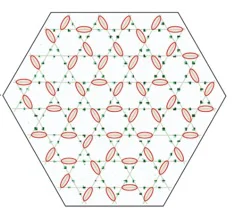
--> Quantum Physics arXiv:2602.17991 (quant-ph) [Submitted on 20 Feb 2026] Title:Enhanced Maximum Independent Set Preparation with Rydberg Atoms Guided by the Spectral Gap Authors:Seokho Jeong, Minhyuk Kim View a PDF of the paper titled Enhanced Maximum Independent Set Preparation with Rydberg Atoms Guided by the Spectral Gap, by Seokho Jeong and 1 other authors View PDF HTML (experimental) Abstract:Adiabatic quantum computation with Rydberg atoms provides a natural route for solving combinatorial optimization problems such as the maximum independent set (MIS). However, its performance is fundamentally limited by the reduction of the spectral gap with increasing system size and connectivity, which induces population leakage from the ground state during finite-time evolution. Here we introduce the Adjusted Detuning for Ground-Energy Leakage Blockade (ADGLB), a spectral-gap-guided schedule engineering method that modifies the laser detuning profile to suppress leakage without introducing additional Hamiltonian terms or iterative optimization loops. We experimentally benchmark ADGLB on a quasi-one-dimensional chain of $N=10$ atoms, and the MIS preparation probability increases substantially compared with the standard adiabatic schedule. Furthermore, we show that the schedule optimized for smaller instances can be directly applied to larger two-dimensional triangular lattices with $N=25$ and $N=37$. With a small heuristic offset, the method also remains effective for instances with higher hardness parameters. These findings demonstrate that spectral-gap-guided schedule engineering offers a scalable and hardware-efficient strategy for enhancing adiabatic quantum optimization on neutral-atom platforms. Subjects: Quantum Physics (quant-ph) Cite as: arXiv:2602.17991 [quant-ph] (or arXiv:2602.17991v1 [quant-ph] for this version) https://doi.org/10.48550/arXiv.2602.17991 Focus to learn more arXiv-issued DOI via DataCite (pending registration) Submission history
arXiv Quantum PhysicsLoading...0
quantum-computingClarification of “academic relevance”
Hi community, I’m reaching out to better understand the removal of my recent post regarding the quantum computer hardware replica I designed and built for a local university. It was removed for "not being related to the academics of quantum computing," and I’m hoping for some clarity on that criteria. To provide context: this wasn’t a fan-art project. This was a commissioned educational tool built specifically for a university’s quantum computing department. The "cooling tower" (dilution refrigerator) architecture is fundamental to how superconducting qubits function; without that specific hardware environment, the "academics" of the math and logic don't translate to reality. My post aimed to show the hardware side of the field, specifically how universities are using physical models to teach students about: Cryogenic environments and the stages of cooling. Signal routing and the physical constraints of wiring a quantum processor. Scaling challenges in hardware design. If a project commissioned by a university for the express purpose of departmental education doesn’t qualify as "academic," could you please clarify what does? Is the sub restricted strictly to theoretical papers, or is there room for the physical engineering and pedagogical tools that make the science accessible? I’d love to find a way to share this that fits your guidelines, as the intersection of hardware engineering and education is a vital part of the field. submitted by /u/StarsapBill [link] [comments]
Reddit r/QuantumComputing (RSS)Loading...0
quantum-computing2 Quantum Computing Stocks That Could Make a Millionaire
Quantum computing is still a high-risk frontier, but for patient investors, these two tickers could be tomorrow's generational wealth creators.Quantum computing is still early, messy, and wildly speculative, which is exactly why the upside for patient, risk‑tolerant investors is so intriguing. If this technology can cross the chasm from lab curiosity to everyday infrastructure over the next 10–20 years, today's niche players could look like buying early cloud or GPU leaders before the world catches on. Here are two quantum names with very different approaches that could, in a bullish scenario, move the needle on lifetime wealth and eventually produce some millionaire investors. Image source: Getty Images. 1. IonQ IonQ (IONQ 4.52%) remains the poster child for pure‑play, gate‑based quantum hardware. This month, the company reiterated that its systems are already accessible via major public clouds and are being used by customers in pharmaceuticals, materials, finance, logistics, cybersecurity, and government work. What makes IonQ interesting from a millionaire‑maker perspective is the combination of three things: A credible technical roadmap (including industry‑leading error rates on key two‑qubit gates). Distribution through hyperscale clouds that can switch on demand when the economics make sense. Early‑stage real workloads and partnerships rather than purely academic demos. In other words, IonQ looks like a potential millionaire maker because it has a real technical edge, major cloud distribution, and early partnerships, proving it's moving beyond lab demos into real-world use. ExpandNYSE: IONQIonQToday's Change(-4.52%) $-1.51Current Price$31.92Key Data PointsMarket Cap$11BDay's Range$31.37 - $33.8852wk Range$17.88 - $84.64Volume679KAvg Vol20MGross Margin-747.41% 2. Rigetti Computing Where IonQ leans into trapped ions, Rigetti (RGTI 4.07%) is the scrappy superconducting challenger aiming to sell both cloud access and physical systems. In January, the company updat
The Motley FoolLoading...0
quantum-computingIt is time for Europe to weaponise its chokepoints
Opinion Global tradeIt is time for Europe to weaponise its chokepointsChina and others have long been adept at using supply chains to their advantage — the EU should do the sameMartin SandbuAdd to myFTGet instant alerts for this topicManage your delivery channels hereRemove from myFTEurope could strengthen its geopolitical leverage by fostering its leadership in cutting-edge semiconductor technologies, such as ASML’s ultraviolet lithography, on which other countries depend © ASMLIt is time for Europe to weaponise its chokepoints on x (opens in a new window)It is time for Europe to weaponise its chokepoints on facebook (opens in a new window)It is time for Europe to weaponise its chokepoints on linkedin (opens in a new window)It is time for Europe to weaponise its chokepoints on whatsapp (opens in a new window) Save It is time for Europe to weaponise its chokepoints on x (opens in a new window)It is time for Europe to weaponise its chokepoints on facebook (opens in a new window)It is time for Europe to weaponise its chokepoints on linkedin (opens in a new window)It is time for Europe to weaponise its chokepoints on whatsapp (opens in a new window) Save Martin SandbuPublishedFebruary 22 2026Jump to comments sectionPrint this pageUnlock the Editor’s Digest for freeRoula Khalaf, Editor of the FT, selects her favourite stories in this weekly newsletter.Europeans’ great geopolitical awakening has been to realise, first, that they depend on other powers in many near-existential ways, and second, that those powers are increasingly willing to use their strangleholds to bend Europe to their wills.This fear first fully emerged vis-à-vis China, with concerns over Huawei’s role in 5G networks a decade or so ago. Vulnerability to Vladimir Putin over energy flows was something countries near Russia warned against early on, but became commonly understood only after his open weaponisation of gas sales in 2022. Yet what has most shocked Europeans is how the US has joined those t
Financial TimesLoading...0
quantum-computingMerLin: Framework for Differentiable Photonic Quantum Machine Learning - Quantum Computing Report
MerLin: Framework for Differentiable Photonic Quantum Machine Learning - Quantum Computing Report. Google News – Quantum Computing
Google News – Quantum ComputingLoading...0
quantum-computingMerLin: Framework for Differentiable Photonic Quantum Machine Learning
MerLin: Framework for Differentiable Photonic Quantum Machine Learning MerLin 0.3 is an open-source framework developed by Quandela for the systematic exploration of photonic and hybrid quantum machine learning (QML). Built on the Perceval SDK, it utilizes Strong Linear Optical Simulation (SLOS) to perform exact quantum state computation within a PyTorch-native environment. The architecture is centered on the QuantumLayer, a torch.nn.Module that enables end-to-end differentiable training of linear-optical circuits. By precomputing sparse photon-number transition graphs, the framework accelerates gradient-based optimization of circuit parameters, such as phase shifters and beam-splitters, directly within standard classical AI pipelines. The framework supports multiple data encoding methodologies, including angle encoding for Fourier-like feature mapping and amplitude encoding for state-vector initialization. A QuantumBridge abstraction allows for cross-paradigm architectural comparisons by mapping qubit-based gates into photonic dual-rail or QLOQ encodings. MerLin is designed for hardware-aware execution through the MerlinProcessor interface, which facilitates offloading hybrid model components to physical quantum processing units (QPUs), such as Quandela’s Belenos system. It also integrates noise models and detector-specific semantics—including photon-number-resolving and threshold detectors—allowing researchers to simulate hardware constraints during the training phase. To address reproducibility challenges in QML, MerLin includes a library of 18 reproduced state-of-the-art papers spanning quantum kernels, reservoir computing, and convolutional architectures. These modular experiments provide standardized baselines for comparing photonic and gate-based modalities under unified conditions. Technical insights from these reproductions indicate that expressivity in photonic variational quantum circuits (VQCs) scales linearly with the number of input photons without inc
Quantum Computing ReportLoading...0
quantum-computingAI Spots New Electron Crystal Within Graphene Layers
Scientists have uncovered a novel ground state of matter within artificial graphene, revealing a paired Wigner crystal formed through an unexpected self-assembly process. Conor Smith from the Center for Computational Quantum Physics at the Flatiron Institute and the Department of Electrical and Computer Engineering at the University of New Mexico, alongside Yubo Yang from the Center for Computational Quantum Physics, Flatiron Institute and the Department of Physics and Astronomy at Hofstra University, Zhou-Quan Wan, Yixiao Chen from ByteDance, Miguel A. Morales from the Center for Computational Quantum Physics, Flatiron Institute and the Department of Physics at the University of Toronto, and Shiwei Zhang utilised a neural-network-based Monte Carlo approach to identify this state in a two-dimensional electron gas subjected to a honeycomb moiré potential. This research demonstrates the spontaneous formation of molecules comprising paired electrons, which then organise into a Wigner crystal without any external guiding potential or attractive forces, offering a compelling example of emergent collective behaviour and opening avenues for the design of materials with unique electronic characteristics. For decades, physicists have sought to understand how electrons arrange themselves in complex materials. Now, an artificial graphene system reveals an unexpected, self-organised pattern where electrons pair up and form crystalline structures, offering a fresh perspective on collective electron behaviour and potential control over material properties. Scientists are increasingly focused on moiré systems as tunable platforms for investigating quantum matter — these artificially created structures, arising from the interference of two overlaid lattices, have already exhibited a range of exotic states. Prompting considerable research across experimental and theoretical physics. This new state emerges at a specific filling factor, where one electron occupies every four minima wi
Quantum ZeitgeistLoading...0
quantum-computingPhoenix and Quantum Technology: Arizona’s Industrial Bet on the Quantum Economy
Insider Brief Officials, investors, manufacturers and researchers met in Phoenix to assess how the region could build a manufacturing-centered quantum ecosystem, signaling a shift in focus from research breakthroughs to long-term system production. Discussions highlighted Arizona’s expanding semiconductor and advanced materials base — including epitaxial wafer manufacturing and photonic chip fabrication at ASU Research Park — as foundational infrastructure for future quantum hardware supply chains. Participants framed Phoenix as entering a preparatory phase similar to early aerospace and semiconductor hubs, positioning the region to support large-scale deployment and trusted manufacturing once quantum technologies mature. Image: Lawrence Semiconductor process engineer inspecting an isotopically enriched silicon-28 epitaxial wafer produced at the company’s Tempe, Arizona facility. The company’s capabilities support low-defect, spin-coherent materials platforms for silicon spin-qubit research and quantum device development. Over two days in Phoenix this week, local officials, manufacturers, researchers, international partners and representatives from the U.S. Air Force met across a series of roundtables and meetings to discuss what it would take to build a regional quantum ecosystem. The visit, led by Matt Cimaglia, founder and managing partner of Quantum Coast Capital, and senior advisor Dan Hart, included discussions at the Greater Phoenix Economic Council and concluded with remarks at the Phoenix Sister Cities annual Global Links Business Luncheon. The conversations frequently returned to a comparison that has begun surfacing in policy circles: the early space industry and the emerging quantum technology sector may follow similar geographic patterns. Matt Cimaglia, left, and Dan Hart, right, speak during the Phoenix Sister Cities Global Links Business Luncheon at Monroe Street Abbey on Feb. 19, 2026, in downtown Phoenix. The implication is less about where breakthr
Quantum DailyLoading...0
quantum-computingParameter Sharing Misleads Quantum Optimizers with Complex Gradients
Researchers are increasingly focused on mitigating the barren plateau problem that hinders optimisation in Variational Quantum Circuits (VQCs). Gerhard Stenzel, Tobias Rohe, and Michael Kölle, all from LMU Munich, alongside Leo Sünkel, Jonas Stein, and Claudia Linnhoff-Popien, also at LMU Munich, demonstrate a critical and often overlooked consequence of parameter sharing within VQCs. Their work reveals that while parameter sharing can reduce the complexity of quantum circuits, it simultaneously creates deceptive gradients, areas where optimisers receive misleading information, fundamentally altering the optimisation landscape. This research is significant because it establishes a quantitative framework for measuring optimisation difficulty and highlights a mismatch between classical optimisation strategies and the parameter landscapes generated by parameter sharing, offering vital considerations for the design of practical quantum circuits. Can quantum circuits with shared components actually hinder their ability to learn effectively. It appears so, as sharing parameters creates misleading signals that confuse optimisation algorithms. These deceptive gradients become more pronounced with increased sharing, making it harder to find the best solution despite having fewer settings to adjust. Researchers investigated how parameter sharing affects optimisation landscapes and the convergence of gradient-based optimisers. The study focused on demonstrating that increasing degrees of parameter sharing generates more complex solution landscapes with heightened gradient magnitudes and measurably higher deceptiveness ratios. Specifically, the work examined the impact of parameter sharing on the presence of deceptive gradients, regions where gradient information exists but systematically misleads optimisers away from global optima. Through systematic experimental analysis, findings reveal that traditional gradient-based optimisers (Adam, SGD) show progressively degraded conver
Quantum ZeitgeistLoading...0
quantum-computingFaster Network Algorithms Boost Data Transfer Efficiency
Scientists investigate fundamental limits of communication in distributed computing networks, presenting new algorithms for leader election, broadcast, Minimum Spanning Tree construction, and Breadth-First Search. Fabien Dufoulon from the School of Computing and Communications at Lancaster University, Frédéric Magniez from Universit e Paris Cit e, CNRS, IRIF, and Gopal Pandurangan from the Department of Computer Science at the University of Houston, working in collaboration, demonstrate near-optimal message complexity for these crucial tasks within the quantum routing model. Their algorithms achieve complexities of for leader election, broadcast, and MST, and for BFS, where n represents the number of nodes and e the number of edges in the network. This research significantly advances the field by establishing tighter bounds than previous work and highlighting a quadratic advantage offered by routing over classical approaches, where a lower bound of typically applies to these problems even with randomised algorithms. The team’s innovative use of walks based on electric networks provides a novel framework for designing efficient distributed algorithms and establishes a powerful technique for proving lower bounds on message complexity. Scientists have devised new algorithms that dramatically reduce communication costs for complex network tasks. These advances achieve near-optimal efficiency for leader election, broadcast communication, and tree construction, requiring fewer messages than previously possible. These algorithms represent a departure from classical approaches, offering the potential for significant efficiency gains in scenarios where communication bandwidth is limited or energy consumption is a concern. The research focuses on optimising message complexity, a critical metric in distributed systems. By leveraging the principles of quantum mechanics, the team developed algorithms that outperform their classical counterparts, particularly for large networks.
Quantum ZeitgeistLoading...0
quantum-computingQuandela Unveils MerLin, Reproducing 18 State-of-the-Art Photonic QML Models
Quandela Quantique Inc. has unveiled MerLin, a new open-source framework designed as a discovery engine for photonic and hybrid quantum machine learning. Available as of February 11, 2026, MerLin integrates optimized quantum simulation into standard machine learning workflows, enabling the training of quantum layers and systematic benchmarking. As an initial demonstration, the framework successfully reproduces eighteen state-of-the-art photonic and hybrid QML models, spanning diverse architectures like kernel methods and convolutional networks. By embedding photonic quantum models within established machine learning ecosystems, MerLin allows practitioners to leverage existing tooling for comparisons and hybrid workflows, “establishing a shared experimental baseline consistent with empirical benchmarking methodologies widely adopted in modern artificial intelligence.” This positions MerLin as a tool for linking algorithms, benchmarks, and future quantum hardware. Photonic Quantum Computing Advantages for Machine Learning Photonic quantum computing is proving particularly promising due to its scalability, robustness, compatibility with optical communication technologies, and energy efficiency. This convergence of quantum computing and machine learning is accelerating advances in both fields, with quantum machine learning (QML) offering the potential to extend the capabilities of classical algorithms. Unlike many approaches, photonic QML “exploits the bosonic nature of light and high-dimensional multi-mode interference to implement and train machine learning models directly on this unconventional photonic quantum computation model, enabling intrinsic parallelism and efficient exploration of large Hilbert spaces.” Realizing this potential necessitates software frameworks that bridge abstract QML models with execution on emerging quantum hardware. The need for such tools is highlighted by the current fragmented software landscape, where frameworks like Qiskit, Cirq, Puls
Quantum ZeitgeistLoading...0
quantum-computingSimulations Unlock Heat Transfer in Solid Insulators
Scientists have long struggled to accurately calculate thermal conductivity in insulating solids at low temperatures, where conventional methods falter. Now, Vladislav Efremkin from the Center for Advanced Systems Understanding, Helmholtz Zentrum Dresden-Rossendorf, Stefano Mossa from Université Grenoble Alpes and CEA, and Jean-Louis Barrat from Univ. Grenoble Alpes, CNRS, LIPhy, alongside Markus Holzmann and colleagues from CNRS, LPMMC, and Université Savoie Mont Blanc, present a novel methodology for computing thermal conductivity using Path Integral Monte Carlo (PIMC) simulations and Green-Kubo linear response theory. This collaborative research, conducted across multiple institutions, addresses a fundamental challenge in materials science by demonstrating that observed increases in thermal conductivity at low temperatures cannot be explained by existing Peierls-Boltzmann or quasi-harmonic approximations. Instead, the team reveals a distinct transport lifetime derived from heat-current correlations, establishing Monte Carlo methods as a robust, non-perturbative framework for investigating heat transport in insulating solids and surpassing the limitations of classical molecular dynamics. A temperature drop of just one degree Kelvin, measured across a millimetre of crystalline argon, reveals the limits of existing heat transfer models. This new computational technique offers a more accurate way to understand how heat flows in insulating materials. Scientists have long faced challenges in accurately modelling heat transfer within insulating solids, particularly at temperatures nearing absolute zero. Conventional methods, relying on classical or semi-classical physics, begin to falter when quantum effects become dominant, leading to discrepancies between theoretical predictions and experimental observations. Existing theories often rely on approximations of atomic vibrations, known as phonons, and their interactions, which become inadequate when quantum mechanics gov
Quantum ZeitgeistLoading...0
quantum-computingLooking for papers: emergency transportation/dispatch optimization using quantum + multi-agent RL (QMARL)
Hi everyone, I’m currently working on my thesis and I’m specifically looking for research papers or resources on solving emergency transportation or emergency dispatch problems (such as ambulance routing, dynamic fleet management, or emergency logistics) using Quantum Multi-Agent Reinforcement Learning (QMARL). My focus is on integrating quantum computing techniques (e.g., variational quantum circuits, quantum-enhanced policy/value functions, hybrid quantum-classical models) within a multi-agent RL framework to handle dynamic, stochastic, and decentralized decision-making settings. Despite extensive searching, I haven’t found work directly applying QMARL to emergency transportation scenarios. If anyone is aware of relevant papers, preprints, surveys, related applications, or even adjacent domains where QMARL has been applied to complex coordination or routing problems, I would greatly appreciate your guidance. submitted by /u/Standard_Birthday_15 [link] [comments]
Reddit r/QuantumComputing (RSS)Loading...0
quantum-computingQuantum Circuits Bypass Scaling Limits with New Design
Scientists are tackling the limitations of Variational Quantum Circuits (VQCs) as they attempt to scale to complex, high-dimensional data, a challenge often hindered by exponential costs and untrainable ‘Barren Plateaus’. Howard Su, working with Chen-Yu Liu from National Taiwan University, Taiwan, and Samuel Yen-Chi Chen and Huan-Hsin Tseng from Brookhaven National Laboratory, Upton, NY, USA, in collaboration with Kuan-Cheng Chen from Imperial College London, UK, present a novel approach in their research. They introduce the Multi-Layer Fully-Connected VQC (FC-VQC), a modular architecture designed for end-to-end learning without relying on classical feature compression. This framework achieves linear scalability by restricting local Hilbert space dimensions while maintaining global feature interaction, and importantly, demonstrates performance exceeding state-of-the-art classical machine learning algorithms like XGBoost and CatBoost on a 300-asset Option Portfolio Pricing task. These findings suggest that carefully designed, modular quantum circuits can effectively navigate and learn from industrial-scale feature spaces previously considered intractable for conventional quantum ansatzes. Three hundred assets, the scale of a real financial portfolio, is now within reach of quantum computation. This new architecture overcomes limitations that previously confined quantum machine learning to simple problems, offering a path towards practical quantum advantage. By carefully restricting the size of local quantum processing units while simultaneously enabling interaction between these units, the FC-VQC achieves improved scalability. Unlike traditional VQCs, which suffer from exponential scaling, this framework demonstrates linear scalability, opening possibilities for tackling previously inaccessible problems. Validation of the FC-VQC on standard benchmarks and a complex, high-dimensional industrial task, the pricing of 300-asset option portfolios, reveals a significant br
Quantum ZeitgeistLoading...0
quantum-computingClassical Models Explain Magnetic Material Properties
Scientists have long sought to accurately model the behaviour of complex magnetic materials, and a new study details a robust quantum-classical correspondence for systems of interacting spins at finite temperatures. A. El Mendili and M. E. Zhitomirsky, working collaboratively, demonstrate that the asymptotic form of a partition function converges with that of a classical spin model in the large-N limit, with corrections forming a series in powers of N. This representation rigorously underpins classical modelling approaches to realistic magnetic Hamiltonians, offering a powerful tool for materials scientists. As an application of this framework, the researchers performed classical Monte Carlo simulations to compute transition temperatures for a range of topical materials, including MnF, MnTe, RbMnF₃, MnPSe₅, FePS₆, FePSe₅, CoPS₆, CrSBr, and CrI₃, achieving good agreement with existing experimental data. This approach accurately predicts transition temperatures for ten compounds, including MnF, MnTe and CrI, aligning closely with experimental observations. The method provides a rigorous link between quantum mechanics and widely-used classical simulations. Scientists have long sought to accurately model the behaviour of magnetic materials, a pursuit driven by the ever-growing demand for applications reliant on their properties. Accurate theoretical modelling requires understanding the thermodynamics of quantum magnets, yet simulating these systems presents considerable challenges. Magnetic frustration, arising from complex interactions within materials, often creates computational roadblocks for quantum simulations. Classical Monte Carlo simulations offer a potential solution, but their validity when applied to quantum spin models requires careful consideration. Now, research establishes a rigorous connection between quantum and classical descriptions of magnetism, opening new avenues for materials modelling. Quantum spins, governed by the principles of quantum mechani
Quantum ZeitgeistLoading...0