Technology
Technical innovations and engineering
quantum-computingAtom Computing and Nu Quantum Partner to Unlock Utility-Scale Quantum Computing
Atom Computing and Nu Quantum today announced a strategic collaboration via a Memorandum of Understanding to integrate neutral-atom quantum computers with photonic networking hardware. The goal is to develop scalable, modular approaches for utility-scale quantum computing and fault-tolerant architectures. This partnership combines Atom Computing’s expertise in neutral-atom systems and quantum error correction with Nu Quantum’s leadership in quantum networking technology. Together, they aim to move the industry beyond foundational research toward transformative real-world applications at the GigaQuOp scale and beyond. The post Atom Computing and Nu Quantum Partner to Unlock Utility-Scale Quantum Computing appeared first on The Qubit Report.
The Qubit ReportLoading...0
quantum-computingDARPA Initiative Backs Quantum Motion’s Maryland Facility at CoQ
Quantum Motion, a U.K. company developing silicon-based quantum computers, will establish a facility within Discovery District Maryland, adding an international dimension to the U.S. quantum computing sector. The move places Quantum Motion alongside IQM and Microsoft in a concentrated deep tech hub designed to advance hardware development and support the DARPA Quantum Benchmarking Initiative, a national program assessing commercial quantum platforms. “Maryland’s Discovery District represents an ideal launchpad for our U.S. operations,” said Hugo Saleh, President and CCO of Quantum Motion, emphasizing access to talent and a thriving quantum ecosystem. This expansion diversifies the Capital of Quantum’s hardware portfolio, now encompassing ion trapping, photonic, superconducting, topological, and silicon qubit technologies, and reflects strategic investments intended to maintain Maryland’s leadership in quantum discovery. Quantum Motion Expands Silicon Qubit Development in Maryland Quantum Motion, a U.K. company that develops full-stack silicon CMOS quantum computers, is expanding its operations. This expansion places Quantum Motion alongside existing quantum leaders IQM and Microsoft, already co-located in the same deep tech facility, creating a concentrated hub for advanced quantum research and development. The facility is specifically designed to support the development of quantum hardware and facilitate collaboration with federal agencies, including access to nearby institutions like NIST, NASA Goddard, and the University of Maryland’s Joint Quantum Institute. Dr. Corey Stambaugh, Director of the Capital of Quantum, noted that Quantum Motion’s decision to locate here, alongside IonQ, IQM, Microsoft, and a growing community of quantum leaders, reflects the momentum this ecosystem has built and the region’s growing prominence in the field. Maryland’s Discovery District represents an ideal launchpad for our US operations. Hugo Saleh, President and CCO of Quantum Moti
Quantum ZeitgeistLoading...0
generalDigitalXForce Launches AI and Quantum Risk Management Platform
Insider Brief DigitalXForce has launched its Enterprise TRiSCM platform, combining trust, risk, security, compliance, AI governance, and quantum risk management into a unified operating model. The platform introduces AI TRiSCM for managing AI-related trust, risk, security, and compliance across generative AI, agentic AI, and AI supply chains. DigitalXForce also unveiled Q-ROC, a Quantum Risk Operations Center designed to help organizations assess quantum-related risks and post-quantum readiness. PRESS RELEASE — DigitalXForce today announced the launch of the industry’s first Enterprise TRiSCM™ (Trust, Risk, and Security Management) platform designed for the AI and Quantum era, introducing a new operating model for organizations to manage Trust, Risk, Security and Compliance through continuous assurance, operational intelligence and autonomous risk operation. The DigitalXForce Enterprise TRiSCM Platform brings together AI-powered governance, Enterprise Security & Risk Posture Management (ESPRM), Automated GRC, Operational Resilience, Digital Trust Intelligence and the newly introduced Quantum Risk Operations Center (Q-ROC) into one unified platform designed to operationalize Digital Trust. As enterprises accelerate adoption of Generative AI, Agentic AI, multi-cloud architectures, connected ecosystems and emerging quantum technologies, existing governance and security operating models are becoming increasingly fragmented and reactive. DigitalXForce was built to address this shift. Enterprise TRiSCM represents the evolution beyond traditional Governance, Risk and Compliance (GRC), security posture management and isolated governance workflows by enabling continuous trust assurance across technology, operations, ecosystems and business processes “Organizations today are not struggling because they lack data—they are struggling because trust itself has become fragmented,” said Lalit Ahluwalia, Founder and CEO of DigitalXForce. “Traditional GRC platforms
Quantum DailyLoading...0
quantum-computingUK, Japan Expand Quantum Partnership With Focus on Commercial Deployment
Insider Brief The United Kingdom and Japan launched a new Frontier Technology Partnership that expands bilateral cooperation on quantum computing, sensing and communications with an emphasis on commercialization and deployment. The two governments committed to long-term collaboration on integrating quantum computing with high-performance computing systems while encouraging cross-border investment, exports and joint research and development by businesses in both countries. The partnership also calls for closer cooperation on quantum testbeds, evaluation frameworks and system integration to accelerate practical applications across computing, networking and sensing domains. The United Kingdom and Japan are expanding their quantum partnership beyond research collaboration and toward commercialization, infrastructure integration and long-term industrial coordination. The two countries on Sunday unveiled a new Frontier Technology Partnership that places quantum technologies alongside artificial intelligence, cybersecurity and advanced communications as priority areas for joint action. The agreement signals a deeper effort to connect the U.K.’s strengths in quantum software and research with Japan’s manufacturing expertise and hardware capabilities. According to the joint statement signed in London by U.K. Prime Minister Keir Starmer and Japanese Prime Minister Takaichi Sanae, the countries aim to “develop globally competitive, commercially scalable and deployable quantum technologies, including computing, sensing and communications.” The commitment builds on a Quantum Memorandum of Cooperation signed in 2025, but expands the scope of collaboration into areas that have become increasingly important as governments seek economic and strategic advantages from emerging technologies. The statement outlines plans to strengthen ties between British and Japanese quantum computing ecosystems while encouraging businesses in both countries to export products, invest across borders an
Quantum DailyLoading...0
quantum-computingQuantum Motion Establishes Silicon CMOS Hardware Base within Discovery District Maryland
Quantum Motion Establishes Silicon CMOS Hardware Base within Discovery District Maryland Silicon spin-qubit developer Quantum Motion has finalized an agreement to establish an engineering facility within the Capital of Quantum (CoQ) deep-tech complex located in Discovery District Maryland. The United Kingdom-headquartered firm joins an established hardware cluster that houses IQM’s primary United States Quantum Technology Center and Microsoft’s Quantum Research Center. The regional expansion is designed to deploy Quantum Motion’s full-stack silicon complementary metal-oxide-semiconductor (CMOS) architectures alongside existing ion-trap, photonic, topological, and superconducting modalities. This expansion supports specialized testing infrastructure tailored for federal collaboration and high-throughput hardware characterization pipelines. CMOS Manufacturing Leverage and Cross-Border Research Integration Quantum Motion’s hardware strategy relies on manufacturing quantum processing units (QPUs) by utilizing standard silicon transistor fabrication techniques identical to those found in commercial consumer electronics. By encoding quantum information into the spin states of electrons confined within mass-produced silicon structures, the company intends to leverage existing semiconductor foundries to bypass the fabrication yield barriers that frequently complicate alternative qubit modalities. The College Park installation connects Quantum Motion’s international research and development nodes spanning London, San Sebastián, and Sydney with the commercial and defense infrastructure of the Washington metropolitan corridor. This includes proximity to the National Institute of Standards and Technology (NIST), NASA Goddard Space Flight Center, the Army Research Laboratory, and the University of Maryland’s Joint Quantum Institute. Operational Mandate: The DARPA Quantum Benchmarking Hub A primary operational objective for the new facility is its integration into the Capital of
Quantum Computing ReportLoading...0
quantum-computingQuEra Outlines 2028 Roadmap for 256-Logical-Qubit “Libra” System and Expanded AWS Cloud Partnership
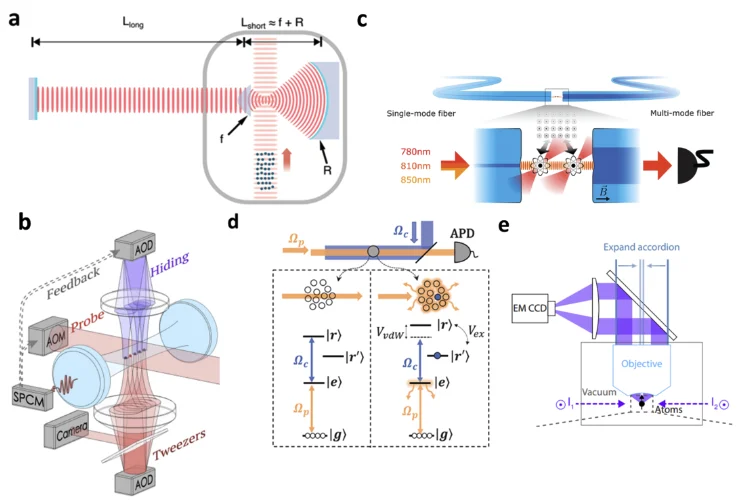
QuEra Outlines 2028 Roadmap for 256-Logical-Qubit “Libra” System and Expanded AWS Cloud Partnership Neutral-atom hardware developer QuEra Computing and Amazon Web Services (AWS) have announced an expanded, multi-year strategic collaboration to bring the first fault-tolerant quantum computer to the cloud. Scheduled for release in 2028, QuEra’s upcoming system, Libra, is designed as a “megaquop-class” processor. This classification indicates that the hardware is engineered to execute on the order of one million reliable logical quantum operations over hundreds of logical qubits before computational states are degraded by errors. Under the expanded agreement, the error-corrected system will be hosted natively on Amazon Braket, establishing an integration pathway for early non-trivial research and scientific applications. Technical Parameters: Target Specs and Reconfigurable Atom Arrays The structural architecture of the Libra processor targets an operational baseline of 256 error-corrected logical qubits and an anticipated logical error rate of 10-6 (one error per million operations). To sustain these thresholds, the system utilizes neutral-atom (Rydberg) technology, which inherently scales by organizing thousands of identical atoms within a single module, eliminating the need for complex inter-module interconnects. Furthermore, the hardware leverages optical tweezers—highly focused laser beams—to dynamically reposition atoms in real time without destroying quantum coherence. This reconfigurability provides all-to-all connectivity between qubits, allowing the system to run ultra-high-rate, transversal error-correcting codes that lower the physical-to-logical qubit overhead ratio compared to rigid, static topologies. Peer-Reviewed Scientific Foundations and Validation History The engineering roadmap for Libra builds on a series of field validations conducted by QuEra and its academic founders at Harvard University and the Massachusetts Institute of Technology (MIT). The
Quantum Computing ReportLoading...0
quantum-computingCapital of Quantum Welcomes Quantum Motion to Discovery District Maryland
Insider Brief Quantum Motion will establish a new facility in Discovery District Maryland, joining the Capital of Quantum ecosystem and expanding its U.S. presence. The company will operate alongside organizations including Microsoft, IQM, IonQ, and federal research institutions within Maryland’s quantum technology hub. Quantum Motion will participate in the Capital of Quantum Benchmarking Hub and support DARPA’s Quantum Benchmarking Initiative. PRESS RELEASE – The Capital of Quantum (CoQ) announced today that Quantum Motion, a U.K. company that develops full-stack silicon CMOS quantum computers, will establish a facility in Discovery District Maryland. Quantum Motion joins a growing roster of global quantum leaders at the heart of the nation’s most dynamic quantum ecosystem.CoQ is building out dedicated space for Quantum Motion within the same deep tech facility that is home to IQM’s first U.S.-based Quantum Technology Center and Microsoft’s Quantum Research Center. The facility provides purpose-built infrastructure designed to support advanced quantum hardware development and federal collaboration at the frontier of the field.“From day one, our administration has been intentional about placing big bets on industries where Maryland is positioned to lead,” said Gov. Wes Moore. “Quantum Motion’s presence sends a clear signal that these strategic investments are delivering results. We are thrilled to welcome them to the Capital of Quantum, and look forward to building a lasting partnership that will build economic momentum, drive innovation, and keep Maryland at the forefront of quantum discovery.” By establishing a presence in Discovery District Maryland, Quantum Motion gains immediate proximity to the federal agencies, world-class research institutions, and deep tech companies that define the region, including NIST, NASA Goddard, and the Army Research Laboratory, as well as the University of Maryland’s Joint Quantum Institute and Applied Res
Quantum DailyLoading...0
quantum-computingTight Bounds for Quantum Phase Estimation and Related Problems
AbstractPhase estimation, due to Kitaev [17], is one of the most fundamental subroutines in quantum computing. In the basic scenario, one is given black-box access to a unitary $U$, and an eigenstate $\lvert \psi \rangle$ of $U$ with unknown eigenvalue $e^{i\theta}$, and the task is to estimate the eigenphase $\theta$ within $\pm\delta$, with high probability. The cost of an algorithm for us is the number of applications of $U$ and $U^{-1}$. We tightly characterize the cost of several variants of phase estimation where we are no longer given an eigenstate, but are required to estimate the maximum eigenphase of $U$, aided by advice in the form of states (or a unitary preparing those states) which are promised to have at least a certain overlap $\gamma$ with the top eigenspace. We give algorithms and nearly matching lower bounds for all ranges of parameters. We show that a small number of copies of the advice state (or of an advice-preparing unitary) are not significantly better than having no advice at all. We also show that having lots of advice (applications of the advice-preparing unitary) does not significantly reduce cost, and neither does knowledge of the eigenbasis of $U$. We immediately obtain a lower bound on the complexity of the Unitary recurrence time problem, resolving an open question of She and Yuen [29]. Lastly, we study how efficiently one can reduce the error probability in the basic phase-estimation scenario. We show that a phase-estimation algorithm with precision $\delta$ and error probability $\epsilon$ has cost $\Omega\left(\frac{1}{\delta}\log\frac{1}{\epsilon}\right)$, matching an easy upper bound. This contrasts with some other scenarios in quantum computing (e.g., search) where error-probability reduction costs only a factor $O(\sqrt{\log(1/\epsilon)})$. Our lower bound uses a variant of the polynomial method with trigonometric polynomials.► BibTeX data@article{Mande2026tightboundsquantum, doi = {10.22331/q-2026-06-15-2140}, url = {https://
Quantum JournalLoading...0
quantum-computingQuantonation Strengthens Platform with Two Global Deep-Tech Industry Executives
Insider Brief Quantonation has appointed Magnus Bengtsson and Elizabeth Ruetsch as Venture Partners to support the commercialization and scaling of its quantum and deep-tech portfolio companies. Bengtsson brings leadership experience from Coherent Corp., while Ruetsch previously led quantum and EDA-related business initiatives at Keysight Technologies. The appointments follow Quantonation’s €220 million second fund close and reflect the firm’s focus on helping founders navigate growth, manufacturing, partnerships, and global expansion. PRESS RELEASE — Quantonation, the world’s leading venture firm for quantum and physics technologies, today announced the appointment of Magnus Bengtsson and Elizabeth Ruetsch as Venture Partners, strengthening the firm’s ability to support portfolio companies as they scale from scientific breakthroughs into global businesses. The appointments form part of Quantonation’s broader effort to expand its operating platform and provide founders with access to experienced industry leaders across commercialization, manufacturing, strategic partnerships, and global market expansion. Earlier this year, Quantonation closed its oversubscribed €220 million second fund, making it the largest dedicated quantum investment firm globally by assets under management. The global buildout of AI infrastructure is creating significant/unprecedented opportunities for quantum, photonics, advanced semiconductors, and other deep-tech companies. As demand accelerates and technologies move from laboratory breakthroughs to industrial development, founders increasingly face challenges that extend beyond technology development. Scaling production, building commercial organizations, navigating global supply chains, securing strategic customers, forging industry partnerships, and expanding internationally require expertise that is often difficult for early-stage companies to access. “Building transformative technology is only part of the journey,” said Christo
Quantum DailyLoading...0
quantum-computingCHIRON Project Launches Quantum Communication Network Initiative in Germany
Insider Brief The CHIRON project has launched in Germany to develop a scalable quantum communication infrastructure based on entanglement-enabled Quantum Key Distribution (QKD). The consortium will demonstrate quantum-secure networking through testbeds in Berlin and Thuringia, integrating quantum communications with existing digital infrastructure. The project combines entangled photon sources, quantum networking technologies, secure operating systems, and intelligent key routing to support future quantum-secure communications. PRESS RELEASE — The CHIRON project has officially launched, bringing together leading German research institutions and technology companies to build a scalable, entanglement-based quantum communication infrastructure designed to secure Europe’s digital networks against emerging cyber threats. Encryption protecting today’s digital infrastructure is under existential pressure from accelerating computing power, AI-driven attacks, and the approaching reality of cryptographically relevant quantum computers. While post-quantum cryptography (PQC) will strengthen algorithmic resilience, only Quantum Key Distribution (QKD) can provide long-term protection against “harvest now, decrypt later” attacks. Quantum Optics Jena will play a central role in making that vision a reality. Within CHIRON, the company is building the long-distance quantum communication backbone through SPAD-based polarization-entanglement links and high-brightness, high-heralding photon sources. These technologies are designed to extend the reach of semiconductor-detector-based QKD systems and create a scalable, maintainable network capable of connecting users across large geographic areas. The BMFTR-funded consortium will demonstrate the network across two real-world testbeds in urban Berlin and rural Thuringia, integrating quantum communications into existing ICT infrastructure. The project will also test quantum-secured access tokens at Bundesdruckerei for users operating in
Quantum DailyLoading...0
quantum-computingReport: U.S. Still Leads in Quantum Technology, But China is Closing the Gap
Insider Brief The United States still holds a narrow lead over China in the race to develop quantum technologies, but that advantage is shrinking as Beijing deploys a coordinated national strategy that increasingly challenges American strengths in research, manufacturing and commercialization. A new SCSP Tech Competition Scorecard report from the Special Competitive Studies Project (SCSP) […]
Quantum DailyLoading...0
quantum-computingTemporal Coarse Graining for Classical Stochastic Noise in Quantum Systems
AbstractSimulations of quantum systems with Hamiltonian classical stochastic noise can be challenging when the noise exhibits temporal correlations over a multitude of time scales, such as for $1/f$ noise in solid-state quantum information processors. Here we present an approach for simulating Hamiltonian classical stochastic noise that performs temporal coarse-graining by effectively integrating out the high-frequency components of the noise. We focus on the case where the stochastic noise can be expressed as a sum of Ornstein-Uhlenbeck processes. Temporal coarse-graining is then achieved by conditioning the stochastic process on a coarse realization of the noise, expressing the conditioned stochastic process in terms of a sum of smooth, deterministic functions and bridge processes with boundaries fixed at zero, and performing the ensemble average over the bridge processes. For Ornstein-Uhlenbeck processes, the deterministic components capture all dependence on the coarse realization, and the stochastic bridge processes are not only independent but taken from the same distribution with correlators that can be expressed analytically, allowing the associated noise propagators to be precomputed once for all simulations. This combination of noise trajectories on a coarse time grid and ensemble averaging over bridge processes has practical advantages, such as a simple concatenation rule, that we highlight with numerical examples.Popular summaryClassical simulation of quantum systems is a valuable tool for understanding the role of different noise sources on a quantum system's behavior, as well as informing how different strategies can mitigate or eliminate the impact of such non-idealities. For this reason, the development of practical methods that allow a more faithful simulation of the noise experienced by a quantum system remains an important area of research. Many noise sources, such as charge noise in solid-state quantum technologies, exhibit temporal correlations
Quantum Science and Technology (arXiv overlay)Loading...0