Home/Quantum Technology/Quantum Computing Drug Discovery: Pharma Applications & Molecular Simulation

Quantum Computing Drug Discovery: Pharma Applications & Molecular Simulation

Quantum computing drug discovery news: pharmaceutical quantum simulation, molecular modeling, protein folding. Roche, Merck & biotech partnerships.

1,418 Articles
Updated Daily

Quantum computing promises to transform pharmaceutical research by enabling first-principles molecular simulation of drug-target interactions, protein folding dynamics, and chemical reaction mechanisms that classical computers cannot accurately model. The pharmaceutical industry represents one of the highest-value near-term markets for quantum computing.

The Classical Bottleneck

Drug discovery relies heavily on molecular dynamics simulations and density functional theory (DFT) to predict how small-molecule drug candidates bind to protein targets. Classical computers cannot simulate strongly correlated electronic systems without exponential approximation errors, forcing reliance on expensive, time-consuming laboratory screening.

India's Pharmaceutical Quantum Computing Landscape

India's pharmaceutical industry, the world's third-largest by volume and a major global supplier of generic drugs, represents a strategic application domain for quantum computing under the National Quantum Mission. The NQM's Quantum Computing Thematic Hub at IISc Bengaluru includes drug discovery and molecular simulation among priority applications. Indian pharmaceutical companies including Sun Pharma, Dr. Reddy's Laboratories, Cipla, and Lupin are exploring quantum computing partnerships through collaborations with Indian quantum startups and global quantum cloud providers. The Department of Biotechnology (DBT) supports quantum biology research at institutions including IISc Bengaluru, TIFR Mumbai, and IISER Pune. The NQM targets developing quantum computers capable of simulating molecular systems relevant to drug discovery within the mission's 8-year timeline.

Near-Term Applications (NISQ Era)

Near-term applications in the NISQ era include quantum machine learning for molecular property prediction, quantum optimization of clinical trial design, quantum simulation of small molecules (10-50 atoms) for lead optimization, and hybrid approaches integrating quantum and classical molecular dynamics.

2 Quantum Computing Stocks That Could Make a Millionairequantum-computing

2 Quantum Computing Stocks That Could Make a Millionaire

Quantum computing is still a high-risk frontier, but for patient investors, these two tickers could be tomorrow's generational wealth creators.Quantum computing is still early, messy, and wildly speculative, which is exactly why the upside for patient, risk‑tolerant investors is so intriguing. If this technology can cross the chasm from lab curiosity to everyday infrastructure over the next 10–20 years, today's niche players could look like buying early cloud or GPU leaders before the world catches on.​ Here are two quantum names with very different approaches that could, in a bullish scenario, move the needle on lifetime wealth and eventually produce some millionaire investors. Image source: Getty Images. 1. IonQ IonQ (IONQ 4.52%) remains the poster child for pure‑play, gate‑based quantum hardware. This month, the company reiterated that its systems are already accessible via major public clouds and are being used by customers in pharmaceuticals, materials, finance, logistics, cybersecurity, and government work. What makes IonQ interesting from a millionaire‑maker perspective is the combination of three things: A credible technical roadmap (including industry‑leading error rates on key two‑qubit gates). Distribution through hyperscale clouds that can switch on demand when the economics make sense. Early‑stage real workloads and partnerships rather than purely academic demos. In other words, IonQ looks like a potential millionaire maker because it has a real technical edge, major cloud distribution, and early partnerships, proving it's moving beyond lab demos into real-world use. ExpandNYSE: IONQIonQToday's Change(-4.52%) $-1.51Current Price$31.92Key Data PointsMarket Cap$11BDay's Range$31.37 - $33.8852wk Range$17.88 - $84.64Volume679KAvg Vol20MGross Margin-747.41% 2. Rigetti Computing Where IonQ leans into trapped ions, Rigetti (RGTI 4.07%) is the scrappy superconducting challenger aiming to sell both cloud access and physical systems. In January, the company updat

The Motley FoolLoading...0
Fastest Change in Physics Limited by Planck Timequantum-computing

Fastest Change in Physics Limited by Planck Time

Scientists have long sought to understand the minimum time required for a system to reach local thermal equilibrium. Marvin Qi from the Leinweber Institute for Theoretical Physics & James Franck Institute, University of Chicago, and Alexey Milekhin from the Department of Physics and Astronomy, University of Kentucky, alongside Luca Delacr etaz from the Leinweber Institute for Theoretical Physics & James Franck Institute, University of Chicago, demonstrate a rigorous lower bound on this ‘equilibration time’, conjecturing it is fundamentally limited by the Planckian time. Their research establishes this bound by analysing the emergence of hydrodynamic behaviour in conserved densities, revealing a dimensionless coefficient dependent only on dimensionality and the type of behaviour, irrespective of the underlying thermalisation mechanism. This universally applicable result, achieved through careful consideration of real-time thermal correlators, offers significant insight into the foundations of statistical mechanics and applies to a broad range of physical systems, even those lacking a quasiparticle description or exhibiting inelastic scattering. Within a cryostat chilled to near absolute zero, delicate measurements track how quickly order arises from chaos. This pursuit reveals a fundamental limit to how rapidly any physical system can reach stability. The universal timescale, linked to the very fabric of spacetime, governs the emergence of predictable behaviour in everything from fluids to quantum materials. Scientists have long recognised the importance of the Planckian timescale, ħ/T, in quantum statistical physics — recent attention focuses on a compelling conjecture: that this timescale fundamentally limits how quickly quantum many-body systems reach local equilibrium. With a local equilibration time τeq greater than or equal to the Planckian time, and scientists have now moved beyond theoretical motivation to formally establish this bound. Defining τeq a

Quantum ZeitgeistLoading...0
AI Spots New Electron Crystal Within Graphene Layersquantum-computing

AI Spots New Electron Crystal Within Graphene Layers

Scientists have uncovered a novel ground state of matter within artificial graphene, revealing a paired Wigner crystal formed through an unexpected self-assembly process. Conor Smith from the Center for Computational Quantum Physics at the Flatiron Institute and the Department of Electrical and Computer Engineering at the University of New Mexico, alongside Yubo Yang from the Center for Computational Quantum Physics, Flatiron Institute and the Department of Physics and Astronomy at Hofstra University, Zhou-Quan Wan, Yixiao Chen from ByteDance, Miguel A. Morales from the Center for Computational Quantum Physics, Flatiron Institute and the Department of Physics at the University of Toronto, and Shiwei Zhang utilised a neural-network-based Monte Carlo approach to identify this state in a two-dimensional electron gas subjected to a honeycomb moiré potential. This research demonstrates the spontaneous formation of molecules comprising paired electrons, which then organise into a Wigner crystal without any external guiding potential or attractive forces, offering a compelling example of emergent collective behaviour and opening avenues for the design of materials with unique electronic characteristics. For decades, physicists have sought to understand how electrons arrange themselves in complex materials. Now, an artificial graphene system reveals an unexpected, self-organised pattern where electrons pair up and form crystalline structures, offering a fresh perspective on collective electron behaviour and potential control over material properties. Scientists are increasingly focused on moiré systems as tunable platforms for investigating quantum matter — these artificially created structures, arising from the interference of two overlaid lattices, have already exhibited a range of exotic states. Prompting considerable research across experimental and theoretical physics. This new state emerges at a specific filling factor, where one electron occupies every four minima wi

Quantum ZeitgeistLoading...0
Laser Tweezers Sculpt Atoms’ Electrons with Precisionquantum-computing

Laser Tweezers Sculpt Atoms’ Electrons with Precision

Researchers are now demonstrating precise control over the behaviour of Rydberg atoms, potentially revolutionising areas such as quantum computing and materials science. Homar Rivera-Rodríguez and Matthew T. Eiles, from the Max-Planck Institut für Physik komplexer Systeme, alongside Tilman Pfau and Florian Meinert working with colleagues at the 5. Physikalisches Institut and Center for Integrated Quantum Science and Technology, Universität Stuttgart, detail a novel method for manipulating the electron orbits of Rydberg atoms using optical tweezers. Their work computes electronic eigenstates within a tightly focused laser beam, revealing strong mixing of Rydberg states and the creation of substantial dipole moments that can be rapidly modulated. This ability to sculpt the electronic matter wave and trap atoms via ponderomotive forces on sub-orbital length scales opens exciting possibilities for creating and controlling ultralong-range Rydberg molecules and exploring new quantum phenomena. Scientists are edging closer to harnessing the exotic properties of matter at its most fundamental level. Controlling individual atoms with light offers a pathway to entirely new technologies, and this work demonstrates an unexpected degree of precision. The ability to sculpt the behaviour of electrons within atoms could unlock advances in quantum computing and materials science. Researchers have achieved a new level of control over the electronic structure of Rydberg atoms, manipulating the electron orbitals with focused laser light. This work details a method for sculpting the “matter wave” of an electron within a Rydberg atom, atoms with electrons in highly excited states, using optical tweezers, beams of light capable of trapping and manipulating microscopic objects. By focusing a laser beam to a size smaller than the electron’s orbit, they induce substantial changes in the atom’s electronic properties, creating large, controllable dipole moments measured in the kilo-Debye range

Quantum ZeitgeistLoading...0
New Method Reveals Hidden Order in Complex Systemsquantum-computing

New Method Reveals Hidden Order in Complex Systems

Scientists have developed a novel spectroscopic technique, termed dissipative spectroscopy, to extract spectral information from complex systems by harnessing controlled dissipation. Xudong He and Yu Chen, from the University of Science and Technology of China, present this framework, establishing a general dissipative response applicable to both Markovian and non-Markovian environments. Their research details a protocol to access the dissipative spectrum through driven oscillation-dissipation resonance, revealing previously hidden signatures of critical behaviour and macroscopic order. This work is significant because it identifies two-particle soft modes near critical points and predicts power-law growth following a dissipation quench, even in quasiparticle-dominant regimes often dismissed as trivial. By introducing extended dissipative susceptibilities and demonstrating their utility in a fermionic model, the authors offer a versatile tool for probing both equilibrium properties and predicting non-equilibrium dissipative dynamics. Scientists have devised a novel technique for understanding complex materials by carefully controlling how energy fades away within them. This method reveals hidden details about a material’s behaviour, even when traditional approaches fail to detect changes, and promises a fresh perspective on predicting how systems evolve and respond to external stimuli. This work introduces dissipative spectroscopy, a technique that extracts spectral information from quantum materials through controlled dissipation, opening avenues to study phenomena previously hidden from view. The research details how this approach can identify subtle changes within materials near critical points, moments of dramatic transformation, and even predict the emergence of order in seemingly disordered systems. Probing quantum dynamics often requires distinguishing between external influences and inherent noise. Equipped with recent advances in dissipation engineering, re

Quantum ZeitgeistLoading...0
Machine Learning Clarifies Elusive Quantum States in Materialquantum-computing

Machine Learning Clarifies Elusive Quantum States in Material

Scientists continue to pursue the definitive identification of Majorana zero modes (MZMs) within topological superconductors, a pursuit complicated by overlapping spectral features that mimic genuine MZM signals. Jewook Park and Hoyeon Jeon, both from the Center for Nanophase Materials Science at Oak Ridge National Laboratory, alongside Dongwon Shin from the Materials Sciences and Technology Division at the same institution, have led a study employing a novel machine-learning approach to address this challenge. Working with colleagues including Guannan Zhang from the Computer Science and Mathematics Division, Michael A McGuire and Brian C Sales from the Materials Sciences and Technology Division, and An-Ping Li, the team developed a data-driven workflow for analysing tunneling spectroscopy data from the intrinsic topological superconductor FeTe0.55Se0.45. This research is significant because it introduces an objective and reproducible method for distinguishing true MZMs from trivial in-gap states, offering a crucial step towards reliable detection and eventual manipulation of these exotic states for potential quantum computation applications. Scientists are edging closer to realising the potential of quantum computing with a new technique for identifying elusive quantum particles. The method overcomes a major hurdle in materials science by reliably distinguishing genuine quantum signals from misleading background noise, promising to accelerate the development of stable and scalable quantum technologies. Researchers are developing a new method to reliably identify Majorana zero modes within topological superconductors, a critical step towards building more stable quantum computers. Identifying these quasiparticles has proven difficult because their signatures, zero-bias conductance peaks, can be mimicked by other, non-topological phenomena within the material. The team demonstrated a data-driven workflow integrating detailed spectral analysis with machine learning to

Quantum ZeitgeistLoading...0
Twisted Material Hosts Topological Superconductivity and Vorticesquantum-computing

Twisted Material Hosts Topological Superconductivity and Vortices

Researchers are increasingly focused on understanding the interplay between superconductivity and the fractional quantum anomalous Hall (FQAH) effect in twisted materials. Daniele Guerci, Ahmed Abouelkomsan, and Liang Fu, all from the Department of Physics at the Massachusetts Institute of Technology, demonstrate that the superconducting state observed in twisted MoTe₂ is a chiral p-wave superconductor hosting an array of vortices. These vortices are induced by an emergent magnetic field within the moiré superlattice, resulting in a topological superconducting vortex lattice state with a Chern number of one. This work offers a unified understanding of both FQAH and topological superconductivity, potentially paving the way for novel electronic devices and a deeper comprehension of correlated electron systems. Recent observations in twisted molybdenum ditelluride (MoTe₂) revealed the simultaneous presence of superconductivity and the fractional quantum anomalous Hall effect (FQAH), prompting a detailed theoretical investigation into their underlying connection. The arrangement of electrons within the material creates a unique, ordered structure with implications for future electronic devices. Scientists have uncovered a surprising link between these two distinct quantum phenomena. This work demonstrates that the superconducting state emerging in these materials is not conventional, but a chiral f-wave superconductor hosting a unique array of vortices, each carrying twice the usual quantum of magnetic flux. These vortices, induced by an emergent magnetic field arising from the material’s layered structure, form a topological vortex lattice with a Chern number of -1/2, directly resulting in a half-integer thermal Hall conductance. The research establishes a unified framework explaining both phenomena, controlled by the spatial variation of this emergent magnetic field. Unlike traditional superconductivity induced by external magnetic fields, this system’s superconductiv

Quantum ZeitgeistLoading...0
Superconductor Effect Lost in Stages, Not All at Oncequantum-computing

Superconductor Effect Lost in Stages, Not All at Once

Researchers are investigating the behaviour of superconductivity in bilayer materials, revealing a surprising sequence of events leading to the loss of key quantum properties. F. Yang, C. Y. Dong, and Joshua A. Robinson from the Department of Materials Science and Engineering and Materials Research Institute at The Pennsylvania State University, working with L. Q. Chen, demonstrate that the Josephson diode effect, a form of nonreciprocal current flow, disappears at a lower temperature than complete superconducting coherence. This challenges the established understanding that both effects vanish simultaneously. Their self-consistent microscopic theory, incorporating phase fluctuations, shows a hierarchy of thermal crossovers, progressing from a nonreciprocal to a reciprocal and finally an incoherent Josephson regime before the superconducting gap closes. Significantly, this research highlights the sensitivity of these transitions to factors like interlayer coupling, in-plane disorder, and carrier density, offering insights relevant to layered superconductors such as cuprates and nickelates, and potentially advancing the development of superconducting devices. Imagine building a delicate house of cards, where even the slightest tremor can cause it to collapse. Similarly, maintaining the flow of supercurrent in advanced materials requires shielding it from disruptive thermal vibrations. New work reveals how this delicate balance breaks down in layered superconductors, with specific components failing at different temperatures before complete loss of conductivity. Scientists have long understood that superconductivity, the lossless flow of electricity, relies on the delicate coherence of electrons forming Cooper pairs. Recent investigations into superconducting diodes, devices exhibiting a directional preference for current flow, have revealed a surprising complexity in how this coherence breaks down within layered superconductors. Contrary to expectations of a simultan

Quantum ZeitgeistLoading...0
Quandela Unveils MerLin, Reproducing 18 State-of-the-Art Photonic QML Modelsquantum-computing

Quandela Unveils MerLin, Reproducing 18 State-of-the-Art Photonic QML Models

Quandela Quantique Inc. has unveiled MerLin, a new open-source framework designed as a discovery engine for photonic and hybrid quantum machine learning. Available as of February 11, 2026, MerLin integrates optimized quantum simulation into standard machine learning workflows, enabling the training of quantum layers and systematic benchmarking. As an initial demonstration, the framework successfully reproduces eighteen state-of-the-art photonic and hybrid QML models, spanning diverse architectures like kernel methods and convolutional networks. By embedding photonic quantum models within established machine learning ecosystems, MerLin allows practitioners to leverage existing tooling for comparisons and hybrid workflows, “establishing a shared experimental baseline consistent with empirical benchmarking methodologies widely adopted in modern artificial intelligence.” This positions MerLin as a tool for linking algorithms, benchmarks, and future quantum hardware. Photonic Quantum Computing Advantages for Machine Learning Photonic quantum computing is proving particularly promising due to its scalability, robustness, compatibility with optical communication technologies, and energy efficiency. This convergence of quantum computing and machine learning is accelerating advances in both fields, with quantum machine learning (QML) offering the potential to extend the capabilities of classical algorithms. Unlike many approaches, photonic QML “exploits the bosonic nature of light and high-dimensional multi-mode interference to implement and train machine learning models directly on this unconventional photonic quantum computation model, enabling intrinsic parallelism and efficient exploration of large Hilbert spaces.” Realizing this potential necessitates software frameworks that bridge abstract QML models with execution on emerging quantum hardware. The need for such tools is highlighted by the current fragmented software landscape, where frameworks like Qiskit, Cirq, Puls

Quantum ZeitgeistLoading...0
Simulations Unlock Heat Transfer in Solid Insulatorsquantum-computing

Simulations Unlock Heat Transfer in Solid Insulators

Scientists have long struggled to accurately calculate thermal conductivity in insulating solids at low temperatures, where conventional methods falter. Now, Vladislav Efremkin from the Center for Advanced Systems Understanding, Helmholtz Zentrum Dresden-Rossendorf, Stefano Mossa from Université Grenoble Alpes and CEA, and Jean-Louis Barrat from Univ. Grenoble Alpes, CNRS, LIPhy, alongside Markus Holzmann and colleagues from CNRS, LPMMC, and Université Savoie Mont Blanc, present a novel methodology for computing thermal conductivity using Path Integral Monte Carlo (PIMC) simulations and Green-Kubo linear response theory. This collaborative research, conducted across multiple institutions, addresses a fundamental challenge in materials science by demonstrating that observed increases in thermal conductivity at low temperatures cannot be explained by existing Peierls-Boltzmann or quasi-harmonic approximations. Instead, the team reveals a distinct transport lifetime derived from heat-current correlations, establishing Monte Carlo methods as a robust, non-perturbative framework for investigating heat transport in insulating solids and surpassing the limitations of classical molecular dynamics. A temperature drop of just one degree Kelvin, measured across a millimetre of crystalline argon, reveals the limits of existing heat transfer models. This new computational technique offers a more accurate way to understand how heat flows in insulating materials. Scientists have long faced challenges in accurately modelling heat transfer within insulating solids, particularly at temperatures nearing absolute zero. Conventional methods, relying on classical or semi-classical physics, begin to falter when quantum effects become dominant, leading to discrepancies between theoretical predictions and experimental observations. Existing theories often rely on approximations of atomic vibrations, known as phonons, and their interactions, which become inadequate when quantum mechanics gov
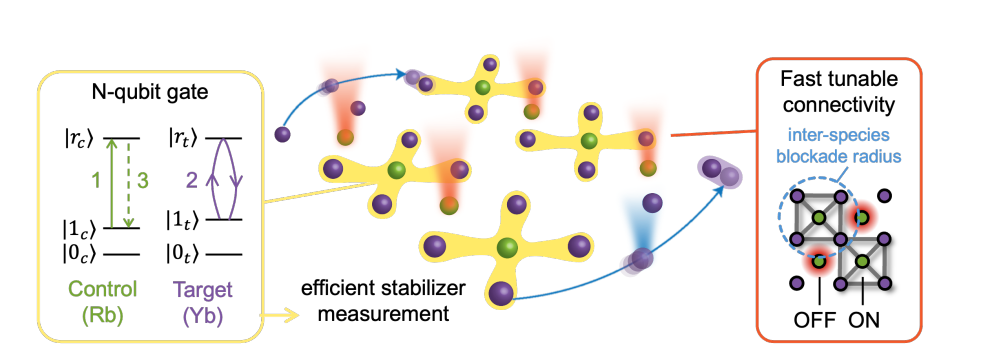
Quantum ZeitgeistLoading...0
Classical Models Explain Magnetic Material Propertiesquantum-computing

Classical Models Explain Magnetic Material Properties

Scientists have long sought to accurately model the behaviour of complex magnetic materials, and a new study details a robust quantum-classical correspondence for systems of interacting spins at finite temperatures. A. El Mendili and M. E. Zhitomirsky, working collaboratively, demonstrate that the asymptotic form of a partition function converges with that of a classical spin model in the large-N limit, with corrections forming a series in powers of N. This representation rigorously underpins classical modelling approaches to realistic magnetic Hamiltonians, offering a powerful tool for materials scientists. As an application of this framework, the researchers performed classical Monte Carlo simulations to compute transition temperatures for a range of topical materials, including MnF, MnTe, RbMnF₃, MnPSe₅, FePS₆, FePSe₅, CoPS₆, CrSBr, and CrI₃, achieving good agreement with existing experimental data. This approach accurately predicts transition temperatures for ten compounds, including MnF, MnTe and CrI, aligning closely with experimental observations. The method provides a rigorous link between quantum mechanics and widely-used classical simulations. Scientists have long sought to accurately model the behaviour of magnetic materials, a pursuit driven by the ever-growing demand for applications reliant on their properties. Accurate theoretical modelling requires understanding the thermodynamics of quantum magnets, yet simulating these systems presents considerable challenges. Magnetic frustration, arising from complex interactions within materials, often creates computational roadblocks for quantum simulations. Classical Monte Carlo simulations offer a potential solution, but their validity when applied to quantum spin models requires careful consideration. Now, research establishes a rigorous connection between quantum and classical descriptions of magnetism, opening new avenues for materials modelling. Quantum spins, governed by the principles of quantum mechani

Quantum ZeitgeistLoading...0
Light Squeezed at Band-Gap Frequency in New Statesquantum-computing

Light Squeezed at Band-Gap Frequency in New States

Researchers are increasingly investigating high-harmonic generation (HHG) through the lens of strong-field quantum optics, demonstrating that generated radiation often exhibits nonclassical light characteristics. However, a comprehensive quantum optical understanding of HHG originating from topological insulators remains elusive. Christian Saugbjerg Lange and Lars Bojer Madsen, both from the Department of Physics and Astronomy at Aarhus University, have addressed this knowledge gap by examining HHG responses within the Su-Schrieffer-Heeger model, a finite atomic chain exhibiting both trivial and nontrivial insulating phases supporting edge states. Their findings reveal squeezed light generation at the band-gap frequency for both phases, with harmonic spectra differentiating the phases, although this distinction weakens with increasing chain length due to increased overlap between bulk and edge states. This work elucidates the role of dipole coupling strength in governing nonclassical HHG and opens new avenues for exploring the protected generation of quantum light in strong-field physics. Imagine building a complex electrical circuit where the very edges conduct power differently to the interior. New work explores how light emission from materials with unusual electronic properties, specifically those supporting edge states, exhibits a unique quantum character. This investigation demonstrates squeezed light at the material’s band-gap frequency, offering a pathway to control non-classical light generation. Scientists are increasingly applying quantum mechanical descriptions to the interaction between light and matter, a field known as strong-field quantum optics. Recent work has demonstrated that light generated through high-harmonic generation (HHG), a process where intense laser fields create new frequencies of light, often exhibits nonclassical properties. A complete quantum optical understanding of HHG originating from materials with unusual electronic structures

Quantum ZeitgeistLoading...0
Symmetry Breaking Develops Faster Than Charge Diffusionquantum-computing

Symmetry Breaking Develops Faster Than Charge Diffusion

Scientists investigate the breakdown of symmetry in open quantum systems, a phenomenon with implications for understanding non-equilibrium dynamics and the emergence of classical behaviour from quantum mechanics. Jacob Hauser, Kaixiang Su, and Hyunsoo Ha, working at the Department of Physics, University of California, Santa Barbara, alongside Jerome Lloyd and Romain Vasseur from the Department of Theoretical Physics, University of Geneva, and colleagues including Sarang Gopalakrishnan of Princeton University’s Department of Electrical and Computer Engineering, and Matthew P. A. Fisher from the Kavli Institute for Theoretical Physics and the Department of Physics at UC Santa Barbara, demonstrate how strong-to-weak symmetry breaking transitions occur, linking discrete particle behaviour to continuum hydrodynamic descriptions. Their research, conducted in collaboration across multiple institutions, reveals that this symmetry breaking manifests on timescales that define the limits of hydrodynamic approximations, offering new insights into the relationship between microscopic dynamics and macroscopic, classical phenomena. Can complex systems transition from behaving like distinct particles to flowing like a continuous fluid. This work demonstrates how such a change happens, revealing a precise timescale for when particle-like behaviour gives way to fluid-like dynamics. Understanding this shift unlocks new ways to model everything from quantum materials to biological systems. Scientists are increasingly focused on understanding transitions in systems interacting with external environments, moving beyond traditional equilibrium phase transitions. Recent investigations have uncovered a wider range of transitions occurring in systems coupled to external environments, including measurement-induced criticality, separability transitions, teleportation transitions, complexity transitions, and those driven by decoherence. Strong-to-weak spontaneous symmetry breaking (SW-SSB) is a

Quantum ZeitgeistLoading...0
Graphene Patterns Unlock Stacked Insulating Electron Statesquantum-computing

Graphene Patterns Unlock Stacked Insulating Electron States

Researchers are increasingly focused on harnessing correlated insulating behaviour in graphene to unlock emergent phenomena such as superconductivity and magnetism. Xinyu Cai, Fengfan Ren, and Qiao Li, all from ShanghaiTech University, alongside Yanran Shi, Yifan Wang, Yifan Zhang, Zhenghang Zhi, Jiawei Luo, Yulin Chen, and Jianpeng Liu, also of ShanghaiTech University, working with Xufeng Kou and Zhongkai Liu, demonstrate a new method for achieving this using bilayer graphene. Their work details the creation of an artificial Kagome superlattice through nanopatterning of the substrate, offering a precisely defined and tunable periodic potential. This approach overcomes reproducibility and tunability issues associated with traditional moiré graphene superlattices, revealing a stack of correlated insulating states and establishing dielectric-patterned graphene superlattices as a robust platform for exploring flat-band-induced correlated phenomena. Imagine building a miniature city with perfectly arranged blocks, controlling how electrons flow through it. That level of precision is now possible with bilayer graphene, creating multiple, interacting layers of insulating behaviour. This new technique offers a reliable route to harnessing strong electron interactions for future electronic devices. Scientists have long sought to control the behaviour of electrons in materials to create new quantum phenomena. Graphene, a single-atom-thick sheet of carbon, presents a particularly promising platform due to its exceptional electronic properties. Recent work has focused on engineering ‘flat bands’ within graphene’s electronic structure, where electrons experience reduced kinetic energy and enhanced interactions, potentially leading to states like superconductivity and correlated insulation. Achieving these flat bands has traditionally relied on creating moiré superlattices, patterns arising from the slight misalignment of graphene layers, or utilising specific stacking arrangeme

Quantum ZeitgeistLoading...0
Entanglement Boosts Machine Learning of Quantum Systemsquantum-computing

Entanglement Boosts Machine Learning of Quantum Systems

Researchers are increasingly focused on accurately approximating complex Hamiltonian dynamics with simplified, effective models, a crucial challenge at the intersection of Hamiltonian learning and simulation. Ayaka Usui, Guillermo Abad-López, and Hari krishnan SV, working with colleagues at the Universitat Autònoma de Barcelona and ICREA, demonstrate a novel approach to improve the performance of quantum generative adversarial networks (QGANs) in this area. Their work addresses the common issue of training plateaus and local minima that often limit QGAN scalability. By introducing an entanglement-assisted learning strategy, coupling a randomly initialized auxiliary qubit during training, the team significantly enhances learning performance, offering a promising pathway towards more efficient and robust Hamiltonian dynamics simulations. Complex molecular simulations, essential for materials science and drug design, could become dramatically faster with improved quantum algorithms. Entanglement-assisted learning offers a potential solution to longstanding challenges in quantum machine learning, stabilising the training process and bringing practical quantum simulation closer to reality. Scientists are increasingly focused on methods for approximating complex quantum systems with simpler, more manageable models, a pursuit at the intersection of quantum Hamiltonian learning and quantum simulation. Recent work demonstrates that quantum generative adversarial networks, or QGANs, can outperform traditional approaches to this approximation, such as the Trotter method. However, training these QGANs presents challenges, including optimisation difficulties and a tendency to get stuck in suboptimal solutions as the system grows in complexity. A new entanglement-assisted learning strategy offers a potential solution, coupling a randomly initialised auxiliary qubit to the learning process at an intermediate stage. This addition introduces a beneficial interaction between randomis

Quantum ZeitgeistLoading...0
Finite-Temperature Dynamical Phase Diagram of the $2+1$D Quantum Ising Modelquantum-computing

Finite-Temperature Dynamical Phase Diagram of the $2+1$D Quantum Ising Model

--> Quantum Physics arXiv:2602.16772 (quant-ph) [Submitted on 18 Feb 2026] Title:Finite-Temperature Dynamical Phase Diagram of the $2+1$D Quantum Ising Model Authors:Lucas Katschke, Roland C. Farrell, Umberto Borla, Lode Pollet, Jad C. Halimeh View a PDF of the paper titled Finite-Temperature Dynamical Phase Diagram of the $2+1$D Quantum Ising Model, by Lucas Katschke and 4 other authors View PDF HTML (experimental) Abstract:Mapping finite-temperature dynamical phase diagrams of quantum many-body models is a necessary step towards establishing a framework of far-from-equilibrium quantum many-body universality. However, this is quite difficult due, in part, to the severe challenges in representing the volume-law entanglement that is generated under nonequilibrium dynamics at finite temperatures. Here, we address these challenges with an efficient equilibrium quantum Monte Carlo (QMC) framework for computing the finite-temperature dynamical phase diagram. Our method uses energy conservation and the self-thermalizing properties of ergodic quantum systems to determine observables at late times after a quantum quench. We use this technique to chart the dynamical phase diagram of the $2+1$D quantum Ising model generated by quenches of the transverse field in initial thermal states. Our approach allows us to track the evolution of dynamical phases as a function of both the initial temperature and transverse field. Surprisingly, we identify quenches in the ordered phase that cool the system as well as an interval of initial temperatures where it is possible to quench from the paramagnetic (PM) to ferromagnetic (FM) phases. Our method gives access to dynamical properties without explicitly simulating unitary time evolution, and is immediately applicable to other lattice geometries and interacting many-body systems. Finally, we propose a quantum simulation experiment on state-of-the-art digital quantum hardware to directly probe the predicted dynamical phases and their real-t

arXiv Quantum PhysicsLoading...0
Neural Network Discovery of Paired Wigner Crystals in Artificial Graphenequantum-computing

Neural Network Discovery of Paired Wigner Crystals in Artificial Graphene

--> Quantum Physics arXiv:2602.16798 (quant-ph) [Submitted on 18 Feb 2026] Title:Neural Network Discovery of Paired Wigner Crystals in Artificial Graphene Authors:Conor Smith, Yubo Yang, Zhou-Quan Wan, Yixiao Chen, Miguel A. Morales, Shiwei Zhang View a PDF of the paper titled Neural Network Discovery of Paired Wigner Crystals in Artificial Graphene, by Conor Smith and 5 other authors View PDF HTML (experimental) Abstract:Moiré systems have emerged as an exciting tunable platform for engineering and probing quantum matter. A large number of exotic states have been observed, stimulating intense efforts in experiment, theory, and simulation. Utilizing a neural-network-based quantum Monte Carlo approach, we discover a new ground state of the two-dimensional electron gas in a honeycomb moire potential at a filling factor of $\nu_m =1/4$ (one electron every four moiré minima). In this state, two opposite-spin electrons pair to form a singlet-like valence bond state which restores local $C_6$ symmetry in hexagonal molecules each spanning $6$ moiré minima. These molecules of pairs then form a molecular Wigner crystal, leaving one quarter of the moiré minima mostly depleted. The formation of such a paired Wigner crystal, absent any confining potential or attractive interaction to facilitate "pre-assembling" the molecule, provides a fascinating case of collective phenomena in strongly interacting quantum many-body systems, and opportunities to engineer exotic properties. Subjects: Quantum Physics (quant-ph) Cite as: arXiv:2602.16798 [quant-ph]   (or arXiv:2602.16798v1 [quant-ph] for this version)   https://doi.org/10.48550/arXiv.2602.16798 Focus to learn more arXiv-issued DOI via DataCite (pending registration) Submission history From: Conor Smith [view email] [v1] Wed, 18 Feb 2026 19:01:36 UTC (6,894 KB) Full-text links: Access Paper: View a PDF of the paper titled Neural Network Discovery of Paired Wigner Crystals in Artificial Graphene, by Conor Smith and 5 othe

arXiv Quantum PhysicsLoading...0
Phonon-enhanced strain sensitivity of quantum dots in two-dimensional semiconductorsquantum-computing

Phonon-enhanced strain sensitivity of quantum dots in two-dimensional semiconductors

--> Quantum Physics arXiv:2602.17212 (quant-ph) [Submitted on 19 Feb 2026] Title:Phonon-enhanced strain sensitivity of quantum dots in two-dimensional semiconductors Authors:Sumitra Shit, Yunus Waheed, Jithin Thoppil Surendran, Indrajeet Dhananjay Prasad, Kenji Watanabe, Takashi Taniguchi, Santosh Kumar View a PDF of the paper titled Phonon-enhanced strain sensitivity of quantum dots in two-dimensional semiconductors, by Sumitra Shit and 6 other authors View PDF HTML (experimental) Abstract:Two-dimensional semiconductors have attracted considerable interest for integration into emerging quantum photonic networks. Strain engineering of monolayer transition-metal dichalcogenides (ML-TMDs) enables the tuning of light-matter interactions and associated optoelectronic properties, and generates new functionalities, including the formation of quantum dots (QDs). Here, we combine spatially resolved micro-photoluminescence ($\mu$-PL) spectroscopy from cryogenic (4$\text{-}$94 K) to room temperature with micro-Raman spectroscopy at room temperature to investigate the strain-dependent emission energies of thousands of individual QDs in ML-WS$_2$ and ML-WSe$_2$, integrated across multiple heterostructures and a piezoelectric device. Compared with delocalized excitons, QDs in both materials exhibit enhanced strain sensitivities of their emission energies $-$ approximately fourfold in WS$_2$ and twofold in WSe$_2$ $-$ leading to pronounced broadening of the ensemble emission linewidth. Temperature-dependent $\mu$-PL spectroscopy combined with dynamic strain tuning experiments further reveal that the enhanced strain sensitivity of individual QDs originates from strengthened interactions with low-energy phonons induced by quantum confinement. Our results demonstrate a versatile strain-engineering approach with potential for spectral matching across solid-state, atomic, and hybrid quantum photonic networks, and provide new insights into phonon-QD interactions in two-dimensional semi

arXiv Quantum PhysicsLoading...0
Entanglement Reveals Hidden Order in Complex Materialsquantum-computing

Entanglement Reveals Hidden Order in Complex Materials

Researchers are increasingly focused on understanding how fragile quantum entanglement behaves in realistic, imperfect systems. Kang-Le Cai and Meng Cheng, both from the Department of Physics at Yale University, have investigated universal entanglement signatures in mixed states arising from the decoherence of topologically ordered phases. Their work centres on topological entanglement negativity and mutual information, revealing how these quantities relate to the dimensions of defects forming between different decoherence-induced boundary conditions. By developing a replica field-theory framework and applying it to decohered string-net states, the authors demonstrate a crucial distinction between topological mutual information, which probes the full emergent anyon theory, and topological entanglement negativity, which specifically detects its modular component. This research provides fundamental insights into characterising topological order in noisy quantum systems and advances our ability to detect and protect quantum information. Within a cryostat chilled to near absolute zero, delicate quantum states are being deliberately disrupted to explore the boundaries of order. These controlled disturbances reveal hidden connections between entanglement and the underlying structure of matter. By measuring how entanglement responds to this ‘decoherence’, physicists are mapping the properties of exotic quantum phases and the anyons within them. Scientists are increasingly focused on understanding mixed-state phases of matter, particularly those arising from the decoherence of topologically ordered systems. Topological order, a property of certain quantum materials, promises robustness against local perturbations, yet real-world materials inevitably experience noise. As a result, identifying universal characteristics within these imperfect, mixed states becomes a central challenge. Recent work has concentrated on entanglement measures, quantifications of quantum connectedne

Quantum ZeitgeistLoading...0