
Scientists Just Measured an Energy Pulse Smaller Than a Trillionth of a Billionth of a Joule
Summarize this article with:


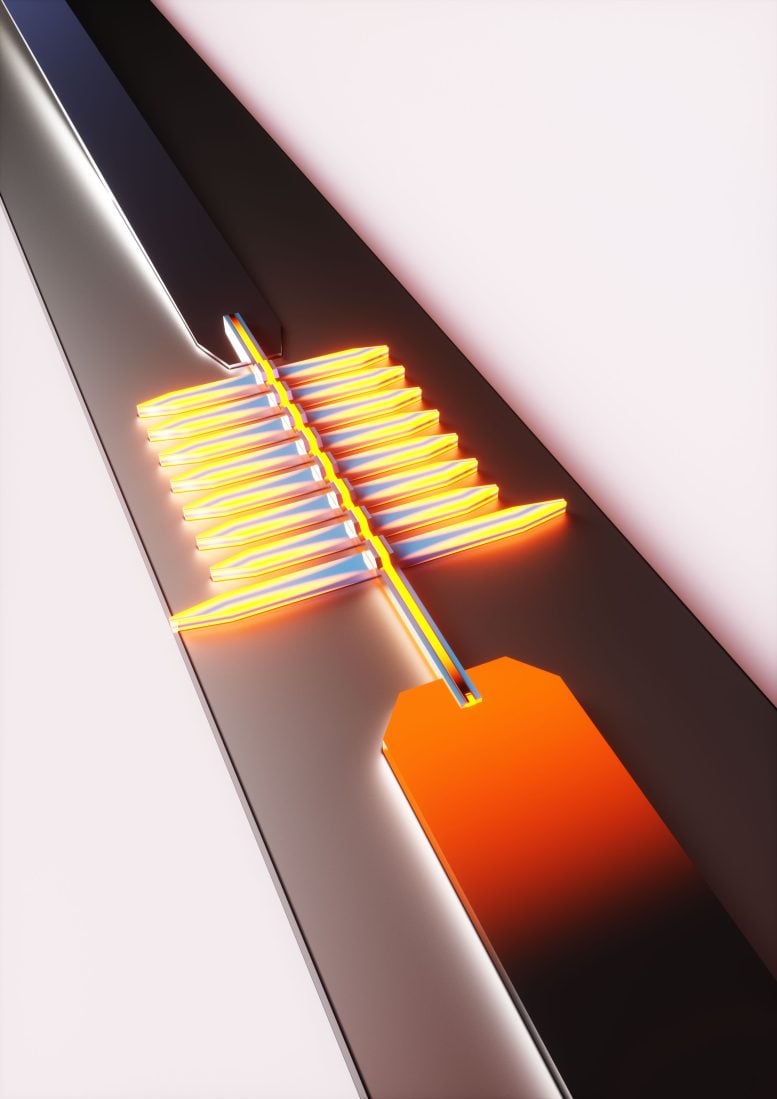
Science Scientists Just Measured an Energy Pulse Smaller Than a Trillionth of a Billionth of a JouleBy Aalto UniversityMay 14, 20263 Mins Read Facebook Twitter Pinterest Telegram LinkedIn WhatsApp Email Reddit Share Facebook Twitter LinkedIn Pinterest Telegram Email Reddit Researchers in Finland have developed an ultra-sensitive calorimeter capable of detecting energy levels below one zeptojoule. Credit: Ella Maru StudioA newly developed quantum sensor has measured unimaginably small amounts of energy with record-breaking precision.A newly developed technique for measuring unimaginably small amounts of energy could help advance quantum computing and improve the search for dark matter. The method is sensitive enough to detect less than a trillionth of a billionth of a joule and may eventually allow scientists to count individual photons.Quantum mechanics operates at extremely small scales, so researchers are continually developing more precise tools to study particles such as photons, which carry light. Better measurements could improve quantum technologies and help scientists detect hypothetical dark matter particles known as axions.Researchers in Finland recently used an ultra-sensitive heat-based sensor called a calorimeter to measure energy levels below one zeptojoule, equal to one trillionth of a billionth of a joule. For comparison, a zeptojoule is about the amount of energy needed to move a red blood cell upward by one nanometer in Earth’s gravity.The research team was led by Academy Professor Mikko Möttönen at Aalto University in collaboration with quantum computing company IQM and the Technical Research Centre of Finland (VTT). Their findings were published in Nature Electronics.How the Sensor WorksMeasuring energy at this scale is extremely challenging. To perform the experiment, the researchers sent a microwave pulse into a sensor made from two types of metals: superconductors, which allow electrical signals to move freely, and standard conductors, which create resistance.‘That combination of metals makes superconductivity such a fragile phenomenon that it weakens immediately if the temperature in the ultracold conductor rises even a little bit. This makes it such a sensitive setup,’ says Möttönen, who is also a founder of the quantum computer unicorn IQM.The zeptojoule pulse traveled through a combination of superconducting and regular metals. Credit: Ella Maru StudioAfter filtering out background noise, the researchers confirmed that the device detected an electromagnetic pulse carrying just 0.83 zeptojoules of energy. According to the team, this is the first time a calorimetric measurement device has achieved this level of sensitivity.Implications for Quantum Technology and Dark Matter SearchesThe researchers say the technology could eventually make it possible to count individual photons. Möttönen explained that reaching this level of sensitivity has been a long-standing goal in both quantum research and astrophysics.“We want to make this setup capable of measuring input that has an arbitrary time of arrival, which is important for things like detecting dark-matter axions in space when you have no idea when they might reach your system.”Möttönen also said the calorimeter has an important advantage for quantum computing applications because it works at the same ultracold millikelvin temperatures required by qubits.“A calorimeter operates in the same millikelvin temperatures that qubits require. This introduces less disturbance into the system as we don’t have to bring the device to a high temperature or amplify the qubit measurement signal to get a result. In the future, our device could be a component for reading out qubits in quantum computers, for example.”Reference: “Zeptojoule calorimetry” by András Márton Gunyhó, Kassius Kohvakka, Qi-Ming Chen, Jean-Philippe Girard, Roope Kokkoniemi, Wei Liu and Mikko Möttönen, 12 May 2026, Nature Electronics. DOI: 10.1038/s41928-026-01615-2The team used the facilities of OtaNano, Finland’s national research infrastructure for nano-, micro- and quantum technologies. This result mainly stems from the Future Makers project funded by the Jane and Aatos Erkko Foundation and the Technology Industries of Finland Centennial Foundation.Never miss a breakthrough: Join the SciTechDaily newsletter.Follow us on Google and Google News. Share.
Facebook Twitter Pinterest LinkedIn Email Reddit Related Articles 540-Million-Year-Old Fossils Reveal a Huge Surprise About Early Life on Earth Scientists Create “Living” Materials That Crawl, Walk, and Dig on Their Own Dante’s Inferno May Secretly Be About a Planet-Destroying Asteroid Strike Mixing Edible Cannabis and Alcohol May Impair Driving More Than Scientists Expected Scientists Reverse Stroke Damage Using Stem Cells in Breakthrough Study Eating One Egg a Day Could Cut Alzheimer’s Risk by 27% Hidden Warm Water Beneath Antarctica Could Rapidly Raise Global Sea Levels Scientists Revive Ancient Chemistry Trick To Engineer Next-Generation Glass Scientists Use AI To Supercharge Ultrafast Laser Simulations by More Than 250x