Quantum Networking & Communications: Quantum Internet & Entanglement
Quantum internet news: quantum communications, quantum repeaters, entanglement distribution, quantum teleportation. Network architecture updates.
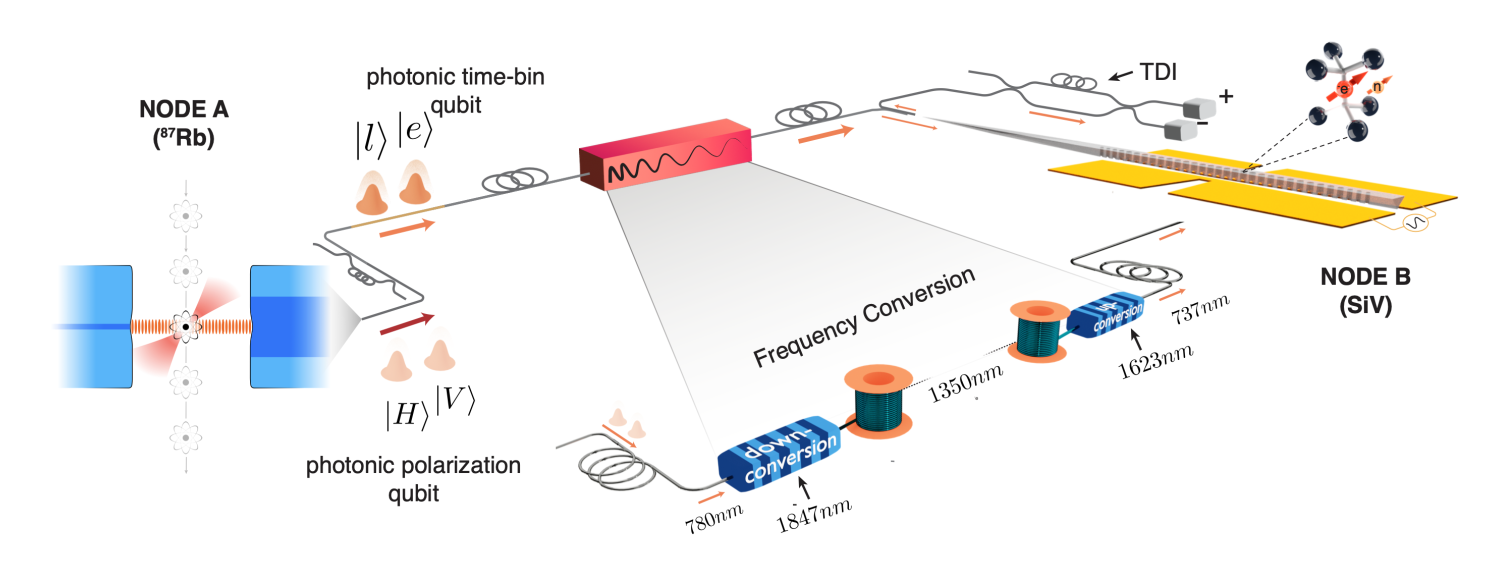
Quantum networking connects distant quantum processors via entanglement distribution, enabling distributed quantum computing, provably secure communications, and quantum sensor arrays.
India's Quantum Networking and Communications Initiatives
India's National Quantum Mission includes quantum communication as a major vertical with specific deliverables: satellite-based secure quantum communications between ground stations over 2000 kilometers; long-distance secure quantum communications with other countries; inter-city quantum key distribution over 2000 km; and multi-node quantum networks with quantum memories.
The IITM C-DOT Samgnya Technologies Foundation at IIT Madras serves as the Thematic Hub on Quantum Communication. Established in partnership with the Centre for Development of Telematics (C-DOT), the hub focuses on quantum cryptography, post-quantum security, QKD networks, quantum memory, quantum repeaters, and satellite-enabled quantum communication.
ISRO plans satellite-based quantum communication missions to demonstrate space-based quantum links. The Society for Applied Microwave Electronics Engineering & Research (SAMEER) in Mumbai develops indigenous QKD systems. The Centre for Development of Telematics (C-DOT) integrates quantum communication with national telecom infrastructure.
The NQM targets operational quantum communication networks connecting major Indian cities, with potential applications in government secure communications, financial transaction security, and defense applications.
quantum-computingA dimension-independent strict submultiplicativity for the transposition map in diamond norm
--> Quantum Physics arXiv:2602.17748 (quant-ph) [Submitted on 19 Feb 2026] Title:A dimension-independent strict submultiplicativity for the transposition map in diamond norm Authors:Hyunho Cha View a PDF of the paper titled A dimension-independent strict submultiplicativity for the transposition map in diamond norm, by Hyunho Cha View PDF HTML (experimental) Abstract:We prove that there exists an absolute constant $\alpha<1$ such that for every finite dimension $d$ and every quantum channel $T$ on $\mathsf{L}(\mathbb{C}^d)$, $\left\|\Theta\circ(\mathrm{id}-T)\right\|_\diamond \le \alpha\,\left\|\Theta\right\|_\diamond\,\left\|\mathrm{id}-T\right\|_\diamond$, where $\Theta$ is the transposition map. In fact we show the explicit choice $\alpha=1/\sqrt{2}$ works. Comments: Subjects: Quantum Physics (quant-ph) Cite as: arXiv:2602.17748 [quant-ph] (or arXiv:2602.17748v1 [quant-ph] for this version) https://doi.org/10.48550/arXiv.2602.17748 Focus to learn more arXiv-issued DOI via DataCite (pending registration) Submission history From: Hyunho Cha [view email] [v1] Thu, 19 Feb 2026 15:38:21 UTC (3 KB) Full-text links: Access Paper: View a PDF of the paper titled A dimension-independent strict submultiplicativity for the transposition map in diamond norm, by Hyunho ChaView PDFHTML (experimental)TeX Source view license Current browse context: quant-ph < prev | next > new | recent | 2026-02 References & Citations INSPIRE HEP NASA ADSGoogle Scholar Semantic Scholar export BibTeX citation Loading... BibTeX formatted citation × loading... Data provided by: Bookmark Bibliographic Tools Bibliographic and Citation Tools Bibliographic Explorer Toggle Bibliographic Explorer (What is the Explorer?) Connected Papers Toggle Connected Papers (What is Connected Papers?) Litmaps Toggle Litmaps (What is Litmaps?) scite.ai Toggle scite Smart Citations (What are Smart Citations?) Code, Data, Media Code, Data and Media Associated with this Ar
arXiv Quantum PhysicsLoading...0
quantum-computingComparison of security mechanisms of Mathematical cipher, Wyner scheme, QKD, and Quantum stream cipher
--> Quantum Physics arXiv:2602.17933 (quant-ph) [Submitted on 20 Feb 2026] Title:Comparison of security mechanisms of Mathematical cipher, Wyner scheme, QKD, and Quantum stream cipher Authors:Gikyu Yamamoto, Osamu Hirota View a PDF of the paper titled Comparison of security mechanisms of Mathematical cipher, Wyner scheme, QKD, and Quantum stream cipher, by Gikyu Yamamoto and 1 other authors View PDF HTML (experimental) Abstract:A new generation of global communications technology has been emerging. These systems, which utilize established device technologies and quantum effect devices, require ultra-high speeds, low cost, and strong security. In recent years, global communication systems have faced various practical security challenges depending on their configurations, and research efforts are underway to address these issues. In particular, the issue of the security of physical layer security from microwave wireless systems to quantum optical communication systems is urgent problem. However, concepts of cryptographic schemes have also been diversifying. Typical examples are mathematical ciphers, the Wyner scheme and QKD. Then, the Y-00 protocol has recently emerged as a third pillar cryptographic technology in the optical quantum domain. These security principles differ significantly from one another. This makes it difficult for different fields to understand each other. At this stage, comparative explanations of the security principles underlying these various cryptographic technologies are likely to promote mutual understanding among researchers across different fields. As the first trial, this lecture note explains the security mechanism of the third pillar (Y-00), comparing it with the principles of other mechanisms. Comments: Subjects: Quantum Physics (quant-ph) Cite as: arXiv:2602.17933 [quant-ph] (or arXiv:2602.17933v1 [quant-ph] for this version) https://doi.org/10.48550/arXiv.2602.17933 Focus to learn more arXiv-issued DOI via DataCite (pend
arXiv Quantum PhysicsLoading...0
quantum-computingA Tailored Fidelity Estimation and Purification Method for Entangled Quantum Networks
--> Quantum Physics arXiv:2602.18011 (quant-ph) [Submitted on 20 Feb 2026] Title:A Tailored Fidelity Estimation and Purification Method for Entangled Quantum Networks Authors:Takafumi Oka, Michal Hajdušek, Shota Nagayama, Rodney Van Meter View a PDF of the paper titled A Tailored Fidelity Estimation and Purification Method for Entangled Quantum Networks, by Takafumi Oka and 3 other authors View PDF HTML (experimental) Abstract:We present a method to conduct both quantum state reconstruction and entanglement purification simultaneously that is advantageous in several respects over previous work in this direction, showing that the number of Bell pairs necessary to boot a quantum network can be significantly reduced compared to an existing method. The existing method requires at least $10^5$ Bell pairs for the state reconstruction phase to estimate that the state is of fidelity $0.99$ within the error range of $10^{-2}$, whereas our approach only requires around $2,841$ to be certain with $99.7\%$ of confidence that the estimated fidelity lies within $[0.99-0.01, 0.99+0.01]$. In addition, in our approach we can start with a lower fidelity Bell pair and purify it multiple times, estimating at the same time the resultant fidelity with guarantee of $99.7\%$ that the fidelity estimate lies within a certain range. Moreover, the existing method cannot correct both bit-flip and phase-flip errors at the same time and can only correct one of these, whereas our approach can correct both bit-flip and phase-flip errors simultaneously. This research produces numerical estimates for the number of Bell pairs actually needed to guarantee a certain threshold fidelity $F$. The research can support the functioning real-world quantum networking by providing the information of the time needed for the bootstrapping of a quantum network to finish. Comments: Subjects: Quantum Physics (quant-ph) Cite as: arXiv:2602.18011 [quant-ph] (or arXiv:2602.18011v1 [quant-ph] for this version) &nb
arXiv Quantum PhysicsLoading...0
quantum-computingFlux-Activated Resonant Control of a Bosonic Quantum Memory
--> Quantum Physics arXiv:2602.18122 (quant-ph) [Submitted on 20 Feb 2026] Title:Flux-Activated Resonant Control of a Bosonic Quantum Memory Authors:Fernando Valadares, Aleksandr Dorogov, Tanjung Krisnanda, May Chee Loke, Ni-Ni Huang, Pengtao Song, Yvonne Y. Gao View a PDF of the paper titled Flux-Activated Resonant Control of a Bosonic Quantum Memory, by Fernando Valadares and 6 other authors View PDF HTML (experimental) Abstract:Universal control of bosonic degrees of freedom provides a hardware-efficient route for quantum information processing with high-dimensional systems. Bosonic circuit quantum electrodynamics (cQED), which leverages transmon ancillae to coherently control long-lived superconducting cavities, is well suited to this goal. However, the cavity transitions are nearly degenerate in the usual dispersive regime, which limits the direct addressability of individual excitation levels and increases the complexity of engineered gates. Here, we integrate an on-chip flux-control architecture with a long-lived bosonic memory housed in a 3D superconducting cavity to dynamically access resonant Jaynes-Cummings (JC) interactions, and realize efficient arbitrary rotations between any pair of Fock levels in the memory. This on-demand access to JC interactions offers a versatile toolbox for implementing robust Fock-basis qudits and harnessing the rich dynamics of high-dimensional bosonic elements for quantum information processing. Subjects: Quantum Physics (quant-ph) Cite as: arXiv:2602.18122 [quant-ph] (or arXiv:2602.18122v1 [quant-ph] for this version) https://doi.org/10.48550/arXiv.2602.18122 Focus to learn more arXiv-issued DOI via DataCite (pending registration) Submission history From: Fernando Valadares [view email] [v1] Fri, 20 Feb 2026 10:22:53 UTC (8,605 KB) Full-text links: Access Paper: View a PDF of the paper titled Flux-Activated Resonant Control of a Bosonic Quantum Memory, by Fernando Valadares and 6 other authorsView PDFHTML (expe
arXiv Quantum PhysicsLoading...0
quantum-computingGuest Post — Helium-Free Magnetic Refrigeration Supports Continuous Milli-Kelvin Temperatures For Quantum Research
Guest Post by by Jim McMahon Cryogenic characterization is a must to accelerate and enable breakthrough science and quantum technologies. Quantum sensors, quantum communication devices and future quantum computers will rely on scalable and efficient cooling for their operation. Quantum computers rely on qubits, which can exist in multiple states simultaneously. These quantum states are extremely […]
Quantum DailyLoading...0
quantum-computingQuantum Systems Linked with Near-Perfect Data Transfer
Scientists are continually striving to improve the efficiency of quantum teleportation, a process vital for secure quantum communication and computation. Ravi Kamal Pandey from the Department of Physics, Institute of Science, Banaras Hindu University, and Shraddha Singh from Nehru Gram Bharti (Deemed to be University), working with Dhiraj Yadav from IILM University and Devendra Kumar Mishra from Banaras Hindu University, have demonstrated a significant advance in this field. Their research details a method for achieving near-perfect quantum teleportation between distinct types of quantum encoding, discrete and continuous variables, utilising a hybrid entangled resource. This is particularly noteworthy as teleportation from discrete to continuous variables has historically been less efficient than the reverse process, and this new approach, employing cross-Kerr nonlinearity and linear optical components, overcomes this limitation, potentially paving the way for more robust and versatile quantum networks. For decades, fully realising the potential of quantum communication has been hampered by the difficulty of transferring information between different types of quantum systems. Now, a method achieving near-perfect teleportation between distinct quantum encodings offers a major step forward, potentially unlocking more flexible and powerful quantum networks. Scientists are increasingly focused on the reliable transmission of quantum information, a field with implications for secure communication and advanced computation. Quantum teleportation, a process of transferring quantum states, offers a potential solution, yet achieving perfect state transfer remains a significant challenge. A qubit, the basic unit of quantum information, can be encoded in the polarization of a single photon (discrete-variable or DV) or in the superposition of phase-opposite coherent states of an optical field (continuous-variable or CV). DV systems, while convenient, are more susceptible to sign
Quantum ZeitgeistLoading...0
quantum-computingAtomic Vapour Cells Enable Scalable Entanglement Swapping
Researchers demonstrate a crucial advancement in quantum networking by achieving high-rate, scalable entanglement swapping between remote sources utilising existing New York City fibre infrastructure. Alexander N. Craddock and Tyler Cowan, working at Qunnect Inc. and the Center for Quantum Information Physics at New York University respectively, led the study in collaboration with Niccolò Bigagli, Suresh Yekasiri, Dylan Robinson, Gabriel Bello Portmann, Ziyu Guo, Michael Kilzer, Jiapeng Zhao, Mael Flament, Javad Shabani, Reza Nejabati and Mehdi Namazi from Qunnect Inc. and Cisco Quantum Labs. This work overcomes significant hurdles in maintaining photon indistinguishability and entanglement fidelity over deployed fibres, achieving a swapping rate of nearly 500 pairs per second with a CHSH parameter exceeding 2 on a 17.6-km network. The successful demonstration utilising standard components like commercially available detectors and time synchronisation techniques represents a substantial step towards building practical, large-scale quantum networks for applications ranging from secure communication to distributed sensing. The demonstration overcomes a key hurdle in scaling up quantum communication by using simple, widely available components, promising secure data transmission and distributed computing power beyond the reach of conventional technology. Researchers have achieved a significant advance in quantum networking, demonstrating a scalable entanglement swapping experiment exceeding 470 entangled photon pairs per second. This breakthrough relies on a new architecture utilising warm atomic vapor cells as naturally indistinguishable entanglement sources, a departure from methods requiring precise laser synchronization or pulsed sources. The work addresses a long-standing challenge in building quantum repeaters, blind quantum computing systems, and distributed quantum sensors, efficiently connecting quantum devices over existing telecommunication infrastructure. P
Quantum ZeitgeistLoading...0
quantum-computingFibre Optic Source Emits Paired Light at Two Wavelengths
Researchers are developing increasingly sophisticated sources of entangled photons for applications in quantum communication and sensing. Keshav Kapoor, Dong Beom Kim, and Kriti Shetty, all from the University of Illinois Urbana-Champaign, alongside Virginia O Lorenz and colleagues at the same institution, have demonstrated a novel photon-pair source fabricated within commercially available optical fibre. This device generates paired photons at both near-infrared and telecommunication wavelengths, specifically separated by 700nm, offering a significant advantage by minimising Raman noise and achieving a high coincidence-to-accidental ratio at room temperature. The source’s unique ability to produce spectrally distinct, phase-matched processes, combined with its use of readily available materials and potential for multiplexing, positions it as a promising candidate for practical implementation in future quantum networks. Scientists have created a compact device capable of generating entangled photons at wavelengths vital for future optical networks, offering a pathway towards secure data transmission. By utilising standard optical fibre, the technology promises a cost-effective and readily deployable solution. This work details a compact device, built using commercially available optical fibre, capable of generating photon pairs with a substantial wavelength separation of 700nm. The high degree of ‘non-degeneracy’ is particularly advantageous, effectively minimising interference from unwanted noise and allowing for room-temperature operation. Beyond simply creating photon pairs, this research demonstrates the ability to produce two distinct, spectrally separate processes simultaneously, each with unique spatial characteristics. Once a cornerstone of theoretical physics, quantum communication is now edging closer to practical implementation, and efficient photon sources are essential. Dual stimulated four-wave mixing generates E and S band photon pairs Joint spectral
Quantum ZeitgeistLoading...0
quantum-computingNonlocality Achieved Without Quantum Entanglement
Researchers are investigating the fundamental limits of distinguishing between quantum states, a problem with implications for quantum communication and computation. Satyaki Manna from the Department of Physics, Indian Institute of Technology Bhubaneswar, and Anandamay Das Bhowmik from the School of Physics, Indian Institute of Science Education and Research Thiruvananthapuram, alongside their colleagues, demonstrate a surprising disconnect between the ability to globally identify states and the constraints imposed by local operations with classical communication. Their work reveals that it is possible to achieve nonlocality, a hallmark of quantum mechanics, without requiring quantum entanglement, a concept previously thought to be essential. Specifically, the team proves that three bipartite product states can be globally distinguished yet remain indistinguishable through local operations, establishing three as the minimum number of states needed to observe this phenomenon and extending it to higher-order scenarios, including genuinely non-local tripartite states. Researchers have demonstrated a surprising connection between how information is shared and the fundamental laws governing quantum systems. This work reveals that it is possible to discern between quantum states without relying on the entangled particles previously thought necessary, challenging conventional understanding and opening new avenues for exploring the boundaries of quantum mechanics. This research uncovered a disconnect between how quantum states appear locally and globally, revealing that a minimum of three quantum states is sufficient to demonstrate nonlocality without entanglement. This finding challenges conventional understanding of quantum information processing and opens new avenues for exploring the fundamental limits of measurement. While quantum entanglement is often considered a prerequisite for nonlocality, the ability of quantum systems to exhibit correlations stronger than those
Quantum ZeitgeistLoading...0
quantum-computingEntropic Barriers and the Kinetic Suppression of Topological Defects
--> Quantum Physics arXiv:2602.16777 (quant-ph) [Submitted on 18 Feb 2026] Title:Entropic Barriers and the Kinetic Suppression of Topological Defects Authors:Yi-Lin Tsao, Zhu-Xi Luo View a PDF of the paper titled Entropic Barriers and the Kinetic Suppression of Topological Defects, by Yi-Lin Tsao and Zhu-Xi Luo View PDF HTML (experimental) Abstract:Many quantum phases, from topological orders to superfluids, are destabilized at finite temperature by the proliferation and motion of topological defects such as anyons or vortices. Conventional protection mechanisms rely on energetic gaps and fail once thermal fluctuations exceed the gap scale. Here we examine a complementary mechanism of entropic protection, in which defect nucleation is suppressed by coupling to mesoscopic auxiliary reservoirs of dimension $M$, generating an effective free-energy barrier that increases with temperature. In the Ising chain, this produces a characteristic three-regime evolution of the correlation length as a function of temperature - linear growth, entropy-controlled plateau, and eventual breakdown - indicating a general modification of defect behavior. Focusing on two spatial dimensions, where true finite-temperature topological order is forbidden in the thermodynamic limit, we show that entropic protection can nevertheless strongly enhance stabilization at finite system size, the regime directly relevant for quantum memory and experiments. Owing to the topological character of the defects, creation and transport are independently suppressed, yielding a double parametric reduction of logical errors in the entropic toric code and enhanced coherence when the framework is extended to Berezinskii-Kosterlitz-Thouless transitions. Entropic barriers thus provide a passive and scalable route to stabilizing quantum phases in experimentally relevant regimes. We propose an experimental setup for entropic toric code using dual species Rydberg arrays with dressing. Comments: Subjects: Quantum Physi
arXiv Quantum PhysicsLoading...0
quantum-computingQuantum-Channel Matrix Optimization for Holevo Bound Enhancement
--> Quantum Physics arXiv:2602.17065 (quant-ph) [Submitted on 19 Feb 2026] Title:Quantum-Channel Matrix Optimization for Holevo Bound Enhancement Authors:Hong Niu, Chau Yuen, Alexei Ashikhmin, Lajos Hanzo View a PDF of the paper titled Quantum-Channel Matrix Optimization for Holevo Bound Enhancement, by Hong Niu and 3 other authors View PDF HTML (experimental) Abstract:Quantum communication holds the potential to revolutionize information transmission by enabling secure data exchange that exceeds the limits of classical systems. One of the key performance metrics in quantum information theory, namely the Holevo bound, quantifies the amount of classical information that can be transmitted reliably over a quantum channel. However, computing and optimizing the Holevo bound remains a challenging task due to its dependence on both the quantum input ensemble and the quantum channel. In order to maximize the Holevo bound, we propose a unified projected gradient ascent algorithm to optimize the quantum channel given a fixed input ensemble. We provide a detailed complexity analysis for the proposed algorithm. Simulation results demonstrate that the proposed quantum channel optimization yields higher Holevo bounds than input ensemble optimization. Comments: Subjects: Quantum Physics (quant-ph); Information Theory (cs.IT) Cite as: arXiv:2602.17065 [quant-ph] (or arXiv:2602.17065v1 [quant-ph] for this version) https://doi.org/10.48550/arXiv.2602.17065 Focus to learn more arXiv-issued DOI via DataCite (pending registration) Submission history From: Hong Niu [view email] [v1] Thu, 19 Feb 2026 04:15:03 UTC (306 KB) Full-text links: Access Paper: View a PDF of the paper titled Quantum-Channel Matrix Optimization for Holevo Bound Enhancement, by Hong Niu and 3 other authorsView PDFHTML (experimental)TeX Source view license Current browse context: quant-ph < prev | next > new | recent | 2026-02 Change to browse by: cs cs.IT math math.IT Ref
arXiv Quantum PhysicsLoading...0
quantum-computingSecure Data Link Spans 18km Via Free Space
Researchers are addressing the critical challenge of secure long-distance communication through the demonstration of intermodal quantum key distribution over free-space links. Edoardo Rossi, Ilektra Karakosta-Amarantidou, and Matteo Padovan, from the Dipartimento di Ingegneria dell’Informazione, Universit`a degli Studi di Padova, led a collaborative effort with colleagues at ThinkQuantum s.r.l. and the Institute of Photonics and Nanotechnology, National Council of Research of Italy, to achieve this breakthrough. The team, including Marco Taffarello and Antonio Vanzo, successfully implemented a real-time key distribution field trial across an 18km free-space channel, utilising adaptive optics to mitigate turbulence-induced wavefront aberrations. This work represents a significant step towards scalable and interoperable quantum networks, demonstrating secure key generation at 200 bit/s with compact, room-temperature detectors and providing a validated model for predicting fibre coupling efficiency in future intermodal systems. Secure communications could soon span vast distances without relying on vulnerable infrastructure. This advance paves the way for unhackable networks linking cities and even countries. By successfully transmitting encryption keys through the air over 18 kilometres, utilising standard detectors and adaptive optics, a practical quantum network is now within reach. Scientists are increasingly focused on building quantum networks capable of seamlessly integrating different transmission methods, such as optical fibres and free-space links. Achieving this interoperability is vital for creating scalable and flexible quantum communication systems, potentially linking terrestrial and satellite-based terminals. Extending quantum key distribution (QKD) to long-distance free-space links presents considerable challenges. Atmospheric turbulence distorts the wavefront of light, severely hindering efficient coupling into the single-mode fibres essential for rec
Quantum ZeitgeistLoading...0
quantum-computingNetworks Achieve Quantum Data Transfer over 30km Fibre
Scientists are advancing quantum communication networks by successfully demonstrating quantum teleportation of weak coherent polarization states on a metropolitan fibre. Zofia A. Borowska from Deutsche Telekom AG, Shane Andrewski from Qunnect Inc, and Giorgio De Pascalis from the Institute for Photonic Quantum Systems (PhoQS), Center for Optoelectronics and Photonics Paderborn (CeOPP), and Department of Physics, Paderborn University, led a collaborative effort involving researchers from Deutsche Telekom AG, Qunnect Inc, and Orbit GmbH. This research represents a significant step towards practical quantum networking, as the team achieved 90% average teleportation fidelity over a 30km field-deployed fibre loop within Deutsche Telekom’s Berlin testbed, crucially utilising commercial components and coexisting with live classical data channels. The demonstration validates the potential for integrating quantum key distribution and other quantum protocols into existing telecommunications infrastructure, paving the way for secure and high-performance future networks. Can quantum communication function alongside existing internet traffic on standard fibre optic cables. Experiments in Berlin confirm it can, successfully ‘teleporting’ information using a live telecommunications network. This achievement moves quantum networks closer to practical deployment, paving the way for genuinely secure data transmission. Scientists are increasingly focused on the potential of quantum networks to connect advanced technologies such as quantum computers, sensors, and timing devices. Realising this potential demands a demonstration of fundamental quantum protocols, including quantum teleportation, operating within the constraints of existing telecommunications infrastructure. At the core of this demonstration lies a sophisticated system employing a local Bell-state measurement. This measurement acts upon photons at 795nm originating from both a weak coherent source and a bichromatic warm-at
Quantum ZeitgeistLoading...0
quantum-computing2 Top Quantum Computing Stocks to Buy in 2026
By Robert Izquierdo – Feb 19, 2026 at 4:15PM ESTKey PointsQuantum computer stocks are down in 2026, creating buying opportunities.Two compelling quantum stocks are IonQ and IBM.Both are making advances in the field, such as IBM's goal to achieve quantum advantage this year.These 10 Stocks Could Mint the Next Wave of Millionaires ›NYSE: IONQIonQMarket Cap$12BToday's Changeangle-down(0.24%) $0.08Current Price$33.42Price as of February 19, 2026 at 3:58 PM ETThese companies are poised for years of revenue growth ahead.Investor excitement over quantum computing companies reached a fever pitch last October with rumors the Trump administration was contemplating an investment in some of them, including IonQ (IONQ +0.24%). The rumors proved false, and in 2026, the fervor had cooled off, with shares in these businesses dropping substantially. For example, IonQ saw its stock skyrocket to a 52-week high of $84.64 in October. But in 2026, shares are down 24% through the week ending Feb. 13. IonQ's rival in the space, IBM (IBM 1.98%), also saw its stock price fall in 2026, dropping 11% through Feb. 13. As a result, these two quantum computing companies have become compelling investment choices for the year. Here's why investing in them makes sense. Image source: Getty Images. IonQ's robust quantum platform What makes IonQ an attractive quantum computing investment is its comprehensive technology. The company is acquiring SkyWater Technology, a semiconductor foundry that will give IonQ end-to-end ownership over the quantum computer chip production process. SkyWater is one of the latest in an acquisition spree, as IonQ collected quantum companies to round out its platform. These include Capella Space, a business focused on satellite quantum tech, as well as Skyloom and Qubitekk, which are working on quantum computer networks. IonQ has applied its technology in projects such as last year's deployment of the first dedicated citywide quantum network in Geneva, Switzerland. I
The Motley FoolLoading...0
quantum-computingAccurate Model Predicts Quantum Data Noise Levels
Researchers are increasingly focused on the harmonious operation of classical and quantum key distribution (QKD) systems within shared optical infrastructure. Lucas Alves Zischler, Amirhossein Ghazisaeidi, and Carina Castiñeiras Carrero, working with colleagues at the Department of Physical and Chemical Sciences, University of L’Aquila, and the Optical Transmission Department, Nokia Bell Labs, have undertaken an experimental characterization of interference effects, specifically stimulated Raman scattering and four-wave mixing, that arise when these systems coexist. This collaborative effort between the University of L’Aquila, L’Aquila, Italy, and Nokia Bell Labs, Massy, France, validates a comprehensive semi-analytical model, providing accurate noise estimation and representing a significant step towards the practical implementation of secure quantum communication networks alongside existing classical networks. Previously, accurately predicting signal degradation when quantum key distribution shares fibre with classical communications proved exceptionally difficult. Now, detailed experiments and modelling confirm how these systems interfere, enabling more reliable and secure quantum networks. This understanding allows for better system design and performance optimisation. Scientists have long sought methods to guarantee secure communication, and quantum-key distribution (QKD) offers a promising solution by exploiting the laws of quantum mechanics. While dedicated optical fibres provide ideal conditions for QKD, practical deployments often require sharing infrastructure with classical communication channels. This coexistence introduces challenges stemming from non-linear effects within the optical fibre itself. Specifically, spontaneous Raman scattering (SpRS) and four-wave mixing (FWM), phenomena where light interacts with the fibre material, can generate noise that degrades QKD performance. SpRS, a broadband effect, arises from the scattering of light by molecular
Quantum ZeitgeistLoading...0
quantum-computingSunlight Generates Quantum Entanglement Without Lasers
Scientists are addressing the growing energy demands of modern information technologies by exploring alternative light sources for quantum communication. Cheng Li, Jasvinder Brar and Michael Küblböck from the Max Planck Institute for the Science of Light, working with Jeremy Upham and Robert W. Boyd from the Department of Physics, University of Ottawa, and in collaboration with Hanieh Fattahi, have demonstrated the generation of quantum entanglement directly from sunlight. This research is significant because it challenges the long-held assumption that coherent laser light is essential for creating quantum states, instead successfully utilising incoherent sunlight via spontaneous parametric down-conversion to produce highly entangled photon pairs. The team’s system not only violates Bell’s inequality, confirming genuine entanglement, but also achieves generation rates comparable to those of conventional laser-based systems, potentially enabling sustainable quantum technologies for applications in energy-constrained settings such as deep-space exploration. This achievement offers a pathway towards dramatically reducing the power consumption of future quantum technologies and opens doors for deployment in remote and challenging environments. Achieving this required overcoming a fundamental hurdle: the inherent randomness of natural light. Researchers successfully produced entangled photon pairs through spontaneous parametric down-conversion, utilising sunlight as the energy source. The resulting entangled states exhibit a concurrence of 0.905 ±0.053 and a Bell state fidelity of 0.939 ±0.027, demonstrating a high degree of quantum correlation. The system convincingly violates Bell’s inequality, registering a value of 2.5408 ±0.2171, which definitively exceeds the classical limit of 2. This violation confirms the genuinely quantum nature of the correlation and rules out explanations based on classical physics. Maintaining comparable generation rates to laser-based syste
Quantum ZeitgeistLoading...0
quantum-computingWelinq and Pasqal Accelerate Networked Quantum Computing with Neutral-Atom Technology
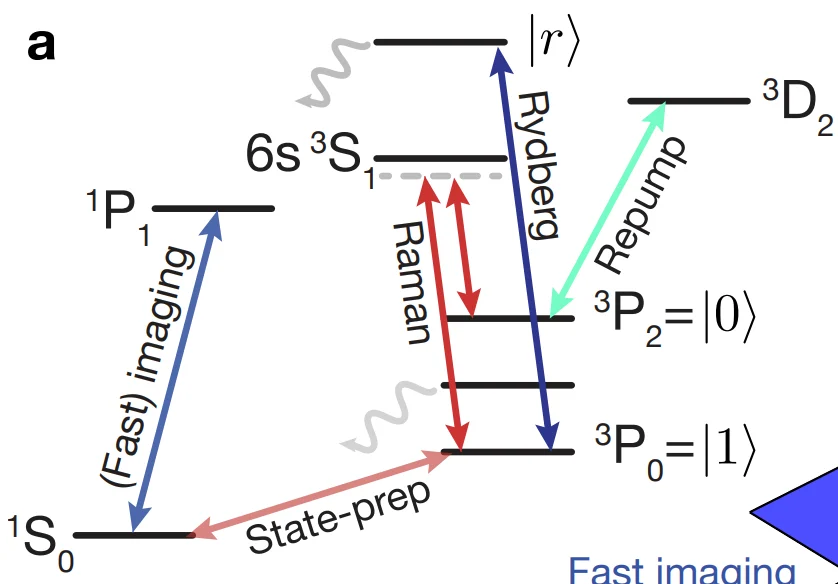
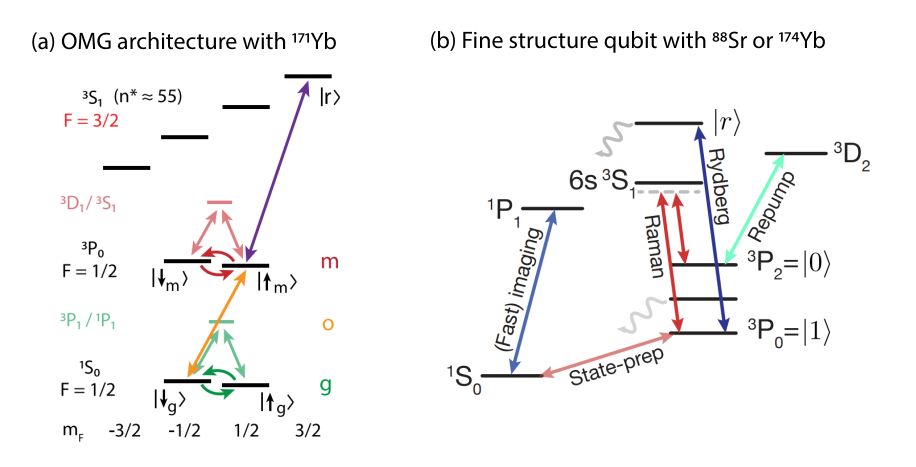
Welinq and Pasqal announce the strengthening of their strategic collaboration to accelerate the development of networked quantum computing based on interconnected neutral-atom quantum processors. Building on an established collaboration and a shared neutral-atom technology stack, the two companies are now moving into a new phase of rapid implementation, tightly aligning quantum computing and quantum networking to deliver scalable, network-ready quantum architectures designed for deployment in data centers. This collaboration reaches a new milestone with InterQo, a €4 million, supported by the Île-de-France Region and BPI France through the i-Demo Régionalisé (France 2030) call. The project includes a bilateral industrial partnership between Pasqal and Welinq, alongside a dedicated research collaboration led by Pasqal with the group of Alexei Ourjoumtsev at Collège de France (JEIP), a leading expert in quantum optics and strong light–matter interactions. From Individual Machines to Networked Quantum Computers Early deployments of quantum computing resources generally depend on standalone quantum processing units (QPUs). While these machines are already demonstrating practical utility and delivering value, scaling capacity will ultimately encounter practical limits. By allowing separate quantum processors to function as a single, more powerful computer, quantum networking fundamentally shifts how quantum resources can be deployed and scaled. In practice, quantum information is converted from qubits inside a QPU into photons – the ideal carriers of flying quantum information – and transmitted optically between processors. This optical quantum interconnect enables entanglement to be shared between qubits located on different QPUs, effectively creating a larger quantum computer with many more qubits than any individual machine could provide. This collective operation would enable quantum computing to scale beyond the vertical scalability barriers of individual processors
PASQAL NewsLoading...0
quantum-computingQuantum States Stay Frozen in First Experimental Test of Statistical Localization
Insider Brief Researchers at Duke University report the first experimental observation of statistical localization in a quantum simulator, showing that most quantum states can remain effectively frozen rather than spreading toward equilibrium, with findings published in Nature Physics. Using a neutral-atom platform built from chains of laser-controlled rubidium atoms, the team engineered a one-dimensional lattice gauge theory system in which subsets of quantum states remained disconnected, preventing the usual process of thermalization. The results suggest that fragmented quantum state spaces could enable more robust quantum information storage and advance quantum simulations of fundamental forces, with potential applications in subatomic physics and quantum materials research. Image: Huanqian Loh (right) works on neutral-atom quantum simulator setups with Duke graduate students. (Alex Sanchez, Duke University) PRESS RELEASE — In the everyday world, governed by classical physics, the concept of equilibrium reigns. If you put a drop of ink into water, it will eventually evenly mix. If you put a glass of ice water on the kitchen table, it will eventually melt and become room temperature. That concept rooted in energy transport is known as thermalization, and it is easy to comprehend because we see it happen every day. But this is not always how things behave at the smallest scales of the universe. In the quantum realm—at the atomic and sub-atomic scales—there can be a phenomenon called localization, in which equilibrium spreading does not occur, even with nothing obviously preventing it. Researchers at Duke University have observed this intriguing behavior using a quantum simulator for the first time. Also known as statistical localization, the research could help probe questions about unusual material properties or quantum memory. The results appear online February 18 in the journal Nature Physics. “In statistical localization, almost all states are frozen,” said&nbs
Quantum DailyLoading...0
quantum-computingQunnect Demonstrates First Metro-Scale Quantum Network with Cisco, Exceeds Previous Benchmarks by 10,000x
Qunnect and Cisco have achieved a landmark breakthrough, demonstrating the first metro-scale quantum network with high-speed entanglement swapping over deployed commercial fiber. The February 18, 2026, demonstration, conducted on Qunnect’s GothamQ testbed throughout New York City, spanned 17.6 kilometers of fiber and achieved record swapping rates exceeding 5,400 entangled pairs per hour—nearly 10,000 times better than previous benchmarks. This milestone utilizes Qunnect’s room-temperature quantum hardware and Cisco’s software, paving the way for scalable deployment and a new spoke-and-hub model for quantum networks. “Entanglement swapping is a fundamental operation in the quantum internet. Today, we not only broke the record for rate and scalability, we did so in New York City using some of the noisiest, most chaotic fiber on Earth,” said Mehdi Namazi, Co-Founder and Chief Science Officer for Qunnect. Record 1.7M+ Pairs/Hour Entanglement Swapping Achieved in NYC A staggering 1.7 million entangled photon pairs per hour were generated locally, marking a new benchmark in quantum networking achieved within New York City’s infrastructure, according to recent results from Qunnect and Cisco. This achievement surpasses previous benchmarks by nearly 10,000 times, utilizing similar platforms. Maintaining greater than 99% polarization fidelity, the system successfully navigated the challenges presented by a real-world urban environment. The experiment decoupled nodes from the need for shared lasers, enabling a scalable hub-and-spoke architecture. This advancement relies on Qunnect’s room-temperature endpoints and Automatic Polarization Controllers, which continuously compensate for signal degradation in deployed fiber. Cisco’s unified quantum networking software stack functioned as a coordinating system, managing the hardware across geographically separated nodes. Reza Nejabati, Head of Quantum Research at Cisco, stated, “This milestone accelerates our quantum networking visi
Quantum ZeitgeistLoading...0
quantum-computingWiMi Hologram Cloud Unveils Quantum-Classical AI Model for Image Classification
WiMi Hologram Cloud Inc. has unveiled a novel approach to image classification, proposing a hybrid quantum-classical Inception neural network model. The Beijing-based Holographic Augmented Reality technology provider aims to overcome limitations in current image classification models by integrating the power of quantum computing with established classical deep learning techniques. This new architecture utilizes Inception-style parallel feature channels to achieve “triple improvements in performance, efficiency, and robustness.” WiMi’s research focuses on redesigning the parallel structure of quantum networks, moving beyond single-path designs to unlock the full potential of quantum computing for image analysis and lay the foundation for future hybrid quantum AI research. WiMi’s Hybrid Quantum-Classical Inception Network for Image Classification This isn’t simply adding quantum components to existing structures; WiMi’s approach fundamentally redesigns the architecture to integrate quantum computing with classical deep learning via Inception-style parallel feature channels. The core objective, as the company explains, is to “solve the expressiveness bottleneck of image classification models” by leveraging quantum computing’s ability to represent high-dimensional features while maintaining practical engineering feasibility. Previous quantum neural network research, WiMi notes, has largely focused on embedding variational quantum circuits into traditional neural networks, yielding incremental gains but failing to fully unlock quantum potential. The WiMi research team determined that a redesign of the parallel structure was essential, specifically needing to move beyond the limitations of single-path quantum networks. Their solution utilizes three parallel feature paths: quantum feature extraction, classical feature extraction, and a hybrid quantum-classical path. This Inception module concatenates outputs from these paths, creating a feature tensor for the classifier. “
Quantum ZeitgeistLoading...0