Photonic Quantum Computing: PsiQuantum & Xanadu Room-Temperature Systems
Photonic quantum computing news: PsiQuantum, Xanadu quantum photonics. Room-temperature operation, cluster states & quantum networking advances.
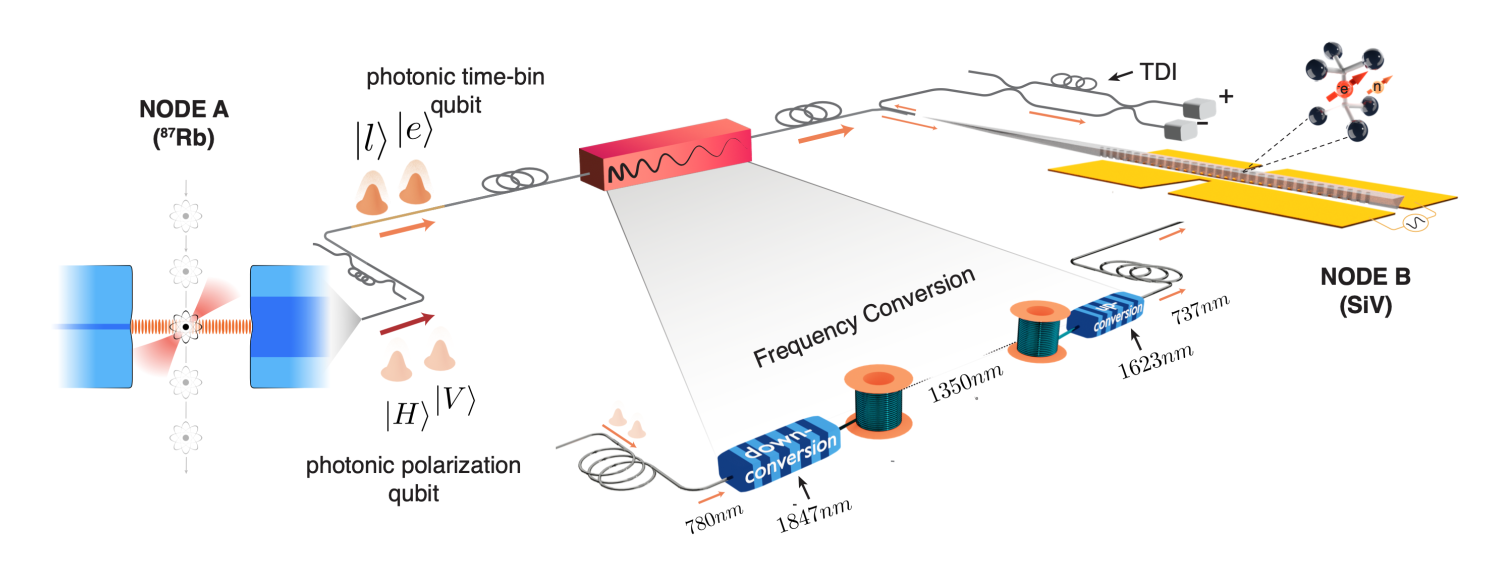
Photonic quantum computing encodes quantum information in light—using photon polarization, path, or time-bin degrees of freedom—to perform computation at room temperature without cryogenic infrastructure. This approach promises seamless integration with existing fiber-optic telecommunications networks.
Two Dominant Architectures
Two dominant architectures drive commercial development: cluster state/MBQC (Measurement-Based Quantum Computing) used by PsiQuantum, and Gaussian Boson Sampling/SGBSV employed by Xanadu's Borealis and X-series photonic processors.
India's Photonic Quantum Research
India's National Quantum Mission explicitly includes photonic technology as a priority platform. The Quantum Computing Thematic Hub at IISc Bengaluru targets development of quantum computing chips based on superconducting, photonic, and spin qubits according to official DST announcements. The Quantum Communication Thematic Hub at IIT Madras, established as the IITM C-DOT Samgnya Technologies Foundation, focuses on photonic quantum technologies including quantum key distribution and satellite-based quantum communication.
Key Advantages
Key advantages include room-temperature operation eliminating dilution refrigerators, natural compatibility with fiber-optic quantum networks, high-speed gate operations (picoseconds), and mature semiconductor fabrication for silicon photonics integration. Current challenges include probabilistic photon sources and detectors introducing overhead, photon loss in optical components, and massive qubit counts needed for fault tolerance.
Recent Breakthroughs
Recent breakthroughs include Xanadu's Borealis demonstrating quantum computational advantage using Gaussian boson sampling with 216 squeezed light modes, and PsiQuantum releasing detailed architecture plans for utility-scale quantum computing using thousands of modular chips.

quantum-computing4colors Research Secures UK Space Agency and NQCC SparQ Contracts for Optimization
4colors Research Secures UK Space Agency and NQCC SparQ Contracts for Optimization 4colors Research has been awarded two separate contracts to advance optimization capabilities in the space and aerospace sectors. The first is a proof-of-concept contract from the UK Space Agency to develop sensor scheduling and resource optimization algorithms for the National Space Operations Centre (NSpOC). This project, part of the BOREALIS Algorithm Development programme under Innovate UK’s Contracts for Innovation scheme, aims to enhance the UK’s sovereign space domain awareness. The company’s technology integrates mathematical optimization with machine learning to dynamically adapt solvers, enabling the NSpOC to coordinate multiple sensor networks and respond to orbital congestion in real time. In a concurrent development, a consortium led by 4colors Research has been awarded an NQCC SparQ grant for a project titled “Quantum-Accelerated Mixed-Integer Optimisation for Aircraft Loading.” The consortium includes Airbus, DNV, the National Quantum Computing Centre (NQCC), and ORCA Computing. This initiative focuses on utilizing hybrid classical-quantum computing to optimize cargo placement and fleet utilization in aerospace logistics. By addressing complex variables such as trim, center of gravity, and structural constraints, the project seeks to reduce fuel burn and CO₂ emissions for airlines and cargo operators. The NQCC SparQ grant utilizes ORCA Computing’s photonic quantum systems to test the feasibility of hybrid optimization in industrial workflows. 4colors Research, based in Cambridge, has a history of performance in this field, having previously won the Airbus-BMW Quantum Computing Challenge and being named a semi-finalist in the XPRIZE Quantum Applications competition. These contracts further the company’s objective of commercializing algorithmic technology for supply chain and logistics optimization while strengthening the UK’s position in sovereign quantum and space situa
Quantum Computing ReportLoading...0
quantum-computingNear-perfect Noisy Quantum State Teleportation
--> Quantum Physics arXiv:2602.19103 (quant-ph) [Submitted on 22 Feb 2026] Title:Near-perfect Noisy Quantum State Teleportation Authors:Md Manirul Ali, Sovik Roy, Dipankar Home View a PDF of the paper titled Near-perfect Noisy Quantum State Teleportation, by Md Manirul Ali and 2 other authors View PDF HTML (experimental) Abstract:Achieving high fidelity of quantum teleportation (QT) in a noisy environment is an essential requirement for its real-world applications. To this end, we devise a distinctive protocol for ensuring teleportation fidelity {\it close to unity}, hinging essentially on the timing of Alice's Bell-basis measurement (BM) dependent on the choice of Bob's local noise parameters, but is independent of Alice's local noise. Our scheme is enabled by Alice communicating to Bob only two of the BM outcomes corresponding to the states that are decoherence-free under common dephasing at Alice's wing. On the other hand, Bob is asked to discard the states of his qubit for the other two BM outcomes in order to maximize fidelity of the teleported state. This ensures the teleportation fidelity's independence of noise parameters in Alice's wing. We formulate the protocol in terms of a generic two-level quantum system, subjected to non-Markovian dephasing noise, applicable for any pure maximally/non-maximally entangled state as well as a Werner-type mixed state as resource. Notably, we show that high fidelity is achievable even using resource states with small values of the entanglement measure. Remarkably, even within the local regime of Werner states, where Bell-CHSH inequalities are not violated, the teleportation fidelity remains significantly high. Finally, we discuss the empirical feasibility of our scheme using photonic qubits. Comments: Subjects: Quantum Physics (quant-ph) Cite as: arXiv:2602.19103 [quant-ph] (or arXiv:2602.19103v1 [quant-ph] for this version) https://doi.org/10.48550/arXiv.2602.19103 Focus to learn more arXiv-issued DOI via Da
arXiv Quantum PhysicsLoading...0
quantum-computingKaiwu-PyTorch-Plugin: Bridging Deep Learning and Photonic Quantum Computing for Energy-Based Models and Active Sample Selection
--> Quantum Physics arXiv:2602.19114 (quant-ph) [Submitted on 22 Feb 2026] Title:Kaiwu-PyTorch-Plugin: Bridging Deep Learning and Photonic Quantum Computing for Energy-Based Models and Active Sample Selection Authors:Hongdong Zhu, Qi Gao, Yin Ma, Shaobo Chen, Haixu Liu, Fengao Wang, Tinglan Wang, Chang Wu, Kai Wen View a PDF of the paper titled Kaiwu-PyTorch-Plugin: Bridging Deep Learning and Photonic Quantum Computing for Energy-Based Models and Active Sample Selection, by Hongdong Zhu and 8 other authors View PDF HTML (experimental) Abstract:This paper introduces the Kaiwu-PyTorch-Plugin (KPP) to bridge Deep Learning and Photonic Quantum Computing across multiple dimensions. KPP integrates the Coherent Ising Machine into the PyTorch ecosystem, addressing classical inefficiencies in Energy-Based Models. The framework facilitates quantum integration in three key aspects: accelerating Boltzmann sampling, optimizing training data via Active Sampling, and constructing hybrid architectures like QBM-VAE and Q-Diffusion. Empirical results on single-cell and OpenWebText datasets demonstrate KPPs ability to achieve SOTA performance, validating a comprehensive quantum-classical paradigm. Subjects: Quantum Physics (quant-ph); Artificial Intelligence (cs.AI) Cite as: arXiv:2602.19114 [quant-ph] (or arXiv:2602.19114v1 [quant-ph] for this version) https://doi.org/10.48550/arXiv.2602.19114 Focus to learn more arXiv-issued DOI via DataCite (pending registration) Submission history From: Haixu Liu [view email] [v1] Sun, 22 Feb 2026 10:11:23 UTC (2,757 KB) Full-text links: Access Paper: View a PDF of the paper titled Kaiwu-PyTorch-Plugin: Bridging Deep Learning and Photonic Quantum Computing for Energy-Based Models and Active Sample Selection, by Hongdong Zhu and 8 other authorsView PDFHTML (experimental)TeX Source view license Current browse context: quant-ph < prev | next > new | recent | 2026-02 Change to browse by: cs cs.AI References
arXiv Quantum PhysicsLoading...0
quantum-computing4colors Research & Partners Secure Funding to Tackle Aircraft Loading with Quantum Computing
A consortium led by 4colors Research has secured funding from the National Quantum Computing Centre (NQCC) to tackle a critical challenge in aerospace logistics. Today, February 23, 2026, 4colors Research announced the award of an NQCC SparQ Grant under the 2025 STFC Cross Cluster Proof of Concept call, supporting a project focused on optimising aircraft cargo loading using a hybrid classical-quantum computing approach. The collaborative effort, which includes Airbus, DNV, NQCC, and ORCA Computing, aims to improve fuel efficiency, turnaround times, and fleet capacity. “Through the SparQ programme, NQCC is supporting important, industry-led projects that explore how quantum computing can deliver real-world impact,” commented Dr Rob Whiteman, Quantum Readiness Delivery Lead, NQCC. This project seeks to harness quantum power for practical and sustainable benefits within the industry. HLNQCC SparQ Grant Fuels Aerospace Optimisation Project The project, titled “Quantum-Accelerated Mixed-Integer Optimisation for Aircraft Loading,” directly addresses the computationally intensive challenge of optimising cargo placement for maximum efficiency. Even incremental improvements to this process promise significant reductions in fuel burn and CO2 emissions, alongside faster aircraft turnaround times. This isn’t merely theoretical exploration; the project aims to demonstrate how hybrid classical–quantum computing can solve a real-world, high-impact problem for airlines and cargo operators. 4colors Research, winner of the 2024 Airbus × BMW Quantum Computing Challenge, brings expertise in complex optimisation algorithms to the collaboration. “The NQCC SparQ grant brings together partners with complementary expertise,” said Dr Marcin Kaminski, Founder and CEO of 4colors Research, “We are excited to collaborate on this use case and, more broadly, to push forward quantum solutions for combinatorial optimisation.” ORCA Computing will contribute its photonic quantum systems, believing tha
Quantum ZeitgeistLoading...0
quantum-computingFinnish quantum unicorn IQM set to go public
Finnish unicorn IQM today announced plans to go public via a special purpose acquisition company (SPAC), valuing the company at approximately $1.8 billion. The move will see IQM join the growing cohort of quantum computing companies listed on U.S. stock markets. Founded in 2018 as a spinout from Finland’s Aalto University and VTT Technical Research, IQM commercializes both on-premises full-stack quantum computers and a cloud platform to access its systems, with clients including academic and industrial labs around the world. Public quantum companies have seen their stocks surge in recent months, fueled by signals from governments and Big Tech that the “quantum advantage” over regular supercomputers may soon be within reach. This has led believers to double down, with the conviction that the field will soon have lucrative real-life applications in life sciences, new materials, and more. Going public will provide IQM with an extended runway to support its commercial plans. The company reported $35 million in 2025 revenue and over $100 million in bookings. With the close of this transaction, its cash position will exceed $450 million. But the company could also see its market cap trend upwards or downwards, depending on how investor appetite for quantum stocks has evolved when it begins trading. With industrial applications still years away, questions remain as to whether the current quantum frenzy will last. These questions arise to an even greater extent because most of these companies went public via SPACs — a route that is faster than a traditional IPO, but that peaked in 2021 and left many investors nursing losses in its wake. Despite this sour aftertaste, quantum SPACs are back in fashion. Earlier this month, neutral-atom quantum company Infleqtion jumped in its debut on the New York Stock Exchange (NYSE) via a SPAC, with Canadian firm Xanadu Quantum Technologies planning to go public via a SPAC on the Nasdaq by the end of March. Now, IQM is following
TechCrunchLoading...0
quantum-computingXanadu Nominates Four Experienced Global Business Leaders to its Board of Directors
Insider Brief PRESS RELEASE — Xanadu Quantum Technologies Inc. (“Xanadu”), a leading photonic quantum computing company, and Crane Harbor Acquisition Corp. (“Crane Harbor”) (Nasdaq: CHAC), a publicly traded special purpose acquisition company, today announced the proposed nomination of: as directors of Xanadu Quantum Technologies Limited (“NewCo”), the post-closing public company, in connection with the previously […]
Quantum DailyLoading...0
quantum-computingPulsed coherent spectroscopy of a quantum emitter in hexagonal Boron Nitride
--> Quantum Physics arXiv:2602.18096 (quant-ph) [Submitted on 20 Feb 2026] Title:Pulsed coherent spectroscopy of a quantum emitter in hexagonal Boron Nitride Authors:Jake Horder, Hugo Quard, Kenji Watanabe, Takashi Taniguchi, Nathan Coste, Igor Aharonovich View a PDF of the paper titled Pulsed coherent spectroscopy of a quantum emitter in hexagonal Boron Nitride, by Jake Horder and 5 other authors View PDF Abstract:Defects in solid-state systems constitute a promising platform for the realization of deterministic quantum emitters. Among many candidate materials and emitters, point defects in hexagonal Boron Nitride (hBN) have recently emerged as particularly promising. In this work, we probe the coherence of an individual B center with a zero phonon line at 436 nm, under pulsed resonant excitation. We observe power-dependent Rabi oscillations up to 5{\pi}, demonstrating optical coherent control of the transition. We achieve an excellent single photon purity of 93% at {\pi}-pulse. Furthermore, we probe the coherence of the two-level system using Ramsey interferometry, revealing an inhomogeneous coherence time of T_2*=0.60 ns. These results establish B centers in hBN as viable candidates for triggered, coherent quantum emitters and represent an important step towards their integration into quantum photonic platforms. Comments: Subjects: Quantum Physics (quant-ph) Cite as: arXiv:2602.18096 [quant-ph] (or arXiv:2602.18096v1 [quant-ph] for this version) https://doi.org/10.48550/arXiv.2602.18096 Focus to learn more arXiv-issued DOI via DataCite (pending registration) Submission history From: Jake Horder [view email] [v1] Fri, 20 Feb 2026 09:35:51 UTC (1,353 KB) Full-text links: Access Paper: View a PDF of the paper titled Pulsed coherent spectroscopy of a quantum emitter in hexagonal Boron Nitride, by Jake Horder and 5 other authorsView PDF view license Current browse context: quant-ph < prev | next > new | recent | 2026-02 Refe
arXiv Quantum PhysicsLoading...0
quantum-computingMerLin: Framework for Differentiable Photonic Quantum Machine Learning - Quantum Computing Report
MerLin: Framework for Differentiable Photonic Quantum Machine Learning - Quantum Computing Report. Google News – Quantum Computing
Google News – Quantum ComputingLoading...0
quantum-computingMerLin: Framework for Differentiable Photonic Quantum Machine Learning
MerLin: Framework for Differentiable Photonic Quantum Machine Learning MerLin 0.3 is an open-source framework developed by Quandela for the systematic exploration of photonic and hybrid quantum machine learning (QML). Built on the Perceval SDK, it utilizes Strong Linear Optical Simulation (SLOS) to perform exact quantum state computation within a PyTorch-native environment. The architecture is centered on the QuantumLayer, a torch.nn.Module that enables end-to-end differentiable training of linear-optical circuits. By precomputing sparse photon-number transition graphs, the framework accelerates gradient-based optimization of circuit parameters, such as phase shifters and beam-splitters, directly within standard classical AI pipelines. The framework supports multiple data encoding methodologies, including angle encoding for Fourier-like feature mapping and amplitude encoding for state-vector initialization. A QuantumBridge abstraction allows for cross-paradigm architectural comparisons by mapping qubit-based gates into photonic dual-rail or QLOQ encodings. MerLin is designed for hardware-aware execution through the MerlinProcessor interface, which facilitates offloading hybrid model components to physical quantum processing units (QPUs), such as Quandela’s Belenos system. It also integrates noise models and detector-specific semantics—including photon-number-resolving and threshold detectors—allowing researchers to simulate hardware constraints during the training phase. To address reproducibility challenges in QML, MerLin includes a library of 18 reproduced state-of-the-art papers spanning quantum kernels, reservoir computing, and convolutional architectures. These modular experiments provide standardized baselines for comparing photonic and gate-based modalities under unified conditions. Technical insights from these reproductions indicate that expressivity in photonic variational quantum circuits (VQCs) scales linearly with the number of input photons without inc
Quantum Computing ReportLoading...0
quantum-computingQuantum Systems Linked with Near-Perfect Data Transfer
Scientists are continually striving to improve the efficiency of quantum teleportation, a process vital for secure quantum communication and computation. Ravi Kamal Pandey from the Department of Physics, Institute of Science, Banaras Hindu University, and Shraddha Singh from Nehru Gram Bharti (Deemed to be University), working with Dhiraj Yadav from IILM University and Devendra Kumar Mishra from Banaras Hindu University, have demonstrated a significant advance in this field. Their research details a method for achieving near-perfect quantum teleportation between distinct types of quantum encoding, discrete and continuous variables, utilising a hybrid entangled resource. This is particularly noteworthy as teleportation from discrete to continuous variables has historically been less efficient than the reverse process, and this new approach, employing cross-Kerr nonlinearity and linear optical components, overcomes this limitation, potentially paving the way for more robust and versatile quantum networks. For decades, fully realising the potential of quantum communication has been hampered by the difficulty of transferring information between different types of quantum systems. Now, a method achieving near-perfect teleportation between distinct quantum encodings offers a major step forward, potentially unlocking more flexible and powerful quantum networks. Scientists are increasingly focused on the reliable transmission of quantum information, a field with implications for secure communication and advanced computation. Quantum teleportation, a process of transferring quantum states, offers a potential solution, yet achieving perfect state transfer remains a significant challenge. A qubit, the basic unit of quantum information, can be encoded in the polarization of a single photon (discrete-variable or DV) or in the superposition of phase-opposite coherent states of an optical field (continuous-variable or CV). DV systems, while convenient, are more susceptible to sign
Quantum ZeitgeistLoading...0
quantum-computingXanadu to Host Analyst Day on March 4, 2026
TORONTO, Feb. 20, 2026 (GLOBE NEWSWIRE) — Xanadu Quantum Technologies Inc. (“Xanadu”), a leading photonic quantum computing company, today announced that it will host an Analyst Day on Wednesday, March 4, 2026 at 9:00 am ET. Christian Weedbrook, Founder and Chief Executive Officer; Michael Trzupek, Chief Financial Officer; and Rafal Janik, Chief Operating Officer; will […]
Financial PostLoading...0
quantum-computingCorrelations Linked to Entanglement Via Universal Property
Correlations represent a fundamental aspect of physics, driving advances across science and technology, and originate from the inability to describe a system as independent parts. Elizabeth Agudelo of TU Wien, Atominstitut & Vienna Center for Quantum Science and Technology, Laura Ares and Jan Sperling from Paderborn University, Institute for Photonic Quantum Systems (PhoQS), Theoretical Quantum Science, working in collaboration with colleagues at TU Wien, Atominstitut & Vienna Center for Quantum Science and Technology and Paderborn University, Institute for Photonic Quantum Systems (PhoQS), Theoretical Quantum Science, now demonstrate a generalised understanding of these correlations through arbitrary products. Their research establishes a universal link between these general products and the more familiar tensor products, effectively connecting broader classes of non-product states to entanglement. This work constructs a framework for analysing correlations using an extended resource theory, applicable even to systems beyond two components, and offers potential insights into diverse areas such as fermionic states, multi-photon factorisation, and even the intriguing relationship between prime numbers and single-party entanglement. Scientists have expanded our understanding of how connections form between quantum systems. This work reveals a surprising link between all such connections and the more familiar phenomenon of quantum entanglement, potentially unlocking new ways to harness quantum mechanics for advances in computing and even mathematics. Researchers have developed a new way to view quantum correlations, extending beyond traditional entanglement to encompass a wider range of interconnectedness between quantum systems. This introduces a generalised notion of correlations based on arbitrary products of quantum states, revealing a link between these broader correlations and entanglement. Remarkably, the research establishes a universal property connect
Quantum ZeitgeistLoading...0
quantum-computingQuandela Unveils MerLin, Reproducing 18 State-of-the-Art Photonic QML Models
Quandela Quantique Inc. has unveiled MerLin, a new open-source framework designed as a discovery engine for photonic and hybrid quantum machine learning. Available as of February 11, 2026, MerLin integrates optimized quantum simulation into standard machine learning workflows, enabling the training of quantum layers and systematic benchmarking. As an initial demonstration, the framework successfully reproduces eighteen state-of-the-art photonic and hybrid QML models, spanning diverse architectures like kernel methods and convolutional networks. By embedding photonic quantum models within established machine learning ecosystems, MerLin allows practitioners to leverage existing tooling for comparisons and hybrid workflows, “establishing a shared experimental baseline consistent with empirical benchmarking methodologies widely adopted in modern artificial intelligence.” This positions MerLin as a tool for linking algorithms, benchmarks, and future quantum hardware. Photonic Quantum Computing Advantages for Machine Learning Photonic quantum computing is proving particularly promising due to its scalability, robustness, compatibility with optical communication technologies, and energy efficiency. This convergence of quantum computing and machine learning is accelerating advances in both fields, with quantum machine learning (QML) offering the potential to extend the capabilities of classical algorithms. Unlike many approaches, photonic QML “exploits the bosonic nature of light and high-dimensional multi-mode interference to implement and train machine learning models directly on this unconventional photonic quantum computation model, enabling intrinsic parallelism and efficient exploration of large Hilbert spaces.” Realizing this potential necessitates software frameworks that bridge abstract QML models with execution on emerging quantum hardware. The need for such tools is highlighted by the current fragmented software landscape, where frameworks like Qiskit, Cirq, Puls
Quantum ZeitgeistLoading...0
quantum-computingNIST’s Quantum Breakthrough: Single Photons Produced on a Chip - SecurityWeek
NIST has developed a chip that reliably emits a single photon on demand. This ability will improve the efficiency of QKD (quantum key distribution) as we prepare for the arrival of quantum computers. Quantum computers will upend current cryptology by using Shor’s algorithm to rapidly negate the current public/private key secure encryption methods. This has largely been solved by NIST’s post quantum cryptology (PQC) algorithms. Knowledge of this future is driving the ‘harvest now, decrypt later’ spate of data exfiltration – companies may not even know their encrypted data has been stolen. But adversaries, including, if not primarily, nation state adversaries, are storing that data knowing they will be able to decrypt it in the future; and who knows how many vital secrets may be within it? The arrival of quantum computing is future, but the threat is current. Commercial and federal organizations need to protect against quantum computing decryption now. Various new mathematical approaches have been developed for PQC, but while they may be theoretically secure, they are not provably secure (what can be made by math can be unmade by math given enough compute power, and what is sent over traditional channels can be silently intercepted). Ultimately, the only provably secure key distribution must be based on physics rather than math. A physics solution based on photons could rely on quantum principles – for example, you can know a quantum particle exists but not simultaneously where it is. The energy of examining a quantum particle is sufficient to disturb it.Advertisement. Scroll to continue reading. This principle is harnessed in QKD by ultimately transmitting the key as photons within fiber channels. Any attempt to intercept the key exchange will disrupt the message and notify the receiver.
Google News – Quantum ComputingLoading...0
quantum-computingTower Semiconductor Bolsters Quantum Hardware Manufacturing with Xanadu
Tower Semiconductor and Xanadu are deepening their strategic collaboration, announced February 19, 2026, to accelerate the development of photonic quantum hardware. The companies are co-engineering a unique production flow for Xanadu’s custom material stack, leveraging Tower’s high-volume silicon photonics platform to build a scalable foundation for fault-tolerant quantum computers. This builds upon prior successes, including joint tapeouts to refine Xanadu’s designs. “Our work with Tower has been instrumental in moving our hardware from concept to prototype to demonstrator systems within a scalable manufacturing environment,” said Christian Weedbrook, Founder and CEO of Xanadu. This collaboration aims to meet the manufacturability requirements of large-scale photonic quantum computing as the industry moves toward commercial systems. Tower Semiconductor & Xanadu Expand Photonic Quantum Collaboration The pursuit of practical quantum computing took a significant step forward on February 19, 2026, as Tower Semiconductor and Xanadu announced an expanded partnership focused on silicon photonics. This isn’t merely incremental progress; the collaboration is specifically geared towards creating fault-tolerant quantum computers, leveraging Tower’s established high-volume manufacturing capabilities. Prior joint efforts have already yielded successful “tapeouts” – test runs of Xanadu’s designs on Tower’s production lines – paving the way for this deeper integration. Crucially, the companies have co-engineered a unique production flow tailored to Xanadu’s specific material requirements, creating a platform designed for scalability without sacrificing performance. This custom stack is intended to support the increasing complexity of quantum systems as they evolve, addressing a key challenge in the field. Current development focuses on optimizing critical components using standard product flows for ultra-low loss silicon nitride (SiN) and integrated photodiodes, allowing Xana
Quantum ZeitgeistLoading...0
quantum-computingLight Squeezed at Band-Gap Frequency in New States
Researchers are increasingly investigating high-harmonic generation (HHG) through the lens of strong-field quantum optics, demonstrating that generated radiation often exhibits nonclassical light characteristics. However, a comprehensive quantum optical understanding of HHG originating from topological insulators remains elusive. Christian Saugbjerg Lange and Lars Bojer Madsen, both from the Department of Physics and Astronomy at Aarhus University, have addressed this knowledge gap by examining HHG responses within the Su-Schrieffer-Heeger model, a finite atomic chain exhibiting both trivial and nontrivial insulating phases supporting edge states. Their findings reveal squeezed light generation at the band-gap frequency for both phases, with harmonic spectra differentiating the phases, although this distinction weakens with increasing chain length due to increased overlap between bulk and edge states. This work elucidates the role of dipole coupling strength in governing nonclassical HHG and opens new avenues for exploring the protected generation of quantum light in strong-field physics. Imagine building a complex electrical circuit where the very edges conduct power differently to the interior. New work explores how light emission from materials with unusual electronic properties, specifically those supporting edge states, exhibits a unique quantum character. This investigation demonstrates squeezed light at the material’s band-gap frequency, offering a pathway to control non-classical light generation. Scientists are increasingly applying quantum mechanical descriptions to the interaction between light and matter, a field known as strong-field quantum optics. Recent work has demonstrated that light generated through high-harmonic generation (HHG), a process where intense laser fields create new frequencies of light, often exhibits nonclassical properties. A complete quantum optical understanding of HHG originating from materials with unusual electronic structures
Quantum ZeitgeistLoading...0
quantum-computingQuantum Computing Companies In 2026
Quantum Computing Companies | The Complete Guide [2026] | Quantum Zeitgeist Last updated: February 2026 The quantum computing industry has entered what many observers now describe as its commercial inflection point. Record-breaking equity funding rounds and rapidly growing government commitments have reshaped the industry. With new companies listing on public markets, billion-dollar private fundraising rounds closing at unprecedented speed, and the first genuine enterprise deployments taking shape, the landscape of quantum computing companies has never been more dynamic or more consequential for investors, technologists and policymakers. This is a continuously evolving space where company valuations, technical milestones and competitive positions shift rapidly, and what follows is a snapshot of the landscape as it stands today. This guide covers pure-play quantum firms, the large technology companies running major quantum R&D programmes, and the wider ecosystem of software, cybersecurity and sensing businesses that complete the quantum technology stack. For those looking to explore over 940 companies across 47 countries, the Quantum Navigator offers the most comprehensive directory of quantum technology firms anywhere in the world. Context Why the Landscape Matters Now The quantum computing sector is no longer dominated by a handful of research labs. A full ecosystem has emerged, and 2026 is significant because of three converging trends. Public markets have opened dramatically. Infleqtion completed its SPAC in February 2026, trading as INFQ on NYSE. Xanadu’s SPAC with Crane Harbor is expected to close in H1 2026. Quantinuum filed a confidential S-1 in January 2026 and is expected to achieve the largest quantum IPO valuation to date. The era of quantum as a purely private endeavour is ending. The technology has matured to where modalities can be meaningfully compared. Superconducting, trapped-ion, neutral-atom, photonic and topological approaches have all demons
Quantum ZeitgeistLoading...0
quantum-computingTower Semiconductor and Xanadu Industrialize Silicon Photonic Quantum Stack
Tower Semiconductor and Xanadu Industrialize Silicon Photonic Quantum Stack Tower Semiconductor and Xanadu have expanded their partnership to develop a manufacturable silicon photonics platform for fault-tolerant quantum computing. This collaboration utilizes Tower’s high-volume foundry infrastructure to industrialize Xanadu’s photonic circuit designs, transitioning hardware from prototype to demonstrator systems. The joint engineering effort focuses on a custom production flow for a specialized material stack designed to maintain optical performance and scalability as system complexity increases. Technical developments center on the optimization of ultra-low loss silicon nitride (SiN) waveguides and integrated photodiodes within standard product flows. These components are critical for measurement-based quantum computing (MBQC) architectures, which require the generation and entanglement of thousands of qubits on a single photonic chip. By validating these designs on an established 200mm manufacturing platform, the partnership aims to meet the precise tolerances and high-yield requirements of large-scale quantum information processing. This manufacturing-aligned approach leverages Tower Semiconductor’s PH18 silicon photonics platform to provide a foundation for commercial-scale hardware. The expansion secures a dedicated fabrication route for Xanadu’s custom material stack, ensuring compatibility with industrial semiconductor processes. This technical alignment is intended to facilitate the deployment of photonic quantum modules that integrate with existing telecommunications and data center infrastructure. For further technical specifications, consult the official documentation from Tower Semiconductor here, review Xanadu’s photonic hardware architecture here, explore the Tower SiPho technology platform here, or access research on PennyLane here. February 19, 2026 Mohamed Abdel-Kareem2026-02-19T16:48:10-08:00 Leave A Comment Cancel replyComment Type in the text di
Quantum Computing ReportLoading...0
quantum-computingNetworks Achieve Quantum Data Transfer over 30km Fibre
Scientists are advancing quantum communication networks by successfully demonstrating quantum teleportation of weak coherent polarization states on a metropolitan fibre. Zofia A. Borowska from Deutsche Telekom AG, Shane Andrewski from Qunnect Inc, and Giorgio De Pascalis from the Institute for Photonic Quantum Systems (PhoQS), Center for Optoelectronics and Photonics Paderborn (CeOPP), and Department of Physics, Paderborn University, led a collaborative effort involving researchers from Deutsche Telekom AG, Qunnect Inc, and Orbit GmbH. This research represents a significant step towards practical quantum networking, as the team achieved 90% average teleportation fidelity over a 30km field-deployed fibre loop within Deutsche Telekom’s Berlin testbed, crucially utilising commercial components and coexisting with live classical data channels. The demonstration validates the potential for integrating quantum key distribution and other quantum protocols into existing telecommunications infrastructure, paving the way for secure and high-performance future networks. Can quantum communication function alongside existing internet traffic on standard fibre optic cables. Experiments in Berlin confirm it can, successfully ‘teleporting’ information using a live telecommunications network. This achievement moves quantum networks closer to practical deployment, paving the way for genuinely secure data transmission. Scientists are increasingly focused on the potential of quantum networks to connect advanced technologies such as quantum computers, sensors, and timing devices. Realising this potential demands a demonstration of fundamental quantum protocols, including quantum teleportation, operating within the constraints of existing telecommunications infrastructure. At the core of this demonstration lies a sophisticated system employing a local Bell-state measurement. This measurement acts upon photons at 795nm originating from both a weak coherent source and a bichromatic warm-at
Quantum ZeitgeistLoading...0
quantum-computingThree Photons Interfere, Simplifying Complex Light Behaviour
Researchers are increasingly focused on understanding and utilising multi-photon interference, a crucial step towards advanced quantum technologies. Nilakshi Senapati from the Department of Physics, Indian Institute of Technology Kanpur, Girish Kulkarni working with colleagues at the Department of Physics, Indian Institute of Technology Ropar, and Anand K. Jha from the Department of Physics, Indian Institute of Technology Kanpur, have developed a comprehensive theory describing temporal three-photon interference. Their collaborative work simplifies the characterisation of this complex phenomenon, demonstrating that despite involving eight length parameters in typical setups utilising cascaded or third-order parametric down-conversion, interference patterns are governed by only three independent values. This reduction in complexity, and the identification of novel three-photon effects analogous to the well-known Hong-Ou-Mandel effect, provides a vital theoretical foundation for current and future experiments and may unlock new possibilities for exploiting multi-particle correlations. Scientists have unlocked a deeper understanding of how light interacts with itself, moving beyond the well-established behaviour of single and paired photons. This work clarifies the complex interplay when three photons meet, revealing a surprising level of control over their interference and potentially opening new avenues for advanced optical technologies and quantum computing applications. Researchers have established a new theoretical framework for understanding how multiple photons interact, building upon established principles for single and two-photon interference and extending them to more complex systems. They formulated three-photon interference based on the concept of “each three-photon interfering only with itself,” mirroring Dirac’s famous dictum for single photons and its extension to two-photon systems. Although a typical experimental setup involves eight length parameters
Quantum ZeitgeistLoading...0