
Yonsei to Install IBM Nighthawk Quantum Processor for Research and Industry Applications
Understand this faster with AI


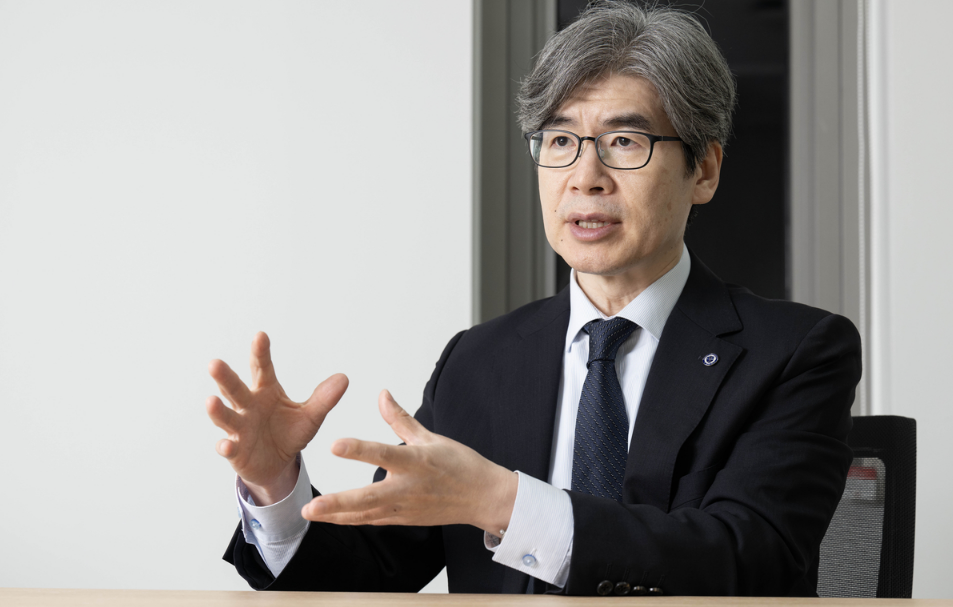
Insider BriefThe Yonsei Quantum Initiative will replace its quantum processing unit with IBM’s next-generation Nighthawk processor in November, the Seoul Economic Daily reported. IBM Miami is currently the only site operating a Nighthawk-based quantum computer, making Yonsei expected to become the world’s second research institution to install one.Yonsei is also the first institution in Korea to have installed an IBM quantum computer. Alongside the Nighthawk upgrade, the initiative will launch Q-Bridge, a platform designed to support industry’s use of quantum computers. The stated aim is to move beyond hardware acquisition and accumulate practical use cases across research and industrial settings.Jung Jae-ho, director of the Yonsei Quantum Initiative, outlined these plans in an interview conducted at the Quantum Convergence Research Building on the Songdo International Campus in Incheon on August 11, the publication reported. “Going forward, the key for the initiative is to resolve demand from industrial sites and to actively develop algorithms that will advance research, while accumulating use cases,” the director said.Nighthawk’s design increases the connections between qubits, reducing unnecessary computation and errors in complex calculations.Director Jung explained the technical distinction from the existing Eagle processor: “With the existing Eagle processor, each qubit was connected to an average of 2.5 others, so computing between qubits that were not directly connected required swap gates and errors accumulated in that process. Nighthawk has a lattice-shaped connection structure in which a single qubit is directly connected to four neighboring qubits, reducing unnecessary swap gates.”The result, the director said, is that Nighthawk can perform about 40% more computation than Eagle at the same error level.Jung also referenced IBM’s broader timeline. “IBM has forecast that quantum computing will reach a ‘technological inflection point’ once large-scale, error-corrected quantum systems are built in 2029,” the director said. “Until then, the task the Yonsei Quantum Initiative must focus on most is maximizing the real-world ‘practical use’ of quantum computers in the field.”A leading application area at Yonsei is biomedical research, including drug development and rare disease treatments. The initiative is conducting joint research on Leigh syndrome, a genetic disease, by connecting IBM’s quantum computer with Fugaku, a supercomputer operated by Japan’s RIKEN institute.Director Jung described the scale of the calculation challenge: “To identify the biological mechanism of Leigh syndrome, using Fugaku alone would require running the computer nonstop for 48 years. If a quantum computer narrows down the key candidates for calculation and takes on the first-round computation, the calculation period can be reduced to a matter of days.”Yonsei plans to review the first calculation results using the quantum computer in August and to discuss the next round of computation with RIKEN, according to the Seoul Economic Daily.The initiative will also pursue a joint research project with the University of Cambridge using the Nighthawk-based quantum computer, the source noted. The plan involves establishing branch offices on each other’s campuses – specifically, Yonsei’s quantum-based drug research center and Cambridge’s Milner Therapeutics Institute alongside its stem cell and artificial intelligence research centers.Q-Bridge, described as a quantum-classical fusion platform, will bundle data, algorithms, and computing resources to support companies working on industrial problems. The platform is targeted at companies that have demand for quantum computing but find it difficult to determine which algorithm to apply or how to divide computation between quantum and classical systems.When a company inputs its industrial problems and data, it can receive suitable algorithms and computing resources and carry out everything from research to demonstration. “Most companies have no quantum literacy, so the idea is to lower the research barrier and first get them to bring ‘domain problems’ from their industries,” Director Jung said.Development of Q-Bridge is set to finish in early November, in line with the Nighthawk installation. The initiative also plans to accumulate industry-specific use cases and algorithms generated through Q-Bridge in a resource it calls the Q-Library, with the aim of reapplying accumulated cases to similar industrial problems over time.TopicsShare Get the latest research, company news, and market intelligence every week. MENTIONED IN THE ARTICLERIKEN (short for Rikagaku Kenkyusho) is a National Research and Development Agency founded in 1917 as private scientific research foundation. Initially modeled after the Kaiser Wilhelm Society in Germany, it has evolved into a comprehensive, state-funded research institution covering a wide range of natural sciences."Cambridge is active in space and satellite-related research: its “Space” research topic page references contributions to exoplanet detection, galaxy evolution via the James Webb Space Telescope (JWST) and instrumentation for space missions. It participates in advanced materials and manufacturing for space: e.g., collaboration on ultra-lightweight solar cells for space applications (with the UK Space Agency) involving Cambridge researchers. The university also engages in space-environment, planetary science, instrumentation research such as graphene protection for lunar dust."More in Research
Tags
Source Information
Discussion
0 professional contributions
Sign in to join this professional discussion.
Be the first to add a constructive contribution.