
QuTech establishes Quantum Systems Integration Unit
Understand this faster with AI


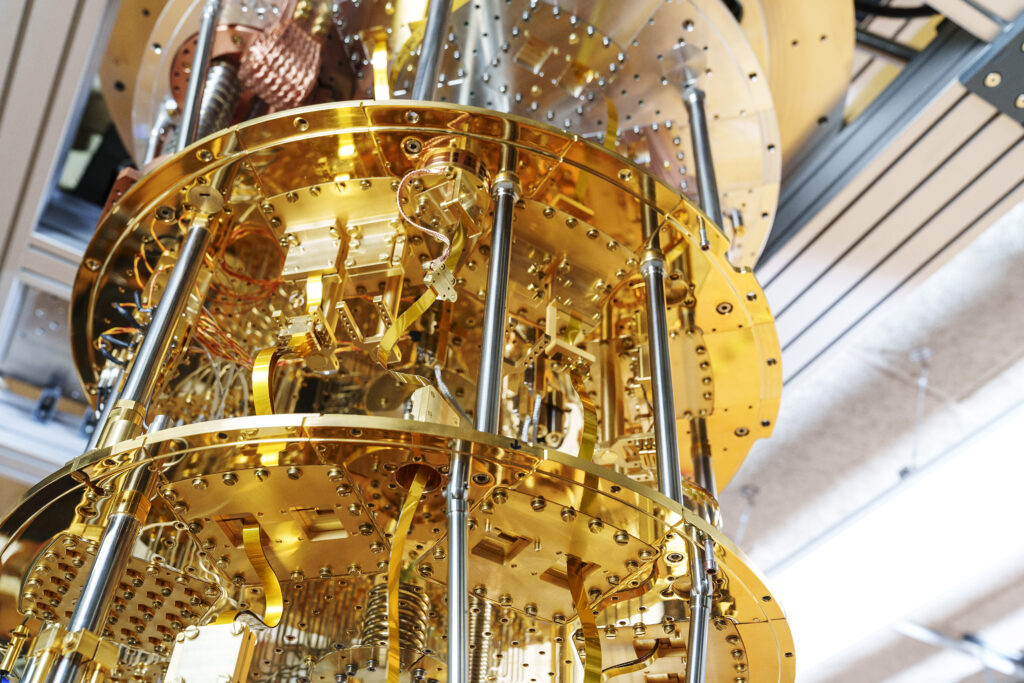
Home Newsroom News QuTech establishes Quantum Systems Integration Unit 04.09.2026Quantum Computing QuTech establishes Quantum Systems Integration Unit Share this article QuTech has established a Quantum Systems Integration Unit to develop full-stack superconducting quantum computers. The new unit will build open–architecture quantum computers using a European quantum value chain. It is seed-funded by QuTech Business Development, with Quantum Inspire providing the environment for deploying integrated systems and making them accessible to users. The QuTech-wide unit builds on years of experience developing, integrating and operating superconducting quantum computers in Delft. To date, five generations of these systems have been made publicly accessible through Quantum Inspire, giving the team experience across the full cycle from processor development to staging, testing, release, operations, maintenance and user access and support. Leo DiCarlo is the Scientific Lead of the unit. Vivek Sinha acts as Strategy and Partnerships Lead. From processor to full system A full quantum computer brings together much more than the quantum processor. Cryogenics, packaging and wiring, control electronics, calibration and characterisation, system software, compilers, monitoring, cloud access and day-to-day operation all must work together. These layers are closely connected, and a change in one part of the stack can affect several others. Through successive system builds and programs such as HectoQubit/2 and OpenSuperQPlus, QuTech has developed experience across this full integration cycle. The new unit brings this knowledge together and will develop a repeatable approach to system architecture, interfaces, component qualification, integration, commissioning, automation, monitoring, and maintenance. Open architecture is central to this approach. Specialised technologies from different organisations can be combined through well-defined interfaces, allowing a system to benefit from advances across the wider ecosystem. Delft already provides a strong base for this way of working. QuTech collaborates with organisations including TNO, Qblox, QuantWare, Delft Circuits, Orange Quantum Systems, Peak Quantum, and Riverlane across different parts of the quantum computing stack.
The Quantum Systems Integration Unit will build on these relationships and strengthen Delft as a European hub for superconducting quantum system integration. For Europe, the ability to connect processors, control technology, cryogenics, software and other specialised components into complete systems is becoming increasingly important for maintaining its own quantum computing capability. Connecting research and engineering System integration also creates a direct connection between scientific research and the engineering of complete machines. Research in the DiCarlo Lab continues to address areas such as quantum error correction, processor physics and improved qubit control. Recent work includes leakage reduction to improve quantum error correction, methods for selecting tunable-coupler operating points that reduce unwanted spectator interactions, and studies of correlated error bursts and quasiparticle dynamics in operational Quantum Inspire processors. These results can feed into future systems, while integrated machines provide researchers with increasingly capable infrastructure on which new ideas can be tested. Quantum Inspire, through its open access, plays an important role in this cycle. Making systems available to users provides operational experience beyond individual laboratory experiments and exposes engineering questions that only become visible when a complete machine is commissioned, maintained and used over time. This experience can then feed back into processor design, control methods, software and the architecture of future systems. From public investment to new technology and valorisation National and European investment has helped build substantial scientific and engineering knowledge in Delft. HectoQubit/2 and OpenSuperQPlus have contributed to this development, together with the wider network of academic and industrial partners around QuTech.
The Quantum Systems Integration Unit will use this foundation to develop new technology, intellectual property and economic activity. During its first year, the team will create a repeatable system-integration blueprint, build an IP base around system architecture, integration methods, tooling and interfaces, and work with potential customers and partners to understand where this capability is most valuable. The market study will consider different routes, including but not limited to turnkey system-integration projects, system integration as a service, open-architecture quantum computers for HPC and research infrastructures, and services around deployment, operations, and compute time. The findings will guide the development of the unit and the route towards venture creation in 2028, supported by a strong IP position and practical experience integrating superconducting quantum computers across the European value chain. Rebecca Mayrhofer (Head of Business Development at QuTech): “Delft has built up years of experience in developing and operating complete quantum systems. We now want to turn that experience into a repeatable integration capability, build the IP around it and understand where customers see the greatest need. That creates a strong basis for future venture creation.” Marco Matters (QDNL CAT-1 Lead): “Europe has excellent companies and research groups across many parts of the quantum computing stack. A strong system integrator can connect those technologies into complete practical and usable machines. Expanding that capability in Delft strengthens both the Dutch ecosystem and Europe’s ability to develop its own quantum computing infrastructure.” Back to overview Next news item The quantum bus goes round and round Researchers at QuTech have demonstrated a semiconductor quantum circuit in which moving qubits plays an active role in processing ... Read more
Tags
Source Information
Discussion
0 professional contributions
Sign in to join this professional discussion.
Be the first to add a constructive contribution.