
Quantum Computing Weekly Round-Up: Week Ending August 15, 2026
Understand this faster with AI


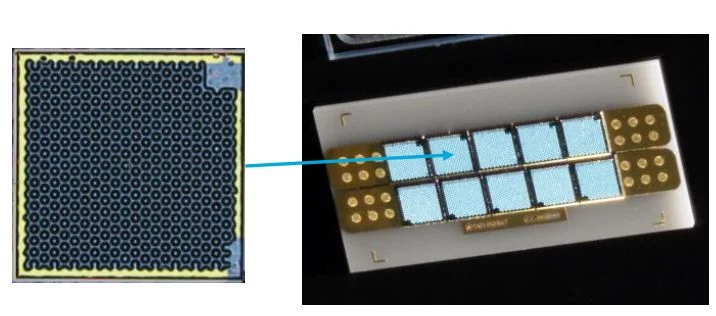
Quantum Computing Weekly Round-Up lands with force this week. Neutral-atom systems moved critical laser control onto photonic chips, a 100-qubit Quantum Fourier Transform ran cleanly on IBM hardware, Quantinuum parked Helios inside an Oracle AI data center, and state governors plus federal labs wrote real checks for quantum hubs. Revenue at Infleqtion more than doubled while post-quantum tools marched deeper into government schedules. Miss any of these links and the FOMO will be real.Pasqal just cleared one of the thorniest optical bottlenecks in neutral-atom computing. Using a photonic integrated circuit from its Aeponyx subsidiary, the team generated four optical traps from a single chip and held individual rubidium atoms with lifetimes matching bulk optics. The Pasqal on-chip control announcement frames the result as a direct path toward 10,000-atom machines and 100 logical qubits. The same story landed on The Qubit Report coverage with extra engineering context.Across the Pacific, Q-CTRL smashed the previous experimental ceiling for the Quantum Fourier Transform. Their convolutional compilation strategy ran the algorithm across 100 qubits on IBM Heron hardware, keeping the correct frequency clearly visible above noise. Process fidelity hit 11.4 percent at 50 qubits and the target remained distinguishable all the way to 100. The Q-CTRL 100-qubit QFT write-up and the accompanying arXiv technical paper show how software is unlocking larger useful circuits today.Northeastern University researchers advanced modular architectures that could stitch smaller processors into larger systems without the usual interconnect pain. Their modular quantum research points toward practical ways to grow capacity while keeping error rates manageable.Quantinuum and Oracle turned a long-running conversation into metal in the rack. Helios, the 98-qubit trapped-ion system with demonstrated 48 logical qubits and 99.921 percent two-qubit fidelity, will sit inside a U.S. Oracle AI data center and appear as a managed OCI service. Customers will mix quantum, GPU, and classical HPC under the same identity and governance controls.
The Quantinuum Oracle partnership and the parallel The Qubit Report analysis make the commercial intent crystal clear.Days later Quantinuum doubled down with Quanta Computer. The Taiwanese manufacturing powerhouse will help industrialize the mechanical, thermal, and systems engineering layers needed for large-scale trapped-ion machines.
The Quanta Quantinuum alliance aims to turn laboratory wins into factory-ready platforms.QC Ware also showed a practical hybrid chemistry workflow that stitches Promethium classical software to IBM Quantum hardware. The QC Ware hybrid demo underscores that useful near-term value still lives in the classical-quantum seam.Utah Governor Spencer Cox signed an executive order creating the Utah Quantum Initiative and a Quantum Coordination Council. The state is leaning on existing strengths in sensing, photonics, semiconductors, and defense facilities at Hill Air Force Base.
The Utah Quantum Initiative and the follow-up The Qubit Report Utah story position the Beehive State for federal dollars under the recent White House quantum order.Canada launched a C$20.3 million quantum defence hub focused on GNSS-independent navigation and other military priorities. The Canada quantum defence hub adds concrete funding to a region already deep in quantum research.New York opened the selection process for regional quantum technology hubs backed by tens of millions in state support.
The New York quantum hubs RFP continues the Empire State’s aggressive build-out. Across the Pacific, Quantum Australia reported an $83.1 million economic impact and growth across fifteen companies in its latest Quantum Australia impact report.Infleqtion posted record second-quarter revenue of $12.6 million, up 116 percent year over year, and raised full-year guidance to roughly $43 million. Growth was entirely organic and quantum-driven, with NASA’s Quantum Gravity Gradiometer program as a major contributor. The company also secured a Letter of Intent for up to $100 million in proposed Commerce Department funding. Details live in the Infleqtion Q2 results.Quantinuum reported its own second-quarter numbers alongside the Oracle news, while Quantum Computing Inc. and BTQ Technologies issued updates that show the public-company cohort is starting to generate real operating momentum. The BTQ Q2 commercialization update and related filings keep the investor narrative grounded in product progress rather than pure hype.D-Wave secured National Research Council of Canada funding to advance commercial annealing software for Advantage2 systems. The D-Wave NRC Canada award is modest in size yet tightly focused on usable commercial tools.BTQ and Taiwan’s ITRI validated a QCIM core designed to meet NIST post-quantum standards. The BTQ ITRI QCIM validation marks another hardware-level step toward deployable quantum-resistant chips.QuSecure’s post-quantum platform is now available on Carahsoft’s GSA schedule, opening federal procurement channels. The QuSecure GSA availability announcement arrives as Cloudflare earned FedRAMP High authorization, strengthening the secure-cloud side of the equation. Meanwhile Google’s upcoming Tensor G6 and Titan M3 will bake post-quantum crypto into Pixel 11 silicon, according to Pixel 11 PQC coverage.QoreChain is already running the NIST standards at full strength on a live Layer-1 chain, with QOR trading set to begin August 20. The QoreChain live PQC launch shows blockchain is not waiting for the rest of the industry.DARPA awarded Qunnect a contract to advance its Carina polarization compensation module for reliable quantum network operation. The DARPA Qunnect contract builds on the company’s partnership with Monarch Quantum to commercialize deployable networking infrastructure.In the UK, Aquark Technologies, Saab, and the Royal Navy completed a world-first quantum timing trial that augmented networked radars. The Aquark quantum timing trial and the company Aquark radar announcement prove timing precision can move out of the lab and onto operational platforms.Germany’s FAU, RRZE and partners launched the Quantum Domain Dynamics project aimed at cross-domain quantum encryption. The FAU quantum encryption project adds another European node to the growing network of real-world quantum communication testbeds.Alice & Bob joined the €4.6 million QUBRIC network focused on quantum error correction doctoral training.
The Alice Bob QUBRIC entry and the broader MSCA QUBRIC program signal Europe’s determination to grow the specialized workforce required for fault tolerance.Xanadu signed agreements with the University of Alberta and the University of Guelph to accelerate pharmaceutical applications and talent pipelines.
The Xanadu Alberta partnership and Guelph quantum education MoU keep the Canadian photonic ecosystem humming.South Korea’s Yonsei University will install IBM’s Nighthawk processor, becoming only the second site worldwide to run the next-generation system.
The Yonsei Nighthawk installation announcement pairs with broader Korean future-technology targets that include a 2030 moon landing ambition.This week quantum hardware, cloud platforms, state strategies, and post-quantum security all moved in the same direction: out of the lab and into production environments that enterprises and governments can actually use.—See the full week of articles in the Weekly Archives Pages and the Weekly Round-Ups found at The Qubit Report.BTQ Technologies completed its acquisition of QPerfect and reported commercial progress across its trusted quantum platform in its Q2 2026 corporate update. QSSN surpassed 100,000 DARPA has awarded Qunnect a contract to advance the next-generation polarization compensation nodule in its Carina quantum entanglement distribution system. Carina already anchors quantum-network deployments Saab UK, Aquark Technologies and the Royal Navy DCTO completed a trial showing Giraffe 1X radars can maintain a coherent air picture using independent AQlock Sign up to receive our newsletter and other reports.We keep your data private and share your data only with third parties that make this service possible. Read our privacy policy for more info.Check your inbox or spam folder to confirm your subscription.
Tags
Source Information
Discussion
0 professional contributions
Sign in to join this professional discussion.
Be the first to add a constructive contribution.