
Microsoft Quantum’s new metrics separate real progress from demos
Understand this faster with AI


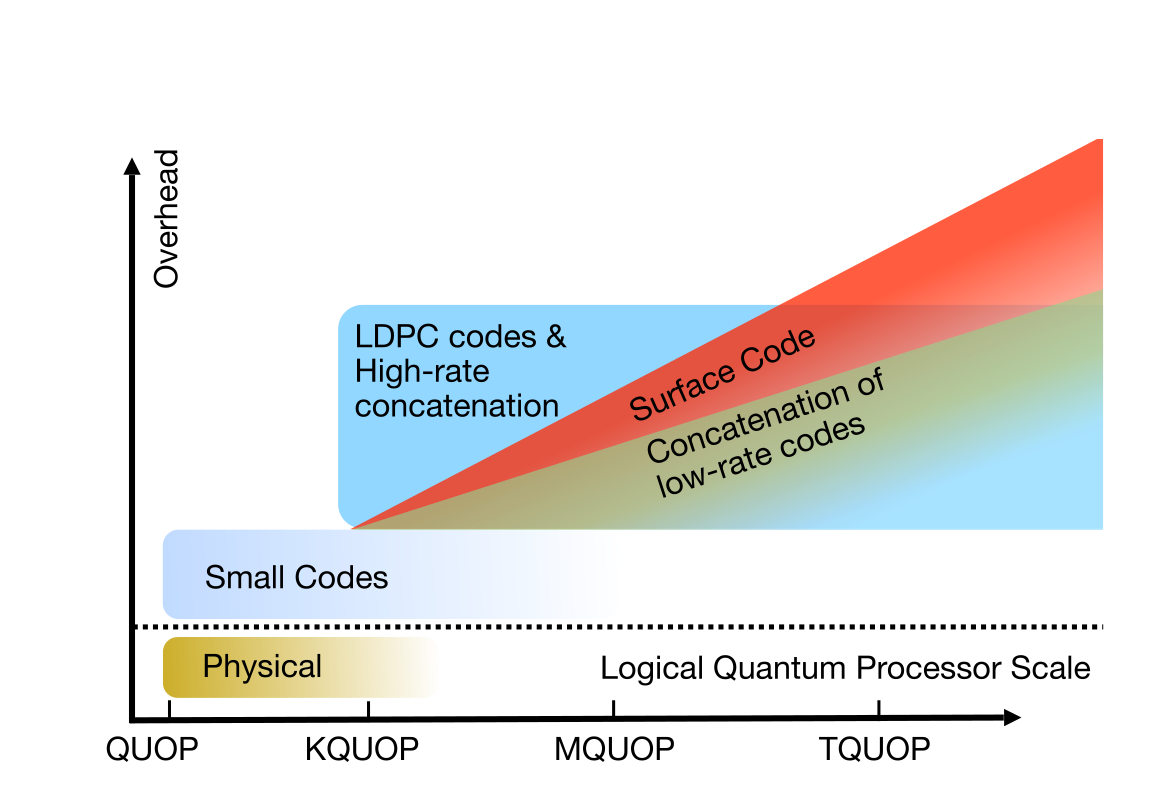
Microsoft Quantum is establishing a four-dimensional framework, reliability, scale, capability and performance, to assess scalable logical qubits and move beyond ambiguous claims of progress. The company recognizes a fundamental challenge within the field. The term “logical qubit” lacks a standardized definition, causing confusion even among experts. Microsoft Quantum aims to clarify development by focusing on fault-tolerant operation that scales with problem size, distinguishing genuine advancement from isolated demonstrations.
Topological Gap Protocol Tracks Progress in Topological Qubit Development Microsoft Quantum developed the Topological Gap Protocol (TGP) to identify topological superconductivity in nanowires during its earliest stages, establishing a metric to track progress toward more robust topological phases. This protocol addresses a challenge in verifying topological order, where fixed length and limited temperature ranges can obscure exponential scaling typically associated with topological qubits. The TGP’s stringent requirements, combined with its ease of implementation, provide a readily available benchmark for evaluating the development of these materials. The company launched an extensive program of material and fabrication development to create devices capable of passing the TGP, with the topological gap serving as a key metric for monitoring the program’s advancement, Microsoft Quantum says. Initial results from this program, detailed in a Physical Review B publication from 2023, established a baseline for topological superconducting wires. The work is published as a preprint on arXiv. Subsequent improvements to fabrication processes enabled milestones like fermion parity readout, as reported in Nature in 2025 and a pre-print available as of July 2025, further demonstrating progress. A major step-function improvement, detailed in a pre-print from June 2026, shows the impact of a new material stack on the topological gap. Defining a scalable logical qubit requires assessing four dimensions, reliability, scale, capability and performance, a framework proposed by Matthias Troyer, John Martinis and Dr. Chetan Nayak. This approach moves beyond simply identifying encoded qubits and instead focuses on evaluating those that demonstrably outperform the physical qubits they comprise. The need for such a framework arose from the inconsistent use of the term “logical qubit” within the field, where some researchers define it as any encoded qubit while others require a higher standard. This definition distinguishes technologies that demonstrably move the field closer to practical quantum computation from isolated demonstrations that may not translate to larger, more complex systems. The company recognizes that over-reliance on any single definition or measurement can hinder progress, potentially leading researchers to optimize for the metric rather than genuine advancement, according to Microsoft Quantum. To mitigate this risk, Microsoft Quantum emphasizes the importance of evolving metrics and employing multiple benchmarks. The company actively encourages collaboration with other institutions and research groups to establish robust measures and definitions, and welcomes external verification of its results. This commitment to transparency is exemplified by the new quantum research center, which provides a venue for independent testing and evaluation by the Defense Advanced Research Projects Agency (DARPA). The current metrics employed by Microsoft Quantum have guided the technology through its initial phases, from establishing basic physics and proof of concept to achieving steady incremental progress. By increasing the topological gap, the company has demonstrably improved the stability of its devices.
As Microsoft Quantum transitions from small topological qubit processors to larger logical qubit processors, its metrics will continue to adapt, reflecting the evolving challenges and opportunities in the field. Microsoft Quantum views its progress as a roadmap, having established the foundational physics and a proof of concept, and now prepared for scaling. The company emphasizes that continuous adaptation of measuring sticks is necessary to maintain meaningful progress and avoid the trap of over-optimizing for a single benchmark, the company says. This dynamic approach ensures that the metrics remain relevant as the technology matures and the pursuit of verifiable, scalable, functioning topological qubits continues. 👉 More information🗞 Distinct Lifetimes for $X$ and $Z$ Loop Measurements in a Majorana Tetron Device✍️ Morteza Aghaee et al.🧠 ArXiv: https://arxiv.org/abs/2507.08795📰 Source: https://quantum.microsoft.com/en-us/insights/blogs/tracking-progress-in-quantum-computing More like thisQuantum Error CorrectionBistable qubit feedback cuts gate errors by half in new testsQuantum HardwareElectrons on neon achieve 62.5MHz qubit-qubit couplingQuantum Computing NewsDOE prepares for quantum computers with 10,000-100,000 logical operations by 2028Quantum Computing NewsIonQ to deploy a 256-qubit computer at Cambridge by summer 2027Stay currentSee today’s quantum computing news on Quantum Zeitgeist for the latest breakthroughs in qubits, hardware, algorithms, and industry deals. Tags:
Tags
Source Information
Discussion
0 professional contributions
Sign in to join this professional discussion.
Be the first to add a constructive contribution.