
KACST and Imperial College London Partner on Quantum Brain Research
This partnership bridges quantum physics and neuroscience, potentially unlocking new models for understanding brain function while positioning Saudi researchers at the forefront of an emerging interdisciplinary field.
Understand this faster with AI


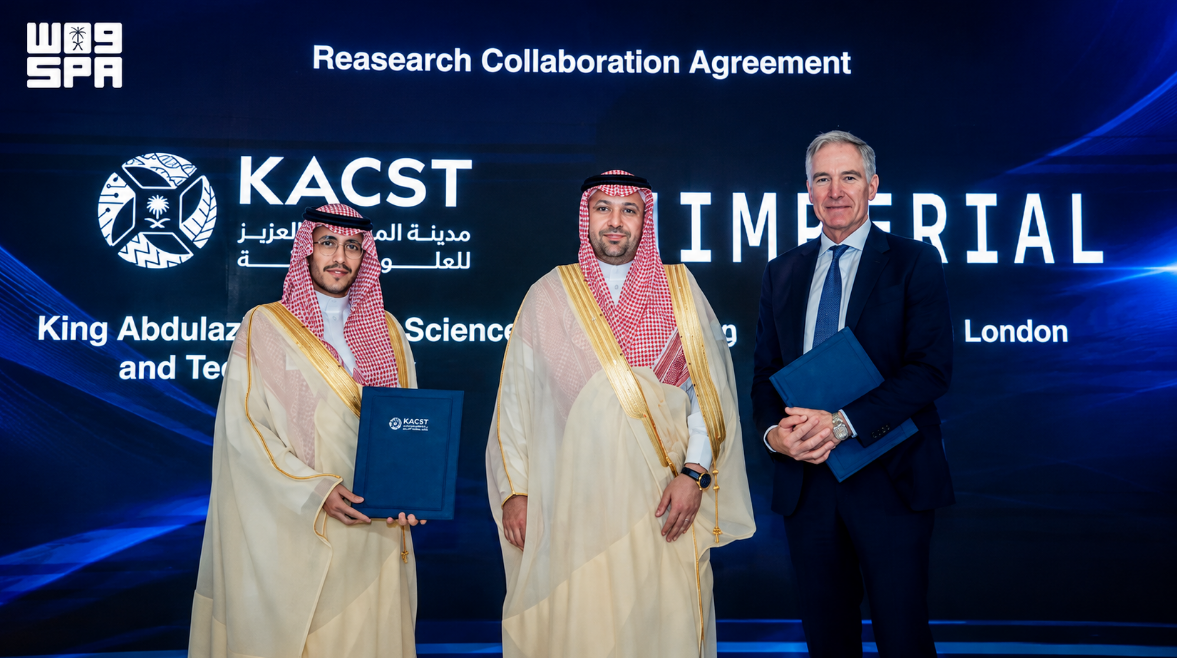
Insider BriefSaudi Arabia’s King Abdulaziz City for Science and Technology (KACST) signed a research partnership with Imperial College London to advance quantum brain research, study quantum mechanical phenomena, and connect quantum science with engineering, neuroscience, and biochemistry, Asharq Al-Awsat reported.The agreement was signed in the presence of KACST President Dr. Munir Eldesouki on the sidelines of the Quantum Forum. The event is organized by the Center for the Fourth Industrial Revolution in Saudi Arabia, an affiliate of the World Economic Forum, in partnership with KACST and King Salman Science Oasis, under the theme “Shaping the Future Quantum Workforce.”The collaboration centers on building an engineering framework to examine quantum properties tied to neuronal cell membranes and how fatty acids influence neural signaling, according to the publication.Work under the partnership will also involve building measurement and testing tools that draw together quantum electronics, semiconductors, biomimetic platforms, and neuroimaging. A separate research strand will look at how maternal fatty acid intake affects fetal brain development, with particular attention to cognitive outcomes.Dr. Mai Alzaydi, Director General of the Bioengineering Institute at KACST, said the partnership is focused on advancing quantum brain research as part of KACST’s efforts to support multidisciplinary research that brings together fundamental science and promising technological applications, enabling Saudi researchers to participate in this scientific field.Professor Mark Johnson, Head of Research at the Quantum Brain Laboratory at Imperial College London, said the collaboration represents a significant milestone in quantum brain research by integrating quantum physics, neuroscience, engineering, and biochemistry within a testable research framework. It also opens new opportunities for KACST researchers to take a leading role in shaping this emerging field in collaboration with leading scientists from Imperial College London, he added, as cited by Asharq Al-Awsat.For related coverage, TQI reported on KACST’s separate research collaboration with Pasqal to develop quantum-safe cryptographic solutions in Saudi Arabia, and on Aramco and Pasqal’s launch of Saudi Arabia’s first quantum computer in May 2026.TopicsShare Get the latest research, company news, and market intelligence every week. MENTIONED IN THE ARTICLEKACST is a government research institute and technology development organization in Saudi Arabia. Their main objective is investing in scientific research and technological advancements to serve national development in Saudi Arabia. KACST and Aramco have launched the Saudi Accelerated Innovation Center, which is focused on enhancing quantum technologies and developing 5G and 6G communications networks.Imperial College London, often referred to as Imperial, operates as a publicly funded research university in London, England. The university has a strong emphasis on science, engineering, business, and medicine. The primary campus is situated in South Kensington, with an additional innovation hub campus in White City. Additionally, it collaborates with teaching hospitals across London, forming an academic health science center in partnership with Imperial College Healthcare NHS Trust. Imperial was initially part of the University of London and gained independence as a university in 2008.More in Research The Quantum Insider (TQI) is the leading source for the latest quantum technology news, market intelligence, industry analysis, and data covering the global quantum ecosystem. NEWSROOMPLATFORMSERVICESCOMPANY© 2026 The Quantum Insider. All rights reserved. Part of the Resonance networkOne of our team will be in touch to learn more about your requirements, and provide pricing and access options.Subscribe to our industry leading leading newsletter for the latest in quantum news and insights. Necessary cookies are always on to ensure the website works. Optional cookies help us understand how the site is used. Privacy Policy
Tags
Source Information
Discussion
0 professional contributions
Sign in to join this professional discussion.
Be the first to add a constructive contribution.