
IonQ Demonstrates Real-Time QEC Decoding at MegaQuOp Scale on Single Commodity CPU
Understand this faster with AI


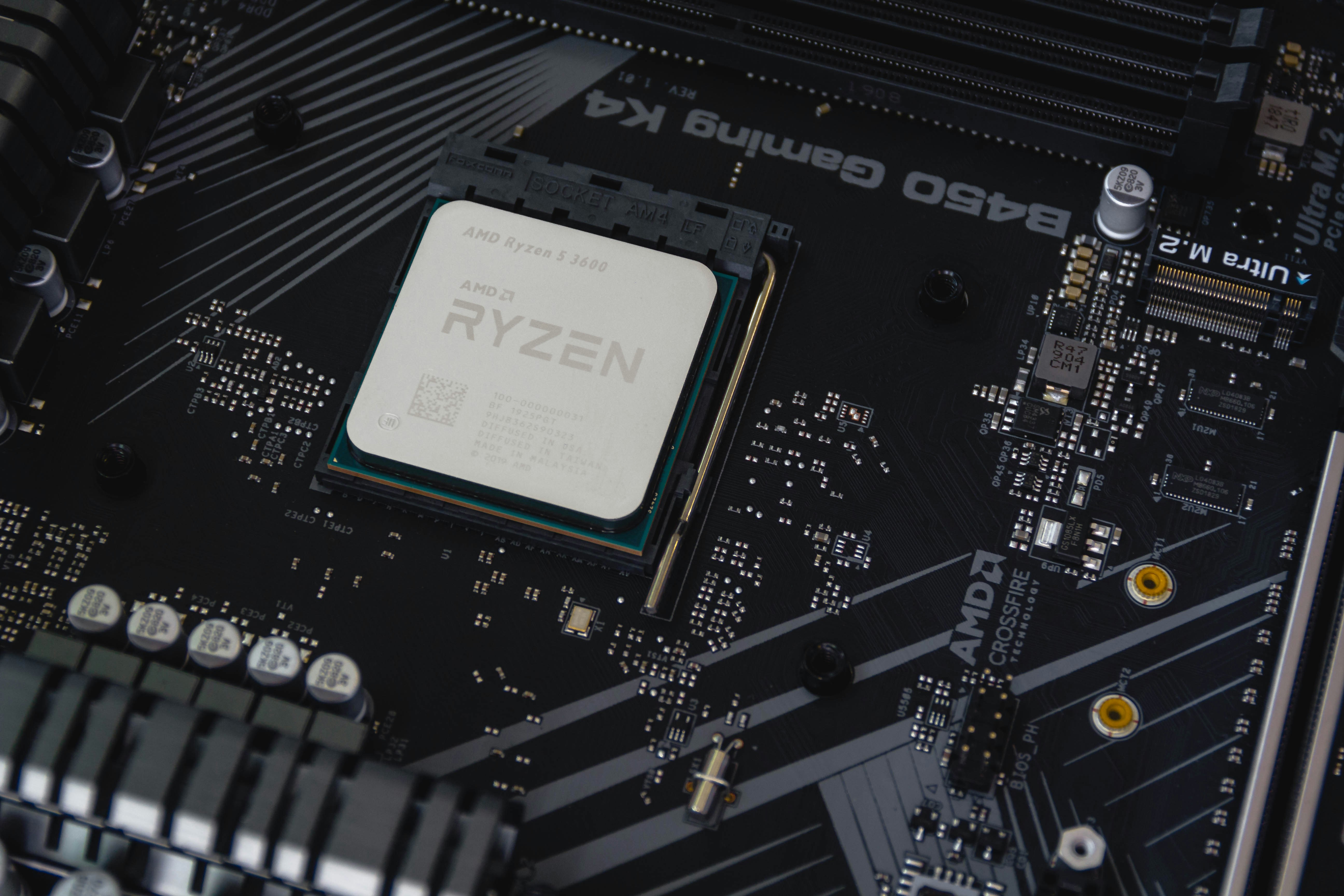
IonQ Demonstrates Real-Time QEC Decoding at MegaQuOp Scale on Single Commodity CPU Trapped-ion quantum developer IonQ (NYSE: IONQ) has validated an end-to-end real-time Quantum Error Correction (QEC) decoding pipeline capable of handling large-scale fault-tolerant workloads without classical execution bottlenecks. Detailed in technical research published on arXiv (arXiv:2608.25027), the software decoding stack executed MegaQuOp-scale circuits—simulating up to 408 logical qubits across 88 memory blocks and magic state factories—on a single commodity central processing unit (CPU). In fault-tolerant architectures, real-time decoding requires classical processors to process syndrome extraction data faster than the physical QPU generates it. Failure to clear syndrome queues introduces a decoding backlog, forcing the quantum computer to pause (“stretch”) while classical decoders resolve Pauli frames and state measurements. IonQ’s dual-decoder architecture resolves this bottleneck using two concurrent sliding-window decoders: a continuous Error Decoder tracking long-term Pauli frame updates and a low-latency Outcome Decoder executing during logical measurements to handle error-detected measurement (EDM) checks. [ IonQ Real-Time QEC Decoding Stack & Benchmark Metrics ]System LayerArchitecture & Algorithm ScopeMeasured Performance MetricsHardware Execution Engine• Commodity 12-Core CPU (Off-the-shelf processor)• Single-chip classical compute allocation• Near-zero computational backlog delays• As little as 0.02% total stretch timeDecoding & Memory Optimizations• Dual Sliding-Window Decoders (Error & Outcome)• Dynamic Detector Error Model (DEM) priors• Fixed Tanner graph reuse avoids graph rebuilds• Log-likelihood ratio (LLR) node-level memory savingsMegaQuOp Benchmark Workload• 408 Logical Qubits (68 LDPC + 20 Magic State Factories)• 31.5 Million total logical quantum operations• 1.31M Logical measurements & 555k T-gates executed• Scalable path beyond 256 physical qubits to 10,000+ QPUs To minimize memory bus overhead and prevent CPU cache contention, the decoding engine reuses a fixed Tanner graph and updates only the log-likelihood ratio (LLR) probability vectors dynamically when cat-state measurements occur. Tested across benchmark workloads including Disordered Heisenberg models and Measurement-Induced Phase Transitions (MIPT), the system maintained decoding latency below the trapped-ion Syndrome Extraction Cycle (SEC) period. Under standard physical noise, the decoder added as little as 0.02% processing stretch, confirming that classical hardware scaling remains linear as system capacity expands. The milestone validates a core component of IonQ’s proprietary Walking Cat architecture. By demonstrating that expensive custom FPGA or GPU clusters are not strictly required for real-time syndrome processing at scale, the software framework establishes a low-overhead classical control layer to support IonQ’s roadmap toward multi-thousand physical qubit systems. Review the press release via IonQ Newsroom here and the technical research preprint on arXiv here, inspect hardware specifications on IonQ Walking Cat Architecture here, and read our prior technical coverage of IonQ Details “Walking Cat” Blueprint for Fault-Tolerant Trapped-Ion Systems here, Architectural Blueprints for Fault-Tolerant Trapped-Ion and Neutral-Atom Systems here and the technical analysis of IonQ’s MegaQuOp Real-Time Decoding Engine here. September 22, 2026 Mohamed Abdel-Kareem2026-09-22T18:00:57-07:00 Leave A Comment Cancel replyComment Type in the text displayed above Δ This site uses Akismet to reduce spam. Learn how your comment data is processed.
Tags
Source Information
Discussion
0 professional contributions
Sign in to join this professional discussion.
Be the first to add a constructive contribution.