
Guest Post: Why Enterprises Need to Start Post-Quantum Migration Now
Understand this faster with AI


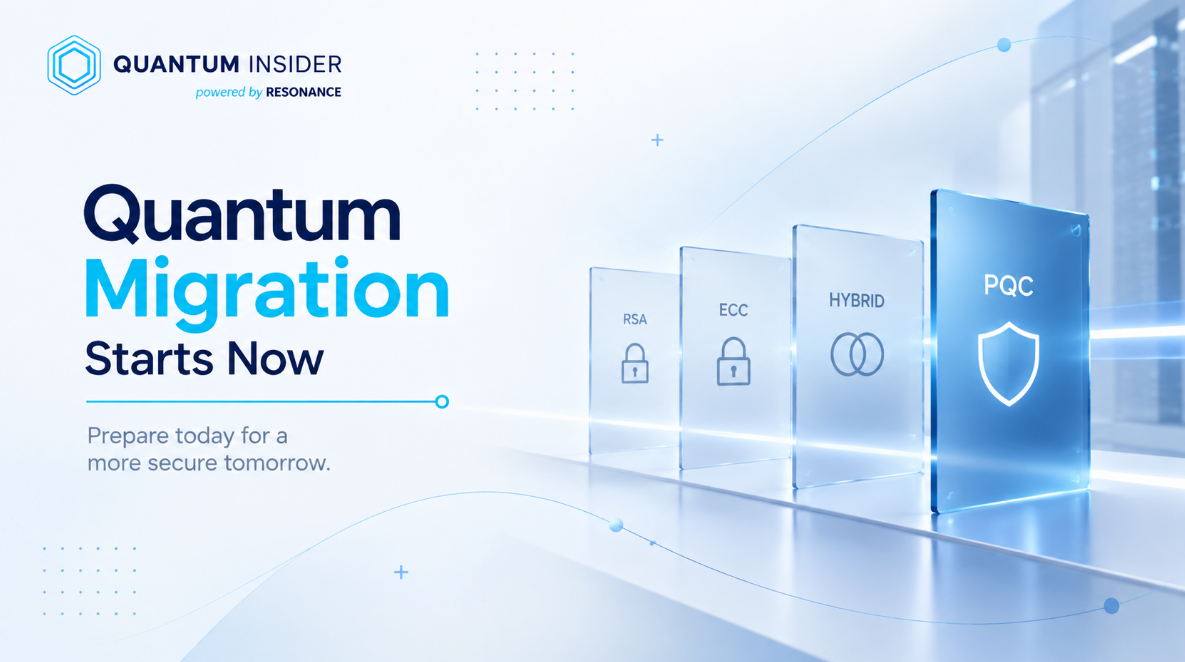
Guest Post by Sudiptaa Paul Choudhury CMO, QNu Labs | TEDx Speaker | LinkedIn Top Voice, AI and Quantum CybersecurityIn March 2026, Google’s Quantum AI team published findings suggesting that a sufficiently powerful quantum computer could crack Bitcoin’s core encryption in roughly nine minutes, using fewer resources than experts had assumed just months earlier. While the research does not establish an immediate threat, it has compressed the timeline for enterprises that have treated quantum security as a distant concern.The standards are no longer pending. NIST finalised its first three post-quantum cryptography standards in August 2024, and regulatory timelines are beginning to take shape. The question for CISOs is no longer whether to prepare, but where to begin.The biggest misconception about quantum security is that the threat begins when a powerful quantum computer arrives. It does not.Nation-state actors are already pursuing harvest-now-decrypt-later (HNDL) strategies, intercepting and storing encrypted information today with the expectation that it can be decrypted once quantum capabilities become available. Any information that needs to remain confidential for five, ten or more years could be relevant, including financial records, health data, government communications, merger documents and valuable intellectual property.This makes quantum readiness an issue for today’s security architecture, not simply tomorrow’s technology roadmap.Regulatory pressure is reinforcing that urgency. The NSA’s CNSA 2.0 requires post-quantum cryptography for new national security systems by 2027, while NIST’s transition plans call for the eventual retirement of vulnerable algorithms. Enterprises therefore need to understand their cryptographic exposure before migration becomes an emergency exercise.Post-quantum security is not a single product category. A practical migration requires five connected capabilities.1. Discover: Cryptographic inventoryYou cannot migrate what you cannot see. Inventory tools identify where public-key cryptography is being used across TLS certificates, SSH keys, VPNs, code-signing infrastructure, embedded firmware, HSMs, cloud environments and applications.The objective should be a living cryptographic inventory rather than a one-time assessment. Infrastructure changes constantly, and an outdated inventory can quickly become incomplete.2. Assess: Quantum risk assessmentKnowing where cryptography exists is not enough. Risk assessment tools help organisations determine which systems require attention first by mapping cryptographic dependencies against factors such as confidentiality requirements and exposure to interception.Data that must remain confidential for a decade or longer and travels across networks should generally receive early attention because of HNDL risk.3. Adapt: Crypto-agilityCrypto-agility is the ability to change cryptographic algorithms without redesigning the systems that depend on them. This capability will become increasingly important as standards mature and new vulnerabilities emerge.Building crypto-agility into new applications and infrastructure can turn future cryptographic changes into configuration updates rather than major development projects.4. Migrate: PQC deploymentDeployment tools implement NIST-standardised algorithms including ML-KEM for key encapsulation and ML-DSA and SLH-DSA for digital signatures.The transition should not be an all-or-nothing exercise. Hybrid deployment, where classical and post-quantum algorithms operate together, allows enterprises to introduce quantum-safe protection progressively while maintaining operational continuity.5. Manage: PKI, HSM and key managementPKI, certificate lifecycle management, HSMs and key management provide the foundation for enforcing policies, rotating keys and retiring vulnerable algorithms across distributed environments.Without centralised management, enterprises can end up reconciling multiple key stores and certificates manually, creating operational and audit challenges.One of the most expensive mistakes an enterprise can make is purchasing a deployment tool before understanding its existing cryptographic environment. Without an inventory, organisations can overlook embedded systems, legacy infrastructure and third-party dependencies.The sequence is straightforward: discover first, assess risk, build crypto-agility, deploy PQC and manage the environment centrally.When evaluating solutions, enterprises should consider three questions. Do the tools support NIST-standardised algorithms? Can they integrate with existing PKI, HSMs and cloud key management infrastructure? And can they produce a Cryptographic Bill of Materials (CBOM) that provides an auditable view of the organisation’s cryptographic environment?The first 90 days should focus on establishing executive ownership, starting automated cryptographic discovery and identifying systems with the longest confidentiality requirements. Within six months, organisations should build a prioritised risk register and make crypto-agility a requirement for new technology investments.Over the following years, hybrid PQC deployment can expand across high-priority systems, followed by migration of legacy and embedded infrastructure.At QNu Labs, our work with organisations across defence, banking and telecom has reinforced the importance of treating post-quantum security as an infrastructure migration rather than a point-solution purchase. QNu Labs’ QKMS brings cryptographic discovery, crypto-agile key management and NIST-aligned PQC capabilities together to support the transition towards quantum-safe infrastructure.A full migration may take years. Starting does not have to.The honest answer for 2026 is simple: Q-Day does not need to arrive for organisations to be at risk. HNDL is already changing the security equation, and data being protected today may need to remain confidential long after today’s encryption is no longer considered safe.The tools exist. The standards are in place. What enterprises need now is a structured migration strategy that begins before the deadline, not after it.add crypto agility piece in it as wellFor readers looking to go deeper on post-quantum cryptography and Bitcoin security, TQI’s coverage of the growing quantum security challenge facing Bitcoin and digital assets, how quantum computing affects modern cryptography, and what crypto-agility means and why it matters for post-quantum migration covers the technical exposure, migration paths, and the infrastructure needed to make transitions manageable.About The AuthorSudiptaa Paul Choudhury is CMO at QNu Labs, India’s full-stack hybrid quantum security company, incubated at IIT Madras Research Park and backed by India’s National Quantum Mission. She is an IIM Calcutta alumna with 22+ years of global marketing leadership across Oracle, Ericsson, Intuit, HP, and Dell EMC. A TEDx speaker and LinkedIn Top Voice in AI and quantum cybersecurity, she mentors 20,000+ professionals and has been featured in ET, CMO Global, CMO Asia and in other premium media outlets. She built QNu Labs’ global marketing function from the ground up as a solo operator.TopicsShare Get the latest research, company news, and market intelligence every week. MENTIONED IN THE ARTICLEMore in Research
Tags
Source Information
Discussion
0 professional contributions
Sign in to join this professional discussion.
Be the first to add a constructive contribution.