
Fermilab and Microsoft Partner on Quantum Hardware Tools
Understand this faster with AI


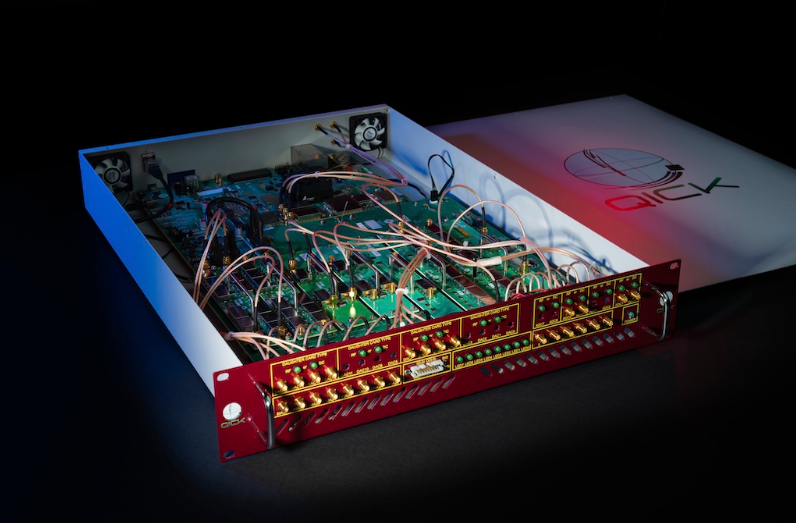
Insider BriefPRESS RELEASE — The U.S. Department of Energy’s Fermi National Accelerator Laboratory is joining Microsoft Quantum as an initial partner in the company’s new quantum hardware makerspace in its newest quantum research center in the University of Maryland’s Discovery District. Here, researchers within the academia, industry, and government sectors will provide access to real quantum hardware and expertise for students and others in the emerging quantum community.Through its broader collaboration with Microsoft, Fermilab also aims to add new capabilities to the Quantum Instrumentation Control Kit, or QICK, an open-source hardware and software toolkit it developed to control and read out information from quantum bits.“We are thrilled that Microsoft has chosen QICK to be part of the quantum hardware makerspace and look forward to working with them on other projects as well. Fermilab is committed to keeping QICK open source to allow users from academia, the national labs and industry to train the quantum workforce and build applications on top of QICK,” said Anna Grassellino, chief technology officer and associate laboratory director for the Technology Directorate at Fermilab.Originally designed for superconducting qubits, the Fermilab QICK development team worked with partners to adapt QICK to use with trapped ions, cold-atoms, silicon-spin qubits, quantum-dot and biological qubits.Anna Grassellino, chief technology officer and associate laboratory director for the Technology Directorate at Fermilab said: “Fermilab is committed to keeping QICK open source to allow users from academia, the national labs and industry to train the quantum workforce and build applications on top of QICK.”Fermilab is committed to keeping QICK open source to allow users from academia, the national labs and industry to train the quantum workforce and build applications on top of QICK,“Our work with Fermilab extends beyond training,” said Charles Tahan, Partner, Microsoft Quantum. “We are collaborating to broaden the applicability of quantum-control technologies across hardware platforms while working with the University of Maryland to explore how tools such as [QICK] can be incorporated into education. As quantum computing matures, it’s important that learners have opportunities to work with real systems, real tools, and the people who build them.”By sharing their results with the open-source user community, Fermilab and Microsoft will provide new tools to the growing quantum ecosystem and help advance quantum information science.TopicsShare Get the latest research, company news, and market intelligence every week. MENTIONED IN THE ARTICLEFermilab QI is focusing on: using technology developed for superconducting particle accelerators to vastly improve qubit systems, including those used for future quantum computers; Developing ways to convey information across large distances with entangled particles ; Improving quantum sensors for many applications and deploying them to potentially detect dark matter and give us new insights into the universe ; Writing algorithms that can simulate subatomic interactions on quantum computers, with many other uses outside of physics ; Developing methods to use quantum computing to improve data analysis and theoretical calculations.Microsoft engages in the creation and licensing of software for both consumer and enterprise use. The company is renowned for its development of Windows operating systems and the Office suite designed for productivity. Microsoft's structure encompasses three major segments of roughly equal size: productivity and business processes, which encompasses legacy Microsoft Office, cloud-based Office 365, Exchange, SharePoint, Skype, LinkedIn, and Dynamics; the intelligence cloud, which includes offerings like Azure, Windows Server OS, and SQL Server; and more personal computing, which covers Windows Client, Xbox, Bing search, display advertising, and a range of Surface laptops, tablets, and desktops.More in Research The Quantum Insider (TQI) is the leading source for the latest quantum technology news, market intelligence, industry analysis, and data covering the global quantum ecosystem. NEWSROOMPLATFORMSERVICESCOMPANY© 2026 The Quantum Insider. All rights reserved. Part of the Resonance networkOne of our team will be in touch to learn more about your requirements, and provide pricing and access options.Subscribe to our industry leading leading newsletter for the latest in quantum news and insights. We use cookies to analyse traffic and improve your experience. Privacy Policy
Tags
Source Information
Discussion
0 professional contributions
Sign in to join this professional discussion.
Be the first to add a constructive contribution.