
Dirac Labs Raises $1.8M for Quantum Navigation Sensors
Understand this faster with AI


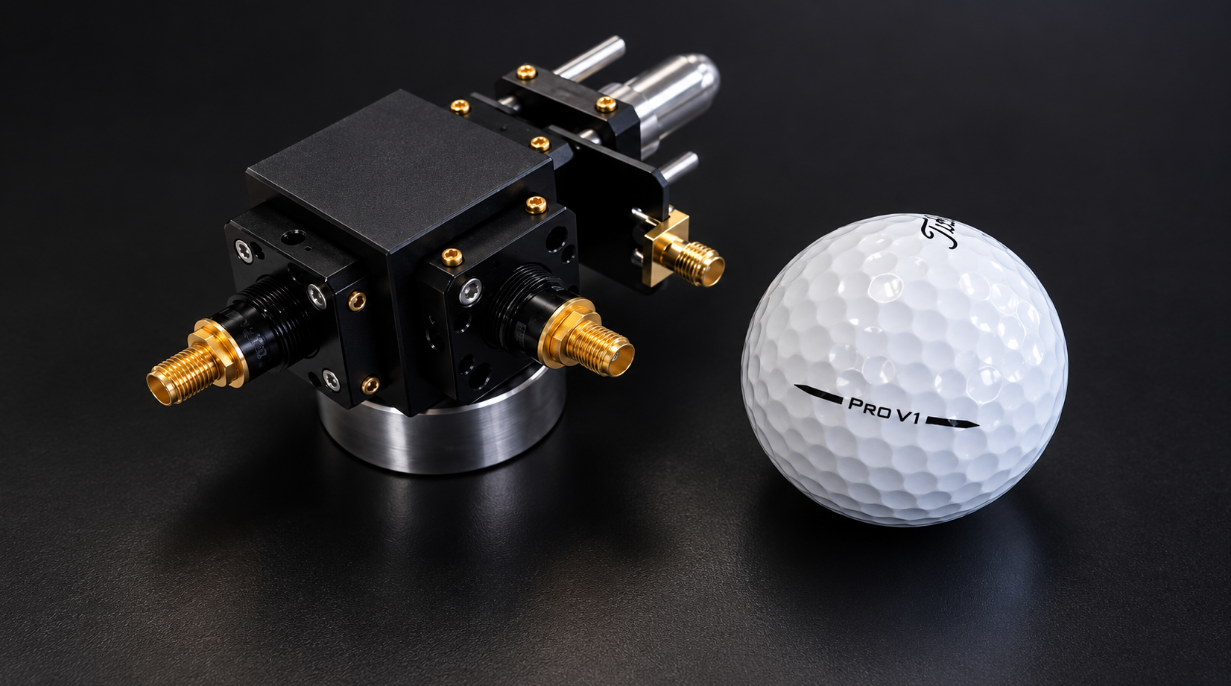
Insider BriefPress release – Dirac Labs, a quantum-enabled navigation company, today announced its $1.8M pre-seed funding to prototype its quantum sensors and conduct field trials to further refine its technology to provide universal positioning where GPS is unavailable. Quantum sensing offers a resilient, alternative method of positioning by measuring features of Earth’s magnetic field, which remains present in environments where GPS signals cannot reach.TitletownTech, a venture capital firm formed out of a partnership between Microsoft and the NFL’s Green Bay Packers, participated in the funding along with Automotive Ventures, Riceberg Ventures, quantumEDGE Ventures, Jude Gomila and Balaji Srinivasan.The Dirac Labs diamond-based sensing platform uses specially engineered materials to measure Earth’s magnetic field with extreme precision, enabling positioning and navigation without relying on GPS. The hardware is combined with AI models that perform real-time signal processing and sensor fusion, turning a faint signal into a precise position and keeping the device resilient as external conditions change. The system is designed to plug into the GPS device ports on airplanes, submarines and other vehicles without re-engineering the platforms.“There is a clear and timely need for navigation and positioning capabilities underwater, underground and more,” said Jill Enos, managing partner of TitletownTech. “Dirac Labs is combining quantum sensing, AI and semiconductor-compatible manufacturing to build a scalable navigation solution for the places where GPS cannot be relied upon. The leadership team has the technical depth and commercial ambition to define this emerging category, and we are proud to lead their pre-seed investment.”Dirac Labs has also received non-dilutive public funding from the Indo-U.S. Science and Technology Forum (IUSSTF) and took part in gener8tor’s Great Lakes Innovation Accelerator, part of the National Oceanic and Atmospheric Administration’s (NOAA) Ocean Enterprise Accelerators program. Additional funding came from the Wisconsin Entrepreneurship Hub, via a collaborative project with the University of Wisconsin-Madison.“NOAA funded the Great Lakes Innovation Accelerator to bring new technology into the ocean and coastal economy, and Dirac Labs is a great example of that mission in action,” said Ryan Jeffery, Vice President of Sustainability at gener8tor. “Their passive quantum sensing could change ocean science and navigation, and the private investment they’ve now attracted shows this public-private model works. We’re excited to continue to support Dirac Labs and ensure they are connected with the right partners across the ocean economy.” “GPS is global, but not universal,” said Sanket Deshpande, co-founder and CEO of Dirac Labs. “The signals have never reached underground or underwater, where a growing share of exploration, mining and defense work happens. Earth’s magnetic field is already in those places, and it only gets stronger the closer you get to the rock. Dirac Labs is building the quantum sensors that turn that field into positioning for the platforms that need it most.”The Dirac Labs sensors are designed to leverage existing semiconductor foundry infrastructure, making them scalable and low-cost compared to competing methods. By producing small and robust sensors, the company can solve the scalability challenge that has proven the main barrier to broad deployment of quantum sensing.“We are building a navigation layer for everywhere that GPS cannot reach and closing the gap toward true universal positioning,” said Aishwarya Das, co-founder and COO of Dirac Labs. “Early traction with major defense and industrial partners has validated the near-term demand for quantum sensing, and once these platforms can navigate the subsurface with confidence, missions that are impossible today become routine.”Deshpande and Das spun Dirac Labs out of the University of Wisconsin-Madison following Deshpande’s Ph.D. defense, which was dedicated to making quantum technologies robust enough to function in the field. Das has a background in physics and machine learning, the two disciplines at the core of Dirac Labs quantum universal positioning system.“Quantum magnetometry has worked in the lab for years. The barrier has always been fielding a sensor that holds accuracy in real conditions at a cost you can actually scale. Dirac Labs built manufacturability into the physics from the start, which is why I see their approach as genuinely deployable navigation infrastructure.” – Dr. Michael Nayak, a scientific advisor to Dirac Labs. Nayak is also CTO of the XPRIZE Foundation, where he oversees the Quantum Applications XPRIZE, and founded a next-gen quantum program while a DARPA Program Manager.“The Dirac Labs roadmap to scalable quantum navigation sensors lines up with a clear national need and with real regional strengths. The Midwest has built a quantum ecosystem that spans national labs, universities, and a growing set of companies. It is home to domestic diamond materials growth and has potential end markets like agriculture where autonomous equipment must operate accurately in places a GPS signal doesn’t reliably reach.” – Jennifer Choy, associate professor at University of Wisconsin-Madison and scientific advisor to Dirac Labs. “Quantum sensors are being developed for positioning and navigation, but today the cost is prohibitive for anything but large defense platforms—and on a large defense budget. Dirac Labs has the technical expertise and vision to make quantum sensors smaller and cheaper, which would unlock secure and reliable positioning in a world of autonomous cars and drones.”– Mikhail Kats, Deshpande’s former PhD advisor and scientific advisor to Dirac Labs. To learn more about Dirac Labs, please visit the company’s website.TopicsShare Get the latest research, company news, and market intelligence every week. MENTIONED IN THE ARTICLEDirac Labs specializes in quantum sensing, focusing on navigation and positioning solutions for environments where GPS is unavailable or unreliable. Leveraging NV-diamond quantum magnetometers and AI-driven navigation stacks, the company addresses the limitations of conventional navigation technologies. Its innovations enable precise, secure, and drift-free positioning for applications in autonomous vehicles, unmanned aerial systems, asset tracking, and robotics. Dirac Labs emphasizes scalable manufacturing and integration of quantum sensors, aiming to enhance resilience and reliability in navigation across diverse industries.More in Research
Tags
Source Information
Discussion
0 professional contributions
Sign in to join this professional discussion.
Be the first to add a constructive contribution.