
Chip-based lasers cool trapped ions 3x faster for quantum computing - Interesting Engineering
Understand this faster with AI


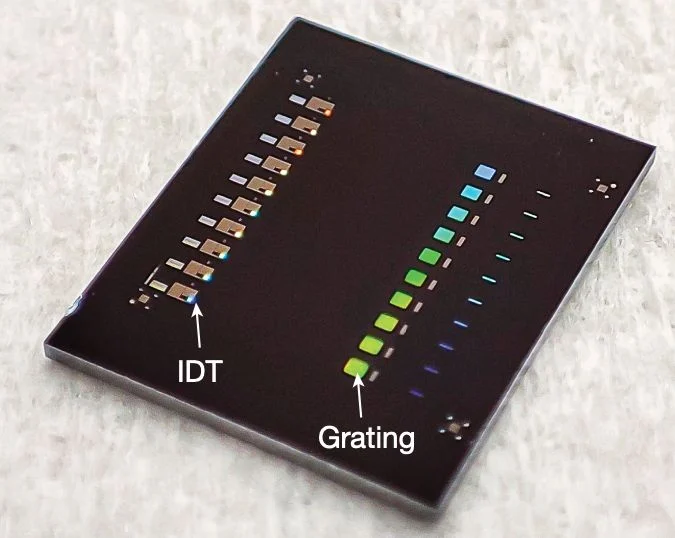
Optical fibers feed an integrated ion-trap chip (gold), delivering laser light to cool trapped ions.Cornell UniversityKey TakeawaysCornell researchers cooled a trapped calcium ion close to its quantum ground state in 150 microseconds, versus approximately 500 microseconds with a conventional setup.The chip-based technique simultaneously addressed three motional modes across an approximately 5 MHz frequency range.The experiment demonstrates how integrated photonics could improve cooling operations in larger trapped-ion quantum computers. Researchers at Cornell University have developed a chip-based laser-cooling technique that brings trapped ions close to their quantum ground state in just 150 microseconds, potentially reducing a major time bottleneck in quantum computing. The method is around three times faster than a conventional laser arrangement, which takes approximately 500 microseconds. It also cools three different modes of an ion’s motion simultaneously, rather than requiring separate cooling operations for each mode. The findings demonstrate how integrated photonics could improve the control of trapped ions as researchers work to build larger quantum computers. The study was led by Karan Mehta, an assistant professor of electrical and computer engineering at Cornell’s Duffield College of Engineering. Cooling slows quantum operations Trapped-ion quantum computers use electrically charged atoms held in electromagnetic fields to store and process quantum information. Their precision makes them promising candidates for quantum computing, but unwanted atomic motion can interfere with operations. Researchers must repeatedly use lasers to remove this motion and cool ions close to their lowest possible energy state. These cooling procedures can take up a substantial portion of a quantum computer’s operating time. Mehta said cooling, particularly to the quantum ground state, has become a major bottleneck in leading trapped-ion systems.More from ScienceSee AllScience1,000-foot historic US ocean liner sinks to become world’s largest artificial reefScienceScientists develop 200-nanometer diamond pillars for future quantum computersScienceLight-powered catalyst delivers 200% more hydrogen peroxide with an atomic twistScienceUS scientists unravel how different iridium faces impact energy reactionsScienceWorld’s largest neutrino experiment begins construction a mile underground in US To address this, the Cornell team developed an approach that delivers carefully controlled laser light through integrated optical components on a microfabricated ion-trap chip. The researchers directed two laser beams in opposite directions to create a standing wave, a pattern of alternating high- and low-intensity regions. They positioned a trapped calcium ion at a low-intensity point, or node, to suppress unwanted light interactions that can heat the ion while cooling its motion. Standing waves accelerate cooling The team combined this optical arrangement with a technique called electromagnetically induced transparency (EIT) cooling. It brought the targeted motion close to the quantum ground state in about 150 microseconds, compared with roughly 500 microseconds using a conventional running-wave laser setup. The experiment also demonstrated simultaneous cooling across three measured motional modes spanning approximately 5 megahertz. The targeted mode reached an average phonon occupancy of around 0.05, while the researchers brought the measured modes close to their ground states. The results also demonstrated cooling below the conventional Doppler limit, experimentally verifying a long-standing theoretical prediction. An important part of the approach is its integrated optical delivery system. The chip routes multiple wavelengths, from ultraviolet to near-infrared light, needed to control the ion.
The team also developed packaging that allowed the device to operate at cryogenic temperatures. The chips were commercially fabricated in the Netherlands through a collaboration with ETH Zurich, while Cornell facilities helped prepare the devices for the experiments. Scaling trapped-ion computers The demonstration involved a single calcium ion, rather than a multi-ion quantum processor. However, the researchers said the approach could be applied to larger trapped-ion systems. Integrating optical components into ion-trap devices could reduce the need for complex external laser arrangements as processors scale to more qubits. Faster cooling across multiple motional modes could also reduce the time spent preparing ions for quantum operations. The researchers said the work shows how technologies being developed to scale quantum computers could also improve the fundamental operations that those systems rely on. The study was published in PRX Quantum. Get the latest in engineering, tech, space & science - delivered daily to your inbox.Sign up for freeBy subscribing, you agree to our Terms of Use and PoliciesYou may unsubscribe at any time.0COMMENTSubscribe toToday!Access to exclusive content, expert insights and a deeper dive into engineering and tech. No ads, no limits.Explore Now!ByNeetika WalterWith over a decade-long career in journalism, Neetika Walter has worked with The Economic Times, ANI, and Hindustan Times, covering politics, business, technology, and the clean energy sector. Passionate about contemporary culture, books, poetry, and storytelling, she brings depth and insight to her writing. When she isn’t chasing stories, she’s likely lost in a book or enjoying the company of her dogs.TRENDINGLATEST1Microsoft 365 outage affects 130,000 users as engineers race to restore services2Google launches Gemini 4 Hydrogen, scores 57% on coding benchmark, triples Flash3New hydrogen tech could put fast-starting turbines at center of grid decarbonization4China strikes high-yield natural gas reservoir 18,930 feet down in Bohai Sea volcanic rock548-story building turned into giant powerhouse as 1,391 solar panels wrap skyscraper wallsOptical fibers feed an integrated ion-trap chip (gold), delivering laser light to cool trapped ions.Cornell UniversityKey TakeawaysCornell researchers cooled a trapped calcium ion close to its quantum ground state in 150 microseconds, versus approximately 500 microseconds with a conventional setup.The chip-based technique simultaneously addressed three motional modes across an approximately 5 MHz frequency range.The experiment demonstrates how integrated photonics could improve cooling operations in larger trapped-ion quantum computers. Researchers at Cornell University have developed a chip-based laser-cooling technique that brings trapped ions close to their quantum ground state in just 150 microseconds, potentially reducing a major time bottleneck in quantum computing. The method is around three times faster than a conventional laser arrangement, which takes approximately 500 microseconds. It also cools three different modes of an ion’s motion simultaneously, rather than requiring separate cooling operations for each mode. The findings demonstrate how integrated photonics could improve the control of trapped ions as researchers work to build larger quantum computers. The study was led by Karan Mehta, an assistant professor of electrical and computer engineering at Cornell’s Duffield College of Engineering. Cooling slows quantum operations Trapped-ion quantum computers use electrically charged atoms held in electromagnetic fields to store and process quantum information. Their precision makes them promising candidates for quantum computing, but unwanted atomic motion can interfere with operations. Researchers must repeatedly use lasers to remove this motion and cool ions close to their lowest possible energy state. These cooling procedures can take up a substantial portion of a quantum computer’s operating time. Mehta said cooling, particularly to the quantum ground state, has become a major bottleneck in leading trapped-ion systems.More from ScienceSee AllScience1,000-foot historic US ocean liner sinks to become world’s largest artificial reefScienceScientists develop 200-nanometer diamond pillars for future quantum computersScienceLight-powered catalyst delivers 200% more hydrogen peroxide with an atomic twistScienceUS scientists unravel how different iridium faces impact energy reactionsScienceWorld’s largest neutrino experiment begins construction a mile underground in US To address this, the Cornell team developed an approach that delivers carefully controlled laser light through integrated optical components on a microfabricated ion-trap chip. The researchers directed two laser beams in opposite directions to create a standing wave, a pattern of alternating high- and low-intensity regions. They positioned a trapped calcium ion at a low-intensity point, or node, to suppress unwanted light interactions that can heat the ion while cooling its motion. Standing waves accelerate cooling The team combined this optical arrangement with a technique called electromagnetically induced transparency (EIT) cooling. It brought the targeted motion close to the quantum ground state in about 150 microseconds, compared with roughly 500 microseconds using a conventional running-wave laser setup. The experiment also demonstrated simultaneous cooling across three measured motional modes spanning approximately 5 megahertz. The targeted mode reached an average phonon occupancy of around 0.05, while the researchers brought the measured modes close to their ground states. The results also demonstrated cooling below the conventional Doppler limit, experimentally verifying a long-standing theoretical prediction. An important part of the approach is its integrated optical delivery system. The chip routes multiple wavelengths, from ultraviolet to near-infrared light, needed to control the ion.
The team also developed packaging that allowed the device to operate at cryogenic temperatures. The chips were commercially fabricated in the Netherlands through a collaboration with ETH Zurich, while Cornell facilities helped prepare the devices for the experiments. Scaling trapped-ion computers The demonstration involved a single calcium ion, rather than a multi-ion quantum processor. However, the researchers said the approach could be applied to larger trapped-ion systems. Integrating optical components into ion-trap devices could reduce the need for complex external laser arrangements as processors scale to more qubits. Faster cooling across multiple motional modes could also reduce the time spent preparing ions for quantum operations. The researchers said the work shows how technologies being developed to scale quantum computers could also improve the fundamental operations that those systems rely on. The study was published in PRX Quantum. Get the latest in engineering, tech, space & science - delivered daily to your inbox.Sign up for freeBy subscribing, you agree to our Terms of Use and PoliciesYou may unsubscribe at any time.0COMMENTSubscribe toToday!Access to exclusive content, expert insights and a deeper dive into engineering and tech. No ads, no limits.Explore Now!ByNeetika WalterWith over a decade-long career in journalism, Neetika Walter has worked with The Economic Times, ANI, and Hindustan Times, covering politics, business, technology, and the clean energy sector. Passionate about contemporary culture, books, poetry, and storytelling, she brings depth and insight to her writing. When she isn’t chasing stories, she’s likely lost in a book or enjoying the company of her dogs.TRENDINGLATEST1Microsoft 365 outage affects 130,000 users as engineers race to restore services2Google launches Gemini 4 Hydrogen, scores 57% on coding benchmark, triples Flash3New hydrogen tech could put fast-starting turbines at center of grid decarbonization4China strikes high-yield natural gas reservoir 18,930 feet down in Bohai Sea volcanic rock548-story building turned into giant powerhouse as 1,391 solar panels wrap skyscraper walls
Tags
Source Information
Discussion
0 professional contributions
Sign in to join this professional discussion.
Be the first to add a constructive contribution.