
Building quantum computers from the qubit up - Laser Focus World
Understand this faster with AI


Global coverage of photonics technologies, applications, and innovations Four-qubit quantum system in an open dilution refrigerator at Nord Quantique's Sherbrooke headquarters.
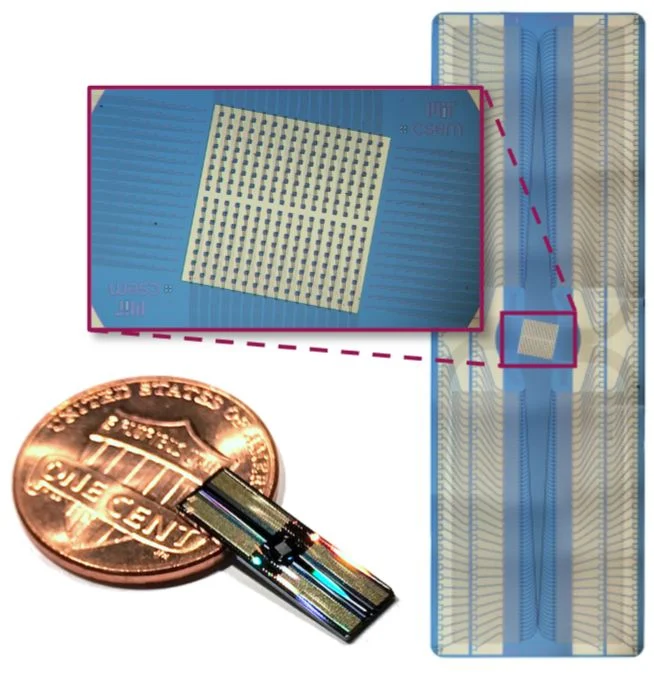
At Nord Quantique, we’re building fault-tolerant quantum computers from the qubit up with the goal of making quantum computing practical at scale. We’re a Canadian company based in Sherbrooke, Québec, where we develop superconducting quantum computers that integrate quantum error correction directly into the hardware. Rather than accept that useful quantum computers will require millions of physical qubits, we’ve taken a different path by designing qubits that are intrinsically more resilient to errors through bosonic encoding. It fundamentally changes the economics and engineering of quantum computing by reducing the hardware overhead needed to build useful systems. We embed error correction directly into the hardware via superconducting bosonic codes to achieve a 1:1 logical-to-physical qubit ratio. The company recently advanced to Stage B of DARPA’s Quantum Benchmarking Initiative and reached unicorn status with a $1.4B valuation in our latest funding round. The biggest challenge in quantum computing isn’t creating qubits—it's performing reliable computations with them. Quantum information is extraordinarily fragile: Every operation, measurement, or interaction with the environment introduces errors that quickly accumulate. Quantum error correction is essential, because it allows errors to be detected and corrected while computations are running. Most approaches achieve this by encoding a single logical qubit across many physical qubits so that individual errors can be identified and corrected. While effective in principle, this strategy comes at a significant cost: It requires vast hardware resources and substantially increases the number of operations needed to perform a logical computation, slowing the effective clock speed of the processor. This combination of hardware overhead and reduced computational throughput is one of the biggest obstacles to building practical, large-scale quantum computers. Our approach starts with a different kind of quantum hardware. Instead of engineering devices that behave as simple two-level systems (qubits), we use microwave fields confined within superconducting 3D cavities that naturally support a much richer set of quantum states. Rather than treating these additional states as a source of errors, we use them to encode a special logical qubit that detects and corrects its own errors as they occur. These are known as bosonic qubits. Among the different bosonic encoding methods, our architecture is designed to achieve a 1:1 ratio between a logical qubit and a physical cavity, which dramatically reduces the hardware overhead of fault-tolerant quantum computing while preserving a much higher effective computational speed. Although controlling these higher-dimensional quantum systems is more demanding, we believe mastering this complexity is a far more scalable path than assembling each logical qubit from hundreds or thousands of conventional two-level qubits. This is what we mean when we say we are building a quantum computer from the qubit up. Quantum error correction is no longer just a theoretical concept—it’s becoming an engineering discipline. Our first milestone was demonstrating quantum error correction could actively protect a bosonic qubit by extending the lifetime of the encoded quantum information. We initially achieved this via a single microwave mode within a superconducting cavity, an encoding known as a GKP qubit. But our long-term vision is to go beyond single-mode encodings by exploiting multiple microwave modes within the same physical cavity. These multimode bosonic codes use the additional degrees of freedom available within the cavity to build even more powerful error-correcting qubits without increasing the number of physical hardware elements. We became the first to demonstrate such a multimode qubit, the Tesseract, which encodes quantum information across two microwave modes of a single cavity. It outperforms single-mode approaches while preserving our one-to-one logical-to-physical architecture. Most recently, we demonstrated the other essential building blocks of a quantum computer in this platform, including high-fidelity state preparation, control and measurement comparable to conventional qubits, as well as logical two-qubit operations between bosonic qubits. While significant improvements in performance are still required before large-scale fault-tolerant quantum computing becomes practical, we’ve now demonstrated all the fundamental ingredients of our architecture. One of the biggest misconceptions about quantum computers is that they’re simply faster versions of classical computers—but they aren’t. Quantum computers are specialized machines designed to solve certain classes of problems that become intractable for even the world’s largest supercomputers—problems in areas like chemistry, materials discovery, optimization, and cryptography. For everyday computing tasks, your laptop will remain the better tool. Another misconception is that building more qubits automatically brings us closer to useful quantum computing. In reality, qubits only matter if they’re reliable. It’s why quantum error correction has become the defining challenge for the industry. The companies that solve scalability and reliability—not just qubit count—will ultimately determine when quantum computing delivers real-world impact. Nord Quantique's four-qubit monolith, integrating superconducting quantum circuits designed for bosonic quantum error correction. Photonics plays an important role throughout the quantum computing stack—even for companies like ours that build superconducting quantum processors. Precision lasers and optical technologies underpin many of the manufacturing, metrology, and characterization techniques used to fabricate and validate quantum devices. High-performance optical instrumentation is also essential to test components and maintain the precision required for advanced quantum hardware. More broadly, photonics is one of the foundational technologies enabling the quantum industry. Whether it’s quantum communications, photonic quantum computing, or the tools used to manufacture and measure quantum systems, advances in optics are helping move the entire field forward. Progress in quantum computing increasingly depends on progress across the broader photonics ecosystem. The biggest shift underway within the quantum world is that the industry is becoming much more focused on utility rather than headline metrics. For years, progress was measured largely by qubit count. Today, the conversation is increasingly about logical qubits, error rates, fidelity, and ultimately whether a system can solve commercially relevant problems. We’re also seeing remarkable progress across multiple hardware platforms simultaneously. Superconducting circuits, trapped ions, neutral atoms, and photonic systems are all advancing rapidly and each contribute new ideas to the field. It’s a sign of a healthy and maturing industry. The next phase won’t be defined by who builds the biggest quantum computer—it will be defined by who builds the first truly useful one. Sherbrooke, Canada is home to one of the world’s most concentrated quantum ecosystems. Our company was spun out of the Université de Sherbrooke’s Institut Quantique, and many of our researchers continue to collaborate closely with the academic community. It’s a unique place because of its tight integration between world-class research, specialized infrastructure, government support, and a growing cluster of quantum companies. This proximity accelerates everything from recruiting exceptional talent to rapidly translating scientific discoveries into commercial technology. It allows a startup like ours to innovate much faster than if these pieces were spread across different regions or countries. Marc-Antoine Lemonde is CTO of Nord Quantique, where he leads the company’s technology development activities. He holds a Ph.D. in quantum optomechanics from McGill University and honed his expertise during his postdocs in Austria and Singapore, focusing on quantum information processing in quantum hybrid systems and NISQ algorithms.
At Nord Quantique, his leadership and scientific and technical contributions have been instrumental to the company’s technical achievements. Take advantage of our EXCLUSIVE benefits. Create your account to start your free membership. These cookies are necessary for the website to function and cannot be switched off in our systems. They are usually only set in response to actions made by you which amount to a request for services, such as setting your privacy preferences, logging in or filling in forms. You can set your browser to block or alert you about these cookies, but some parts of the site will not then work. These cookies do not store any personally identifiable information. These cookies allow us to count visits and traffic sources so we can measure and improve the performance of our site. They help us to know which pages are the most and least popular and see how visitors move around the site. These cookies generate aggregate statistics that are not associated with an individualized profile. If you do not allow these cookies we will not know when you have visited our site, and will not be able to monitor and improve its performance. These cookies enable the website to provide enhanced functionality and personalisation. By recognizing you when you return to our website, these cookies allow us to record information about your visit to our website, such as pages visited, links followed, and videos viewed so we can personalize our content for you, remember your preferences (for example, your choice of topics, language or region), and display advertising that is more relevant to your interests. These cookies may enable visitor identification over time, but not across non-Endeavor Business Media websites. They may be set by us or by third party providers whose services we have added to our pages. If you do not allow these cookies then some or all of these services may not function properly. These cookies may be set through our site by third party advertisers. They may be used by those companies to build a profile of your interests and show you relevant advertisements on other sites. These cookies may enable visitor identification across websites and over time. They are based on uniquely identifying your browser and internet device. We do not control the third party's use of those cookies, their duration, or their ability to share information with other third parties. Please review each party's cookie disclosure before consenting to this use category. Our website may contain helpful but non-essential features or plug-ins enabling third party social media services that use cookies to enable you to share our content with your friends and networks. These cookies may enable visitor identification across websites over time and building a profile of your interests. This may impact the content and messages you see on other websites you visit. We do not control the third party's use of those cookies, their duration, or their ability to share information with other third parties. If you do not allow these cookies you may not be able to use or see these sharing tools.
Tags
Source Information
Discussion
0 professional contributions
Sign in to join this professional discussion.
Be the first to add a constructive contribution.