
Benchmarking the computational power of quantum computers
Understand this faster with AI


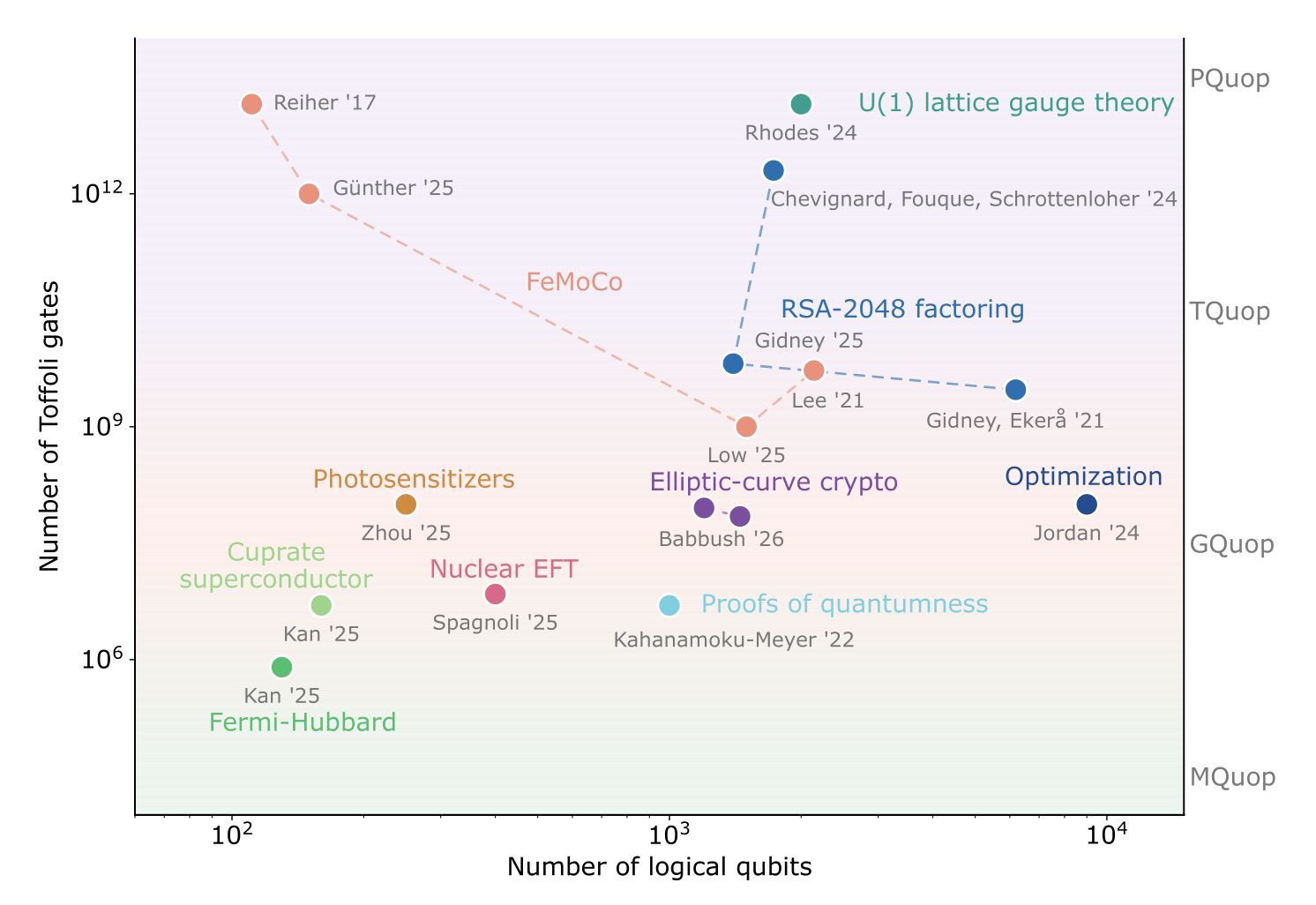
Quantum Physics arXiv:2609.12146 (quant-ph) [Submitted on 10 Sep 2026] Title:Benchmarking the computational power of quantum computers Authors:Timothy Proctor, Oliver Hart, Oliver Widzowski Maupin, Matthew Girling, Daniel Hothem, Daniel Mills, Jordan Hines, Karl Mayer, Jacob S. Nelson, Tyler LeBlond, Zohim Chandani, Diego Forlivesi, Piper C. Wysocki, Boldizsár Poór, Joan M. Dreiling, Annie Park, Adam P. Reed, Brian Estey, Cameron Foltz, Akhil Isanaka, M. S. Allman, Michael Mills, Maxwell D. Urmey, Peter E. Siegfried, Audrey Faricy, Jin-Sung Kim, Cristina Cîrstoiu, Andrew D. Baczewski, Charles H. Baldwin, Robin Blume-Kohout View a PDF of the paper titled Benchmarking the computational power of quantum computers, by Timothy Proctor and 29 other authors View PDF HTML (experimental) Abstract:Quantum computing hardware is advancing rapidly toward utility-scale machines that will enable scientific breakthroughs. Many teams are pursuing distinct and difficult-to-compare routes to this goal, using different qubit technologies and logical architectures. Tracking progress toward quantum utility therefore requires rigorous benchmarks that measure computational capability relative to utility-scale challenge problems and enable fair comparison across disparate platforms. Here we demonstrate direct, cross-platform measurement of quantum computational capability using a new benchmark that quantifies the size of the largest computationally relevant quantum circuits that a machine can execute successfully and the speed at which it can execute them. We apply this quantum universal operation performance system (QUOPS) experimentally to leading processors from Quantinuum, Google, and IBM, computing directly on physical qubits. Translating state-of-the-art resource requirements for recognized challenge problems that represent useful quantum computation into effective QUOPS circuit sizes shows that computational capability must grow by 5 orders of magnitude, motivating fault-tolerant approaches. We use the same benchmark to assess the performance of a simple fault-tolerant logical-qubit processor implemented on up to eight [[7,1,3]]-encoded logical qubits using Quantinuum Helios-1, and project the growth of capability across successive generations of fault-tolerant quantum computers to show how QUOPS can track progress toward quantum scientific utility. Subjects: Quantum Physics (quant-ph); Emerging Technologies (cs.ET); Performance (cs.PF) Cite as: arXiv:2609.12146 [quant-ph] (or arXiv:2609.12146v1 [quant-ph] for this version) https://doi.org/10.48550/arXiv.2609.12146 Focus to learn more arXiv-issued DOI via DataCite (pending registration) Submission history From: Timothy Proctor [view email] [v1] Thu, 10 Sep 2026 19:24:52 UTC (9,358 KB) Full-text links: Access Paper: View a PDF of the paper titled Benchmarking the computational power of quantum computers, by Timothy Proctor and 29 other authorsView PDFHTML (experimental)TeX Source view license Current browse context: quant-ph new | recent | 2026-09 Change to browse by: cs cs.ET cs.PF References & Citations INSPIRE HEP NASA ADSGoogle Scholar Semantic Scholar export BibTeX citation Loading... BibTeX formatted citation × loading... Data provided by: Bookmark Bibliographic Tools Bibliographic and Citation Tools Bibliographic Explorer Toggle Bibliographic Explorer (What is the Explorer?) Connected Papers Toggle Connected Papers (What is Connected Papers?) Litmaps Toggle Litmaps (What is Litmaps?) scite.ai Toggle scite Smart Citations (What are Smart Citations?) Code, Data, Media Code, Data and Media Associated with this Article alphaXiv Toggle alphaXiv (What is alphaXiv?) Links to Code Toggle CatalyzeX Code Finder for Papers (What is CatalyzeX?) DagsHub Toggle DagsHub (What is DagsHub?) GotitPub Toggle Gotit.pub (What is GotitPub?) Huggingface Toggle Hugging Face (What is Huggingface?) ScienceCast Toggle ScienceCast (What is ScienceCast?) Demos Demos Replicate Toggle Replicate (What is Replicate?) Spaces Toggle Hugging Face Spaces (What is Spaces?) Spaces Toggle TXYZ.AI (What is TXYZ.AI?) Related Papers Recommenders and Search Tools Link to Influence Flower Influence Flower (What are Influence Flowers?) Core recommender toggle CORE Recommender (What is CORE?) Author Venue Institution Topic About arXivLabs arXivLabs: experimental projects with community collaborators arXivLabs is a framework that allows collaborators to develop and share new arXiv features directly on our website. Both individuals and organizations that work with arXivLabs have embraced and accepted our values of openness, community, excellence, and user data privacy. arXiv is committed to these values and only works with partners that adhere to them. Have an idea for a project that will add value for arXiv's community? Learn more about arXivLabs. Which authors of this paper are endorsers? | Disable MathJax (What is MathJax?)
Tags
Source Information
Discussion
0 professional contributions
Sign in to join this professional discussion.
Be the first to add a constructive contribution.