
AMD filing reveals unexpected SpaceX and Nutanix bet
Understand this faster with AI


Most investors watch what AMD builds. Fewer watch what it buys.A quarterly filing with the Securities and Exchange Commission just gave them a reason to look.
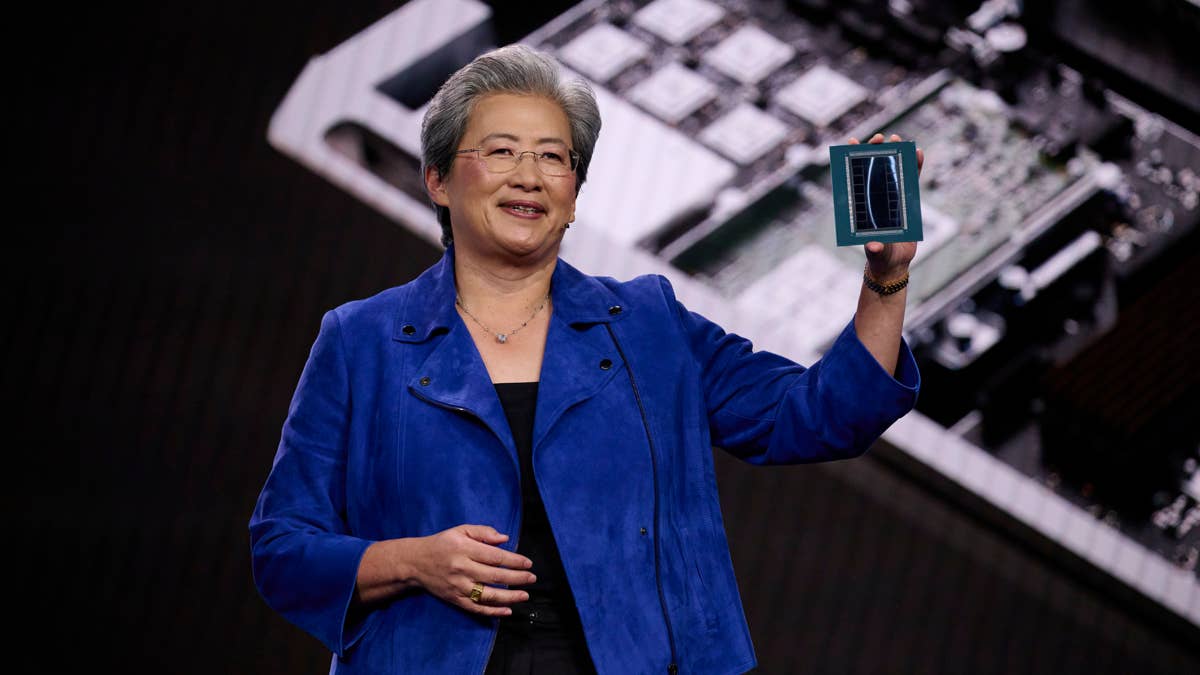
Advanced Micro Devices (AMD) disclosed large equity stakes in two very different companies: Elon Musk's SpaceX (SPCX) and enterprise software maker Nutanix (NTNX).The filing landed the same week AMD raised billions in new debt to fund its AI expansion. That timing places attention on how the chipmaker is spending its money, and where.One of these bets is tied to a working partnership. The other is now purely financial, after the company in question chose Nvidia chips over AMD's for a major project.For shareholders of all three companies, the same filing carries three different messages.What AMD's Form 13F disclosed about its SpaceX and Nutanix stakesAMD updated the public portion of its investment portfolio through a Form 13F filing with the SEC.The filing, submitted on August 14, showed two headline positions. As of the end of the second quarter, AMD held about 3.3 million Class A shares of SpaceX and about 4.1 million shares of Nutanix, Seeking Alpha reported.The SpaceX stake carried the larger dollar figure. The filing valued it at more than $565 million, though estimates vary because the shares can be measured against the $135 IPO price or a higher recent price, 24/7 Wall St noted.The Nutanix position was disclosed at roughly $210 million.AMD's filing also listed smaller stakes, including AI chipmaker Cerebras and quantum computing firm Xanadu.This shows the company is spreading money across several parts of the AI supply chain. AMD disclosed new equity stakes in SpaceX and Nutanix in its second-quarter Form 13F filing with the SEC.Walter Cicchetti / Getty Images Why AMD owns SpaceX shares after losing its chip dealAMD's Form 13F, covering the quarter that ended June 30, showed the chipmaker had added a position of about 3.3 million Class A shares in SpaceX.The filing does not disclose exactly when AMD built the position or at what price. SpaceX went public on June 12 at $135 a share, and 13F filings only require public equity to be reported, so the stake became visible to investors once SpaceX started trading.Here is the awkward part.In early August, during SpaceX's first earnings call as a public company, Musk told analysts SpaceX would build its AI infrastructure only on Nvidia chips.He called Nvidia's design the best available.AMD stock dropped as much as 10% the same day, even though the company had just posted the strongest quarter in its history.That decision changed what the SpaceX stake means for AMD. It is no longer a foothold that could lead to chip sales. It is now a straightforward financial investment, held for whatever return the shares deliver.For AMD shareholders, the point is direct. This stake will rise or fall with SpaceX stock, and it no longer signals a hardware relationship.Why the Nutanix stake is the more valuable relationship for AMDThe Nutanix position works very differently because it came from a direct purchase.In February, AMD and Nutanix announced a multi-year partnership to build an open platform for agentic AI in the enterprise. "Agentic" AI here means software that can carry out multi-step tasks on its own, rather than just answering one prompt at a time.AMD agreed to invest $150 million in Nutanix stock at $36.26 a share, and to spend up to $100 million more on joint engineering and marketing, according to AMD.That combined commitment reaches up to $250 million.More Tech Stocks:AMD stock falls after record quarter as SpaceX picks NvidiaBank of America revamps AMD stock price target for 2026Legendary fund manager makes aggressive SpaceX predictionAt $36.26 per share, AMD's $150 million commitment works out to about 4.1 million shares, which matches the share count in the 13F. Nutanix stock has since traded well above that purchase price, so the position's current market value exceeds the original $150 million outlay.The deal is practical. Nutanix's software will run on AMD's chips, giving AMD a direct line into corporate data centers that Nutanix already serves.For AMD shareholders, this stake does more than sit on the balance sheet. It helps create steady demand for AMD chips within a growing software platform.What the disclosure means for SpaceX shareholdersSpaceX investors get a different read from the same filing.Having a major chipmaker hold millions of shares adds a large, stable institutional owner to the register. Alphabet also holds a sizable SpaceX position, CryptoBriefing reported, which points to steady long-term backers rather than short-term traders.That kind of ownership can reduce the risk of a sharp sell-off after a company goes public.Related: Bank of America sends blunt message to Nvidia stock investorsThe filing also confirms something SpaceX investors may find reassuring. AMD owns a large stake, and SpaceX still picked Nvidia for its AI buildout.That implies the SpaceX management team is choosing hardware on merit, not on investor ties. SpaceX is also expanding its AI ambitions, including its recent completion of a $60 billion acquisition of coding startup Cursor.For SpaceX shareholders, the disclosure adds a credible institutional holder without changing how the company runs.Why Nutanix shareholders may benefit the mostOf the three groups, Nutanix shareholders arguably gain the clearest advantage.AMD's investment is a public vote of confidence from a major hardware company. That kind of backing can help Nutanix win enterprise customers who want proof that big vendors trust the platform.The extra funding matters too.The up to $100 million for joint engineering and marketing covers costs Nutanix would otherwise carry alone. It also helps the company reach new accounts it might not have landed on its own.Nutanix also reported solid results around the time it signed the deal. Revenue rose 10% year over year to $722.8 million, beating the company's own high-end guidance, Blocks & Files reported.For Nutanix shareholders, the practical effect is a funded partner helping sell the product and cover development costs.How the filing fits AMD's larger spending pushOn August 13, AMD raised $4.75 billion in its largest-ever bond sale, adding to a wave of corporate debt tied to the AI buildout, Bloomberg reported.So AMD is both borrowing heavily and holding hundreds of millions in outside equity at the same time. Some investors may question that mix.There is also a reasonable counterargument.The SpaceX and Nutanix stakes are liquid, meaning AMD can sell them if it needs cash, and both have appreciated since AMD acquired them. That gives the company assets it can tap into without touching its core business.The risk is the SpaceX stake now depends entirely on a volatile stock, with no chip revenue attached to soften a decline.What investors should watch nextThe filing shows what AMD owned at the end of the quarter. It does not show what AMD plans to do next.Here is what matters for the three companies going forward:AMD: Whether the next 13F shows AMD adding to, holding, or trimming the SpaceX stake, which would signal how it views a position with no chip deal attached.SpaceX: Whether its exclusive Nvidia AI strategy holds, or whether AMD chips find a role later.Nutanix: Whether the AMD partnership produces the enterprise customer wins both companies are targeting.For investors, this filing shows something simple. AMD is willing to hold a large stake in a company, even after that company picked a rival's chips over its own.That says a lot about how AMD thinks about money versus partnerships. The two do not always move together. Keep that in mind the next time AMD reports earnings.Related: OpenAI’s answer to rising AI hacking risks has two tiers
Tags
Source Information
Discussion
0 professional contributions
Sign in to join this professional discussion.
Be the first to add a constructive contribution.