
'We're starting to find a lot more weirdness': These strange animals can control their body heat
Understand this faster with AI


Some creatures can dramatically alter their internal temperature — a strategy called heterothermy — and outlast storms, floods and predators. When you purchase through links on our site, we may earn an affiliate commission. Here’s how it works. Get the world’s most fascinating discoveries delivered straight to your inbox.Become a Member in Seconds Unlock instant access to exclusive member features.You are now subscribedYour newsletter sign-up was successfulWant to add more newsletters?Delivered DailyDaily NewsletterSign up for the latest discoveries, groundbreaking research and fascinating breakthroughs that impact you and the wider world direct to your inbox.Once a weekLife's Little MysteriesFeed your curiosity with an exclusive mystery every week, solved with science and delivered direct to your inbox before it's seen anywhere else.Once a weekHow It WorksSign up to our free science & technology newsletter for your weekly fix of fascinating articles, quick quizzes, amazing images, and moreDelivered dailySpace.com NewsletterBreaking space news, the latest updates on rocket launches, skywatching events and more!Once a monthWatch This SpaceSign up to our monthly entertainment newsletter to keep up with all our coverage of the latest sci-fi and space movies, tv shows, games and books.Once a weekNight Sky This WeekDiscover this week's must-see night sky events, moon phases, and stunning astrophotos. Sign up for our skywatching newsletter and explore the universe with us!Join the clubGet full access to premium articles, exclusive features and a growing list of member rewards.In 1774, British physician-scientist Charles Blagden received an unusual invitation from a fellow physician: to spend time in a small room that was hotter, he wrote, “than it was formerly thought any living creature could bear.”Many people may have been appalled by this offer, but Blagden was delighted by the opportunity for self-experimentation. He marveled as his own temperature remained at 98 degrees Fahrenheit (approximately 37 degrees Celsius), even as the temperature of the room approached 200°F (about 93°C).Today, this ability to maintain a stable body temperature — called homeothermy — is known to exist among myriad species of mammals and birds. But there are also some notable exceptions. The body temperature of the fat-tailed dwarf lemur, for example, can fluctuate by nearly 45°F (25°C) over a single day.In fact, a growing body of research suggests that many more animals than scientists once appreciated employ this flexible approach — heterothermy — varying their body temperature for minutes, hours or weeks at a time. This may help the animals to persist through all sorts of dangers.“Because we’re homeotherms, we assume all mammals work the way we do,” says Danielle Levesque, a mammalian ecophysiologist at the University of Maine. But in recent years, as improvements in technology allowed researchers to more easily track small animals and their metabolisms in the wild, “we’re starting to find a lot more weirdness,” she says.The most extreme — and well-known — form of heterothermy is classic hibernation, which has been most extensively studied in critters who use it to save energy and so survive the long, cold winters of the Northern Hemisphere. These animals enter long periods of what scientists call deep torpor, when metabolism slows to a crawl and body temperature can drop to just above freezing. But hibernation is just one end of what some scientists now consider a spectrum. Many mammals can deploy shorter bouts of shallow torpor — loosely defined as smaller reductions in metabolism and smaller fluctuations in body temperature — as the need arises, suggesting that torpor has more functions than scientists previously realized.Get the world’s most fascinating discoveries delivered straight to your inbox.“It’s extremely complicated,” says comparative physiologist Fritz Geiser of the University of New England in Australia. “It’s much more interesting than homeothermy.”Australian eastern long-eared bats, for example, adjust their torpor use based on day-to-day changes in weather conditions.
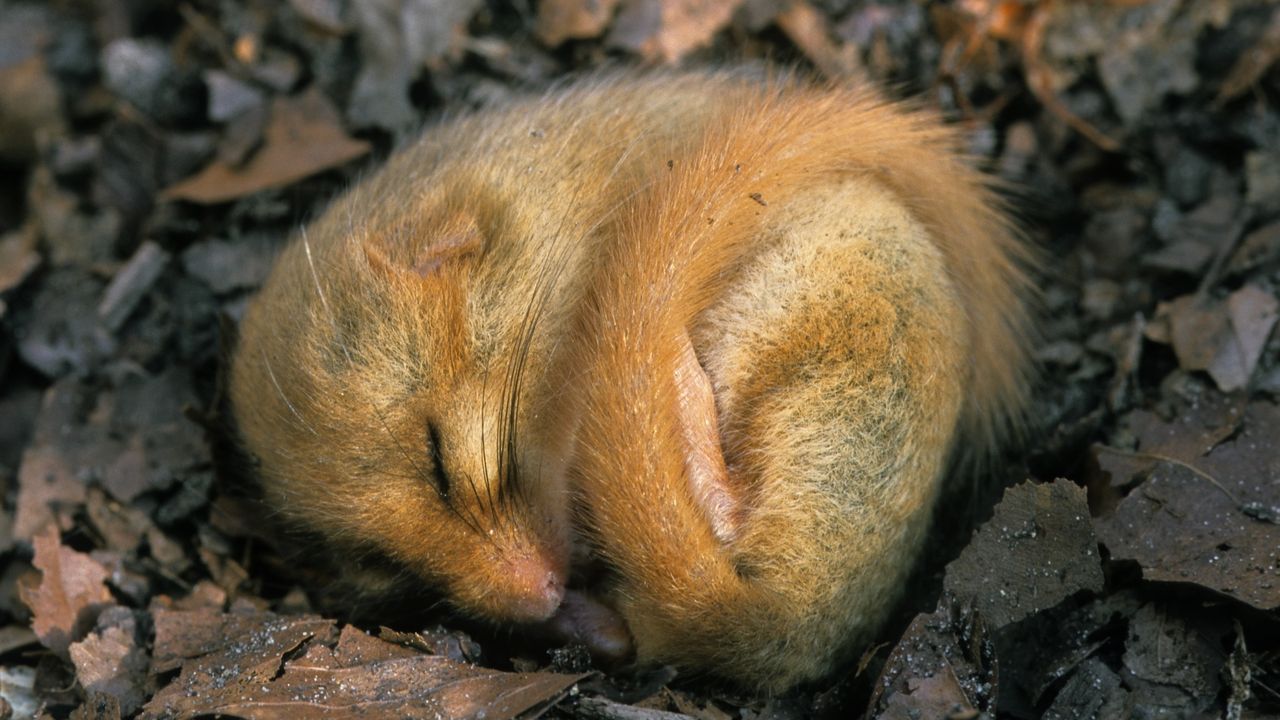
Mari Aas Fjelldal, a bat biologist at the Norwegian University of Life Sciences and the University of Helsinki, used tiny transmitters to measure skin temperatures as 37 free-ranging bats in Australia went about their daily lives. Like many heterothermic species, the bats spent more time in torpor when it was cold, but they also sank into torpor more often as rain and wind speeds picked up, Fjelldal and colleagues reported in Oecologia in 2021. This hunkering down makes sense, says Fjelldal: Wind and rain make flying more energetically demanding — a big problem when you weigh less than a small packet of M&M’s — and make it more costly to find the insects the bats eat.There are even reports of pregnant hoary bats entering torpor during unpredictable spring storms, a physiological maneuver that basically pauses their pregnancies. “It means that they can, to some degree, actually decide a bit when to give birth,” says Fjelldal, “which is really handy when you’re living in an environment that can be quite harsh in the spring.” Fjelldal, who wasn’t involved in that study, notes that producing milk is expensive metabolically, so it’s advantageous to give birth when food availability is good. Other animals, like sugar gliders — tiny, pink-nosed marsupials that “fly” through the trees using wing-like folds of skin — rarely use torpor but seem able to take advantage of it in the case of major weather emergencies. During a storm with category 1 cyclone winds of nearly 100 kilometers per hour and 9.5 centimeters of rain falling in a single night, the gliders were more likely to stay cuddled up in their tree-hole nests, and many entered torpor, reducing body temperature from 94.1°F (34.5°C) to an average of about 66°F (19°C), Geiser and colleagues found.Similarly, in response to an accidental flooding event in the lab, researchers observed a highly unusual period of multiday torpor in a golden spiny mouse, its temperature reaching a low of about 75°F (24°C).This more flexible use of torpor can help heterotherms wait out a catastrophe, Geiser says. In contrast, homeothermic species can’t just dial back their need for food and water and may not be able to outlast challenging conditions.“Maybe there’s no food, maybe no water, it may be really warm,” says ecophysiologist Julia Nowack of Liverpool John Moores University in England, a coauthor on the sugar glider study. Torpor, especially in the tropics, has “lots of different triggers.”Threats of a different sort, such as the presence of predators, can also prompt hunkering down. The (perhaps perfectly named) edible dormouse, for example, sometimes enters long periods of torpor in early summer. At first, this behavior puzzled researchers — why snooze away the summer, when temperatures are comfortable and food abundant, especially if it meant forgoing the chance to reproduce? After looking at years of data collected by various scientists, a pair of researchers concluded that because spring and early summer are especially active periods for owls, these small snackable critters were likely opting to spend their nights torpid, safely hidden in underground burrows, to avoid becoming dinner. In what is thought to be a similar strategy to avoid nocturnal predators, Fjelldal’s bats alter their torpor use slightly depending on the phase of the moon, spending more time torpid as the moon grows fuller and they become easier to spot.The fat-tailed dunnart, a mouse-like carnivorous marsupial native to Australia, is a third species to lie low when it feels more at risk of being eaten. In one study, researchers placed dunnarts in two types of enclosures: Some had lots of ground cover in the form of plastic sheeting, simulating an environment protected from predators, while other enclosures had little cover, simulating a greater risk of predation. In the higher-risk settings, the animals foraged less and their body temperatures became more variable.Levesque, who has studied similar non-torpor temperature flexibility in large tree shrews, says that even small variations in body temperature can be important for saving water and energy.Indeed, water loss during hot weather can pose serious risks to many mammals, and heterothermy is an important conservation tool for some. As Blagden observed, people are marvelously capable of maintaining stable temperatures even in horrifically hot environments, due in large part to our sweating abilities. But this isn’t necessarily a good strategy for smaller mammals — such evaporative cooling in a sweltering climate can quickly lead to dehydration.Instead, creatures like Madagascar’s leaf-nosed bats use torpor. On warm days, the bats enter mini bouts of torpor lasting just a few minutes. But during especially hot days, the bats become torpid for up to seven hours, reducing their metabolism to less than 25 percent of normal and allowing their body temperature to rise as high as 109.2°F (42.9°C). And in an experiment with ringtail possums, slightly raising their body temperature by about 3°C (5.4°F) during a simulated heat wave saved the animals an estimated 10 grams of water per hour — a lot for a creature weighing less than 800 grams.—Alligators survive cold snap by becoming 'frozen solid' in North Carolina and Texas ponds—Humans may have untapped 'superpowers' from genes related to hibernation, scientists claim—Half-asleep bears are wandering around Siberia because it's too hot to hibernateThis heterothermic way of life gives some animals a bit of a buffer when it comes to coping with variability in their environments, says physiological ecologist Liam McGuire of the University of Waterloo in Ontario, Canada. But it can only do so much, he says; heterothermy is unlikely to exempt them from the challenge of rapidly evolving weather conditions brought by climate change.As for Blagden, he saw the human body as remarkable in its capacity to maintain a steady temperature, even by “generating cold” when ambient temperatures climbed too high. Today, however, scientists are beginning to appreciate that for many mammals, allowing body temperature to be a bit more flexible may be key to survival as well.This article originally appeared in Knowable Magazine, a nonprofit publication dedicated to making scientific knowledge accessible to all. Sign up for Knowable Magazine’s newsletter.Hannah Thomasy is a British Columbia-based science journalist covering the weirdest corners of biology. Her work has appeared in the New York Times, Atlas Obscura and Undark; find her outside looking at bugs.You must confirm your public display name before commentingPlease logout and then login again, you will then be prompted to enter your display name.
Source Information
Discussion
0 professional contributions
Sign in to join this professional discussion.
Be the first to add a constructive contribution.