
Back to News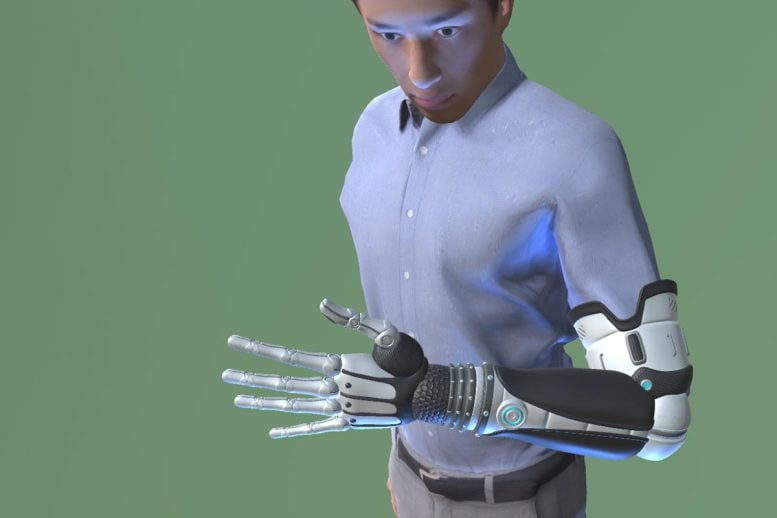
research
Scientists Found the Sweet Spot That Makes Robot Arms Feel Human
Toyohashi University of Technology (TUT)
Loading...
1 min read
0 likes
⚡ Quantum Brief
Researchers discovered that the speed of AI-powered prosthetic arms significantly influences whether users perceive them as natural extensions of their bodies. The study, published in February 2026, identifies an optimal movement speed that enhances embodiment.
Experiments revealed a "sweet spot" in prosthetic arm velocity—neither too slow nor too fast—that mimics human limb movement. This synchronization reduces cognitive dissonance, making the artificial limb feel more intuitive and responsive.
The findings challenge prior assumptions that advanced sensors or neural interfaces alone determine embodiment. Instead, biomechanical alignment with natural motion patterns proves equally critical for user acceptance and functionality.
Participants reported stronger neural integration when prosthetics matched biological limb speeds, suggesting speed optimization could reduce rejection rates. This could accelerate adoption in clinical and consumer applications.
The breakthrough may reshape prosthetic design, prioritizing motion dynamics over purely mechanical or AI-driven enhancements. Future devices could leverage this insight to improve user experience and long-term adaptation.
AI Audio Summary
0:00 / 0:00
Click to playUnderstand this faster with AI


As AI-powered prosthetic arms become more advanced, a surprising detail could determine whether they truly feel like part of the body: how fast they move. As artificial intelligence-powered prosthetic arms become more common, one key question stands out: Will people truly feel that these devices are part of their bodies? To explore this, researchers used [...]
Source Information
Source: SciTechDaily Quantum
Website: https://scitechdaily.com/feed/
Discussion
0 professional contributions
Sign in to join this professional discussion.
Be the first to add a constructive contribution.