
Paper Tax Filers Face Long Wait as IRS Digitization Effort Stalls
Understand this faster with AI


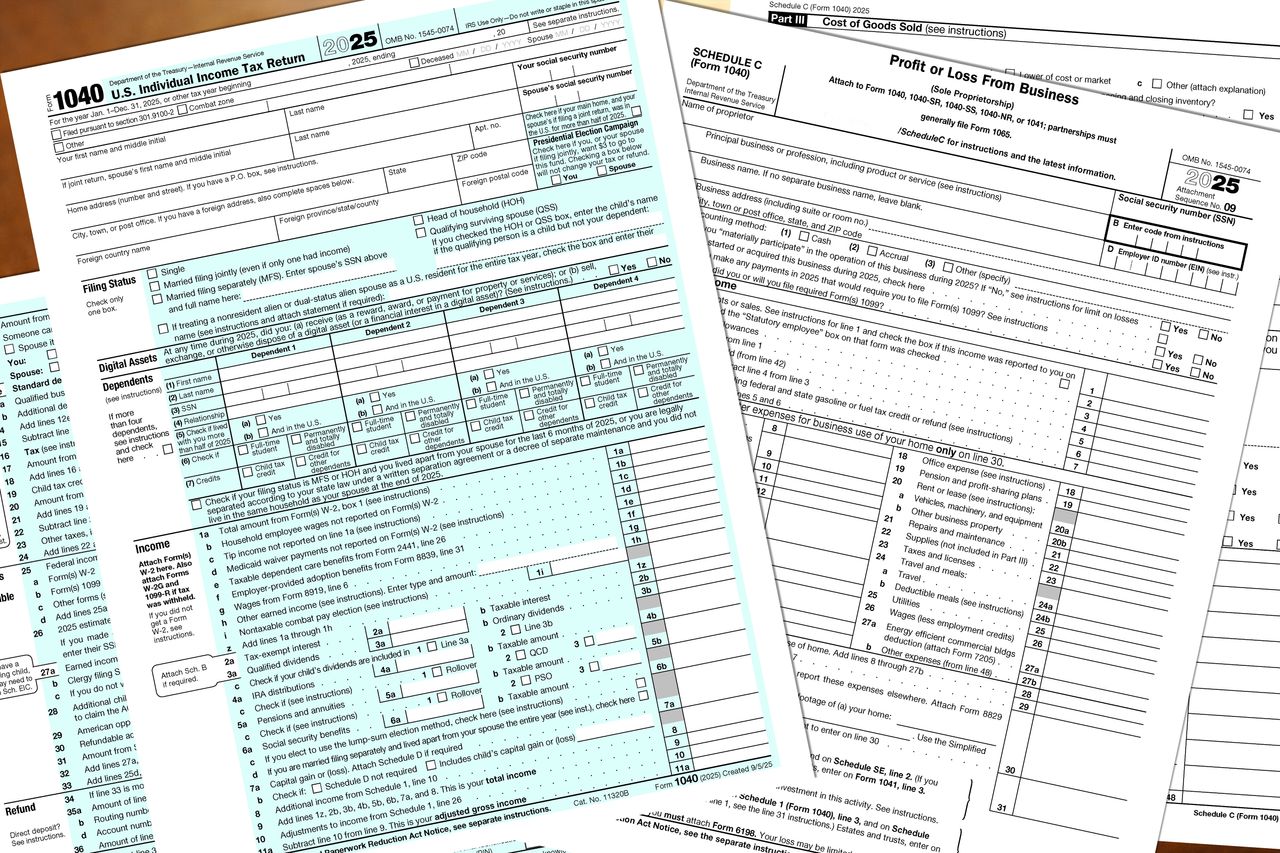
The IRS launched its Zero Paper Initiative last year to speed up paper tax return processing. The project isn’t going well. When you purchase through links on our site, we may earn an affiliate commission. Here’s how it works. Profit and prosper with the best of Kiplinger's advice on investing, taxes, retirement, personal finance and much more. Delivered daily. Enter your email in the box and click Sign Me Up.You are now subscribedYour newsletter sign-up was successfulWant to add more newsletters?Profit and prosper with the best of Kiplinger's advice on investing, taxes, retirement, personal finance and much more delivered daily. Smart money moves start here.Get practical help to make better financial decisions in your everyday life, from spending to savings on top deals.Get today's biggest financial and investing headlines delivered to your inbox every day the U.S. stock market is open.Financial pros across the country share best practices and fresh tactics to preserve and grow your wealth.Trim your federal and state tax bills with practical tax-planning and tax-cutting strategies.Your twice-a-week guide to planning and enjoying a financially secure and richly rewarding retirementInsights for advisers, wealth managers and other financial professionals.Your twice-a-week roundup of promising stocks, funds, companies and industries you should consider, ones you should avoid, and why.Your step-by-step six-part series on how to invest for retirement, from devising a successful strategy to exactly which investments to choose.If you plan to file a tax return on paper during the 2026 filing season and are expecting a refund, you’ll likely have to wait a while before you get your money. It will take the IRS four to six weeks to process your return, assuming there are no mistakes in your tax filing.If you plan to file electronically, as the overwhelming majority of individual taxpayers do, the IRS says your refund would be directly deposited into your bank account within 21 days.Notably, the tax agency had set a goal to speed up paper return processing in time for the current tax filing season, but it hasn’t materialized. What happened, and what does it mean for you if you want (or need) to file a paper return this year?Become a smarter, better informed investor. Subscribe from just $107.88 $24.99, plus get up to 4 Special IssuesProfit and prosper with the best of expert advice on investing, taxes, retirement, personal finance and more - straight to your e-mail.Profit and prosper with the best of expert advice - straight to your e-mail.According to the National Taxpayer Advocate’s Annual Report to Congress, despite 94% of taxpayers filing their tax returns electronically, "tens of millions" of taxpayers still file original paper returns.During a filing season, besides Form 1040, the IRS receives other types of paper tax forms, such as amended individual returns (Form 1040X) and business payroll Forms 940 and 941, to name a few. Then there’s taxpayer correspondence.All this paper has to be manually processed. After arriving at an IRS processing facility, employees:It takes the IRS four to six weeks to process an error-free Form 1040 paper tax return. If there are return errors, questions, or if the agency determines a return needs special handling, e.g., if there’s a question of identity theft, the process can take months.To address some of those issues, the IRS launched its Zero Paper Initiative (ZPI) in April of last year. According to the tax agency, the project’s goal is to convert paper filings into streamlined digital formats for electronic processing.Essentially, paper filings, including individual tax returns, would be converted to digital formats by automatically scanning them with machines and extracting the data, which would then be processed like any other electronically filed return.The IRS has been experimenting, off and on, with electronic processing of paper tax forms for decades, and ZPI is the agency’s latest push. ZPI is especially salient now as it offers the added benefit of helping to offset the loss of thousands of employees in the agency’s submissions processing and account management functions.As Kiplinger has reported, those IRS staffing cuts resulted in part from the Department of Government Efficiency’s (DOGE) efforts last year to reduce the federal workforce and a hiring freeze imposed on the IRS.For ZPI, the IRS chose to outsource the scanning work and lined up four private contractors for the pilot. The contracts required a minimum processing threshold of 70,000 returns per vendor per week, which would be scaled up once the threshold was met.The pilot ran into snags almost from the start, and it wasn’t until December 2025 that one vendor (eventually) reached the minimum processing threshold. It was obvious by then that ZPI wouldn’t be operational in time for the 2026 filing season.It’s unfortunate for taxpayers who need to file paper returns that ZPI was unable to meet its goal of being up and running by the 2026 tax filing season. The core problem is that:It seems there are two primary reasons why so much of the paperwork still has to be manually processed.First, there’s the delay in the rollout of the vendor’s scanning equipment. The second is the fact that the IRS’s legacy computer systems can’t reliably process optical character recognition/barcode data. That the submission processing centers are inadequately staffed only magnifies the difficulty of getting returns processed promptly.What you can do is keep an eye on the IRS’s processing status for tax forms page. You won’t find information about the status of your return, but it will tell you the batch of paper returns currently being processed.By taking note of the date you mailed your return, you can get a very rough idea of where you are in the queue.Profit and prosper with the best of Kiplinger's advice on investing, taxes, retirement, personal finance and much more. Delivered daily. Enter your email in the box and click Sign Me Up.Roxanne Bland, a self-styled “tax nerd,” has worked in the tax field for over 30 years as a state tax legal analyst. Before joining Kiplinger as a tax writer to help ordinary people make sense of their federal and state tax obligations, Roxanne spent many years covering developments in state tax jurisprudence at the U.S. Supreme Court and worked closely with state revenue agencies to develop uniform tax legislation. She has also contributed to Tax Notes State, a Tax Analysts publication focusing on cutting-edge corporate tax issues.
Tax Law The Supreme Court's tariff ruling has many wondering about refund rights and how tariff refunds would work.
State Tax From New York to Oregon, your state income tax refund could be delayed for weeks. Here's what to know.
The Kiplinger Letter “Poisoned” artificial intelligence can give untrustworthy advice about finance, health and lots more. Here’s how to fend off the growing threat.
State Tax From New York to Oregon, your state income tax refund could be delayed for weeks. Here's what to know. Tax Breaks A new tax deduction for people over age 65 has some thinking about Medicare premiums and MAGI strategy.
Tax Law Here's how taxpayers can amend their already-filed income tax returns amid a potentially looming legal battle on Capitol Hill.
Tax Breaks Filing income taxes in 2026? You won't want to miss Form 4547 to claim a $1,000 Trump Account for your child.
Tax Tips Ditch these seven common habits to sidestep IRS red flags for a smoother, faster 2026 income tax filing.
Social Security Taxes on Social Security benefits are stirring debate again, as recent changes could affect how some retirees file their returns this tax season.
Taxable Income When Super Bowl LX hype fades, some fans may be surprised to learn that sports betting tax rules have shifted. Taxes Doing your own taxes isn’t easy, and hiring a tax pro isn’t cheap. Here’s a guide to help you figure out whether to tackle the job on your own or hire a professional.
Source Information
Discussion
0 professional contributions
Sign in to join this professional discussion.
Be the first to add a constructive contribution.