
Jim Cramer drops unexpected take on stock market
Understand this faster with AI


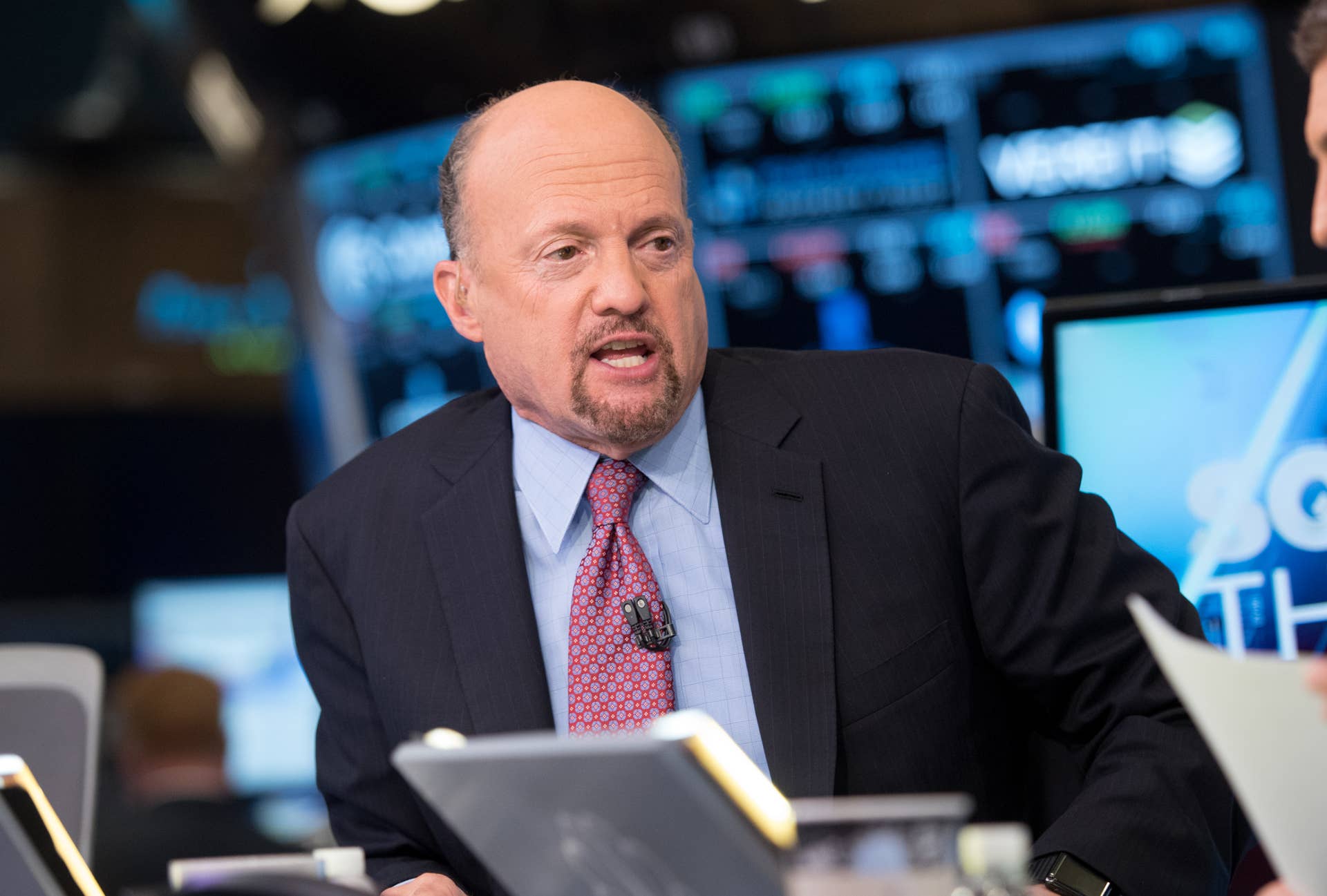
Jim Cramer isn’t buying into the AI doomsday scenario.At a point when Mr. Market had gotten rattled by a viral memo from Citrini Research’s Alap Shah, Cramer pushed back, calling it essentially a work of “science fiction” rather than sober forecasting.The fallout from the report was immediate.On Monday, Feb. 23, the Dow dropped 1.66%, while the S&P 500 and Nasdaq slid 1.04% and 1.13%, respectively, amid AI jitters. Though we saw somewhat of a rebound on Tuesday, Feb. 24, the damage lingered. The S&P 500 Software & Services Index rose 1.3% on the day, but remains firmly in the red for the year, down 23%. 2026 scorecard: stocks, tech, and AI so far S&P 500:+0.83% total return YTD (as of Feb. 24 close)Dow:+2.31% YTDNasdaq 100:-1.08% YTDSoftware: iShares Expanded Tech-Software Sector ETF-27.19% YTD (as of Feb. 23) Source: Slickcharts, BlackRock Nevertheless, Cramer believes the market’s intense reaction to AI anxiety is, for the most part, ill-founded. In addition, the "Mad Money" host points to a growing disconnect. On one side of the spectrum, there are investors pricing in a scenario where AI agents obliterate the software, services, and finance sectors.On the other side, the economic data isn’t pointing to a catastrophic collapse.However, it’s important to acknowledge that the selloff has teeth. Nearly 30% of S&P 500 stocks moved up or down by at least 20% over the past three months, roughly double the 20-year average, according to Barron's.Enterprise software names like Salesforce, in particular, have been hammered and are now trading at just 15 times forward GAAP earnings, compared with a five-year average closer to 35 times.Hence, Cramer argues that the AI fear trade is real, and if a science fiction narrative can cripple stock markets, “too many things can go wrong if we buy the wrong stocks.”He isn’t dismissing AI technology, far from it, but he does question the speed of change and the accuracy of some of the narratives being pushed, making it critical to place your bets carefully. Jim Cramer argued AI fears are overblown but warned valuations could suffer.Photo by Slaven Vlasic on Getty Images Selective buying, strict discipline, and one clear red flagCramer urges selective buying with valuation discipline at a time when investors appear to be running for the exits, he noted in a recent "Mad Money" episode.The Fear & Greed Index stands at 42, according to CNBC, underscoring that fear remains the dominant sentiment in the market.Nevertheless, he isn’t buying the AI apocalypse scenario, and that the fears of a white-coller wipeout are remarkably overblown. However, narratives can suppress pricing multiples and weigh down stocks “without anything being wrong.”More AI Stocks:Morgan Stanley sets jaw-dropping Micron price target after eventBank of America updates Palantir stock forecast after private meetingMorgan Stanley drops eye-popping Broadcom price targetIn essence, Cramer believes investors should be selective and avoid overpaying for stocks.He still believes in the “pioneers of AI,” though, name-dropping Nvidia and pointing to its upcoming earnings. In fact, regarding the AI software narrative, CEO Jensen Huang weighed in, Reuters reported. That said, Cramer is also bullish on power-demand players such as GE Vernova, saying that rising AI infrastructure will entail colossal energy buildouts. Also, he acknowledges that the money’s been flowing into staples and health care as defensive players.On private credit, though, he drew a hard line. He unequivocally stated that he’s “not a buyer” of firms like Blue Owl after redemptions surged. For perspective, investors pulled 15.4% of assets from one Blue Owl tech-focused fund in January, according to Reuters. The firm also permanently halted redemptions in another major retail vehicle, selling off $1.4 billion in loans to efficiently manage liquidity.Cramer calls out dystopian AI report shaking marketsCramer didn’t mince words in taking down the Citrini Research report that jolted stock markets.The report, “The 2028 Global Intelligence Crisis,” authored by Alap Shah and published on Feb. 22, 2026, makes several outlandish claims, envisioning a “Ghost GDP” scenario within the next couple of years.Moody’s chief economist Mark Zandi, in breaking down the state of the U.S. economy, also talked about the sluggishness in job growth and potential AI-driven productivity gains outpacing new job creation.Related: Billionaire fund manager drops $2.8 billion on Big Tech stocksCramer took issue with how quickly Mr. Market embraced that “dystopian tale” as gospel and the speed with which it triggered a stock market sell-off.Here are the key takeaways from Shah’s viral memo.AI-driven white-collar job losses will accelerate, pushing unemploymentto a gobsmacking 10.2% by June 2028 (fictional scenario).“Ghost GDP” emerges, led by robust productivity and headline growth, but lower consumer spending, significantly impairing the U.S. consumption engine, driving nearly 70% of GDP.Agentic coding tools, including Claude Code and Codex, will hit software and SaaS companies, triggering intense pricing pressure and renewal discounts.Per Shah’s fictional scenario, the S&P 500 tanks 38% from October 2026 highs, with an even more worrying GFC-style bear case. Source: Citrini Research The data don’t back the AI collapse narrativeAs Cramer points out, many of the claims do not hold up against reality at this point.A big part of where the research falls apart is the contrary evidence we’ve seen from job platforms and surveys.For instance, a recent NBER working paper surveying nearly 6,000 executives across the U.S., U.K., Germany, and Australia found that more than 90% reported no employment impact from AI in the past three years, with 89% of them seeing no productivity effect. Moreover, executives forecast employment numbers to drop just 0.7% over three years, which is meaningful but nowhere near the mass unemployment scenario painted by Shah. Also, Indeed's Hiring Lab shows AI mentioned in just 4.2% of postings, with overall hiring numbers rising modestly over pre-pandemic levels. On top of that, new roles are being created by AI, with LinkedIn showing more than 600,000 new data-center jobs globally.A big part of Shah’s report focused on an economy shaped by AI agents, but even on that front, the numbers don’t quite add up.Here’s what Indeed CEO Chris Hyams has to say, as reported by Fortune.Additionally, a July 2025 METR study showed that experienced software developers who used AI tools took 19% longer to wrap up their tasks due to errors and oversight requirements. Even frontier agents showed nearly 50% task reliability, which is remarkably behind the 99% consistency enterprises require. Throw in the limited transparency around safety testing, and the AI agent-led economy narrative falls flat. Reddit user Aggressive-Bedroom82 even sounded off in a scathing post on r/aiagents titled, “Why Is Everyone Lying About AI Agents?”Related: Cathie Wood buys $3.5 million in Nvidia-backed stock ahead of earnings
Source Information
Discussion
0 professional contributions
Sign in to join this professional discussion.
Be the first to add a constructive contribution.