
'80% chance of a go,' launch weather officer says at NASA's Artemis II prelaunch conference
Understand this faster with AI


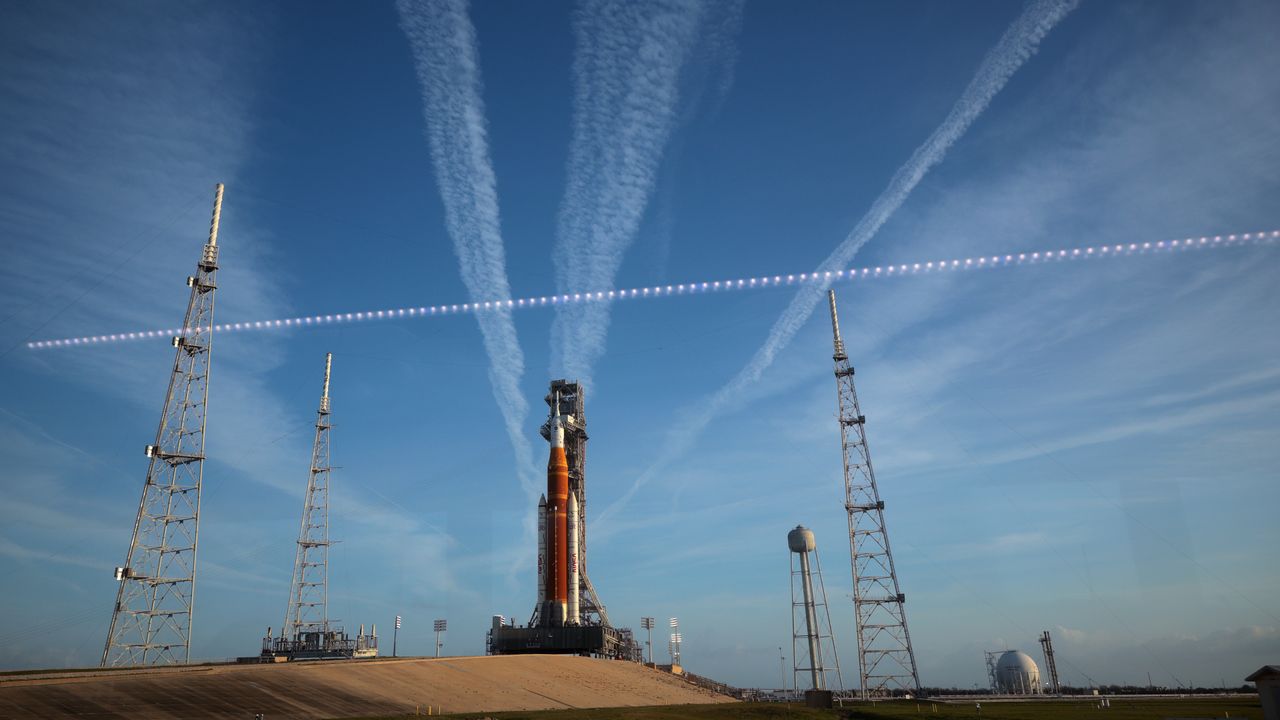
NASA said an X-class solar flare is not currently expected to affect the Artemis II mission, while weather on Earth looks favorable for a smooth launch. When you purchase through links on our site, we may earn an affiliate commission. Here’s how it works. Get the world’s most fascinating discoveries delivered straight to your inbox.Become a Member in Seconds Unlock instant access to exclusive member features.You are now subscribedYour newsletter sign-up was successfulWant to add more newsletters?Delivered DailyDaily NewsletterSign up for the latest discoveries, groundbreaking research and fascinating breakthroughs that impact you and the wider world direct to your inbox.Once a weekLife's Little MysteriesFeed your curiosity with an exclusive mystery every week, solved with science and delivered direct to your inbox before it's seen anywhere else.Once a weekHow It WorksSign up to our free science & technology newsletter for your weekly fix of fascinating articles, quick quizzes, amazing images, and moreDelivered dailySpace.com NewsletterBreaking space news, the latest updates on rocket launches, skywatching events and more!Once a monthWatch This SpaceSign up to our monthly entertainment newsletter to keep up with all our coverage of the latest sci-fi and space movies, tv shows, games and books.Once a weekNight Sky This WeekDiscover this week's must-see night sky events, moon phases, and stunning astrophotos. Sign up for our skywatching newsletter and explore the universe with us!Join the clubGet full access to premium articles, exclusive features and a growing list of member rewards.NASA's Artemis II mission remains on track for its planned April 1 launch, the space agency announced in a prelaunch news conference Tuesday (March 31).At the news event, held at the Kennedy Space Center in Florida, NASA managers emphasized that both the vehicle and team are ready to fly, with current conditions not pointing to any major last-minute technical concerns. The briefing also broke down the two biggest possible spoilers of tomorrow's launch :the weather on the ground and in space.Yesterday (March 30), the sun produced a X1.4-class solar flare tied to a coronal mass ejection, prompting NOAA's Space Weather Prediction Center to issue a G2 geomagnetic storm watch for March 31 and G1 watches for April 1 (the planned launch date) and April 2. Events like solar flares can interfere with radio communications, navigation systems and spacecraft operations, as well as expose astronauts to harmful radiation.However, Mark Berger, NASA's Launch Weather Officer for the Artemis II mission, highlighted that the flare is not currently expected to affect the launch. Artemis launch criteria is designed to avoid liftoff during severe solar conditions, but based on the latest outlook, this flare appears to be something NASA is monitoring rather than something that is stalling the launch."There is nothing here screaming 'no go' for any of these attempts," Berger said at the prelaunch conference.That leaves Earth's weather as the more pressing concern. NASA's latest forecast heading into launch day called for an 80% chance of favorable weather, with high ground winds as the main issue. Berger mentioned that some precipitation could occur on launch day, but shouldn't be an issue."It looks pretty good," Berger added.Get the world’s most fascinating discoveries delivered straight to your inbox.—Artemis II: NASA is preparing for a return to the moon, but why is it going back?—Farthest, fastest and most diverse: 6 major records the Artemis II astronauts will smash as NASA returns to the moon—Mystery medical episode that left astronaut unable to speak shows one of NASA's biggest risks as moon missions ramp upThe prelaunch news conference also invited some lighthearted curiosity about whether anyone might try to sneak an April Fool's joke into the countdown. NASA did not indicate at the conference that it was aware of any jokes or stunts in the works, but the agency hardly lacks a history of mischief. As one example, NASA astronaut Owen Garriott performed a legendary prank on Mission Control while at Skylab, where he played a prerecorded conversation that sounded like his wife Helen had stowed away onboard. In another prank, NASA astronaut John Young smuggled a corn beef sandwich aboard Gemini III.For Artemis II though, the tone coming out of the conference was more focused on the launch ahead as NASA attempts to return to the moon."Everybody understands the significance of this mission," Jeff Spaulding, senior test director for the Artemis II program at NASA's Kennedy Space Center, said in the briefing. "There's a lot of excitement and fervor with all of the [NASA] groups out there, but especially here at Kennedy."Test your knowledge of previous astronauts that have gone to the moon with our moon landing quiz! Kenna Hughes-Castleberry is the Content Manager at Live Science. Formerly, she was the Content Manager at Space.com and before that the Science Communicator at JILA, a physics research institute. Kenna is also a book author, with her upcoming book 'Octopus X' scheduled for release in spring of 2027. Her beats include physics, health, environmental science, technology, AI, animal intelligence, corvids, and cephalopods.You must confirm your public display name before commentingPlease logout and then login again, you will then be prompted to enter your display name.
Tags
Source Information
Discussion
0 professional contributions
Sign in to join this professional discussion.
Be the first to add a constructive contribution.