
University of Waterloo Simulates Non-Markovian Dissipation in Trapped Ion
Understand this faster with AI


Researchers at the University of Waterloo and Colorado School of Mines have experimentally demonstrated how a non-Markovian “bath” fundamentally alters the steady-state of a single trapped-ion spin, a small-scale system used to model complex physics. The work directly compares steady-states achieved with this non-Markovian dissipation channel to those of a standard Markovian bath, a distinction often assumed in theoretical models but rarely observed in experiment.
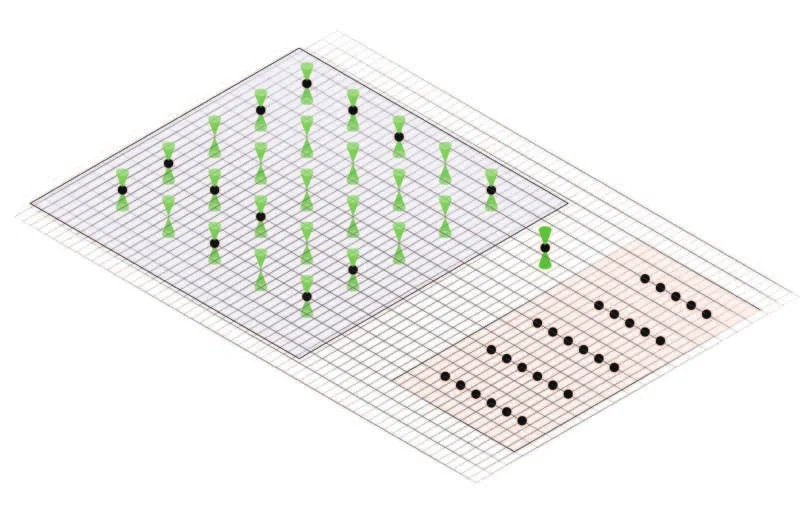
The team observed that even for a single qubit, non-Markovian dissipation can drive the system into a regime inaccessible with traditional Markovian approaches, revealing “added richness available to quantum systems in structured environments.” This research challenges the common Markov approximation used in modeling open quantum systems. Trapped-Ion Simulation of Driven-Dissipative Systems The team, comprised of Anthony Vogliano, Lewis Hahn, Fabien Lefebvre, Jingwen Zhu, Sakshee Patil, Mahmood Sabooni, Zhexuan Gong, and Rajibul Islam, utilized a small-scale “computer”, a single trapped ion, to model the interaction between a quantum system and its surroundings, a feat previously dominated by theoretical approaches. This experimental validation is crucial because most studies model rather than demonstrate the differences between Markovian and non-Markovian systems. The core of the experiment involved engineering a driven-dissipative system where the dissipation channel exhibited temporal memory; the bath influencing the ion wasn’t simply reacting to the ion’s current state but retaining a “memory” of past interactions. This contrasts sharply with the standard Markovian approach, which assumes the bath is instantaneously unaffected by the system. The researchers implemented this non-Markovian behavior by carefully controlling the timing of quantum jumps, statistically sampling them based on the desired spectral properties of the bath, and simulating numerous quantum trajectories. This method circumvents common technical challenges associated with implementing controlled dissipation on quantum hardware, specifically preventing detrimental leakage to extraneous states by pausing Hamiltonian evolution during dissipation. The results revealed that even a single qubit can exhibit dramatically altered steady-state behavior when subjected to non-Markovian dissipation, reaching regimes inaccessible to Markovian systems. This comparison is vital because real-world “baths” are rarely truly Markovian; they possess finite size or structure, leading to time-varying interactions. The techniques employed are not limited to single-qubit systems, laying the groundwork for quantum simulations of more complex, many-body driven-dissipative systems that are generally intractable for classical computers. The study also opens up new possibilities in quantum reservoir engineering beyond the Markovian regime, suggesting a pathway toward more accurate and nuanced control of quantum systems. Engineered Non-Markovian Baths via Quantum Trajectories Researchers are increasingly turning to quantum simulation to unravel the complexities of open quantum systems, those interacting with their environment, and the University of Waterloo team has now demonstrated a novel approach to modeling these interactions with unprecedented control. Unlike many theoretical studies, the group experimentally constructed a system where a single trapped-ion spin served as the core, simulating dissipation through an engineered, non-Markovian “bath.” This small-scale “computer” contrasts with typical narratives surrounding quantum computing, which often focus on scaling up qubit numbers, and allows for precise examination of fundamental physics.
The team’s work directly addresses a long-standing simplification in the field: the Markov approximation. This common assumption posits that the environmental “bath” doesn’t retain any memory of its interaction with the quantum system, a condition rarely met in real-world scenarios. By constructing a non-Markovian bath, the researchers were able to experimentally compare the resulting steady-states with those predicted by a standard, analogous Markovian bath. The techniques employed are readily extensible, promising future investigations into driven-dissipative systems governed by non-Markovian dissipation and offering a pathway toward understanding and engineering complex quantum phenomena. The ability to accurately model energy loss in quantum systems is rapidly becoming critical as researchers pursue more complex quantum technologies, particularly those involving engineered dissipation for quantum control and error correction.
The team directly compared steady-states achieved with a non-Markovian “bath”, representing the environment interacting with the qubit, to those from a standard, analogous Markovian bath. This experimental comparison is particularly noteworthy, as most studies rely on theoretical modeling rather than direct observation of these effects. The core of their investigation revolved around manipulating the rate at which information is transferred into the bath, effectively creating a “memory” within the system’s interaction with its surroundings. This approach also circumvents technical challenges with realizing controlled dissipation on quantum hardware, allowing for simultaneous dissipative interaction and qubit re-pumping. The study also explored systems where dissipation is non-Markovian, simulating scenarios with finite relaxation time and temporal memory, demonstrating features in the steady-state not observed in Markovian analogs. The techniques employed are readily extensible to larger systems with many-body interactions. Extensibility to Many-Body Quantum Simulations The ability to model complex quantum interactions often relies on approximations, particularly when dealing with open quantum systems, those interacting with an external environment. Their work, utilizing a small-scale quantum “computer” consisting of a single trapped-ion spin, reveals that real-world environments frequently exhibit non-Markovian behavior, retaining information about past interactions and influencing future dynamics. The experiment involved simulating many quantum trajectories, each representing the evolution of the system with statistically sampled dissipation events designed to mimic a specific bath spectrum. The techniques used are compatible with many-body extensions of the model, which cannot be simulated efficiently on a classical computer in general. The implications of this work are particularly significant for the growing field of quantum many-body simulations. As technologies advance and researchers attempt to model increasingly complex systems, accurately accounting for environmental effects becomes paramount. The study finds that characterizing these non-trivial dissipative phases is essential both for understanding open quantum many-body systems and for engineering fault-tolerant quantum hardware amidst environmental noise. The ability to extend these simulations to larger, many-body systems lays the groundwork for exploring even more complex driven-dissipative phenomena governed by non-Markovian dissipation, promising a deeper understanding of quantum interactions in realistic physical scenarios. 👉 More information 🗞 Steady States of a Single Trapped-Ion Spin Coupled to an Engineered Non-Markovian Bath ✍️ Anthony Vogliano, Lewis Hahn, Fabien Lefebvre, Jingwen Zhu, Sakshee Patil, Mahmood Sabooni, Zhexuan Gong and Rajibul Islam 🧠 ArXiv: https://arxiv.org/abs/2607.19286 Stay currentSee today’s quantum computing news on Quantum Zeitgeist for the latest breakthroughs in qubits, hardware, algorithms, and industry deals. Tags:
Tags
Source Information
Discussion
0 professional contributions
Sign in to join this professional discussion.
Be the first to add a constructive contribution.