
SpaceX, xAI merger sparks blunt 5-word Palantir billionaire take
Understand this faster with AI


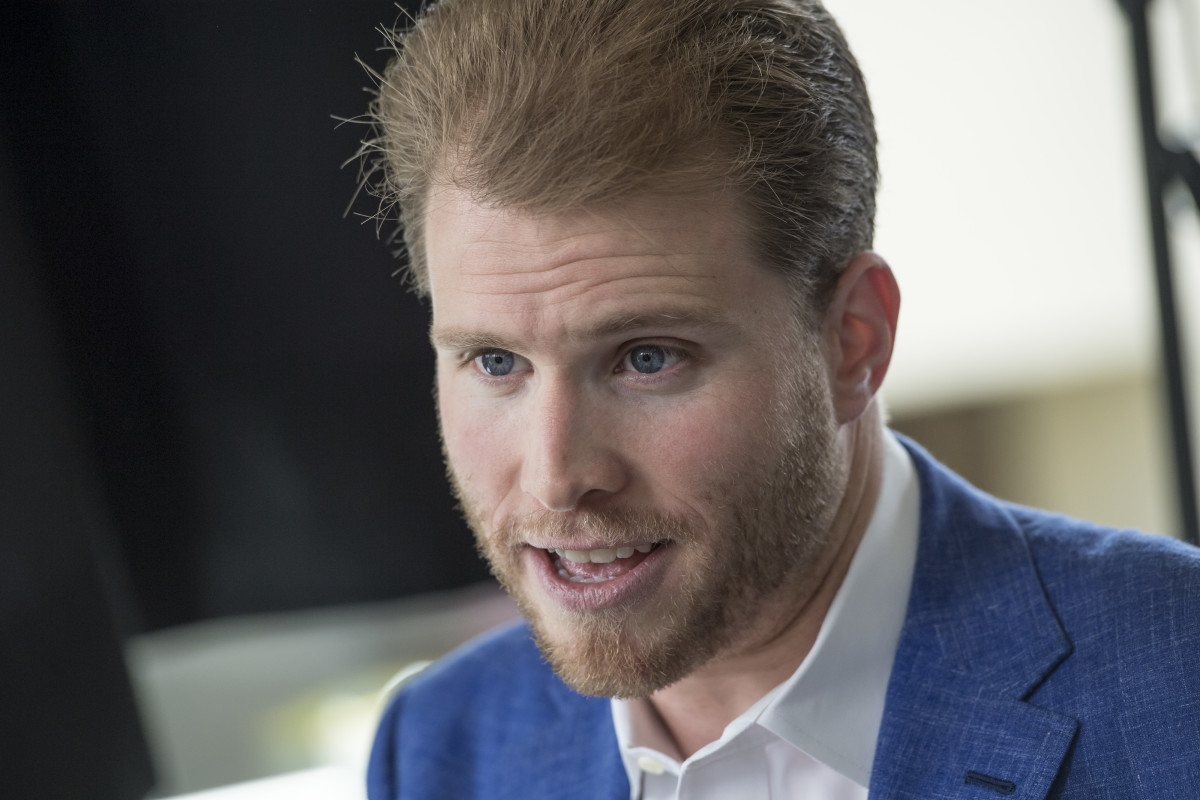
“I don’t ever second-guess Elon.”That’s Palantir (PLTR) co-founder Joe Lonsdale’s sharp take on how he views the growing chatter around a potential SpaceX–xAI tie-up. Though he feels there’s substance to the idea, he isn’t rushing to the conclusion that it is the endgame for Tesla (TSLA) CEO Elon Musk’s empire.For a little context, Lonsdale is a tech entrepreneur and investor with a serious pedigree in areas like defense and AI. He co-founded Palantir Technologies and currently runs venture capital firm 8VC, which manages more than $6 billion in capital. According to Forbes, his net worth is estimated at a whopping $3 billion.That said, rockets, satellites, data, and computing are obvious areas of overlap. AI is fast-evolving into infrastructure, and if we marry that concept with the perhaps-aggressive space and connectivity platform, the combined benefits are extraordinary.Nevertheless, Lonsdale, despite the bullishness on xAI and Musk’s acumen, is stopping short of endorsing an all-in mega-merger. Elon Musk’s SpaceX and xAI spark merger talk; Joe Lonsdale says collaboration, not consolidation, matters.Photo by Bloomberg on Getty Images Why SpaceX merging with xAI is suddenly on the tableSpaceX has reportedly discussed merging with or scooping up xAI ahead of a potential SpaceX IPO.The logic being floated around is that Starlink offers an enormous distribution pipeline, helping xAI scale up quickly. On top of that, over a longer time frame, there’s plenty of chatter around potential space-based compute ideas linked to NASA and Starship.The numbers being reported behind the SpaceX-xAI mergerFollowing a recent insider share sale, SpaceX was last valued near $800 billion, with IPO expectations close to $1 trillion, according to Reuters.Reports suggest SpaceX could raise $50 billion at a valuation exceeding $1.5 trillion in an IPO, with an expected date later in 2026 (near June).xAI recently raised $20 billion at a valuation of$230 billion in a Series E funding round.The Wall Street Journal reported that SpaceX agreed to invest $2 billion in xAI as part of a fundraising round.Lonsdale’s “synergy” pitch, with a big caveatLonsdale isn’t one to second-guess Musk, but that doesn’t really mean he’s buying into the idea of merging all of his businesses together.He’s acknowledging the SpaceX–xAI synergy, but feels focus tends to beat scale.SpaceX and xAI are moving in tandem and are clearly the picks of Musk’s business empire at this point.Related: Morgan Stanley sets bold new price target on Nvidia stockFor perspective, Musk’s ambitions span a sprawling web of businesses that often overlap in technology, data, and ambition.Tesla: Musk’s public crown jewel, covering EVs, energy storage, solar, autonomous driving software, and a growing push into "physical AI" with robotics like OptimusSpaceX: The private rocket giant behind Falcon, Starship, and Starlink that’s revolutionizing an emerging space economy and has long-term plans for MarsxAI: Musk’s promising AI venture behind the popular Grok chatbot and large language models, which also owns X (formerly Twitter), as it goes toe-to-toe against the likes of OpenAI and AnthropicNeuralink: A neurotechnology company developing implantable chips geared toward cognitive enhancementThe Boring Company: Musk’s infrastructure play that’s involved in digging transport tunnels to ease urban congestion at a lower costThat said, Lonsdale believes SpaceX’s mission-driven engineering culture feeds directly into xAI’s insatiable appetite for compute.Particularly with xAI, he believes the company is “growing really fast” this year, with Musk in the thick of things and sweating details.However, with a potential “merge everything,” Lonsdale hit the brakes with a founder’s bias.In his experience, he argues it’s best to keep teams separate when building scale, where several focused businesses often work much better than squeezing everything under a single roof.Inside SpaceX’s current economics and cash engineSpaceX is now running a real, growing business. Reports suggest it generated an eye-catching $15 to $16 billion in sales last year, with nearly $8 billion in EBITDA, which is an excellent result for a business that’s still shelling out millions for Starship and its upcoming systems.The primary growth engine for it is Starlink, which accounts for an estimated 50% to 80% of its revenue. What reportedly began as a side project, satellite internet has effectively become the company’s financial backbone.More Tech Stocks:Morgan Stanley sets jaw-dropping Micron price target after eventNvidia’s China chip problem isn’t what most investors thinkQuantum Computing makes $110 million move nobody saw comingMorgan Stanley drops eye-popping Broadcom price targetApple analyst sets bold stock target for 2026For perspective, SpaceX has launched more than 9,500 Starlink satellites since 2019 and is currently serving over 9 million users globally, Reuters reported. This positions it as the largest satellite operator. Nifty acquisitions, such as the $19 billion spent on wireless spectrum by EchoStar, are paving the way for even bigger sales opportunities with direct-to-device connectivity. If SpaceX can achieve scale, it’s sitting in a total addressable market of immense size.For perspective, McKinsey & Company forecasts the global space economy could potentially surge to $1.8 trillion by 2035, up from $630 billion in 2023.Specifically looking at satellite internet, Grand View Research forecasts the market could reach an incredible $22.4 billion by the end of the current decade.xAI looks legit on paper, but risky on the balance sheetLonsdale spoke with Fox Business about xAI gaining a ton of traction last year, and the numbers suggest he wasn’t just talking vibes.For starters, an internal update puts Grok's monthly user base at nearly 64 million as of September 2025, per The Information. Though that figure trails Google’s Gemini or Anthropic’s Claude by a massive margin, it’s clear that Grok isn’t a niche experiment anymore.On the performance front, Grok impresses as well.On the crowdsourced Text Arena leaderboard, which aggregates millions of blind head-to-head model comparisons, Grok-4.1-thinking ranked second, backed by about 5.1 million votes as of late January 2026. Real-world traction is also stacking up with some head-turning deals. Pentagon’s Chief Digital and AI Office awarded xAI a contract with a whopping ceiling of up to $200 million for developing agentic AI workflows, CNBC noted.The U.S.
General Services Administration signed a major OneGov deal, which makes Grok available to agencies for 42 cents per organization through March 2027.xAI also announced an agreement with Saudi Arabia’s HUMAIN in designing hyperscale GPU data centers while deploying Grok nationwide.However, where the story breaks down is primarily economics.According to a Reuters report, xAI generated $107 million in quarterly sales, but bled $1.46 billion in losses, while burning a worrying $7.8 billion in just nine months as it looks to scale up.Related: Apple report drops iPhone 18 bombshell
Tags
Source Information
Discussion
0 professional contributions
Sign in to join this professional discussion.
Be the first to add a constructive contribution.