
Researchers: AI Can Learn to Build Quantum Circuits For Drug Molecules, Cutting Design Time by Orders of Magnitude
Understand this faster with AI


Insider BriefResearchers from Quantinuum, NVIDIA and Pfizer have developed an artificial intelligence system that learns to generate quantum circuits for molecular simulations in a fraction of the time required by a leading quantum chemistry algorithm, while matching or exceeding its accuracy on benchmark tests.The study, posted on arXiv, introduces a framework that combines transformer-based language models, a type of artificial intelligence model commonly used in generative AI, with reinforcement learning to automate preparing the quantum state needed to calculate a molecule’s electronic properties. The researchers demonstrated the approach on imipramine, a tricyclic antidepressant frequently used as a representative pharmaceutical molecule, and executed AI-generated circuits on Quantinuum‘s Helios trapped-ion quantum computer.The work addresses a longstanding bottleneck in quantum chemistry. Before a quantum computer can estimate the energy of a molecule, it must first prepare the quantum system in a state that closely approximates the molecule’s lowest-energy, or ground, state. Producing those circuits typically requires repeated optimization that becomes increasingly expensive as molecules grow larger.According to the researchers, their AI system reduced circuit-generation time by three to four orders of magnitude compared with the Adaptive Derivative-Assembled Problem-Tailored Variational Quantum Eigensolver, or ADAPT-VQE, while maintaining comparable or better accuracy. Rather than constructing circuits through repeated optimization, the trained models generate complete circuits in a single inference step.One of the innovations is framing quantum circuit generation as a language problem, according to the researchers.Instead of generating sentences, the transformer models generated sequences of quantum operations needed to prepare molecular ground states.
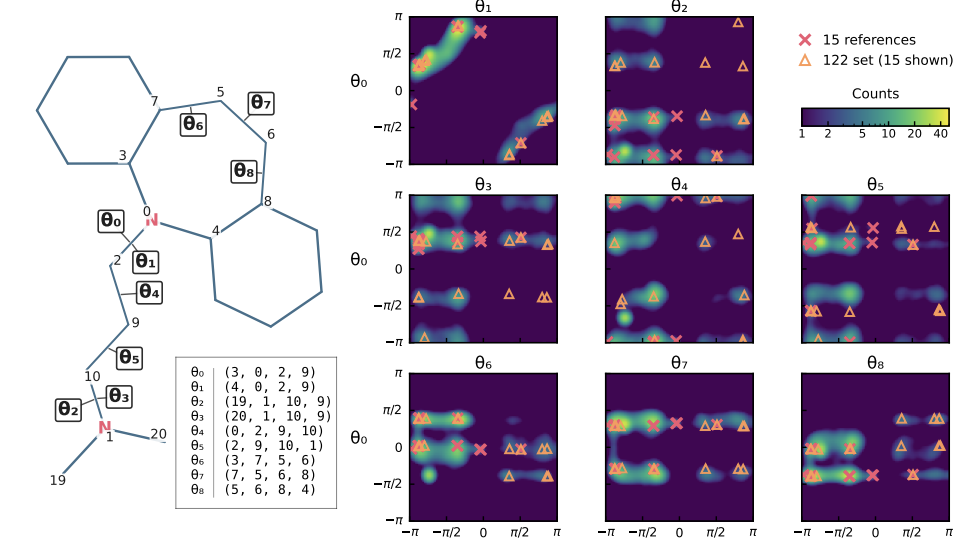
The team trained the models using thousands of high-quality circuits previously generated with ADAPT-VQE, allowing the AI to learn patterns in circuit construction that could be applied to new molecular configurations.The study evaluated two different transformer architectures. One was a relatively compact 325 million-parameter model trained from scratch. The other was a much larger 12 billion-parameter pretrained language model that was adapted for quantum circuit generation. Parameters are the adjustable settings inside an AI model that are tuned during training to help it recognize patterns and make accurate predictions.Both models received information describing the molecular Hamiltonian — the mathematical representation of a molecule’s electronic interactions — and generated corresponding quantum circuits.For the smaller model, the researchers added a reinforcement learning stage after supervised training. Rather than simply reproducing the circuits in the training data, the model received rewards for generating circuits with lower calculated energies. The researchers said this enabled the AI to surpass the quality of the original training examples in many cases.The approach differs from conventional variational quantum algorithms, which repeatedly evaluate and adjust candidate circuits until they converge on a solution. Those iterative calculations require many quantum circuit executions and become increasingly expensive as the number of qubits and circuit depth increase.The team selected imipramine as its primary test system because of its structural complexity and pharmaceutical relevance.Imipramine has multiple reactive sites and can adopt many different three-dimensional shapes, known as conformers. Predicting the electronic properties of these different configurations is important in pharmaceutical development, particularly when studying drug stability and degradation pathways.To build the training data, the researchers first generated thousands of molecular conformations using molecular dynamics simulations, transition-path sampling and additional perturbation methods designed to create challenging out-of-distribution examples.For each molecular geometry, they then used ADAPT-VQE to produce optimized quantum circuits across 12-, 14- and 16-qubit active-space representations. Those circuits became the training targets for the transformer models.The resulting datasets contained roughly 13,000 to 15,700 circuits, representing a broad range of molecular geometries and circuit complexities.The researchers reported that both transformer models reproduced the performance of ADAPT-VQE for many of the easier molecular problems.For more complex quantum circuits, however, performance declined after supervised training alone. The researchers attributed much of this degradation to the increased difficulty of generating longer operator sequences.Applying reinforcement learning substantially improved the smaller model’s performance across every dataset.The researchers found that reinforcement learning largely removed the strong relationship between circuit length and prediction error observed after initial training. In practical terms, the AI became better at generating longer, more complex circuits without losing as much accuracy.Another important result was that the reinforcement learning stage did not merely imitate ADAPT-VQE. Instead, the optimization process frequently produced circuits with lower energies than those found in the original training data, suggesting the AI discovered improved solutions during training.The researchers also observed different behavior between the two model types. The smaller transformer generated more consistent, narrowly distributed solutions, while the larger pretrained language model produced a broader range of candidate circuits. Although that increased variability reduced average accuracy in some tests, the team suggested the greater diversity could prove useful for future optimization and exploration.Beyond simulation, the team executed representative AI-generated circuits on Quantinuum‘s Helios trapped-ion quantum processor.The hardware demonstration provides evidence that circuits produced entirely by the AI framework can operate on an existing quantum computer rather than remaining purely theoretical.The study describes the experiment as a milestone because it combines AI-generated circuit synthesis with execution on commercial quantum hardware for a chemically relevant molecular system. Previous work in this area has generally focused either on simulations or on relatively simple benchmark problems rather than realistic pharmaceutical molecules.Quantum chemistry is widely viewed as one of the most promising long-term applications for fault-tolerant quantum computers because accurately modeling molecular electronic structure becomes prohibitively expensive for classical computers as molecular complexity increases.Current approaches such as the Variational Quantum Eigensolver and ADAPT-VQE can reduce circuit depth compared with fixed circuit designs but still require repeated optimization that scales poorly with system size. The researchers argue that replacing much of that iterative search with learned inference could make future quantum chemistry workflows substantially more efficient.The work also reflects a broader trend of applying generative AI techniques to scientific computing, using transformer architectures not only to process language but also to solve optimization and design problems in physics and chemistry.The researchers note several limitations, including the fact that the models were trained separately for each qubit count, meaning they cannot yet generalize across different active-space sizes. Extending the approach will require more general representations of quantum operators and molecular Hamiltonians.The study also focused on a single pharmaceutical molecule. Although imipramine provides a challenging test case because of its conformational flexibility, broader validation across larger and more chemically diverse molecules will be needed.For a deeper, more technical dive, please review the paper on arXiv. It’s important to note that arXiv is a pre-print server, which allows researchers to receive quick feedback on their work. However, it is not — nor is this article, itself — official peer-review publications. Peer-review is an important step in the scientific process to verify results.The research team included Alex Koziell-Pipe, Jasmine Brewer, Jem Guhit, Fabian Finger, Stephen Clark and Enrico Rinaldi of Quantinuum in London, UK; Kripa Panchagnula, Gabriel Laude, Carlo Gaggioli, Ludmila Szulakowska, Oliver J. Backhouse, Thomas Soini and David Muñoz Ramo of Quantinuum in Cambridge, UK; Marwa H. Farag and Elica Kyoseva of NVIDIA in Santa Clara, California; and Jason G. Mustakis of Pfizer’s Chemical R&D division in Groton, Connecticut, along with Christos Papalitsas of Pfizer’s Center for Digital Innovation in Thessaloniki, Greece.TopicsShare Get the latest research, company news, and market intelligence every week. MENTIONED IN THE ARTICLEQuantinuum is a quantum computing company advancing the aerospace sector through the development of algorithms for aerodynamic modeling, composite materials optimization, and sustainable aviation fuel cell engineering. Founded in 2021 through the merger of Cambridge Quantum and Honeywell Quantum Solutions, the firm provides high fidelity trapped ion hardware and software to accelerate industrial applications.NVIDIA Corporation is an American multinational technology company and a global player in accelerated computing and Artificial Intelligence (AI). Founded in 1993, the company pushes the aerospace frontier with the Space-1 Vera Rubin Module, a platform for orbital data centers that delivers massive AI-compute Space Computing. This NVIDIA technology enables satellites and autonomous spacecraft to process and fuse sensor data rapidly Space Computing.Pfizer Inc. develops, manufactures, and sells healthcare products worldwide.More in Research
Tags
Source Information
Discussion
0 professional contributions
Sign in to join this professional discussion.
Be the first to add a constructive contribution.