
Quantum Machines Reaches a Performance Milestone on Rigetti Hardware
Understand this faster with AI


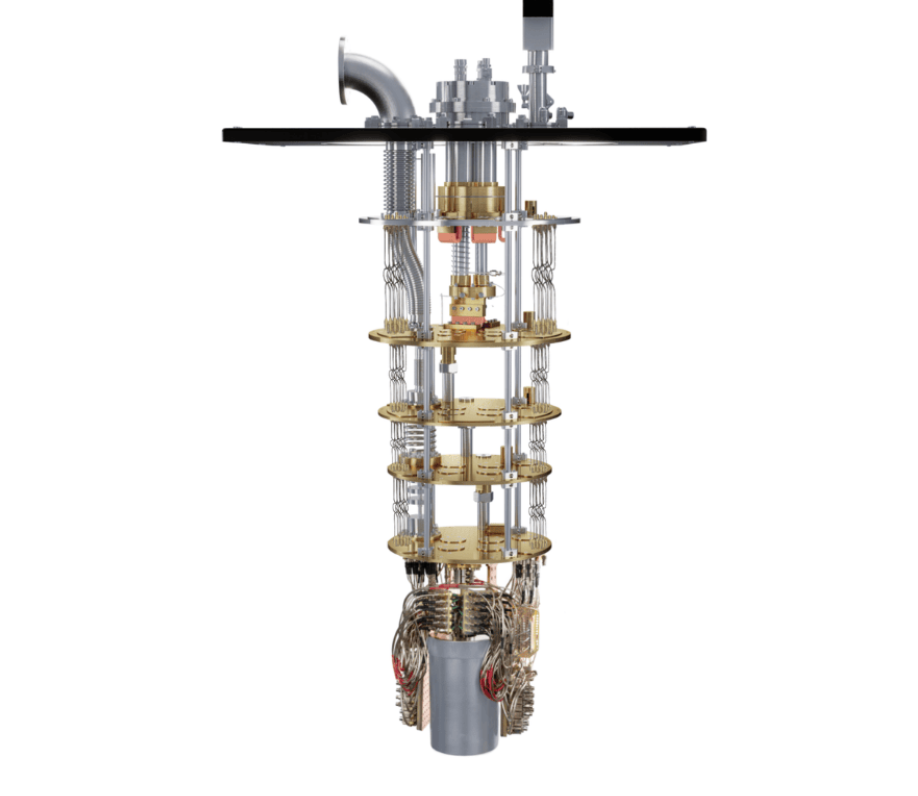
Insider Brief Quantum Machines said it successfully operated Rigetti Computing’s commercially available Novera superconducting quantum processor using its OPX1000 hardware and QUAlibrate software, achieving 99.5% median two-qubit gate fidelity across the full system. The results suggest that high-performance superconducting quantum processors can now be calibrated and operated effectively outside the original developer’s internal environment. Quantum Machines said the workflow relied on automated calibration, parallelized tuning, real-time optimization, and continuous monitoring. PRESS RELEASE — Quantum Machines (QM), the global leader in hybrid quantum-classical control solutions, today announced that it has successfully operated Rigetti Computing’s commercially available Novera™ superconducting quantum processing unit using QM’s OPX1000 hardware and QUAlibrate software, reaching 99.5% median two-qubit gate fidelity, paving the path for broader industry adoption. In practical terms, this means the system was able to perform quantum operations across the processor with very low error rates and consistent performance across the full chip. To QM’s knowledge, and based on benchmarking data, this represents the highest full-system Novera performance ever achieved with a quantum control partner, Quantum Machines. The milestone demonstrates that advanced superconducting quantum processors can achieve stable, high-performance operation outside the original hardware developer’s internal environment – an important step as quantum computing expands into national laboratories and commercial deployments. Rigetti’s Novera is a commercially available 9-qubit superconducting quantum processor (QPU) designed for on-premises deployment in research and development labs. The processor is based on the same underlying architecture used in Rigetti’s larger superconducting quantum systems. “We’ve shown that commercially deployed superconducting quantum processors can now be calibrated and operated at a very high level using QM’s Orchestration Platform,” said Yonatan Cohen, CTO of Quantum Machines. “That is an important step toward making scalable quantum computing deployable across the broader ecosystem.” Using its OPX1000 control stack together with QUAlibrate, its calibration automation software, a Quantum Machines team working onsite at Rigetti calibrated and operated the full Novera system, achieving low-error, high-fidelity quantum operation consistently across the entire chip. The system reached Rigetti’s target of 99.5% median two-qubit gate fidelity across all 11 available qubit couplings, alongside 99.93% median single-qubit fidelity across all nine qubits. In other words, the processor was able to perform quantum operations across the full device with consistently low error rates. “Novera was designed to provide flexible access to Rigetti’s superconducting quantum technology,” said Andrew Bestwick, SVP Quantum Systems at Rigetti Computing. “These results demonstrate the growing maturity of the broader quantum ecosystem and show that high-performance operation can be achieved with external control and software stacks, such as QM’s Orchestration Platform.” The QM calibration and control workflow included automated calibration routines, parallelized tuning across the full device, real-time control optimization, and continuous system-level performance monitoring. The achievement also reflects a broader shift taking place across the quantum computing industry. Historically, achieving state-of-the-art superconducting quantum performance often depended on highly specialized manual tuning and calibration workflows developed internally by the companies developing quantum processing units. As quantum processors become more widely deployed, scalable operation increasingly depends not only on qubit hardware, but also on control infrastructure, calibration automation, real-time feedback, and integrated quantum-classical infrastructure capable of maintaining system-wide performance over time. “As systems scale, calibration and orchestration become fundamental infrastructure challenges,” said Itamar Sivan, CEO of Quantum Machines. “The future of quantum computing will depend not only on better qubits, but on the ability to reliably operate increasingly complex systems across many different environments.” These results validate both the performance of the Novera platform and the role of an integrated control, calibration, and automation stack in achieving high-fidelity operation reproducibly across the full device. The same Quantum Machines platform is already running with Novera systems at Montana State University, Fermilab, and Horizon Quantum. TreQ also selected the QM OPX1000 for their multi-QPU system, which includes the Rigetti Novera, to develop their first Open Architecture Quantum (OAQ) specification. The full technical workflow and calibration results are described in a detailed technical blog authored by Quantum Machines and Rigetti researchers.
Matt Swayne LinkedIn With a several-decades long background in journalism and communications, Matt Swayne has worked as a science communicator for an R1 university for more than 12 years, specializing in translating high tech and deep tech for the general audience. He has served as a writer, editor and analyst at The Quantum Insider since its inception. In addition to his service as a science communicator, Matt also develops courses to improve the media and communications skills of scientists and has taught courses. matt@thequantuminsider.com Share this article:
Tags
Source Information
Discussion
0 professional contributions
Sign in to join this professional discussion.
Be the first to add a constructive contribution.