
Quantum advantage: Five developments on the path for ‘true’ quantum computing - Digital Journal
Understand this faster with AI


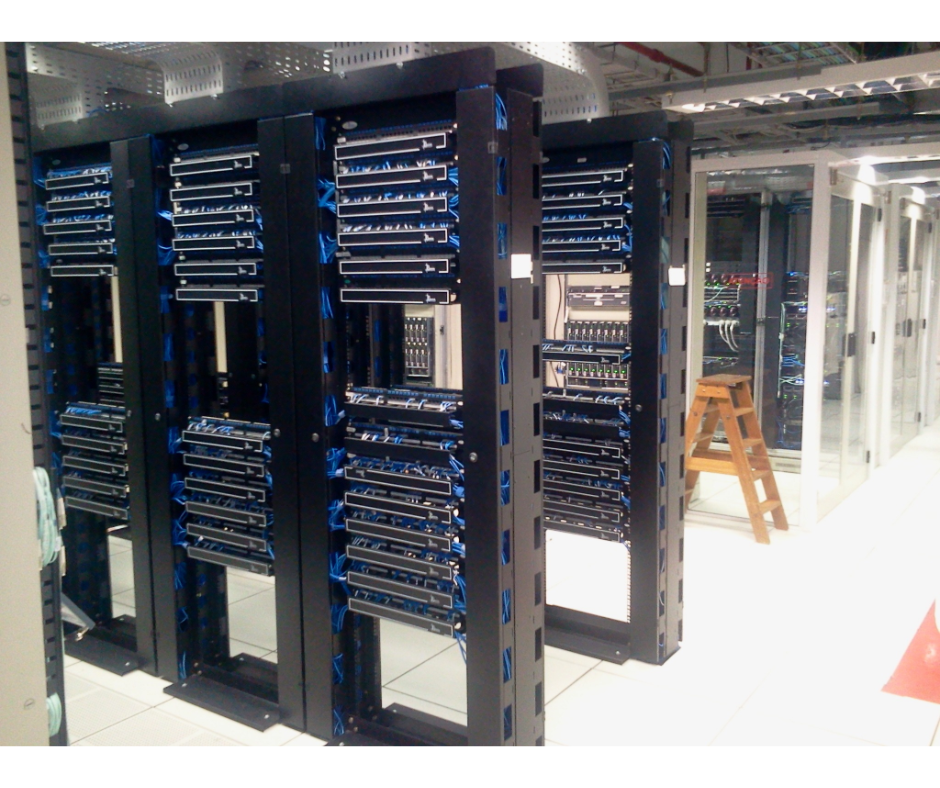
Quantum computing has been touted as a revolutionary advance that uses our growing scientific understanding of the subatomic world to create a machine with powers far beyond those of conventional computers - Copyright AFP/File LUCA SOLA Quantum computing has been touted as a revolutionary advance that uses our growing scientific understanding of the subatomic world to create a machine with powers far beyond those of conventional computers - Copyright AFP/File LUCA SOLA Quantum computing is advancing through improvements in qubit hardware, error correction, and hybrid algorithms, moving from experimental demonstrations toward early practical applications, although large-scale fault-tolerant systems are still in development. Quantum advantage refers to situations where a quantum computer performs a task faster or more efficiently than the best known classical methods. While still emerging, there are several concrete example domains where quantum advantage (or early forms of it) has been demonstrated or is strongly anticipated. In terms of recent progress, Digital Journal highlights five innovations announced during May 2026. Oxford physicists achieve first-ever “quadsqueezing” breakthrough in quantum physics Scientists have created a powerful new way to control quantum systems, achieving the first-ever demonstration of quadsqueezing—an elusive fourth-order quantum effect. By combining simple forces in a clever way, they made previously hidden quantum behaviours visible and usable, opening new frontiers for quantum technology. Many physical systems behave like tiny oscillating objects, similar to springs or pendulums. In quantum physics, these are known as quantum harmonic oscillators. This description applies to a wide range of systems, including light waves, molecular vibrations, and even the motion of a single trapped atom. Controlling these oscillations is essential for modern quantum technologies. Applications range from extremely precise measurement tools to the development of next-generation quantum computers. One of the most common techniques for controlling quantum oscillators is called squeezing. The Oxford team developed a solution by combining two precisely controlled forces acting on a single trapped ion. The research features in Nature Physics, titled “Squeezing, trisqueezing and quadsqueezing in a hybrid oscillator–spin system.” JUPITER supercomputer breaks world record with 50-qubit quantum simulation Researchers at the Jülich Supercomputing Centre, in collaboration with NVIDIA, have achieved a major milestone by fully simulating a universal 50‑qubit quantum computer using Europe’s first exascale supercomputer, JUPITER. This surpasses the previous 48‑qubit record (set in 2019) and demonstrates the rapidly increasing power of high‑performance computing (HPC) to support quantum research. Quantum simulations are crucial because they allow scientists to test algorithms, validate experimental results, and predict the behaviour of future quantum systems before physical quantum hardware can reach the required scale. Key algorithms of interest include Variational Quantum Eigensolver (VQE) for molecular and materials modelling, and Quantum Approximate Optimisation Algorithm (QAOA) for solving complex optimisation problems in areas such as logistics, finance, and AI. However, simulating quantum systems is extraordinarily challenging. The computational demand grows exponentially with each added qubit, doubling memory and processing requirements. While a standard computer can simulate around 30 qubits, simulating 50 qubits requires roughly 2 petabytes of memory. The simulation involves tracking over 2 quadrillion numerical values, all synchronised across thousands of computing nodes to accurately represent quantum behaviour. The achievement was enabled by NVIDIA GH200 Superchips, which integrate CPUs and GPUs to efficiently manage massive data flows. Enhancements to Jülich’s simulation software (JUQCS-50), including memory compression (8× reduction) and dynamic optimisation across 16,000+ superchips, were critical to success.Beyond the technical milestone, JUQCS-50 will be made available via the JUNIQ platform, expanding access for researchers and industry. The work underscores the tight coupling between HPC and quantum computing, accelerating algorithm development and providing a testbed for future quantum technologies that are not yet physically realisable. New quantum algorithm solves “impossible” materials problem in seconds Researchers are exploring how advanced quantum materials—such as twisted layers of graphene forming moiré patterns—can exhibit unusual properties like superconductivity. More complex structures, including quasicrystals and super‑moiré materials, offer even richer behaviour but are extremely difficult to model due to their mathematical complexity, often requiring calculations beyond the capability of current supercomputers. A team at Aalto University has developed a quantum‑inspired algorithm that can simulate these highly complex, non‑periodic materials far more efficiently. Instead of directly modelling every component, the method uses tensor network techniques to encode the system in a way similar to quantum computing, enabling simulation of massive structures—such as a quasicrystal with over 268 million sites. This approach provides a form of exponential speed‑up, potentially overcoming a major barrier in quantum materials research. The work focuses on topological quasicrystals, which host unique quantum excitations that are resilient to noise, making them attractive for stable quantum devices. The findings highlight a two‑way feedback loop, where advances in quantum algorithms help design new quantum materials, which in turn support better quantum computers. Leaping forward with quantum technology. — Image by © Tim Sandle. Although currently theoretical, the approach could enable dissipationless electronics and improve energy efficiency in computing. It also points to quantum materials design as one of the earliest practical applications of quantum computing as hardware capabilities advance. Dissipationless electronics refers to electronic systems in which electric current flows without energy loss, meaning no energy is released as heat during operation. Quantum breakthrough could revolutionize teleportation and computing Quantum entanglement is a fundamental but challenging phenomenon where particles are linked so their properties must be understood collectively. It underpins key technologies such as quantum computing, communication, and teleportation, but accurately identifying entangled states is difficult. Traditional methods like quantum tomography become impractical as system size grows, requiring exponentially more measurements. Researchers from Kyoto and Hiroshima Universities have addressed this by developing a new entangled measurement method for W states, a major class of multi-photon entanglement that had previously resisted direct measurement. Using the symmetry of W states, they designed a photonic quantum circuit capable of identifying these states efficiently and demonstrated it experimentally with three photons. The system proved stable and accurate, marking a significant advance in quantum measurement. This breakthrough could enable improvements in quantum communication, teleportation, and network development, while supporting the move from fragile laboratory setups toward scalable, real-world quantum technologies. Development of universal quantum computer on track with scalable Photonic Assembly Control Unit Quix Quantum has made significant progress towards a world-first universal quantum computer with its new Photonic Assembly Control Unit PACU, which provides a scalable standardized control layer in photonic quantum computing. This new advancement in photonic quantum computing supports the hardware company’s roadmap towards scaling and delivering the first universal quantum computer capable of running a broad set of quantum algorithms to support a wider-range of scientific, industrial, and commercial applications. In this article:Computers, Innovation, quantum computing, Science, Technology Written By Dr.
Tim Sandle Dr. Tim Sandle is Digital Journal's Editor-at-Large for science news. Tim specializes in science, technology, environmental, business, and health journalism. He is additionally a practising microbiologist; and an author. He is also interested in history, politics and current affairs. Advertisement Subscribe to our newsletter Trending Business Upper Bound speakers urge Canada to hold on to its AI advantage Business Canada and CIFAR names 42 new and renewed AI research chairs in $24M talent bet Business Banker: AI will replace ‘lower-value human capital’ Business California governor orders a plan to cope with AI job upheaval Tech & Science Beloved Citroen 2CV revived as electric car You may also like: Business Canada is building a world-class AI story, but sucks at telling it A dispatch from Canada's largest AI conference, written for Canadians who deserve a more complete picture of what our country is doing. Chris Hogg16 hours ago Business Q&A: The real impact of AI: More work, greater complexity, and misunderstood ROI Analysis shows AI skills embedding across every function, with companies hiring more, not fewer, workers to govern, operate, and scale AI. Dr. Tim Sandle6 hours ago World Heat dome over Europe scorches UK, France, Spain Temperatures hit record highs for May in the United Kingdom and France on Monday, as forecasters warned of a prolonged period of extreme heat. AFP16 hours ago World Canada PM compares ‘dangerous’ Alberta separatist bid to Brexit Canadian Prime Minister Mark Carney on Monday compared Alberta's plans to consider separating from Canada to Brexit, calling it "dangerous.
Tags
Source Information
Discussion
0 professional contributions
Sign in to join this professional discussion.
Be the first to add a constructive contribution.