
Nvidia makes good on a key 2025 promise
Understand this faster with AI


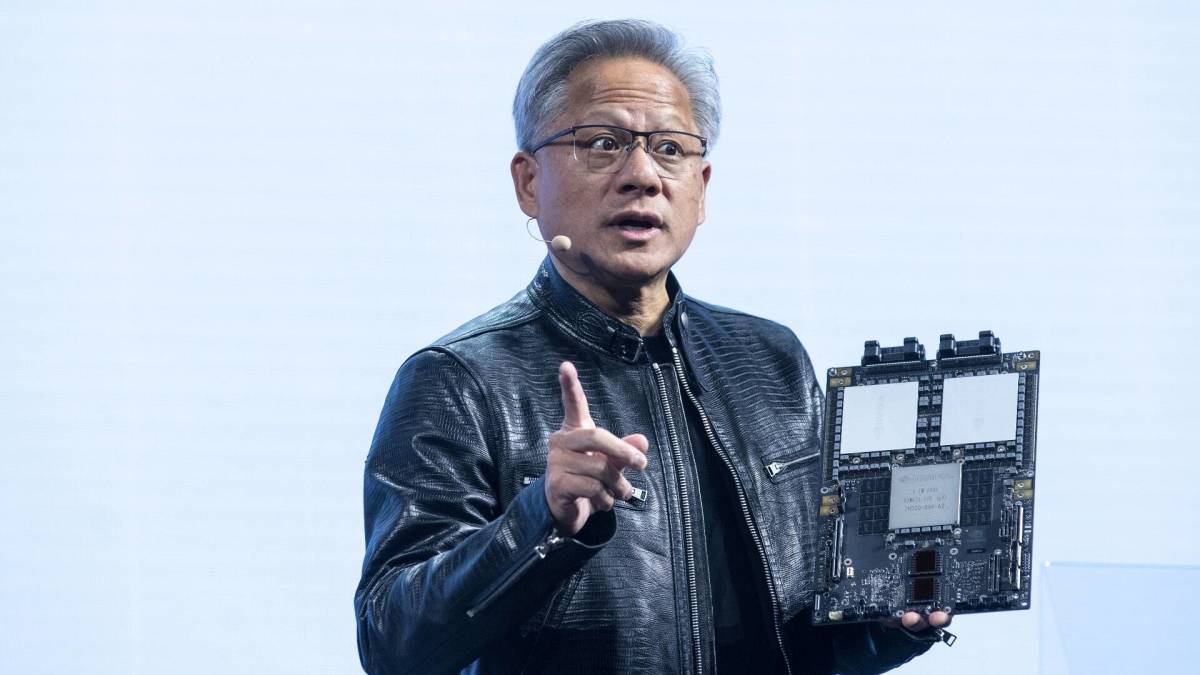
INTCNVDAKey PointsNvidia invested $5 billion in Intel, securing shares at a favorable price.Collaboration will produce advanced CPUs and system-on-chips.Analysts have recently reset their Nvidia and Intel stock price targets. Nvidia’s stock gained about 40% this year, and the company set many new projects in motion that will keep the company at the top of the artificial intelligence boom. I have analyzed the company’s long-term plans in my “What’s next for Nvidia stock in 2026” article, thinking that I was done writing about the company in 2025. However, I was wrong, and the 8-K filing by Intel from 29 December brings more good news for Nvidia investors. According to the filing, Nvidia completed its investment in Intel for $5.0 billion, at a price per share of $23.28. Considering that Intel closed the Monday trading session at $36.68, that investment is currently a big win. Here’s why I think Nvidia’s collaboration and investment in Intel was a vital move for the company, and what investors can expect from it. Nvidia and Intel collaboration will bring us very powerful laptop SOCs. — Source: Image source: Shutterstock/TheStreet Why did Nvidia invest in Intel? Nvidia’s (NVDA) long-term plan was to dominate all of “compute”. When the company failed to acquire ARM due to regulatory hurdles, it had to go back to the drawing board and figure out a different approach to accomplish that goal. The company’s attempt to solve this roadblock was to team up with MediaTek for the design of its ARM cores, which became part of its superchips. This worked out well for superchips, but not so great for anything that would go into consumer-oriented devices. The long-rumored laptop chip has been delayed until late 2026, as reported by Tom’s guide. While Nvidia was dealing with delays, Qualcomm launched its Snapdragon X chips for PCs, and they haven’t managed to capture any significant market share due to the lackluster experience offered by Windows on ARM (ARM), despite the AI PCs branding and Copilot promotion. This sent a clear signal to Nvidia that going after the laptop market with ARM is a losing proposition. Nvidia needed x86 to win. Getting a license for x86 from Intel (INTC) and AMD was never going to happen. Yes, you read that right: Nvidia would need to secure licenses from both companies. AMD actually won the architecture race many years ago when it designed the 64-bit x86 architecture. Intel and AMD have cross-licensing architecture agreements, where Intel provides AMD with the original x86 architecture license, and AMD provides Intel with the AMD64 license. View post: Veteran analyst has blunt message on Intel stockStocksVeteran analyst has blunt message on Intel stockHere’s what could happen to Intel shares next.Vuk Zdinjak 0 INTC Left with no options, Nvidia began working with Intel in secret as early as 2024, well before the investment deal was announced, as reported by Tom’s Hardware. When Nvidia decided to invest in Intel, it had good reasons to do so: Since it had been working with Intel for about a year, helping Intel stay afloat was necessary for its long-term plans. Intel is working on a very promising manufacturing process (node), 14A, which has the potential to be a superior process. This investment will enable Nvidia to become Intel’s preferred customer in its fabs, and being the first to access the best node is a significant advantage. A complete acquisition would have been blocked, like the ARM one. And as an accidental bonus, as the US government has invested $8.9 billion in Intel, by also investing in it, Nvidia is putting itself in good graces of President Donald Trump by following his lead. What can we expect from Intel and Nvidia’s collaboration? The primary focus of the collaboration is to enable Intel’s CPUs to work with NVLink. This will result in Intel’s custom-built CPUs for Nvidia to be used in data centers – superchips, but with Intel instead of Mediatek. “Intel’s leading data center and client computing platforms, combined with our process technology, manufacturing, and advanced packaging capabilities, will complement NVIDIA’s AI and accelerated computing leadership to enable new breakthroughs for the industry,” said Lip-Bu Tan, CEO of Intel. The companies are also working on system-on-chips (SOCs) that integrate NVIDIA RTX GPU chiplets. “There are 150 million laptops sold per year. We’re now creating a system-on-a-chip that fuses two processors into one giant SoC, and that will become a new class of integrated laptops that the world has never seen before,” said Nvidia CEO Jensen Huang, as reported by Wired. More Nvidia: Nvidia’s China chip problem isn’t what most investors think Jim Cramer issues blunt 5-word verdict on Nvidia stock This is how Nvidia keeps customers from switching Bank of America makes a surprise call on Nvidia-backed stock The planned chips and integrations are expected to take approximately 3 to 4 years to materialize. Since the companies began working in 2024, the best-case scenario would be for the first chips to launch in late 2027. According to Notebookcheck.net, leaks indicate that the first chip, part of the collaboration that will launch, is Serpent Lake and will feature an RTX Rubin integrated GPU. This collaboration will, over time, enable more flexibility for Nvidia. When the collaboration began, it was likely too late to redesign the Feynman chips to use Intel cores instead of MediaTek cores, but we can expect the next generation after Feynman to be based on Intel. In turn, this will enable smaller superchips, such as GB10, to be launched, but with Intel CPU cores. This will, in turn, give us the opportunity to buy small devices that can run state-of-the-art AI models, but can also run any “normal” software without issue, including games. There is one dark side of this deal that I see as a consumer, and that is that Intel may slowly abandon its own GPU development efforts. If that happens, consumers are left with a duopoly of Nvidia and AMD, which is never good; it slows the pace of progress and keeps prices high. What are the analyst ratings for Nvidia? Bank of America analyst Vivek Arya reiterated a buy rating and the target price of $275 for Nvidia stock in his research note from December 29, which was shared with me. The target price is based on 28 times his earnings estimate (price-to-earnings ratio), excluding cash for calendar year 2027, which falls within Nvidia’s historical forward-year P/E ratio range of 25 to 56. Veteran analyst Stephen Guilfoyle recently raised the price target for Nvidia stock to $235, in his article on TheStreet Pro. Cantor Fitzgerald ranks Nvidia a top pick, with a $300 target price. As for Intel, Bank of America upped its price target to $40 from $34 on December 16, citing potential for advanced packaging or wafer design wins at Intel Foundry. View post: What’s next for Nvidia stock in 2026StocksWhat’s next for Nvidia stock in 2026Here’s everything you need to know about what Nvidia is planning.Vuk Zdinjak 0 NVDA About the authorsVuk ZdinjakVuk is a tech reporter who covers all things technology, including software, semiconductors, hardware, and networking. He developed his first computer application 25 years ago, a random fantasy name generator for creating names in the style of J.R.R. Tolkien. He also writes on cybersecurity, artificial intelligence, and quantum computing.Todd CampbellTodd Campbell is the Co-Editor-in-Chief of TheStreet. Todd officially joined Wall Street in 1997 as a sales assistant at an independent research firm. He later progressed to partner and vice president, providing actionable stock market research to hedge and mutual funds and serving as a Series 7 licensed stockbroker for high-net-worth clients before starting his own institutional sell-side research firm in 2003. Todd, an investment generalist, writes on the major indexes, the economy, and stocks, and has passed the Series 65 exam for investment adviser representatives.Start the Conversation
Tags
Source Information
Discussion
0 professional contributions
Sign in to join this professional discussion.
Be the first to add a constructive contribution.