
Helios-1: New quantum computer is on the path to unravelling superconductivity - New Scientist
Understand this faster with AI


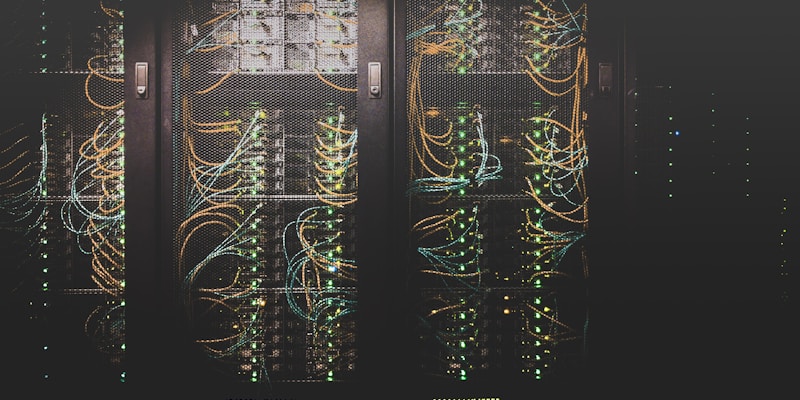
The Helios-1 quantum computing chipQuantinuum Researchers at the quantum computing firm Quantinuum used a new Helios-1 quantum computer to simulate a mathematical model that has long been used to study superconductivity. These simulations are not out of reach for conventional computers, but this advance sets the stage for quantum computers to become useful tools for materials science. Read moreShock discovery tears up the rules of time and space inside a computer Superconductors conduct electricity with perfect efficiency, but they currently only work at temperatures too low to be practical. For decades, physicists have been trying to understand how to tweak their structure to make them work at room temperature, and many believe answers will come from a mathematical framework called the Fermi-Hubbard model. This potential makes it one of the most important models in all condensed matter physics, says Quantinuum’s Henrik Dreyer.Advertisement Conventional computers can run exceptional simulations of the Fermi-Hubbard model but struggle with very large samples or cases where the materials it describes change over time. Quantum computers stand a chance to eventually do better. Now, Dreyer and his colleagues have run the biggest-yet simulation of the Fermi-Hubbard model on a quantum computer. They used Helios-1, which has 98 qubits made from barium ions, each of which is controlled with lasers and electromagnetic fields. To run a simulation, the researchers manipulated the qubits through a sequence of quantum states, then read the output by measuring their properties. Their simulations included 36 particles called fermions, which are exactly the type of particle that exists in real superconductors and are mathematically described by the Fermi-Hubbard model. For a superconductor to work, fermions must pair up, and experiments have found such pairing can sometimes be initiated by hitting a material with a laser. Quantinuum’s team simulated this scenario – they hit their qubits with a laser pulse, then measured the resulting states, finding signs of the simulated particles’ pairing. The simulation did not exactly replicate experiments, but it captured a dynamical process, which is difficult for conventional computer methods when applied to more than a few particles. Free newsletter Sign up to The Daily The latest on what’s new in science and why it matters each day. Sign up to newsletter Dreyer says the new experiment is not a rigorous proof Helios-1 has an advantage over every possible traditional computing approach, but exploring classical simulation methods convinced his team that a quantum computer could compete. “For the methods that we tried, it was impossible to reliably get the same results, we were looking at a couple hours on a quantum computer and a big question mark on the classical side of things,” he says. In other words, the team’s estimates of classical computation times were so much longer it was difficult to tell when they would be comparable to Helios’ work. Read moreQuantum computers have finally achieved unconditional supremacy Trapped ions serve as qubits in the Helios-1 chipQuantinuum Other quantum computers have not yet tackled simulations of fermions pairing to achieve superconductivity, and the team credits their success to Helios’ hardware. David Hayes, also at Quantinuum, says Helios’ qubits are exceptionally reliable and excel at benchmarking tasks common across the quantum computing industry. In preliminary tests, it could also sustain experiments with error-proof qubits, including connecting 94 of these special qubits through quantum entanglement, which is a record across all quantum computers. Using such qubits in future simulations could make them more accurate.
Eduardo Ibarra García Padilla at Harvey Mudd College in California says the new results are promising, but still need to be carefully benchmarked against state-of-the-art classical computer simulations. He says the Fermi-Hubbard model has been of great interest to physicists since the 1960s, so it is exciting to have a new tool for studying it. Precisely when approaches like those used with Helios-1 will become true competitors to the best conventional computers is anyone’s guess, because many more details need to be ironed out, says Steve White at the University of California, Irvine. For instance, he says there are challenges in making sure the quantum computer simulation starts with just the right set of qubit properties. Yet, White says quantum simulations could become complementary to classical, especially for dynamic, or changing, behaviour in materials. “They are on the way to becoming useful simulating tools in condensed matter [physics],” he says. “But they’re still in the early stages, there are computational barriers still to come.” Reference: arXiv, DOI: 10.48550/arXiv.2511.02125 Topics:quantum computing Advertisement Receive a weekly dose of discovery in your inbox. We'll also keep you up to date with New Scientist events and special offers.
Tags
Source Information
Discussion
0 professional contributions
Sign in to join this professional discussion.
Be the first to add a constructive contribution.