
Fewer Wires, More Qubits: D-Wave Tackles Quantum Computing’s Cable Problem - The New Stack
Understand this faster with AI


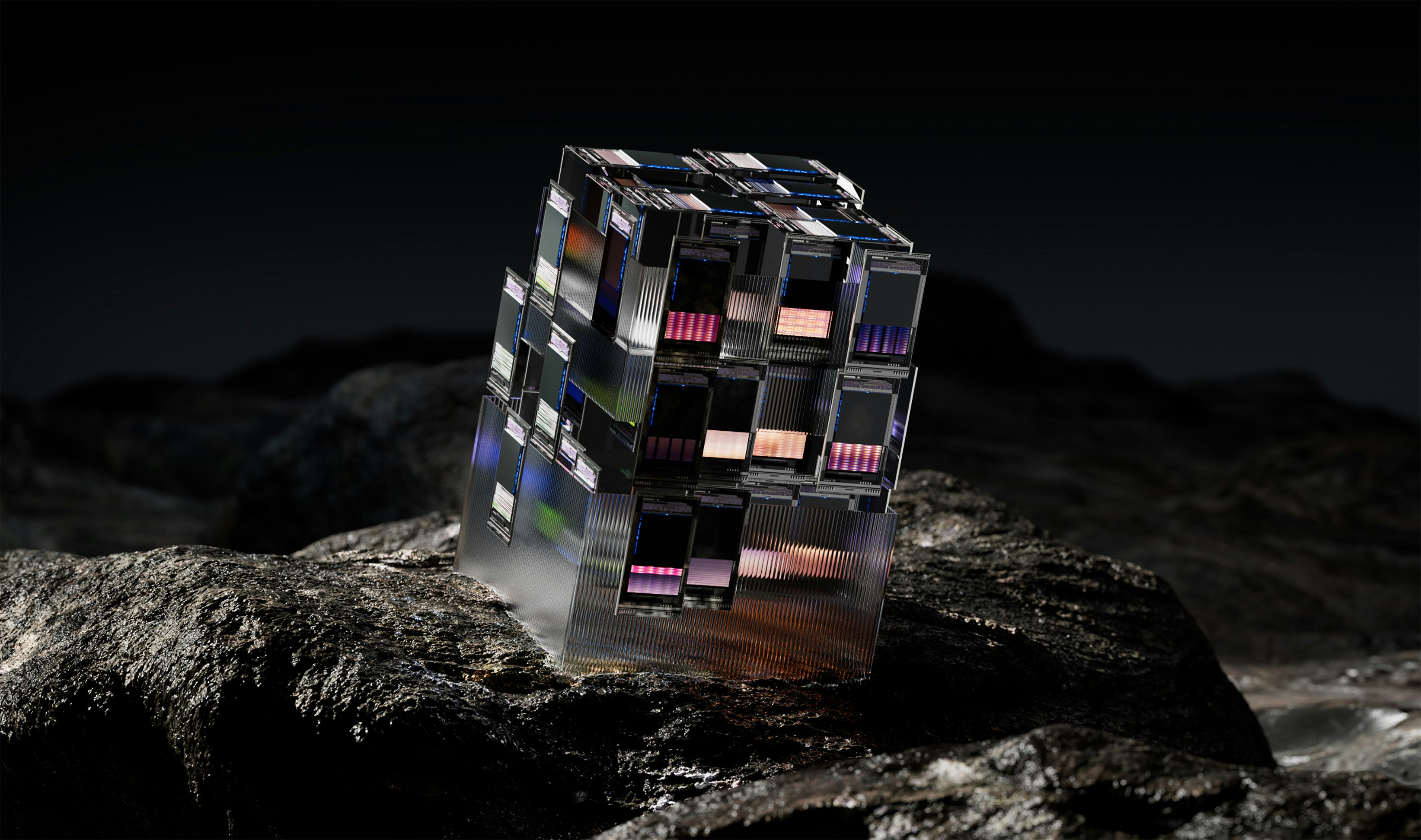
We’re so glad you’re here. You can expect all the best TNS content to arrive Monday through Friday to keep you on top of the news and at the top of your game. Check your inbox for a confirmation email where you can adjust your preferences and even join additional groups. Check out the latest featured and trending stories while you wait for your first TNS newsletter. Quantum computing pioneer D-Wave today announced an industry breakthrough in its approach to building and controlling its upcoming gate model quantum computer. One issue that the quantum computing industry is focused on right now — besides the perpetual question of how to best perform the necessary error corrections to run commercially viable algorithms on these machines — is how to connect the quantum computing unit to the classical machines that control it. This has typically involved running a handful of wires from each qubit to the machine that controls it to perform error corrections, among other things. Since qubits are fickle, it takes multiple physical qubits to create what is called a logical qubit. The idea here, essentially, is that since the individual physical qubits could randomly decohere (think of it as a bit flip in classical computing), having quite a few of them work in tandem makes it easier to know which qubit is showing the wrong values. For quantum computers to become useful, it’ll take about a hundred logical qubits, which could mean thousands or hundreds of thousands of physical qubits. That’s a lot of wires to pass from the cryogenic chamber that houses the quantum computing processor to guard it against outside noise to the outside machine — and each wire adds additional noise and heat to that chamber that has to be cooled to just a few millikelvin. “If you think about how the semiconducting industry evolved, you’ve got chips in your phone and your laptop with billions of transistors. There’s absolutely not billions of control lines that go down to the chip,” Trevor Lanting, D-Wave chief development officer, told me. “It’s fundamental to the growth and the growing adoption of quantum computing technology to make sure that you have that control nailed down. ” D-Wave has a bit of an advantage here because it’s able to reuse a standard semiconductor technology (bump bonding) that it also used for its first set of quantum computers. The company is one of the oldest quantum computing firms, after all, but its original focus was on a very different kind of quantum computer from what most newer companies are focusing on. Those original D-Wave machines, which the company continues to refine, focus on quantum annealing and are great for solving optimization problems. But that also means they’re more limited in their use cases compared to gate model machines that are a bit more akin to classical computers. Those annealing quantum computers do have the advantage that error correction isn’t as much of a problem, and D-Wave already has a few commercial customers like NTT Docomo that use its annealing system in real-world applications. Now, with its efforts to build a gate model quantum computer, D-Wave can build on some of that earlier experience, even as it’s using a different kind of qubit (a superconducting fluxonium qubit) from most of the rest of the industry. Bump bonding is a technique the semiconductor industry pioneered to create its increasingly complex chips. By using tiny dots of a conducting metal, semiconductor manufacturers can stack their intricate components on top of each other — and connect them to the outside world without the need for wires. D-Wave worked with Minnesota-based SkyWater Technology as its foundry partner to create a multichip package that combines its on-chip control technology and the quantum computing processor, reducing the number of cables to a small fraction of what was previously needed. “Our annealing systems are built in a multilayer fab stack, and have up to, you know, on order a million active Josephson junction components on the chip,” Lanting explained. “What we’ve done with the gate model control is use this multilayer technology, which allows us to build this cryogenic digital control, and then we’ve integrated it with the high-coherence qubit chip, which is on a separate chip.” Lanting stressed that for this application, the metal used for the bumps has to be superconducting so that no additional heat is created. “It’s critical that these bump bonds are superconducting,” he said. “We want to make sure that when we make an interconnect between these two chips via this bump on technology, we’re not breaking the superconducting loop — and that then allows us to basically harness all of the controls that we’ve developed for our annealing technology for the game model processors.” The company was able to use most of the original design it had developed for its annealing quantum computer, but it did have to do quite a bit of work to ensure that the superconducting interconnect worked as expected. We’ll likely see different players in the quantum computing industry take different approaches to how they control their individual physical qubits. D-Wave obviously argues that its approach will be far more scalable than current approaches and that it also allows the company to modularize its system and add additional quantum processing units as needed. The industry has seen rapid advances in error correction lately, so it makes sense for the focus to now shift to putting those into practice in scalable systems. Community created roadmaps, articles, resources and journeys for developers to help you choose your path and grow in your career. Some TNS posts require third-party cookies to view embedded content (video, audio, technical & interactive content). By clicking “Accept” you agree to our use of these cookies in accordance with our Cookie Notice. These cookies are necessary for the website to function and cannot be switched off in our systems. They are usually only set in response to actions made by you which amount to a request for services, such as setting your privacy preferences, logging in or filling in forms. You can set your browser to block or alert you about these cookies, but some parts of the site will not then work. These cookies do not store any personally identifiable information. These cookies enable the website to provide enhanced functionality and personalisation. They may be set by us or by third party providers whose services we have added to our pages. If you do not allow these cookies then some or all of these services may not function properly. These cookies allow us to count visits and traffic sources so we can measure and improve the performance of our site. They help us to know which pages are the most and least popular and see how visitors move around the site. All information these cookies collect is aggregated and therefore anonymous. If you do not allow these cookies we will not know when you have visited our site, and will not be able to monitor its performance. These cookies may be set through our site by our advertising partners. They may be used by those companies to build a profile of your interests and show you relevant adverts on other sites. If you do not allow these cookies, you will experience less targeted advertising.
Tags
Source Information
Discussion
0 professional contributions
Sign in to join this professional discussion.
Be the first to add a constructive contribution.