
Curiosity drives innovation
Understand this faster with AI


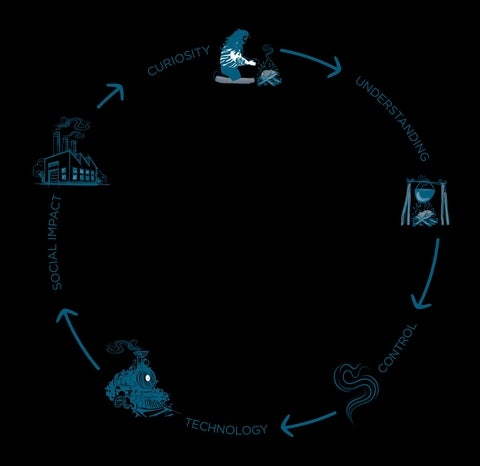
RAYMOND LAFLAMME: A PATH OF CURIOSITYQuantum technologies, like all innovations, were born out of the innate sense of curiosity that drives us. We are curious about the things around us. We learn about something – how it behaves, how it works. Then we capture that behaviour, harness it to do something for society and start the cycle all over again.From a young age, RAYMOND LAFLAMME’s innate sense of curiosity led him down the path of discovery. He asked his grandfather how airplanes flew and learned how to repair lawnmowers from his mother.His curious nature eventually steered him towards a career in research. Laflamme earned his PhD under the supervision of STEPHEN HAWKING, focusing on general relativity and quantum cosmology.After completing a Killam postdoctoral fellowship at the University of British Columbia, Laflamme began exploring quantum computing as an Oppenheimer Fellow at Los Alamos National Laboratory in New Mexico. There, he developed quantum-error correction theory and performed the first experimental demonstration of quantum-error correction.His curiosity piqued when MIKE LAZARIDIS and HOWARD BURTON travelled to meet with him in DAVID CORY’s lab at the Massachusetts Institute of Technology.Lazaridis had a vision – to start an institute for quantum computing at the University of Waterloo, and he wanted Laflamme to lead it. Laflamme said to him: “If you’re really interested in quantum information, you should not focus only on the theoretical side – there should be a strong experimental piece too. And it should be multidisciplinary, bringing mathematicians, computer scientists, chemists and engineers together.”As Laflamme put it, “I took a leap of faith into what has become the most exciting work of my life.” He moved to Waterloo and the Institute for Quantum Computing (IQC) was born. In 15 years serving as Executive Director, Laflamme’s leadership established IQC as a world-class research hub, positioning Canada at the forefront of the quantum revolution. Now, curiosity pulls Laflamme back into the world of research to start the cycle all over again.Quebec-born quantum physicist RAYMOND LAFLAMME once gave STEPHEN HAWKING a boomerang. The gift represented Laflamme’s PhD research with Hawking, during which he proved that time in a contracting universe moves only forward, not in a reverse direction.Quebec-born quantum physicist RAYMOND LAFLAMME once gave STEPHEN HAWKING a boomerang. The gift represented Laflamme’s PhD research with Hawking, during which he proved that time in a contracting universe moves only forward, not in a reverse direction.YES, THE BOOMERANG WAS AN INSIDE JOKE, BUT IT WAS MORE THAN THAT. IT WAS A WAY OF SAYING THAT, ALTHOUGH TIME IS INDEED AN ARROW, IT HAS A WAY OF BRINGING OUR LIVES – AND WHAT IS MOST IMPORTANT TO US – FULL CIRCLE.RAYMOND LAFLAMME
Tags
Source Information
Discussion
0 professional contributions
Sign in to join this professional discussion.
Be the first to add a constructive contribution.