
Why China’s economic reset is a credibility test for Hong Kong
Understand this faster with AI


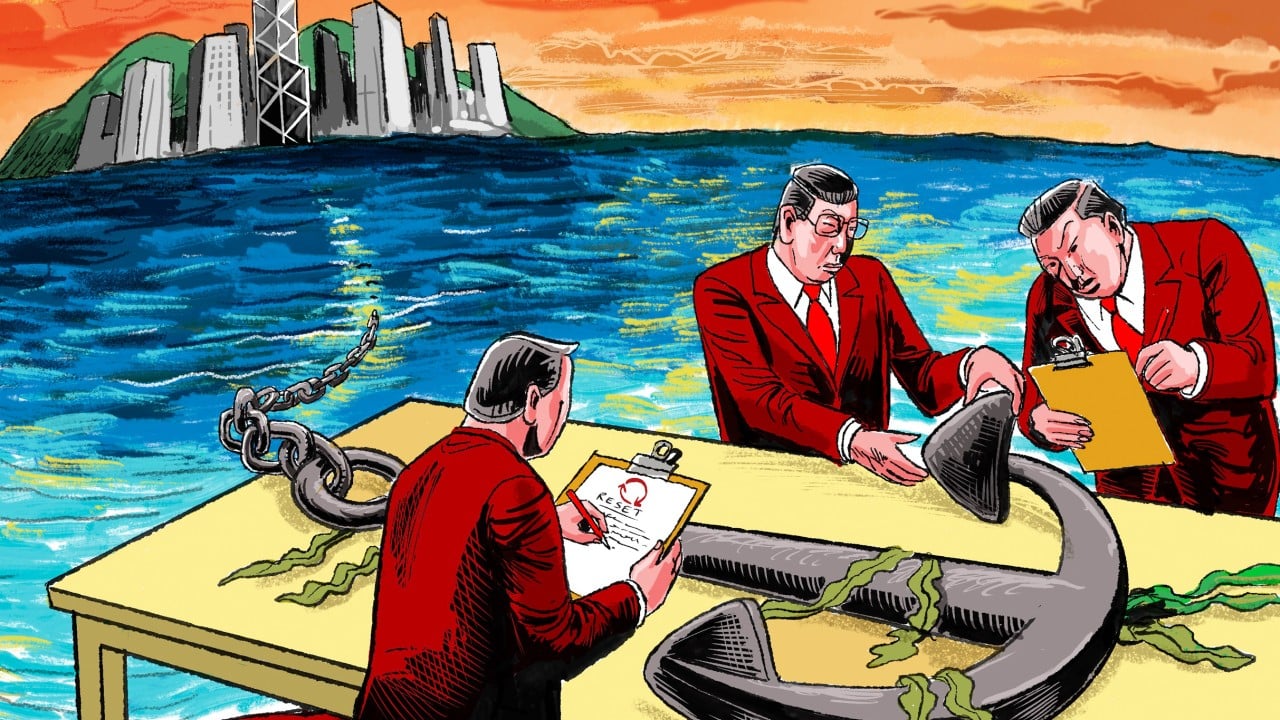
AdvertisementHong Kong economyOpinionHong Kong OpinionKun TianOpinion | Why China’s economic reset is a credibility test for Hong KongAs China rewrites the growth playbook, Hong Kong must show it can anchor the offshore financing and price discovery this reset requires3-MIN READ3-MIN ListenKun TianPublished: 9:30am, 10 Mar 2026China’s annual parliamentary “two sessions” have been framed as a show of resilience in a turbulent world. That framing is not wrong but it is incomplete. Beijing’s deliberately lower 2026 economic growth target is less an admission of weakness than a signal that the growth playbook is being rewritten.
For Hong Kong, this is not background noise. It is a test of whether policy alignment can be converted into institutional credibility.When Premier Li Qiang delivered the government work report last Thursday, the architecture behind the target mattered more than the numbers themselves. China is shifting from growth defined by pace to growth defined by durability, with less reliance on property and greater emphasis on demand quality.Hong Kong’s February budget mirrors that logic almost precisely: restore the operating balance, borrow for long-horizon assets and preserve financial-centre function. The two frameworks are now pointing in the same direction.
Whether Hong Kong can anchor the offshore financing and pricing that this reset requires is the open question.AdvertisementThat shift is visible in Beijing’s fiscal framework. The deficit-to-gross domestic product ratio is set at around 4 per cent, with a deficit of 5.89 trillion yuan (US$853.69 billion) and the general public budget expenditure projected at 30 trillion yuan. This is expansionary policy but not indiscriminate stimulus. It is targeted support where policy reaches into demand and productivity are strongest.The demand package makes this explicit. The work report allocates 250 billion yuan in ultra-long special treasury bonds to consumer goods trade-ins and creates a 100 billion yuan fiscal-financial coordination fund to support domestic demand. The direction is clear: resources are shifting from supply-side capacity building towards boosting household spending power and confidence. 02:16Chinese premier sets 2026 GDP growth target at 4.5-5%Chinese premier sets 2026 GDP growth target at 4.5-5%On February 25, Hong Kong Financial Secretary Paul Chan Mo-po said the city’s operating account would return to surplus ahead of schedule, supported by higher revenues from stamp duty and profits tax that are nearly HK$50 billion (US$6.4 billion) above original estimates.AdvertisementSelect VoiceSelect Speed0.8x0.9x1.0x1.1x1.2x1.5x1.75x00:0000:001.00x
Tags
Source Information
Discussion
0 professional contributions
Sign in to join this professional discussion.
Be the first to add a constructive contribution.