
What Your Tax Refund Could Earn Instead of Sitting With the IRS
Understand this faster with AI


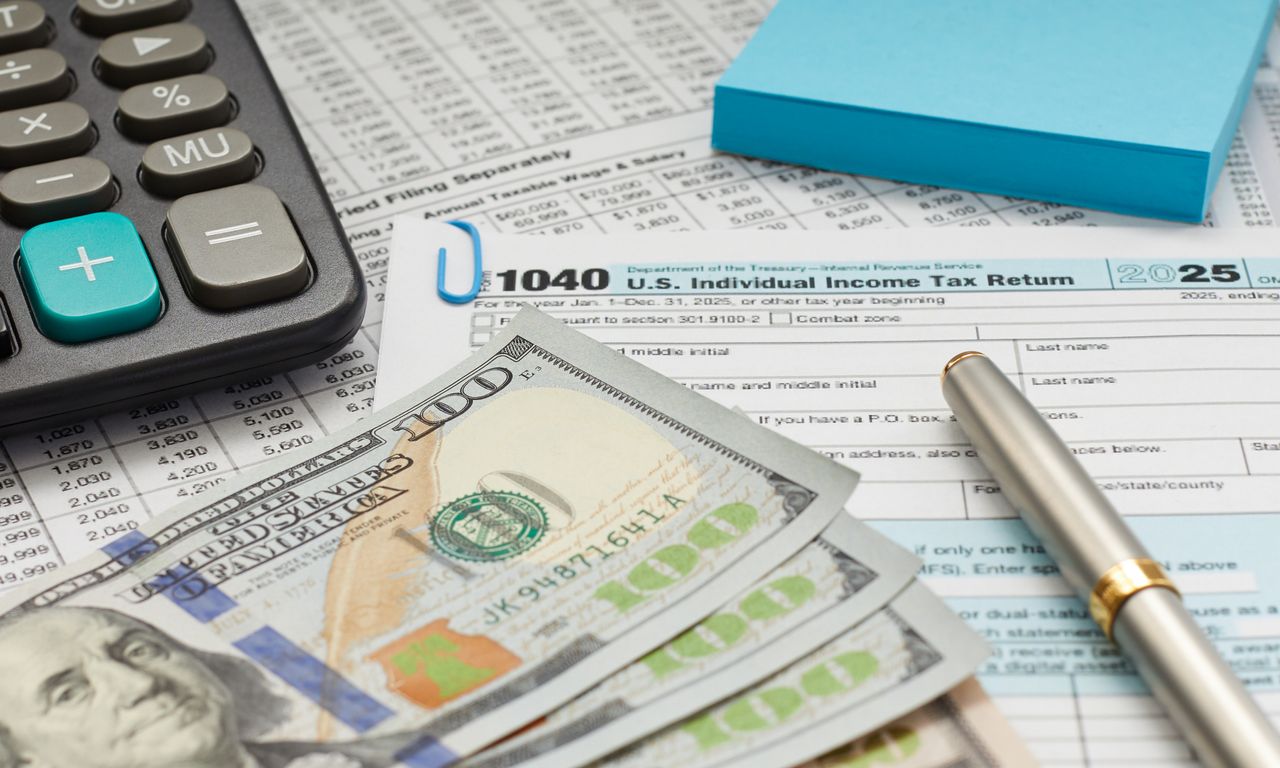
Many taxpayers celebrate a large refund. But that same money might have quietly earned interest or investment returns all year long. When you purchase through links on our site, we may earn an affiliate commission. Here’s how it works. Profit and prosper with the best of Kiplinger's advice on investing, taxes, retirement, personal finance and much more. Delivered daily. Enter your email in the box and click Sign Me Up.You are now subscribedYour newsletter sign-up was successfulWant to add more newsletters?Delivered dailyKiplinger TodayProfit and prosper with the best of Kiplinger's advice on investing, taxes, retirement, personal finance and much more delivered daily. Smart money moves start here.Sent five days a weekKiplinger A Step AheadGet practical help to make better financial decisions in your everyday life, from spending to savings on top deals.Delivered dailyKiplinger Closing BellGet today's biggest financial and investing headlines delivered to your inbox every day the U.S. stock market is open.Sent twice a weekKiplinger Adviser IntelFinancial pros across the country share best practices and fresh tactics to preserve and grow your wealth.Delivered weeklyKiplinger Tax TipsTrim your federal and state tax bills with practical tax-planning and tax-cutting strategies.Sent twice a weekKiplinger Retirement TipsYour twice-a-week guide to planning and enjoying a financially secure and richly rewarding retirementSent bimonthly.Kiplinger Adviser AngleInsights for advisers, wealth managers and other financial professionals.Sent twice a weekKiplinger Investing WeeklyYour twice-a-week roundup of promising stocks, funds, companies and industries you should consider, ones you should avoid, and why.Sent weekly for six weeksKiplinger Invest for RetirementYour step-by-step six-part series on how to invest for retirement, from devising a successful strategy to exactly which investments to choose. Tax season often brings a familiar ritual: filing your return and waiting to see how big your refund will be. For many households, that refund can feel like a financial bonus arriving just as spring expenses begin to pile up. According to the Internal Revenue Service (IRS), the average tax refund is currently $3,742.But a large refund also means something else. You may have given the government an interest-free loan during the year.Instead of sitting with the IRS, that same money could have been earning interest in a savings account, growing in an investment portfolio or helping you reduce debt. Even modest returns can add up when money stays in your own account throughout the year. While refunds can still serve a purpose for some taxpayers, it is worth understanding the opportunity cost.Become a smarter, better informed investor. Subscribe from just $107.88 $24.99, plus get up to 4 Special IssuesProfit and prosper with the best of expert advice on investing, taxes, retirement, personal finance and more - straight to your e-mail.Profit and prosper with the best of expert advice - straight to your e-mail.Each year, the IRS issues hundreds of billions of dollars in tax refunds to U.S. taxpayers. Refunds typically happen for several reasons:Changes like marriage, divorce or a new child may not be reflected in withholding adjustments when you file your taxes, which can impact your refund.Many people also intentionally over-withhold because they want to avoid owing taxes when they file. Others treat their refund as a type of forced savings plan.While that approach can help some households build a lump sum, it also means the money wasn't working for them during the year. So how much could that money actually earn if it stayed in your account during the year? The answer depends on where you keep it. High-yield savings accounts have offered higher interest rates in recent years than traditional bank accounts.If the average $3,742 refund had instead been kept in a high-yield savings account earning 3% to 4% annually, it could have generated:That may not sound like a huge amount, but it represents money earned simply by keeping the funds in your own account rather than sending them to the IRS through excess withholding.High-yield savings accounts also offer flexibility. You can typically access the money anytime without penalties.While rates are still elevated, use the tool below to explore and compare some of today's top savings account options:Certificates of deposit (CDs) can sometimes offer higher yields than savings accounts, depending on the term. In exchange for locking your money away for a set period, banks and credit unions may offer a slightly higher interest rate than a typical savings account.Below is an example of what a $3,742 tax refund could earn in CDs with different terms using rates from several top CD accounts Kiplinger has reviewed.CD TermExample InstitutionAPYEstimated Earnings on $3,7421 YearLimelight Bank4.00%~$1503 YearAmerica First Credit Union4.05%~$470 total interest5 YearSchoolsFirst Federal Credit Union4.00%~$810 total interestCDs typically require you to keep the money invested for the full term. Withdrawing funds early can trigger penalties, which often equal several months of interest. For savers who are comfortable locking up their money for a fixed period, however, CDs can offer predictable returns and protection from market volatility.The opportunity cost becomes more noticeable over longer periods. Historically, the S&P 500 has averaged roughly 10% annual returns over the long term, though results vary significantly year to year and returns are never guaranteed.If that same $3,742 had been invested instead of withheld, the potential growth could look something like this:This example illustrates how even relatively small amounts can grow significantly over time through compounding.Of course, stock market investing involves risk and short-term returns can fluctuate widely.Taxpayers who want to keep more money in their pockets during the year can take a few steps to better align withholding with their actual tax bill.Despite the opportunity cost, a refund isn't always a bad outcome. In some cases, refunds are unavoidable or even beneficial.For example, refundable tax credits may generate a refund regardless of withholding. Also, self-employed taxpayers sometimes overpay estimated taxes to avoid penalties and those with irregular income may prefer a buffer to ensure they don't underpay.For households that struggle to save consistently, a refund can also function as a once-a-year financial reset, providing money to build an emergency fund, pay down debt or cover large expenses.Still, understanding the potential earnings that refunds represent can help taxpayers make more intentional decisions about how much they send to the IRS throughout the year.Profit and prosper with the best of Kiplinger's advice on investing, taxes, retirement, personal finance and much more. Delivered daily. Enter your email in the box and click Sign Me Up.Choncé is a personal finance freelance writer who enjoys writing about eCommerce, savings, banking, credit cards, and insurance. Having a background in journalism, she decided to dive deep into the world of content writing in 2013 after noticing many publications transitioning to digital formats. She has more than 10 years of experience writing content and graduated from Northern Illinois University.
Source Information
Discussion
0 professional contributions
Sign in to join this professional discussion.
Be the first to add a constructive contribution.