
This Ukrainian counter-drone company is worried about missing its moment in the Iran war
Understand this faster with AI


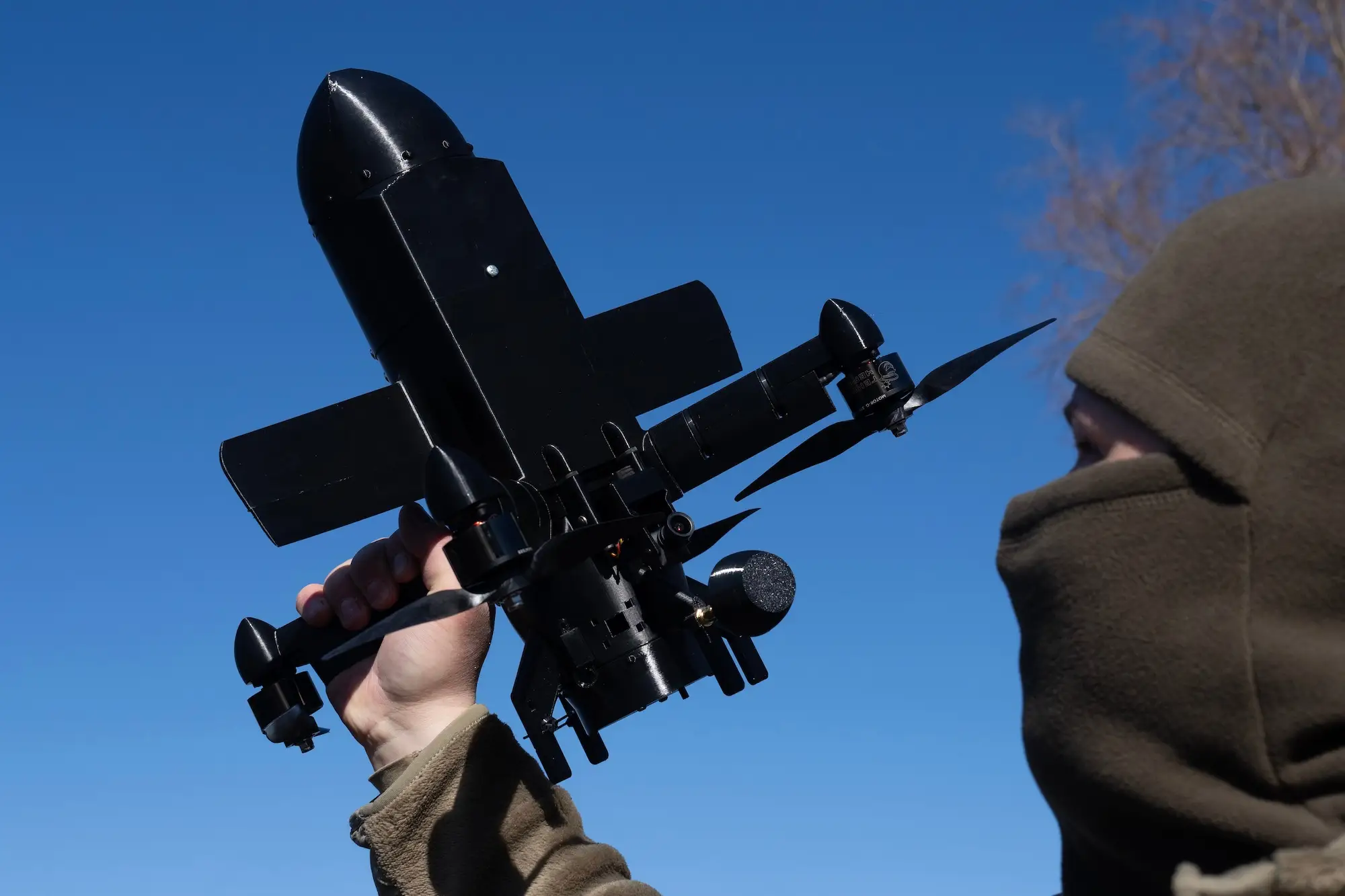
Ukrainian company General Cherry makes drones and interceptor drones. AP Photo/Efrem Lukatsky 2026-04-18T10:00:01.237Z Share Copy link Email Facebook WhatsApp X LinkedIn Bluesky Threads lighning bolt icon An icon in the shape of a lightning bolt.
Impact Link Save Saved Read in app This story is available exclusively to Business Insider subscribers. Become an Insider and start reading now. Have an account? Log in. Ukraine's counter-drone tech has surging interest amid Iran attacks, but exports are limited. A Ukrainian interceptor drone maker said it wants its tech proven beyond Ukraine. It worries that if it doesn't get involved soon, "someone will take our place." AI-generated summary Summaries are generated by an AI model trained on Business Insider's articles. AI may make mistakes or provide inaccurate/incomplete information. We're unable to load that answer right now. Please try again. Why are drone exports restricted? What are the risks of not exporting drones? What challenges does General Cherry face? Who are Ukraine's potential drone buyers? How do interceptor drones work? The Iran war could be a big opportunity for Ukraine's battle-proven counter-drone tech, but one company says it worries it will miss its window without export access. Loading audio narration... The US and its allies in the Middle East are now facing drone threats that Ukraine has fought for years, driving demand for low-cost interceptor drones. Many are built by Ukrainian firms, but exports of battlefield tech remain tightly controlled.Stanislav Hryshyn, the co-founder of Ukrainian company General Cherry, which makes drones and interceptor drones used by Ukraine's forces, said deploying his company's interceptors abroad would give it the chance to prove that its interceptors work in conflicts other than Russia's war against Ukraine. Hryshyn said the company has seen a surge in interest and inquiries since the Iran war began and Tehran started firing Shahed drones and missiles at US allies. Other firms report similar demand, especially in the Middle East and Europe. But Ukraine's export rules prevent many defense tech sales abroad. A Ukrainian interceptor drone taking flight. Nina Liashonok/Ukrinform/Future Publishing via Getty Images He said his desire to help isn't only about the business that could come with selling his gear for use in the war. It's also about gaining "this new level of expertise and experience" that Ukrainian companies have not had before. "For us to receive this new experience, expertise, new layer of using our product, that's critical," he said. "Money is very secondary to this."It's one thing to prove effective against Russia. It's another to prove it in a different war — and directly support US allies. But without fast access to those markets, he warned, Ukraine's industry could lose its edge. "This window of change is closing right now," he said. "Someone will take our place."A host of companies outside of Ukraine are also making interceptor drones. Hryshyn fears delays will let foreign firms scale faster, pushing partners toward non-Ukrainian suppliers with ready stock. Interceptors are in demandThe war with Iran is showing that interceptor drones are "now very critical, not just for Ukraine, but also for other countries as well," Hryshyn said. Iran and Russia's actions mean "the Pandora's box is open" to new and widespread drone threats.Ukraine has already been helping in the Middle East. Zelenskyy said last week Ukrainian personnel had shot down drones in multiple countries in the region, without specifying exactly where or what systems were used. He said more than 200 Ukrainian military experts are advising regional partners. Zelesnkyy also said that Ukraine could supply partners with more than 1,000 interceptor drones a day if backed by sufficient investment to scale production. A soldier from the Khanter (Hunter) group of Ukraine's 208th Khersonska Anti-Aircraft Missile Brigade holds an interceptor drone. Nina Liashonok / Ukrinform/Future Publishing via Getty Images But direct sales are another matter. Without them, companies risk losing their technological lead as rivals copy and scale similar systems. Hryshyn said he understands the restrictions — "we are at war," he said. But he argued exports could strengthen Ukraine's position.Much of Ukraine's defense industry says exports would actually boost domestic production. Without them, companies are limited to producing only what Ukraine can afford on a constrained defense budget. Foreign sales would bring in revenue to expand output — including for Ukraine's own military. One Ukrainian defense industry leader told Business Insider that interceptor exports could ultimately mean more interceptors for Ukraine's military. Ihor Fedirko, CEO of the Ukrainian Council of Defence Industry, said the sector can produce 2.5 times more interceptors than Ukraine can currently buy and far more with added funding. "What we can get from our allies in terms of export is like extra money into our industry," he said.He added that joint production with allied countries — already growing — could benefit both partners and Ukraine's war effort. Hryshyn said some agreements may emerge, even if not public. Fedirko said companies are preparing for potential policy changes allowing exports.Ukraine's counter-drone tech is drawing interest because it's battle-tested and fills a major gap in modern air defense. Many of Ukraine's partners, including the US, have highly capable air defense systems, but the tremendous expenditure of expensive interceptors is not sustainable against low-cost drones.An Iranian Shahed drone costs around $50,000, but each PAC-3 interceptor missile for the US-made Patriot air defense system costs around $3.7 million. A Ukrainian interceptor drone, which typically costs $6,000 or less, is a more appealing and effective option. Ukraine's results have reinforced that case. In March, officials said they were stopping about 90% of incoming Russian drones and missiles using a mix of interceptors, air defenses, and mobile units.
Tags
Source Information
Discussion
0 professional contributions
Sign in to join this professional discussion.
Be the first to add a constructive contribution.