
M&A is still forging ahead in spite of the Iran conflict, Goldman's CEO says — for now
Understand this faster with AI


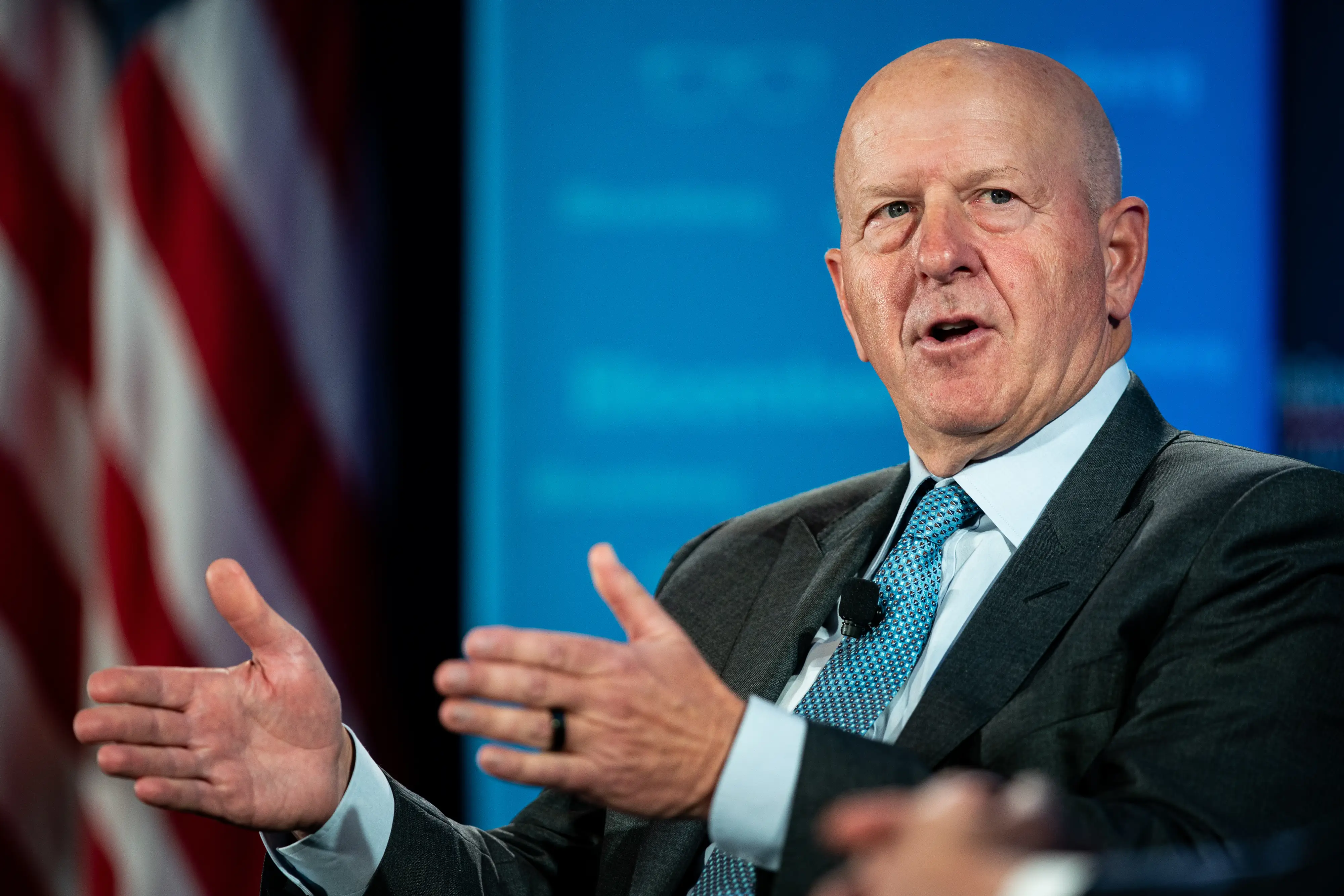
Goldman Sachs CEO David Solomon. Bloomberg/Getty Images 2026-04-13T16:02:51.344Z Share Copy link Email Facebook WhatsApp X LinkedIn Bluesky Threads lighning bolt icon An icon in the shape of a lightning bolt.
Impact Link Save Saved Read in app This story is available exclusively to Business Insider subscribers. Become an Insider and start reading now. Have an account? Log in. Goldman Sachs' CEO says Iran conflict hasn't dented M&A, even as Hormuz tensions rise. David Solomon pointed to a robust backlog at the bank and said clients are pursuing deals. He conceded that IPO activity slowed in March, though he said the pipeline remains full. AI-generated summary Summaries are generated by an AI model trained on Business Insider's articles. AI may make mistakes or provide inaccurate/incomplete information. We're unable to load that answer right now. Please try again. What drives M&A activity amid tensions? What are the risks of the Hormuz conflict? How does geopolitical risk affect markets? How does AI impact investment strategies? Why did IPO activity slow in March? As tensions over the Strait of Hormuz raise the risk of oil market disruption, Goldman Sachs CEO David Solomon said Monday that the conflict in the Middle East has not yet slowed the dealmaking machine. Loading audio narration... "The environment for investment banking activity continues to be incredibly robust, particularly M&A activity," Solomon said during the bank's first-quarter earnings call, where Goldman reported about $17 billion in revenue. Nearly $13 billion came from its trading and investment banking division, including a 89% year-over-year surge in advisory revenue.But Solomon added that he didn't "have a crystal ball" to predict how the Iran conflict would play out, responding to a question from UBS analyst Erika Najarian about the pipeline. "I don't see that slowing based on what we see at the moment," he said of M&A activity. Elevated volatility during the quarter drove trading activity, with equities revenue rising to about $5.3 billion, up 27% year over year, and equities financing up 59%.Even as geopolitical tensions rise, Solomon said a significant share of corporate leaders' attention remains oriented toward a longer-term news cycle: the transformative impacts of artificial intelligence. "They're watching what's going on geopolitically, but that's also balanced by the fact that they see an opportunity during this period of time to drive scale and scale creation in businesses with significant technological change," he said. "They are focused on that, and that candidly trumps some of the geopolitical risk."The firm's deal engine is still holding up. Solomon said the firm's backlog remains "extraordinarily robust," and near a four-year high. He added that "the backlog really did not move very significantly at all," as new deals keep replacing the ones getting done. Now, executives are monitoring the situation to see how rising commodity prices could affect consumer demand, noting that "the level of uncertainty is higher, so we have to watch that carefully."Goldman is maintaining its dominant position in dealmaking this year. The bank ranks first globally in announced M&A, advising on roughly $450 billion in transactions across 115 deals, giving it about a 30% share of total deal value, according to Dealogic data through early April. During the call, Solomon pointed to several large transactions as examples of the recent firm's activity, including the roughly $43 billion merger of Unilever's food business with McCormick and Coterra Energy's $26 billion sale to Devon Energy. He cited the deals as evidence that companies are continuing to pursue large, strategic combinations amid an opaque geopolitical landscape.At the same time, Solomon acknowledged signs of caution in public markets, saying IPO activity "slowed a little bit, particularly in March." Still, he emphasized that the overall climate for this year's biggest listings remained steady in the face of political uncertainty. "My expectation is a number of them are going to come, because it's important for those businesses and for the capital formation around those businesses," he said, adding that "equity markets have been extremely resilient."
Tags
Source Information
Discussion
0 professional contributions
Sign in to join this professional discussion.
Be the first to add a constructive contribution.