
Samsung delivers a hard-nosed shocker to Micron
Understand this faster with AI


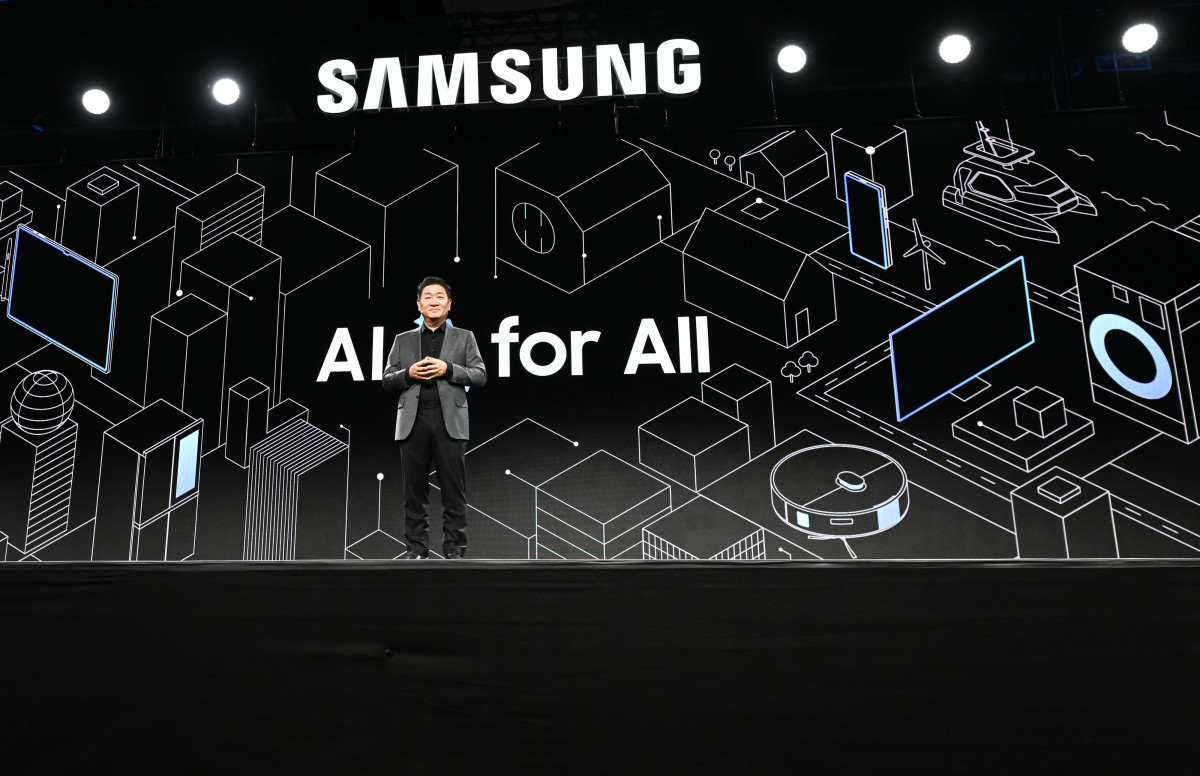
The artificial intelligence memory war is exploding. It’s escalating with no end in sight and not everyone is celebrating and dividing the spoils equally. Shares of Samsung (SSNLF) are on cloud nine after investors learned of reports that the company is looking to charge 20% to 30% more for its next-generation HBM4 chips.Great news overall? Well, not quite for everyone across the Pacific. Micron (MU) stock slipped in early trading despite being in the same market. What gives?Ultimately, all of this leads to a big issue, one that investors cannot afford to ignore:That’s what Micron’s chief business officer, Sumit Sadana, had to say regarding the entire AI-driven shift reshaping the industry.If that headline becomes true, and the financial data suggests so, pricing power in high-bandwidth memory is entering a new era. Samsung quietly reboots its AI memory strategy.Photo by NurPhoto on Getty Images Samsung targets 30% higher HBM4 prices as AI demand explodesSamsung, if local media reports are accurate, is looking to upend the pricing market for HBM4 chips. The hike could be close to as much as 30% above its prior HBM3E generation.That’s bold and perhaps market-shaking — at least to me. Related: Apple’s Siri shocker is flashing a warning AAPL bulls can’t ignoreHBM chips constitute critical hardware for advanced AI accelerators. They are mainly produced by Nvidia (NVDA) and other chipmakers, and they are responsible for powering hyperscale data centers.Now for many people, AI is all hype. But that's not the case for me at all. Generative AI models are getting bigger very quickly. As inference workloads grow, the need for faster memory bandwidth is outpacing the supply.Why is Samsung so sure of itself? Well, the matter is essentially financial:Over the past year, DRAM contract prices are up over 170%.Some DDR5 memory modules have reportedly gone up by about 500% since late 2024.As we get closer to 2027, AI server deployments are moving faster.Samsung is already on the ropes thanks to HBM3 performance benchmarks, giving competitors like SK Hynix and Micron a chance to get into AI-focused memory. But Samsung wants to get back the power to set prices, which is why investors in Seoul acted right away.Micron’s financial surge spells record margins, $200B expansionIt's funny that Micron's finances aren't doing too badly right now, meaning that Micron might actually benefit from increased HBM prices.Micron's gross margin is up 18.5% in the first quarter of 2024 to 56% in the most recent quarter. And we are going to get even better from here; the guidance says that the gross margin is set to get to 68% gross margin in the current period. These levels are getting close to those of the best AI chip makers.Related: Veteran analyst drops a shocker on CiscoRevenue growth has accelerated sharply as well, thanks to data center demand.Micron also locked in forward visibility:There are reports that HBM4 capacity is sold out for 2026.Long-term supply agreements with big AI customers are increasing capacity.More and more buyers are looking for multiyear contracts to make sure they get their share.That urgency explains the company’s aggressive expansion.Micron is spending up to $200 billion over time to build more factories in the U.S., including huge new ones in Idaho and New York. The Idaho campus has two fabs, each 600,000 square feet, and ground will be broken in 2027.The scale is staggering:70,000 tons of steel per fab.The construction process requires hundreds of thousands of cubic yards of concrete.Years-long construction timelines.The way I look at it, this is not incremental growth; Micron is looking for structural capacity expansion.So why did Micron stock slip?The divergence has more to do with positioning than fundamentals.South Korea’s KOSPI index is up around 35% this year, thanks to memory chip enthusiasm, in sharp contrast to U.S. equity markets, which are far more restrained at the moment.Related: Mark Cuban’s bombshell AI warning is a reality check for big techMicron shares quadrupled over the past year, making profit-taking a plausible factor.In contrast, investors perceive Samsung as lagging behind in HBM, potentially causing a market overreaction. The pricing report may signal that its competitive gap is narrowing.But for me, the intriguing question is whether the market is underestimating how tight supply remains.Brad Gastwirth, head of global research at Circular Technology, recently said:If Gastwirth is accurate, then memory pricing will remain elevated for some time, longer than typical cycle watchers are looking out for.A structural shift or another memory supercycle?Having closely observed the semiconductor sector and witnessed numerous cycles of booms and busts, I believe that this moment is unique.For a long time, memory was perceived as a commodity that went through cycles without mercy. Too much supply hurt margins. Producers slashed capex. Repeat.Related: Nvidia CEO shocks AI community over the one thing he didn’t doAI has the potential to rewrite this script.Hyperscalers are investing tens of billions of dollars annually into AI infrastructure. Data center memory per server is climbing. Not just training, but also inference workloads are keeping demand high.If high-bandwidth memory continues to be a problem, pricing power may last longer than it has in the past. But there is a risk.Massive capital expenditures always carry timing danger. If AI spending slows or capacity eventually overshoots demand, margins could compress sharply.For now, however, Samsung’s pricing ambitions send a clear signal: The AI memory race is not cooling down.And even if Micron investors hesitated in the short term, the underlying economics of high-bandwidth memory are almost always strong.Samsung lays down the gauntletWe should contextualize Samsung's attempt to raise HBM4 prices by up to 30%. It isn’t just a competitive maneuver; the test is how tight the AI memory market truly is.If customers accept, that might strengthen the impression that enhanced memory has gone from being a commodity to a strategic need.If that's the case, the recent drop in Micron's stock price may be more noise than a warning. But if Samsung turns on the heart, Micron will be on notice.Related: Trump adviser drops bombshell on Meta, Microsoft
Source Information
Discussion
0 professional contributions
Sign in to join this professional discussion.
Be the first to add a constructive contribution.