
More bank branch closures imminent as industry consolidates
Understand this faster with AI


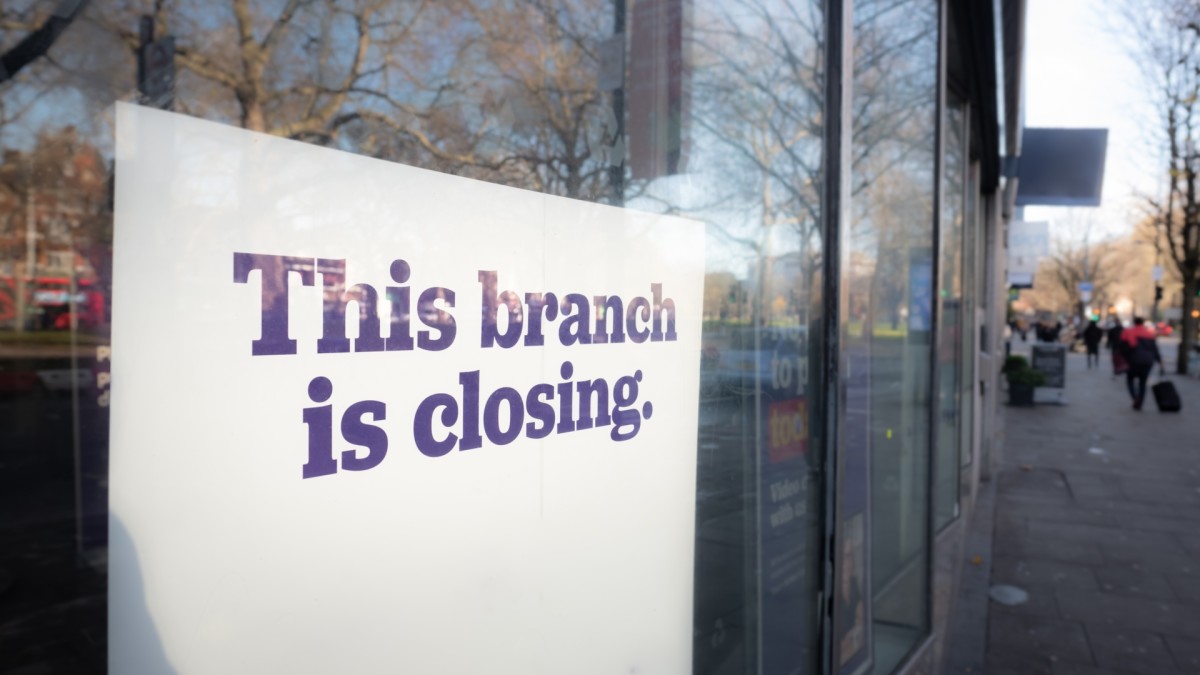
If you prefer to bank in person, your days of speaking to a banker face-to-face might be numbered.American banks are on a merger spree, and that could spell bad news for customers who prefer to talk to a person when they deposit a check.That’s because when banks consolidate, bank branches are often shut down, especially in areas with low foot traffic. Bank M&A deals picked up in 2025 and are set to continue into 2026, according to S&PGlobal.And it already looks like branch closures are becoming more common this year.Bank branch closures on the rise in these statesA bank merger could impact you differently, based on whether you live in a city or rural community.When banks are bought or sold, branch closures happen most often in rural areas. This is because banks often might serve the same community, David Danielson, managing director at accounting and advisory firm Wolf & Company, told TheStreet.“When overlapping branches close to reduce costs, customers who rely on in‑person banking feel that change immediately,” he said.There have been 41 bank closure announcements in the first three months of the year, according to data from the Office of the Comptroller of the Currency. That’s up slightly from the 39 revealed in the first three months of 2025. Bank branch closures are becoming more common.Shutterstock States with the most bank branch closures so far in 2026Ohio has the most branch closures at six, including in Cincinnati, Cleveland, and Columbus.Texas comes in second, with four branch closures.South Dakota, Delaware, Illinois, and Florida all have three branch closures planned.Louisiana, Utah, Wisconsin, and New York each have two branch closures announced.These numbers echo a broader trend that has been happening for several years. With banks facing competition from non-banks and online-only financial institutions, they’ve been cutting costs.And the biggest cost for banks? Branches.That’s resulted in 15% of all branch locations in the U.S. closing between 2015 and 2024, according to data from Statista.Bank mergers' impact on customersBank mergers aren’t a bad thing for customers, Jonathan Lazarow, co-founding partner at Ambrose Lazarow law firm, told TheStreet. In many cases, the combined bank is often able to provide more resources for clients, especially if a small bank merges with a larger, regional bank. “However, if consolidation creates only one or two banks in the entire market, there may be a problem,” he added.More bank newsPrivate capital is coming for your bankBank mergers are on the rise: Your bank could be next$41 billion 156-year-old bank merger reveals shift in consumer behaviorWhile bank mergers can result in branch closures, Danielson says customers shouldn’t be too worried about access or safety, as mergers are protected by federal and state regulations.The bigger challenge is that with so many financial products available, it can be difficult to discern which ones have a regulated bank behind them and which ones don’t.“As fewer people walk into a branch and talk to someone they trust, financial decision‑making can become more confusing — not because there are fewer choices, but because there are too many,” he said.Related: Morgan Stanley issues stark warning on Fed rate outlook
Source Information
Discussion
0 professional contributions
Sign in to join this professional discussion.
Be the first to add a constructive contribution.