
Inflation rose in March to the highest rate in 2 years as the Iran war lifted energy prices
Understand this faster with AI


The Bureau of Labor Statistics published new consumer price index data, including data on energy and gas. Andrew Harnik/Getty Images 2026-04-10T12:35:02.485Z Share Copy link Email Facebook WhatsApp X LinkedIn Bluesky Threads lighning bolt icon An icon in the shape of a lightning bolt.
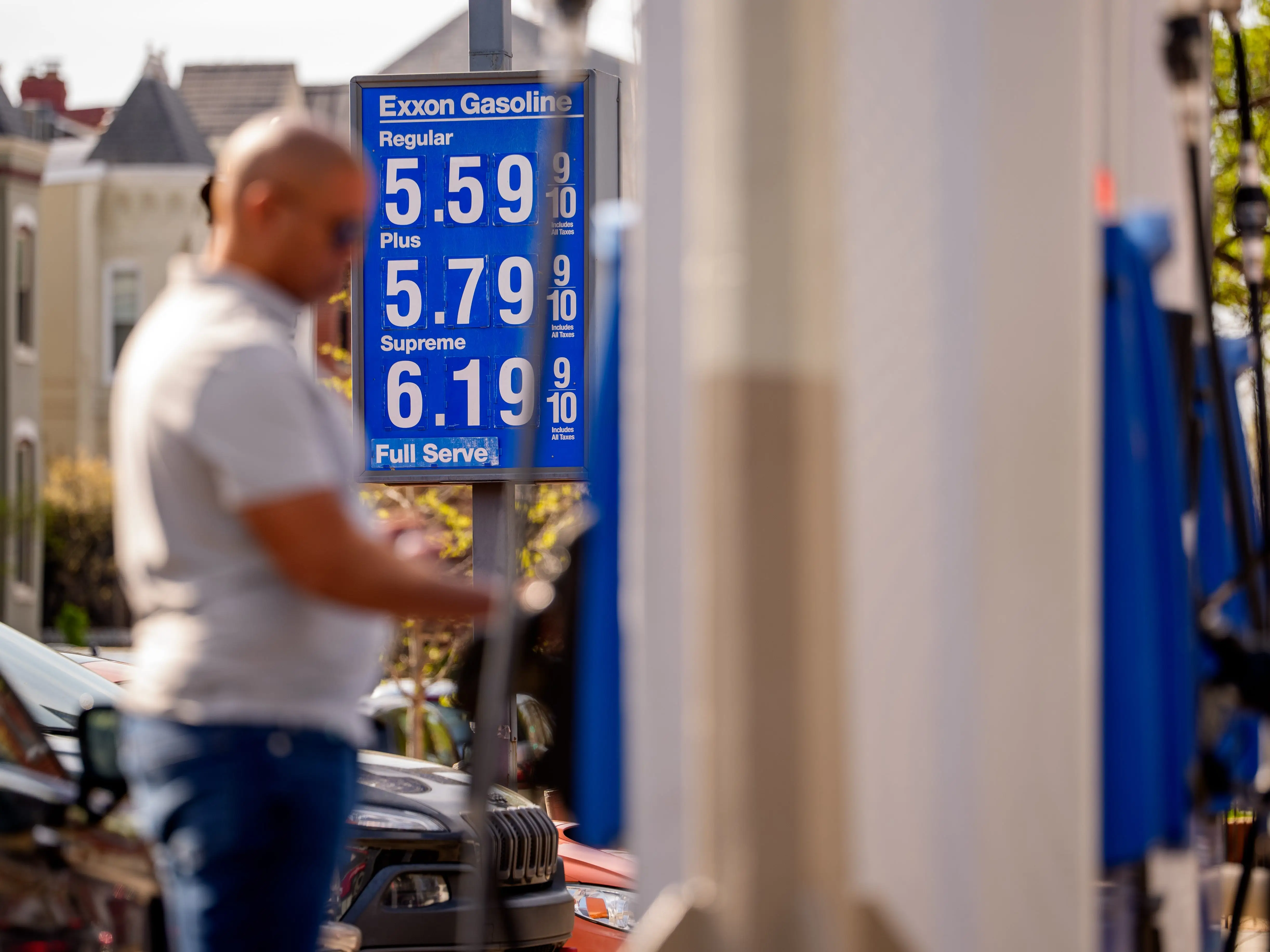
Impact Link Save Saved Read in app This story is available exclusively to Business Insider subscribers. Become an Insider and start reading now. Have an account? Log in. The new CPI report showed the inflation rate sped up in March from 2.4% to 3.3%. Economists expected inflation of 3.4% due to higher energy prices. Gas prices spiked 21.2% between February and March, a record increase. AI-generated summary Summaries are generated by an AI model trained on Business Insider's articles. AI may make mistakes or provide inaccurate/incomplete information. We're unable to load that answer right now. Please try again. What factors influence energy prices? What are the impacts of high gas prices? What causes fluctuations in inflation rates? How do ceasefires affect economies? How does inflation affect interest rates? The effects of the Iran war showed up in the latest US inflation reading. Inflation climbed to the highest rate since May 2024, and gas prices reached a record month-over-month increase. Loading audio narration... The consumer price index increased 3.3% in March from a year ago, up from the 2.4% increase in January and February, and just shy of the 3.4% forecast. Economists expected inflation to rise due to higher energy prices. "The market was braced for a hot print, so today's inline number is a slight relief," said Alexandra Wilson-Elizondo, global co-chief investment officer of multi-asset solutions at Goldman Sachs Asset Management. "However, it may be the best headline inflation number we see for a while as it may only partially capture the full force of the Iran conflict, which sent US crude and US gas up 70% at peak." CPI increased 0.9% over the month, just short of the forecast of 1% and surpassing the previous 0.3% rise. That, plus a 0.2% month-over-month increase in average hourly earnings, means real earnings fell by 0.6%.Energy prices rose 10.9% over the month, the largest increase since September 2005, after a 0.6% rise in February. Gas prices surged 21.2% in just a month, the largest on record. Compared to the previous year, energy prices increased 12.5% in March, the largest rise since November 2022, with gas prices rising 18.9% year-over-year after declining 5.6%.Stephen Juneau, senior economist in BofA Global Research, told Business Insider prior to the new report that it would probably be too early to "see material pass through to core." Core CPI, which excludes volatile food and energy prices, increased 2.6% from a year ago in March, in line with the forecast of 2.7% and the previous 2.5% increase. It rose 0.2% over the month, just shy of the 0.3% forecast but matching February's rise. In addition to usual spring demand, Americans have felt the effects of the war at the gas pump. AAA data showed the national average skyrocketed in March, ending the month at $4.018. It's a crucial milestone as it surpassed $4 for the first time in four years.The new report doesn't include the recent temporary ceasefire. "As risk diminishes, gas prices might come down slightly, mortgage rates might fall, and businesses may gain confidence to hire, but we are still far from business as usual," said Stephen Kates, a financial analyst at Bankrate. The Fed will meet to decide its next interest rate move on April 28 and 29. CME FedWatch showed based on interest-rate traders that it's likely the Fed will decide to hold rates steady again."The implications of developments in the Middle East for the US economy are uncertain," Federal Reserve Chair Jerome Powell said in the FOMC Press Conference in March. "We will remain attentive to risks to both sides of our dual mandate." The war's effects could go on for a while."Even if the prices of gasoline and diesel start to come down after the conflict resolves, the effect on the economy will be more long-lasting," Kates said. "Fuel prices will not fall as quickly as they rose, but they should decline relatively quickly in the months following the end of the conflict. The ripple effects from these events, however, will take longer to play out and will affect the prices of shipped products, manufactured goods, building materials, and consumer products for far longer." And the effects of tariffs aren't over, either."The normal annual price increases from businesses are still contributing to overall inflation, and tariffs are responsible for part of that as the tail end of their drawn-out impact continues to settle into the economy," Kates said. This is a developing story. Please check back for updates.
Tags
Source Information
Discussion
0 professional contributions
Sign in to join this professional discussion.
Be the first to add a constructive contribution.