
Hidden $1,600 fee has car buyers seeing red
Understand this faster with AI


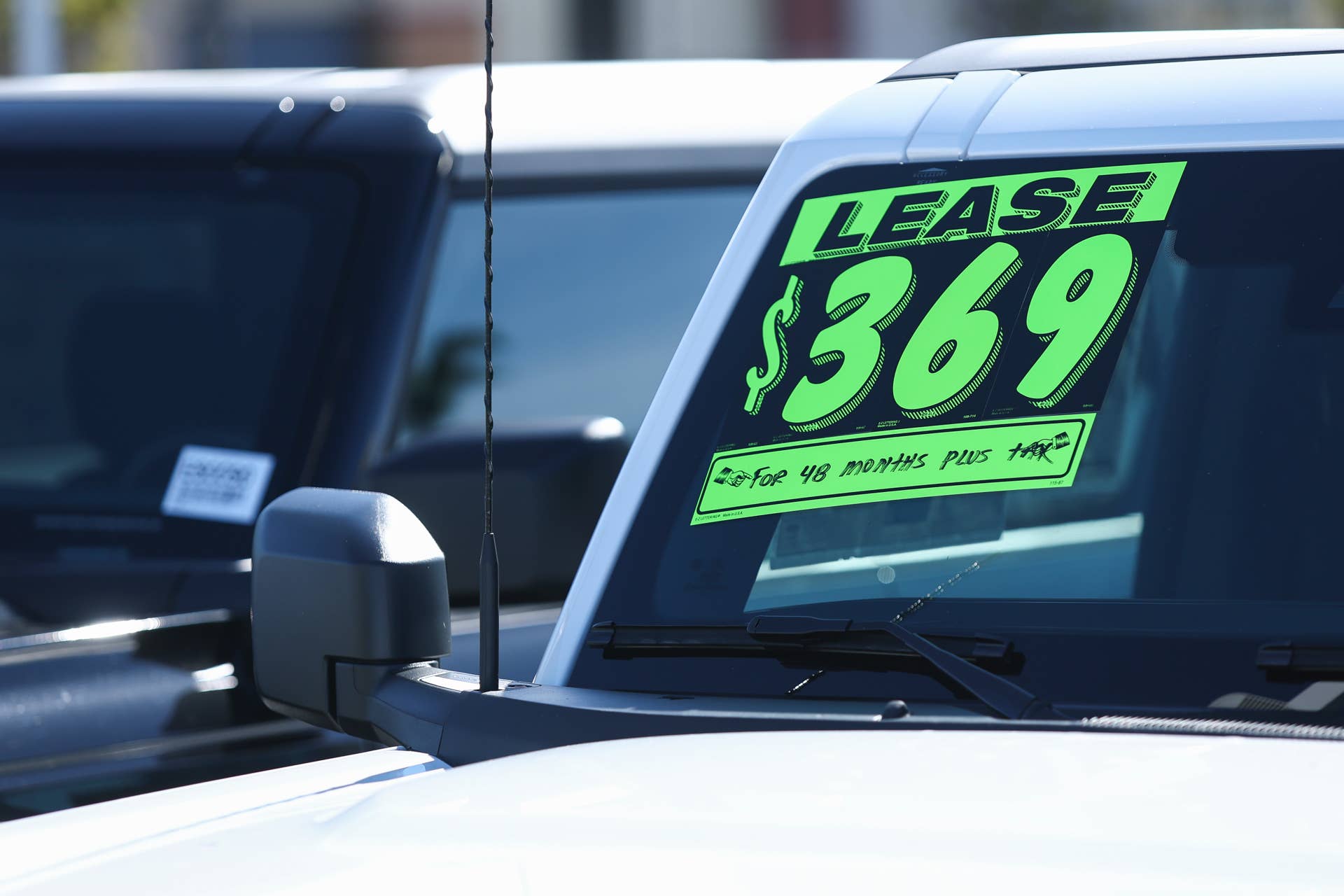
When President Donald Trump first introduced his plan to place 25% tariffs on all automotive and automotive parts imports, he made it clear that he didn't want car companies to pass that added cost onto consumers, but nearly a year after their implementation, car buyers are seeing a weird fee tacked on to the final price of the vehicle that is currently averaging about $1,600. According to a media report last year, Trump convened some of the country's top automakers on a conference call in March and told them if they raised prices in response to the tariffs, they would "face punishment."U.S. 2025 new-vehicle salesGM: 2.83 million vehicles (+5.1% year over year); 17.3% market shareToyota: 2.52 million vehicles (+8.4% YoY); 15.5% market shareFord: 2.18 million vehicles (+5.6% YoY); 13.4% market shareHyundai: 1.84 million vehicles (+7.9% YoY); 11.3% market shareHonda: 1.42 million vehicles (+0.6% YoY); 8.8% market share Source: Cox Automotive You see, Trump had positioned the tariffs as a positive for the American people, even though importers based in the U.S. are responsible for paying the tab. If car buyers actually felt the pain from his policy, the facade that his tariffs were helping the American people would crumble.Weeks after the call, Trump introduced his 25% tariffs on the auto industry. The threat of tariffs prompted an interesting reaction among new-car buyers: they rushed to dealerships to buy vehicles before tariffs raised prices. Sensing an opportunity, many domestic original equipment manufacturers (OEMs), such as Ford and GM, offered steep incentives to further entice potential buyers. Ford used incentives and the fear of tariffs to become the top-selling brand in the U.S. during the year’s first half. Ford said total sales in the second quarter rose at a rate seven times that of the overall auto industry. It sold 1.1 million units in the first six months, a 6.6% year-over-year increase.In the third quarter, GM reported a 17% market share, its most substantial presence in the U.S. since 2017 and it closed out the year with a 17.3% market share. Donald Trump, of course, took full credit for the record-setting sales year for U.S. autos, even though the duties ate into OEMs' margins and forced them to pay billions in tariffs, further lowering profitability. To claw back some of that profitability, carmakers are passing the cost down through a new charge that customers have to pay. Car buyers see an unwanted charge on new vehicles. Photo by Peter Cade on Getty Images Car makers add 'destination charge' to vehicles' final priceIf you have visited a car dealership lately and made it past the window-shopping phase, there is a good chance you've run into sticker shock when you see the final price.Car makers have been increasing the "destination charge" on their vehicles for years, but in 2026, what was once a couple of hundred dollars fee to cover fuel and shipping costs has ballooned to an average of $1,600 per vehicle. Related: New car buyers are resorting to a risky trendOverall, car buyers spent more than $26 billion on destination charges in 2025, according to Edmunds, and the Wall Street Journal reported that much of that cost was due to tariffs. “It’s a way to raise prices that is, shall we say, less transparent to the consumer,” John Morrill, a Massachusetts car dealer, told the Journal. “Carmakers have raised them a lot, certainly faster than they’ve raised prices.”The fee has been steeper for some of the more popular models. Destination charges are adding $2,595 to to final price of Ford F-150s, the country's best-selling vehicle, in model year 2025 from $1,695 in model year 2020. During that time frame, the Destination charge for the Chevy Tahoe jumped to nearly $2,000 from $1,295.GM told the Journal that the charges reflect the "overall cost and business considerations associated with delivering vehicles." Ford said it reviews the charges to stay consistent with the industry. Neither admitted that tariffs were the cause of the increases, but Geoffrey Pohanka, a dealer in the Washington, D.C., area, told the Journal that "the manufacturers have been pinched with the tariffs," and that carmakers might “find they can raise prices in some areas more easily than others, and one would be the destination charge.”Dealerships often fight with automakers about the destination charge, one car dealer told the Journal, because "it's escalating the cost of doing business."But it seems carmakers would rather do that than anger Trump by raising prices because of tariffs. Younger millennials see the biggest increase in monthly car paymentsConsumers paid an average transaction price of $49,191 per vehicle in January, a nearly 2% increase from a year ago, according to Kelley Blue Book, but according to new research from Bank of America, the price increases weren’t distributed evenly.While tariffs helped goose auto sales during the first half of the year, a pronounced slowdown occurred in the second half.Related: US car buyers reverse major trend in second half of 2025Carmakers sold 15.9 million vehicles last year, down from 16.8 million the year prior, Cox Automotive sales data show. Bank of America says that the decline was driven by high prices.“Auto sales have been tapping the brakes over the last few years, and in our view, affordability pressures are a key reason why,” the firm said in a recent note.But customer data also indicate that younger millennials (ages 30-36) have seen their bills climb more compared to other age groups. Younger millennials’ monthly car payments rose by nearly 60% since 2019. Older millennials and Gen Z have also seen big increases, but they’re just above 40%.“Why is affordability weighing so heavily on consumers now? Throughout the 2020s, car prices and motor vehicle insurance have climbed significantly. At the same time, Federal Reserve rate hikes have made car loans more expensive,” Bank of America said.“Taken together, these three factors have raised the overall cost of purchasing and owning a car, which has likely impacted younger generations the most, as they may be building families and scaling up their vehicles.”Related: Trump hikes new tariffs to 15%
Source Information
Discussion
0 professional contributions
Sign in to join this professional discussion.
Be the first to add a constructive contribution.