
Fed official warns rate cuts depend on lower inflation
Understand this faster with AI


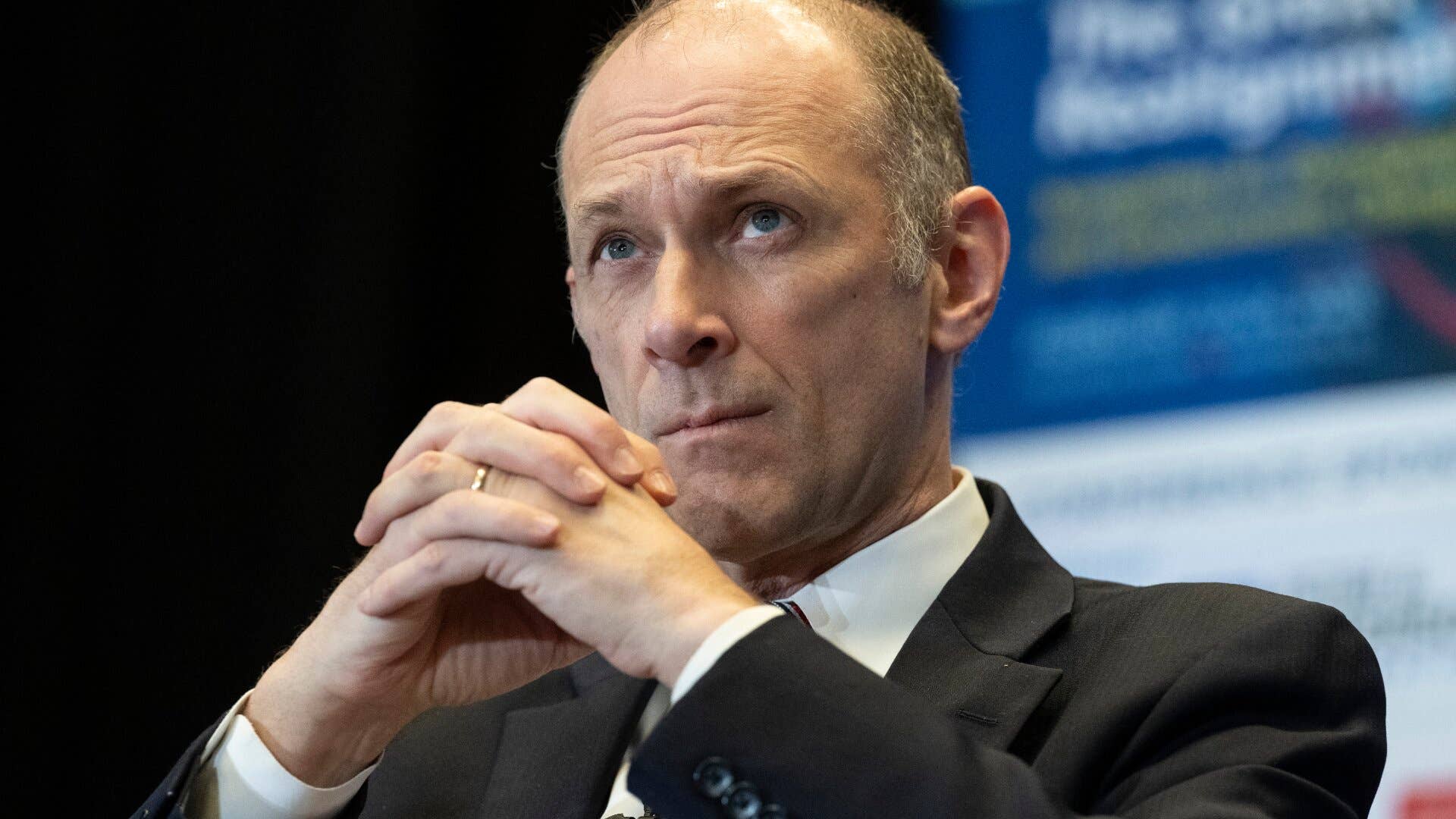
Interest-rate cuts in the near term aren’t appropriate by the Fed until there’s more evidence that sticky inflation is declining, said Chicago Federal Reserve President Austan Goolsbee.Goolsbee, a voting member of the policymaking Federal Open Market Committee, also said the Supreme Court’s decision to strike down many of President Donald Trump’s sweeping global tariffs could help cool inflation.“I remain optimistic that there can be more rate cuts this year. But that hinges on seeing actual progress on inflation that shows we are on a path back to 2%,’’ Goolsbee said in prepared remarks Feb. 24 to be delivered at the National Association for Business Economics annual conference.
Federal Reserve Bank of New York via FRED® FOMC January meeting holds rates steadyThe FOMC voted 10-2 to hold interest rates steady at 3.50% to 3.75% in January after three consecutive quarter-point cuts in its last three meetings of 2025.The Federal Funds Rate guides interest rates for investors and consumers on auto and student loans, home-equity loans, and credit cards.For consumers, a delayed rate cut could mean higher borrowing costs that remain in place longer than expected.It was the FOMC’s first pause since July 2025.Fed Governors Christopher Waller and Stephen Miran dissented, saying they would have preferred a quarter-point cut due to softening in the labor market. Waller explained Sept. 23 that he was monitoring the recent stronger-than-expected labor market data and that it could be “a coin toss” as to whether he would vote to hold or cut interest-rates at the March 17-18 FOMC meeting.How the Fed manages interest rates The Fed’s dual congressional mandate requires it to balance full employment and price stability:Lower interest rates support hiring but can fuel inflation.Higher rates cool prices but can weaken the job market.The two goals often conflict, operate on different timelines and are influenced by unpredictable global events.
More Federal Reserve:Fed Chair Powell sends frustrating message on future interest-rate cutsAfter the December rate cut, Fed Chair Jerome Powell said that the lowering of rates brought monetary policy “within a broad range of neutral.”A neutral rate neither stimulates nor restrains economic growth.When the Fed last paused interest ratesThe Fed last paused interest rates in September 2023, holding the funds rate at 5.25% to 5.50% after a rapid tightening cycle aimed at curbing post-pandemic inflation.The pause lasted nearly a year as policymakers wanted to see if the higher borrowing costs would tame inflation without dipping the economy into a recession.During that pause, inflation gradually cooled and the labor market remained resilient.The central bank resumed cutting rates in September 2025 once Fed officials became confident that inflation was moving sustainably toward the Fed’s 2% target.Inflation remains above Fed’s 2% targetThe Fed’s preferred inflation model is thePersonal Consumption Expenditures (PCE) Price Index, and the most recent headline on Feb. 20 comes from the December 2025 report showing PCE at 2.9%, up from 2.8% in November.The Bureau of Labor Statistics reported Feb. 13 that the Consumer Price Index rose 0.2% in January, the smallest gain since July, reflecting lower energy costs.Overall inflation unexpectedly dropped to 2.4% in January from the same time last year. That was down from the previous 2.7% annual pace.Core inflation, which filters out volatile food and energy prices, ticked down to 2.5% on a year-over-year basis. It last stood at 2.6%.The government is due to release its next employment report on March 6, the CPI on March 11, and the PCE on March 13.Goolsbee ties Fed rate cut to lower inflationGoolsbee said that forecasts have projected “progress on inflation in the near term. Goods inflation, particularly, should start fading.”But he added a caveat, targeted at transitory tariff inflation.Related: Fed's Waller calls March interest-rate cut 'a coin flip'“Since we have been burned by assuming transitory inflation before and since there are plausible scenarios where inflation again proves more persistent than we forecasted, we should be careful not to put ourselves in a difficult position,’’ Goolsbee said.Hence, a dovish pause in March would be appropriate, he said.“I feel that front-loading too many rate cuts is not prudent in that circumstance,” Goolsbee said.“People express that prices are one of their most pressing concerns. Let’s pay attention. Before we cut rates more to stimulate the economy, let’s be sure inflation is heading back to 2%,’’ he added.The CME Group Fed Watch tool shows a 96.1% likelihood that the FOMC will hold rates steady in March. Markets are expecting two rate cuts in 2026, forecasting June or July and possibly December.Goolsbee: SCOTUS tariff ruling might impact inflationPresident Donald Trump’s response to the high court’s decision that his tariffs were illegal prompted him to issue a new set of 15% tariffs that went into effect Feb. 23, sending a burst of uncertainty to traders and businesses.“The more unpredictability you have, the more question marks that the businesses have about policy,” Bloomberg reported that Goolsbee told reporters Feb. 23. “The dynamic of low hiring, low firing — which I believe came from business uncertainty — is made even more solidified by adding more uncertainty," Goolsbee added. "That said, it could bring relief to the inflation side.”Robert Conzo, CEO & managing director at The Wealth Alliance, told TheStreet that markets have been resilient to changing tariff policy, government shutdowns, and Fed Chair pressures over the past year.“This raises the question — will the new tariff policy replace the prior policy, and result in a muted overall effect? While the U.S. has experienced moderating inflation, we believe it will be range-bound for the near future,’’ Conzo said.Related: How the Supreme Court tariff ruling tests Fed independence
Source Information
Discussion
0 professional contributions
Sign in to join this professional discussion.
Be the first to add a constructive contribution.