
Dave Ramsey drops surprisingly harsh words on Trump plan
Understand this faster with AI


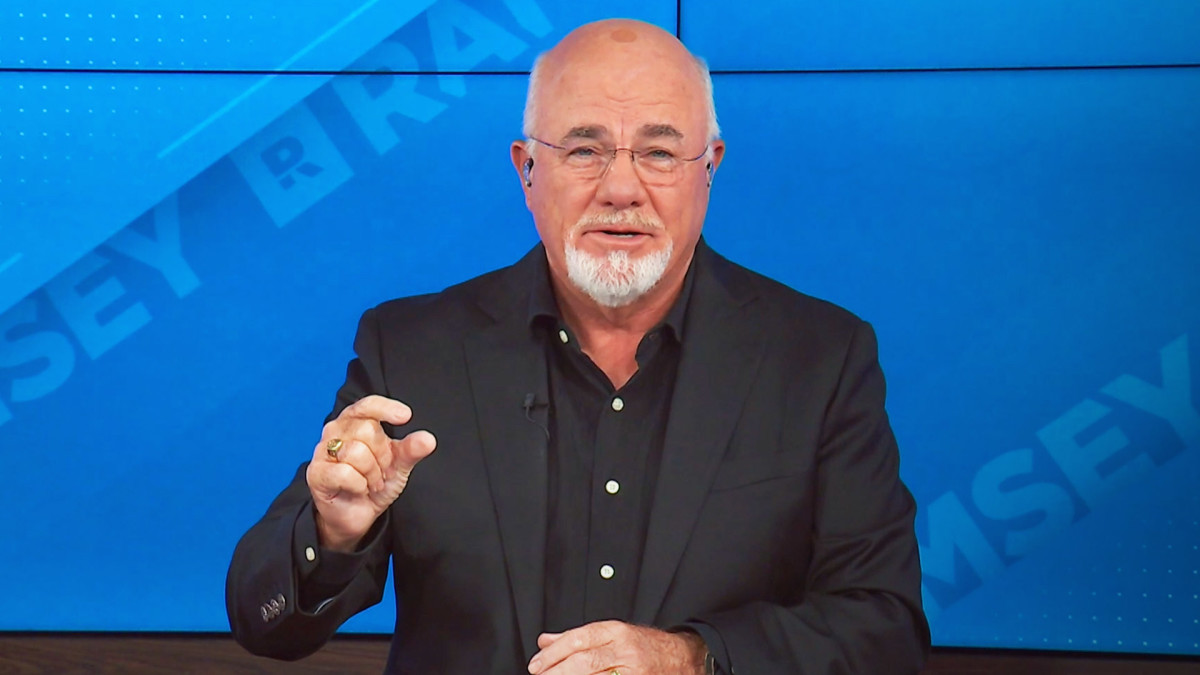
As I listened to President Donald Trump's State of the Union remarks on Feb. 24, my ears perked up by one phrase he used.This occurred when he was talking about Trump Accounts, the long-term savings accounts designed specifically for children that were part of the One Big Beautiful Bill Act (OBBBA) signed into law on July 4, 2025.Trump described them as "tax-free investment accounts for every American child," according to a transcript published by the Associated Press."Tax-free?" I thought. "Aren't those better described as 'tax-advantaged' or 'tax-deferred?'"So I looked it up to refresh my memory and found a pretty good brief explanation."The accounts are tax-deferred, meaning the money grows without being taxed until it’s withdrawn," explained H&R Block.Related: AARP, SSA warn retirees about new benefit reductionsI figured it might be a distinction without much of a difference. I suppose one could call the accounts tax-free, since they are essentially tax-free during their period of growth. Putting all that aside, I got to thinking about the Trump Accounts and what personal finance opinion leaders were saying about them. I thought of Dave Ramsey, the bestselling author and popular radio host who seems pretty clear about his skepticism of government intervention in Americans' finances.And what I found was a surprisingly harsh critique. Parents are often searching for the best way to invest in their children's future. Dave Ramsey criticizes Trump AccountsA Trump Account is created for each eligible child when a parent or guardian chooses to make the election, and it applies to children who have not yet reached age 18 by the end of the calendar year in which that election is filed."Additionally, the federal government will make a one-time $1,000 pilot program contribution to the Trump Account of each eligible child for whom an election is made, who is a U.S. citizen and who is born on or after Jan. 1, 2025, through Dec. 31, 2028," according to the Internal Revenue Service (IRS). At age 18, it stops being a "locked" minor's account and starts behaving like a standard Traditional IRA.Ramsey described the one thing he liked about the idea."We love it when parents ask the question, 'How can I invest in my child’s future?'" he wrote on his company's website Ramsey Solutions. "That’s music to our ears, because it means you’re already thinking about how you can set your kids up for success and change your family tree."But Ramsey had a few other thoughts that were not so rosy."Whenever the government gets involved, it’s only natural to start asking questions ... lots of questions," he wrote."Trump Accounts might seem like a good idea, but the more closely you look at them, the less appealing they become," he added."The truth is, they’re more of a political stunt than a game changer for your kids."Ramsey outlines three objections he has to Trump Accounts.Trump Accounts lack flexibilityContributions are locked away for at least 18 years, making the funds unavailable for any near‑ or medium‑term needs.Once the child reaches adulthood and can withdraw the money, any investment gains are subject to taxation, according to the Internal Revenue Service.The structure limits how families can adapt the funds to changing circumstances over time.(Source:Ramsey Solutions)Trump Accounts restrict what you can use them forWithdrawals must meet federal criteria, and uses outside those approved purposes can trigger additional penalties.A child who wants to use the funds for something not permitted under federal rules may face extra costs for accessing their own account.The restrictions reduce the account’s usefulness for goals beyond the narrow set defined by the government.(Source:Ramsey Solutions)Trump Accounts limit your investment optionsInvestment choices are confined to a small set of government‑approved low‑cost index funds or ETFs.Account holders have limited control over how contributions are invested, reducing the ability to tailor the portfolio to personal preferences or market views.The constrained menu places decision‑making power with the government rather than the family.(Source:Ramsey Solutions)Fintech entrepreneur weighs in on investing for childrenI was then fortunate enough to engage in a brief email exchange with Ksenia Yudina, a fintech entrepreneur and the founder of UNest and Mostt — two platforms specifically designed to help families invest in their children’s futures.More on personal finance:Zillow forecasts big mortgage change for U.S. housing marketAARP sounds alarm on major Social Security problemDave Ramsey bluntly warns Americans on 401(k)sShe offered her own perspective on Trump Accounts."The real challenges with programs like Trump Accounts start with adoption, usability, and sustained engagement once families actually begin using the program," she told me."These initiatives tend to struggle when onboarding is complex, rules are unclear, or the product assumes financial sophistication that most families simply do not have," she continued. "Without simple guidance, intuitive design, and ongoing communication, parents become confused or disengaged, and accounts quickly go dormant. Market volatility can also erode trust if families are not prepared for normal fluctuations."Ksenia Yudina stresses investing simplicityYudina explained her experience that making saving simple for parents is an often overlooked key to investment success."Building UNest and Mostt showed that parents do want to save for their children, but only if the experience is simple, intuitive, and emotionally reassuring," she wrote. "Policymakers often underestimate how much usability, education, and trust matter after the money is allocated.""The hardest part is not funding accounts, but ensuring families understand them, stay engaged through market cycles, and continue using them over many years," she emphasized. "From my experience, parents keep contributing when saving becomes automatic, emotionally rewarding, and easy to understand."Yudina stressed that consistency can be driven more by behavior than by returns."Automatic deposits remove friction, while features like gifting from family, visible progress toward a child’s future, and simple reassurance during market volatility help parents stay engaged," she wrote. "When the product reduces anxiety, avoids overemphasizing short-term performance, and reinforces the feeling that parents are doing the right thing, contributions tend to continue over many years."Related: Dave Ramsey, AARP sound alarm on Social Security, 401(k)s, IRAs
Source Information
Discussion
0 professional contributions
Sign in to join this professional discussion.
Be the first to add a constructive contribution.