
Boosting China-India ties should be pillar of Hong Kong’s five-year plan
Understand this faster with AI


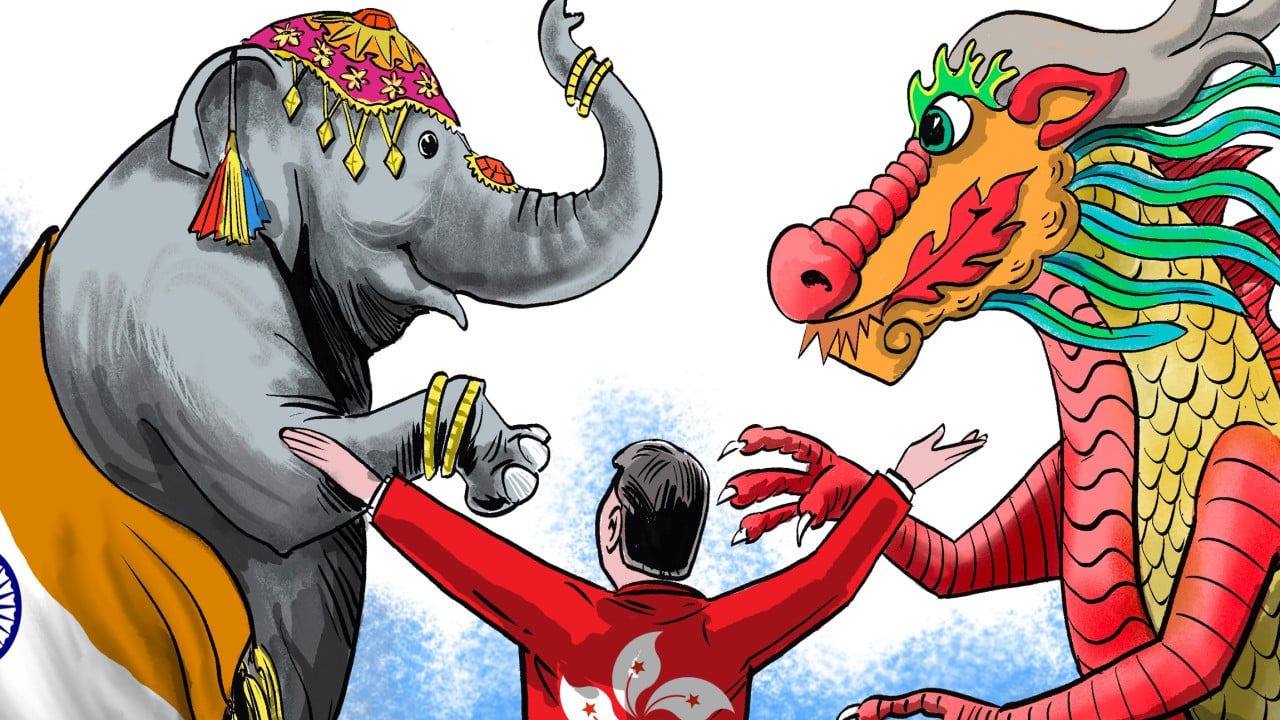
AdvertisementHong Kong economyOpinionHong Kong OpinionBrian Y. S. WongOpinion | Boosting China-India ties should be pillar of Hong Kong’s five-year planIndia is a vibrant, emerging and complex power with much to offer the city and China as a whole3-MIN READ3-MIN ListenBrian Y. S. WongPublished: 9:30am, 14 Mar 2026Updated: 10:23am, 14 Mar 2026By the second half of the 21st century, the Sino-Indian relationship will become the world’s most geopolitical, dislodging even the complex China-US cooperative rivalry. By 2050, the world’s three largest economies are likely to comprise some combination of China, India and the United States. PricewaterhouseCoopers predicts this exact order – with the US having the highest per capita income but the smallest population.Both Asian powerhouses enjoy significant theoretical complementarity. China leads in advanced manufacturing; India has long positioned itself as a global service hub, specifically in software, digital and high-end professional services. China, with its ageing population, is “investing in people”; India’s demographic dividend positions it as the world’s largest exporter of young and capable workers.Crucially, they are co-beneficiaries and can become co-architects of a world order no longer unilaterally determined by any single power. From Brics to the Shanghai Cooperation Organisation, Beijing and New Delhi are both firm advocates of a geopolitical realignment away from a Western-led post-Cold-War order. While the modes of governance differ, their peoples share much common ground, with thousands of years of civilisational history and heritage to draw on.AdvertisementIndia’s ambassador to China, Pradeep Kumar Rawat, recently visited Hong Kong to unveil the statue of Mahatma Gandhi at the India Club. He also met Macau Chief Executive Sam Hou Fai. These are promising signs of how senior Indian diplomats view the two Chinese special administrative regions.
If Hong Kong is to live up to its reputation as China’s most international and outward-looking city, it must leverage its assets to contribute meaningfully to the Sino-Indian partnership.Indeed, this should be an important pillar of Hong Kong’s coming five-year plan. The city has much going for it: the common law system and bilingualism render us highly compatible economies. The human connection is key. While direct mainland China-India flights were suspended between 2020 and 2025 due to the Covid-19 pandemic and border clashes, Hong Kong kept the door open for our friends from the South.AdvertisementHistorically, Indian community leaders were pivotal in the establishment of the University of Hong Kong, Star Ferry and Ruttonjee Hospital, to name just a few. Today, the Indian diaspora of roughly 44,000 make vital contributions to the city in sectors spanning finance, logistics, hospitality and tourism, and supply chain management. 14:30How Indian cuisine travelled to Hong Kong and evolved to please local palatesHow Indian cuisine travelled to Hong Kong and evolved to please local palatesAdvertisementSelect VoiceSelect Speed0.8x0.9x1.0x1.1x1.2x1.5x1.75x00:0000:001.00x
Source Information
Discussion
0 professional contributions
Sign in to join this professional discussion.
Be the first to add a constructive contribution.