
EV bloodbath: US sales plunge as Tesla tightens its grip
Understand this faster with AI


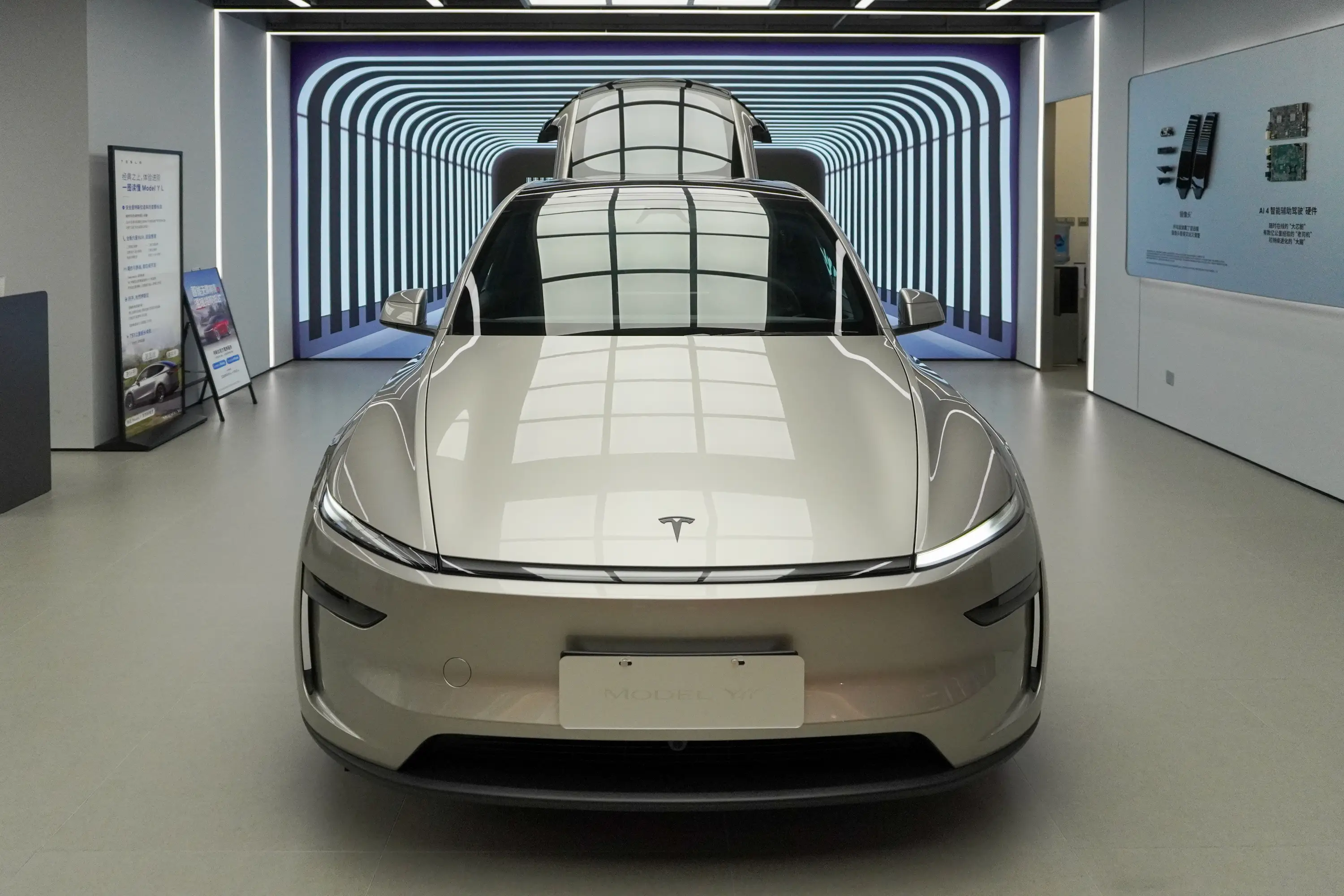
A Tesla Model Y Sheldon Cooper/SOPA Images/LightRocket via Getty Images 2026-04-10T09:00:02.450Z Share Copy link Email Facebook WhatsApp X LinkedIn Bluesky Threads lighning bolt icon An icon in the shape of a lightning bolt.
Impact Link Save Saved Read in app This story is available exclusively to Business Insider subscribers. Become an Insider and start reading now. Have an account? Log in. US EV sales are plummeting, with a 27% drop in Q1 2026, per Cox Automotive. Model Y sales jumped 23%, helping Tesla maintain a 54% US market share. Toyota's US EV sales increased, while Ford and VW faced steep declines. AI-generated summary Summaries are generated by an AI model trained on Business Insider's articles. AI may make mistakes or provide inaccurate/incomplete information. We're unable to load that answer right now. Please try again. Why are US EV sales declining? What challenges do legacy automakers face? How might gas prices affect EV demand? How is Tesla maintaining market share? Why did Toyota's EV sales increase? It's a bloodbath. Loading audio narration... New first-quarter 2026 EV sales estimates from Cox Automotive show the US electric-vehicle market shrinking sharply, with total sales down 27% year over year to about 216,000 units.Nearly every major automaker posted steep declines, underscoring how brutal the market has become without federal incentives. The broader takeaway is stark. Without subsidies, most EV makers don't have the scale to turn a profit in the US and are losing ground fast. Tesla's scale continues to translate into dominance, while rivals face a brutal reality: in this market, volume isn't just an advantage, it's survival.The only standouts from Cox Automotive's report were Tesla, which sold a lot more Model Y vehicles and retained strong market share, and Toyota, which grew from a small base. Ford's EV sales plunged 70%, BMW fell more than 60%, and Volkswagen collapsed nearly 90%. Honda pulled an EV from the US market recently, and VW killed its last EV in this market.Even previously aggressive players such as Hyundai were essentially flat, while Nissan and Mercedes saw demand evaporate. The pattern is clear: low volume and high costs are crushing legacy automakers' EV ambitions. There were only a few bright spots.Toyota stood out, albeit from a small base. Its EV sales jumped about 79% year over year to roughly 10,000 units, boosting its market share to 4.6%. General Motors, through Chevrolet, Cadillac, and GMC, held on to more than 10% of the US market. Tesla, meanwhile, remains in a league of its own. The company sold 117,300 EVs in Q1, giving it a commanding 54% share of the US market. While Tesla's overall sales fell 8%, the Model Y was a standout, with deliveries rising nearly 23% to almost 79,000 units in the first quarter — by far the best-selling EV in the US.It's not all positive news for Tesla. The company has been hit hard by a slowing overall demand for electric vehicles. Despite Tesla's March report of a 6% increase in global sales in the first quarter, the company missed Wall Street expectations. Is there any light at the end of the tunnel? Higher gas prices at the pump could mean demand for EVs recovers. We'll see when the Q2 numbers come in.Sign up for BI's Tech Memo newsletter here. Reach out to me via email at abarr@businessinsider.com.
Source Information
Discussion
0 professional contributions
Sign in to join this professional discussion.
Be the first to add a constructive contribution.